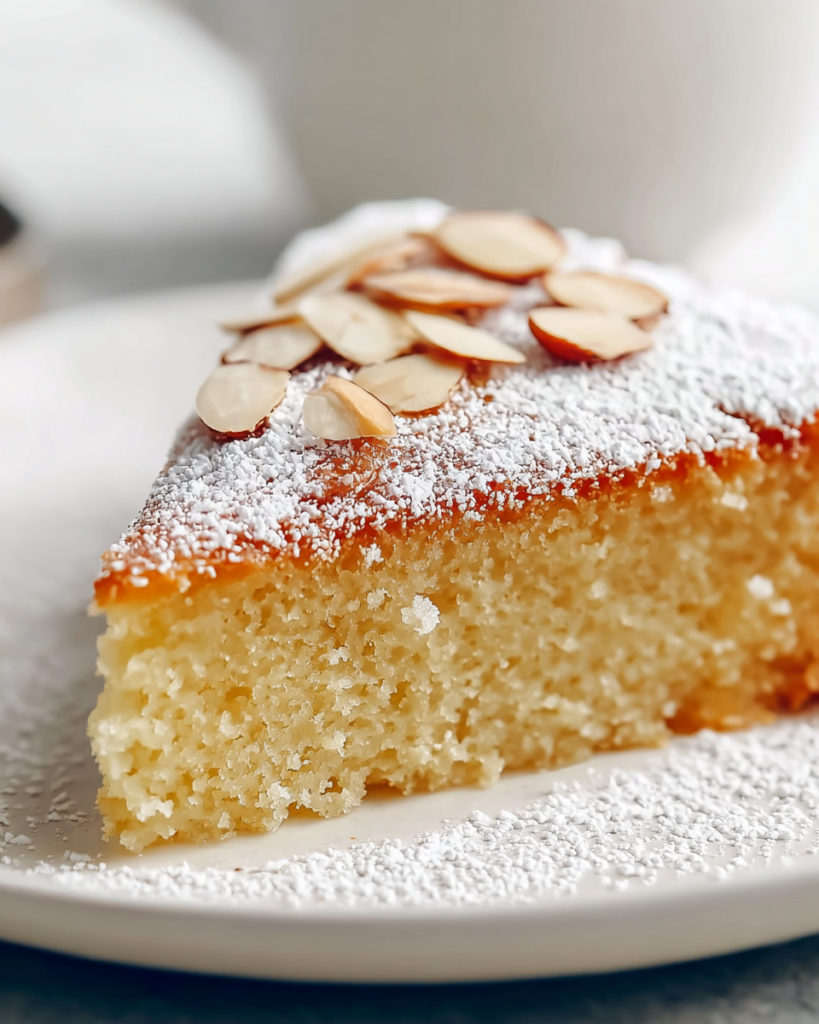
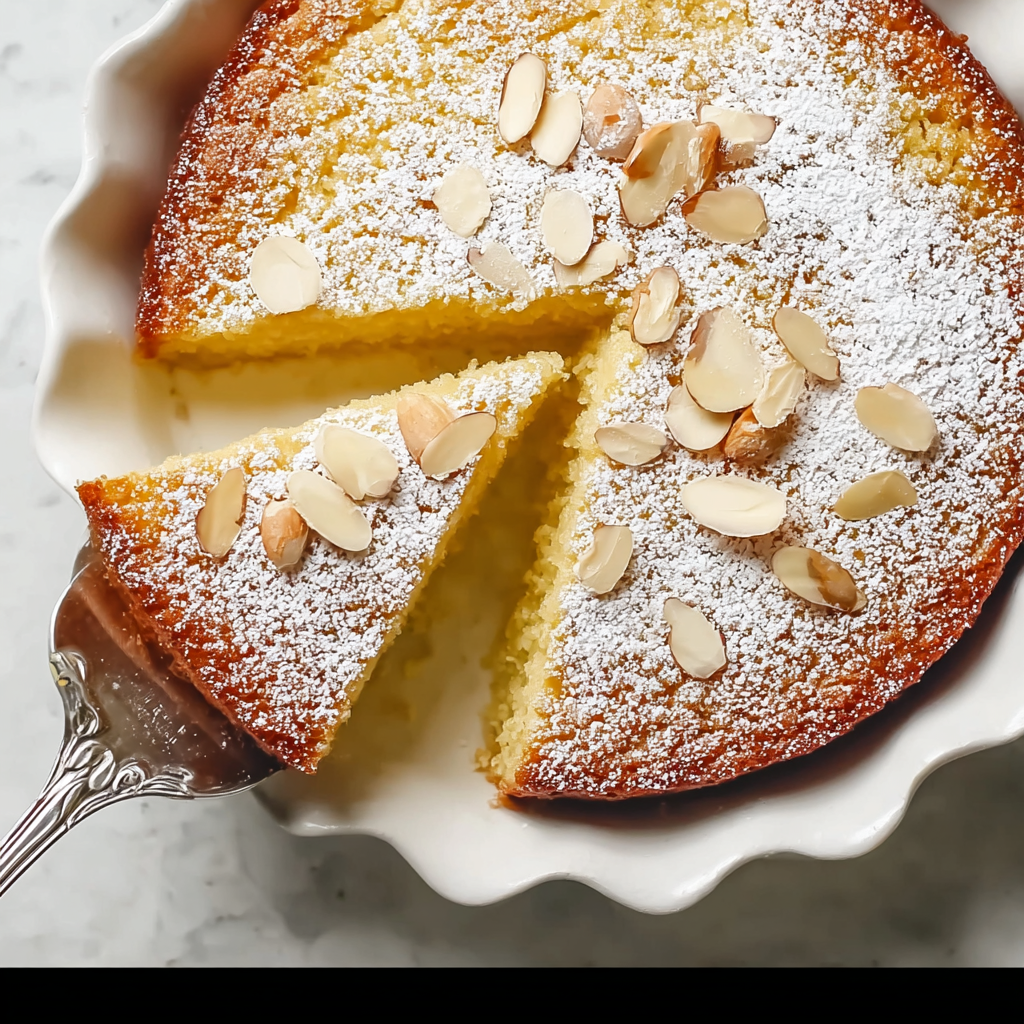
Buttery, reliable, and elegant, Almond Cake With Almond Paste delivers deep nutty flavor, a tender crumb, and a lightly crisp almond topping in one simple bake. It is the kind of dessert that looks polished but fits easily into an everyday kitchen routine.
This is a lovely cake for the days when you want something homemade and comforting without building layers or fussing over frosting. It has that quiet, classic feel that works just as well for a weekend treat as it does for guests.
What makes it stand out is the almond-on-almond flavor. The paste gives the cake richness and depth, while the almond extract sharpens that aroma just enough to make every slice taste a little more special.
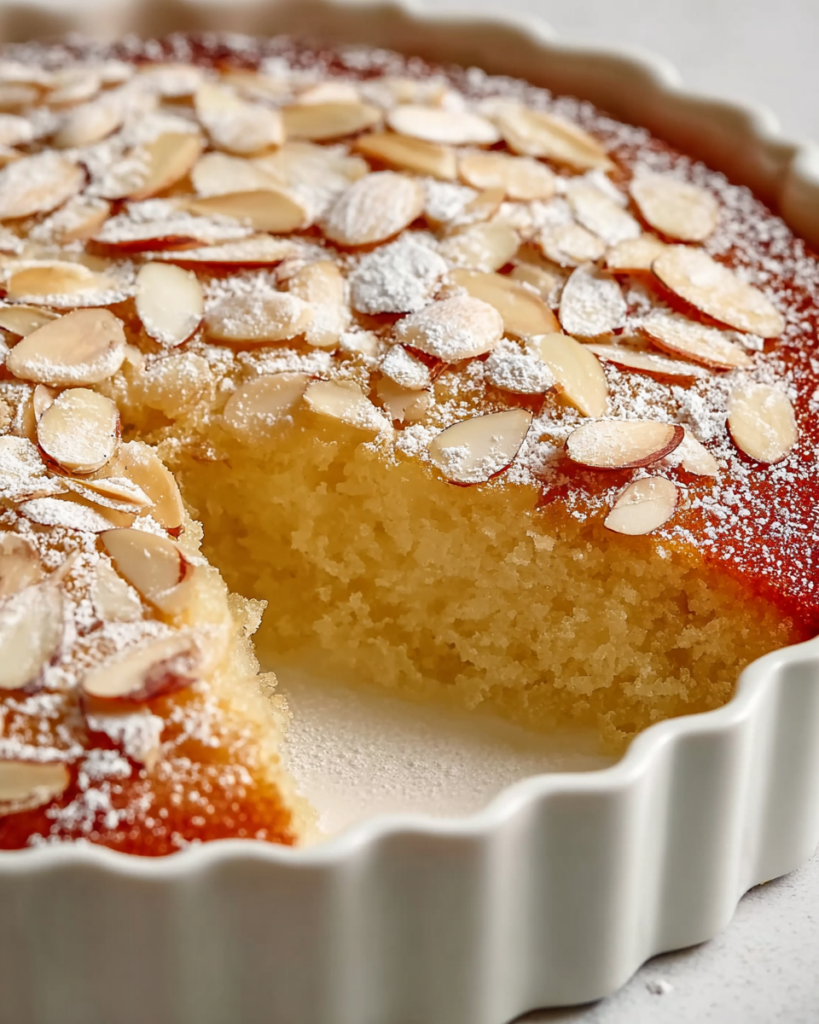
You also get a texture contrast that makes a big difference. The interior stays soft and buttery, and the almond topping toasts lightly in the oven, adding a delicate crunch that keeps the cake from feeling too plain.
Almond Cake With Almond Paste Ingredients
All-purpose flour forms the base of the batter and keeps the crumb soft but structured enough to slice neatly once cooled.
Baking powder gives the cake a gentle lift so it bakes up tender rather than heavy.
Kosher salt balances the sweetness and helps the almond flavor taste fuller and more defined.
Granulated sugar sweetens the cake and helps create a lighter texture when beaten with the almond paste and butter.
Almond paste is the ingredient that gives this cake its signature character. It brings concentrated almond flavor, richness, and a slightly dense, fine crumb that feels bakery-style.
Unsalted butter adds moisture and that classic buttery finish that makes this cake taste round and satisfying instead of dry.
Eggs help emulsify the batter and give the finished cake structure, softness, and a smooth slice.
Almond extract reinforces the nutty aroma without overpowering the cake.
Slivered or sliced almonds create the topping, adding light crunch and an attractive golden finish.
Powdered sugar is optional, but it gives the cake a simple, elegant final touch right before serving.
Cooking Steps
STEP 1: Start by preparing a 9-inch round cake pan with a light coating of spray and a parchment round on the bottom. Heat your oven to 325°F, and make sure the almond paste, butter, and eggs are no longer cold so the batter blends smoothly.
STEP 2: In a separate bowl, whisk together the flour, baking powder, and salt. This quick step helps distribute the leavening evenly, which gives you a more consistent rise throughout the cake.
STEP 3: Beat the almond paste with the sugar until the mixture looks sandy and crumbly. This is an important stage because it breaks up the paste and helps it blend evenly into the batter instead of leaving dense pockets.
STEP 4: Add the softened butter and beat until the mixture turns pale and fluffy, then mix in the almond extract. At this point, the batter base should look creamy and well combined.
STEP 5: Add the eggs one at a time, beating well after each addition. This steady approach keeps the batter emulsified, which helps the cake bake with a finer crumb and a more even texture.
STEP 6: Mix in the dry ingredients on low speed just until the flour disappears. Do not keep beating once the batter comes together, because overmixing can make the cake tighter and heavier than it should be.
STEP 7: Spread the batter into the prepared pan and smooth the top gently. Scatter the almonds evenly over the surface so every slice gets a bit of that toasted topping.
STEP 8: Bake for about 45 to 50 minutes, until the top is golden and a toothpick in the center comes out with a few moist crumbs. Let the cake cool in the pan for around 15 minutes before loosening the edges and transferring it to a rack or leaving it in the pan to finish cooling. Dust with powdered sugar just before serving.
Helpful Tips
- Beat the almond paste and sugar thoroughly at the beginning so the paste breaks down well and the batter stays smooth.
- Once the flour goes in, mix only until combined to keep the crumb delicate and tender.
- Let the cake cool before dusting with powdered sugar, or the sugar can melt into the surface instead of sitting neatly on top.
Can I make this cake a day ahead?
Yes, and it is actually a great make-ahead dessert. The almond flavor settles in beautifully after a few hours, and the cake stays tender. Wait to dust it with powdered sugar until just before serving so the finish looks fresh.
How do I know when the cake is done baking?
Look for a lightly golden top and edges that feel set. A toothpick inserted into the center should come out mostly clean with a few moist crumbs, not wet batter. The cake should also spring back gently when touched in the middle.
Can I use sliced almonds instead of slivered almonds?
Absolutely. Both work well here. Slivered almonds give a slightly more pronounced crunch, while sliced almonds create a finer, more delicate topping. Use whichever you have on hand and spread them evenly for the best finish.
Why do the butter, eggs, and almond paste need to be at room temperature?
Room-temperature ingredients blend more evenly, which makes the batter smoother and easier to emulsify. That helps the cake bake with a more even crumb and prevents little bits of almond paste or butter from staying stubbornly unmixed.
Serving Ideas for Almond Cake With Almond Paste
This cake is wonderful on its own, especially with a hot drink and a light dusting of powdered sugar.
Fresh berries are an easy match if you want a little brightness on the plate. Raspberries or sliced strawberries work especially well with the rich almond flavor.
For a slightly more dessert-like presentation, serve slices with softly whipped cream or a spoonful of lightly sweetened cream on the side.
How to Store & Reheat
If you plan to enjoy the cake within a day or two, keep it covered at room temperature. A cake dome or tightly wrapped plate works well, and the texture stays pleasantly soft.
For longer storage, refrigerate the cake in an airtight container for up to 5 days. Let slices come to room temperature before serving for the best flavor and texture, since cold butter cakes can taste firmer than intended.
You can also freeze it. Wrap individual slices or the whole cake tightly, then store for up to 2 months. Thaw overnight in the refrigerator or at room temperature for a few hours.
Reheating is optional, but a brief warm-up can bring back that fresh-baked feel. Warm a slice for a few seconds in the microwave or a few minutes in a low oven, then add powdered sugar after warming if you want that pretty finish.
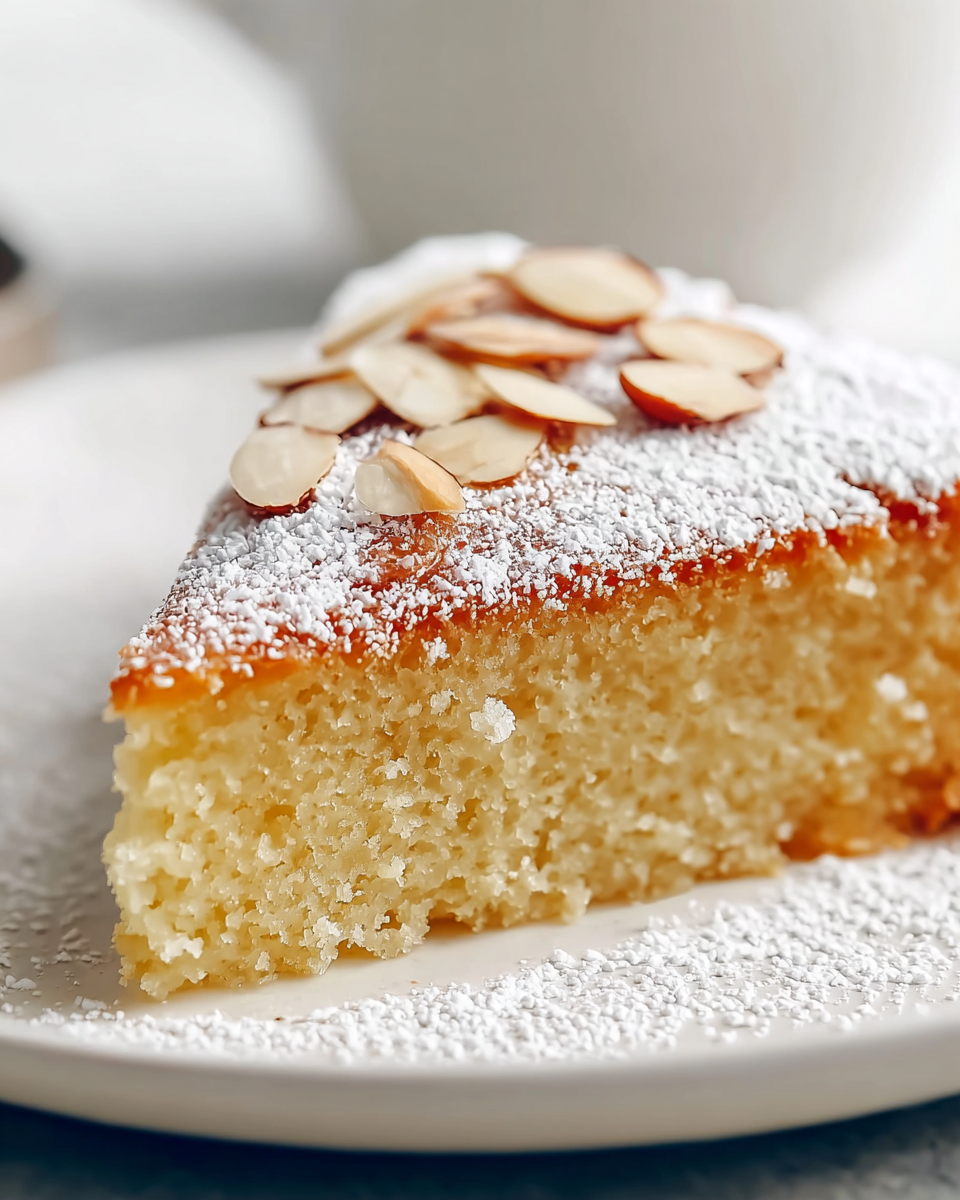
Almond Cake With Almond Paste
Ingredients
- 1 teaspoon baking powder
- 3/4 cup unsalted butter softened at room temperature
- 1 cup granulated sugar
- 4 large eggs at room temperature
- 1 cup all-purpose flour
- 2/3 cup almond paste brought to room temperature for easier blending
- 1/2 cup slivered almonds or sliced almonds
- 3/4 teaspoon kosher salt
- 1/4 teaspoon almond extract
- Powdered sugar optional, for finishing
Instructions
- Prepare a 9-inch round cake pan by coating it lightly with cooking spray and lining the bottom with a round of parchment paper. Heat the oven to 325°F. If needed, allow the almond paste, butter, and eggs to come to room temperature before mixing.
- In a medium bowl, whisk together the all-purpose flour, baking powder, and kosher salt until evenly combined. Set the dry mixture aside.
- Place the almond paste and granulated sugar in a large mixing bowl. Beat on medium speed until the texture resembles coarse crumbs.
- Add the softened butter and continue beating for 2 to 3 minutes, until the mixture looks pale and fluffy. Mix in the almond extract until fully incorporated.
- Add the eggs one at a time, beating well after each addition so the batter remains smooth and properly emulsified.
- Add the reserved flour mixture to the almond batter. Mix on low speed only until the ingredients are just combined. A few faint streaks in the batter are acceptable.
- Transfer the batter to the prepared cake pan and spread it gently into an even layer.
- Sprinkle the slivered almonds evenly over the surface of the batter.
- Bake for 45 to 50 minutes, or until a toothpick inserted into the center emerges mostly clean with a few moist crumbs attached.
- Remove the cake from the oven and let it rest in the pan for about 15 minutes. Then run a thin knife around the edge and either invert the cake onto a wire rack to cool completely or leave it in the pan, according to preference.
- Just before serving, dust the top lightly with powdered sugar, if using.