Asian Braised Pork Shoulder is a make-ahead friendly dinner with deep savory flavor, fork-tender texture, and lightly crisped edges, perfect for cozy rice bowls, relaxed hosting, or a satisfying weekend cook that pays off all week.
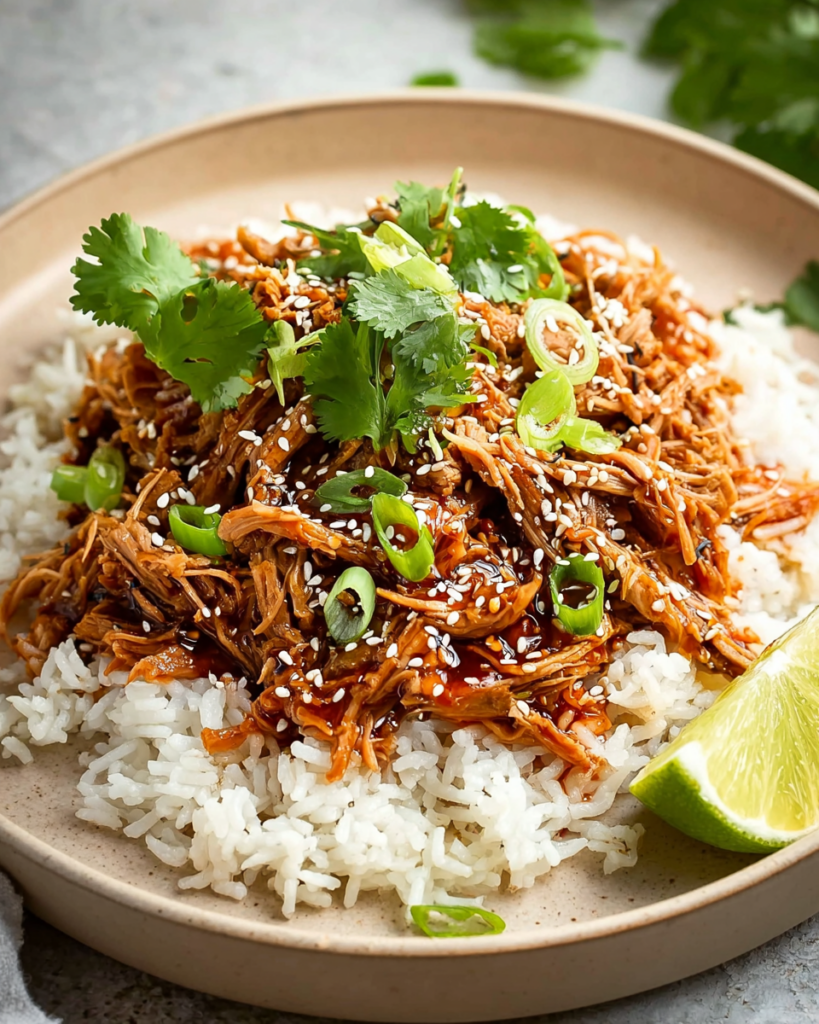
This is the kind of dish that feels low-effort once it goes into the oven. You do a little prep up front, then the pork slowly transforms into something rich, glossy, and full of flavor while your kitchen does most of the work for you.
What makes it especially good is the balance. The pork is deeply savory and gently sweet from the braising liquid, but it never feels heavy once you pile it over rice with lime, kimchi, herbs, and green onions.
I also love how flexible it is for real meals. You can serve it family-style for dinner, tuck leftovers into bowls for lunch, or crisp it again the next day for an even more irresistible texture.
What You Need to Make This Asian Braised Pork Shoulder
Pork shoulder is the star here, and it is ideal for slow roasting because it becomes tender, juicy, and easy to shred without losing its richness.
Kosher salt and black pepper keep the seasoning simple and let the braising mixture do the heavier flavor work.
Coconut aminos bring a mellow salty-sweet depth that helps build a glossy, savory cooking liquid without overpowering the pork.
Rice vinegar adds the bright note that keeps the finished dish from tasting too heavy or one-dimensional.
Coconut sugar rounds out the sharper flavors and helps the pork pick up those lightly caramelized edges during the final roast.
Garlic and fresh ginger give the braise warmth, fragrance, and that unmistakable aromatic base that makes the whole dish smell incredible in the oven.
Fish sauce adds a small but important boost of savory depth, making the braising liquid taste fuller and more complex.
Rice, kimchi, lime, cilantro, green onions, and chili oil turn the pork into a complete meal, adding freshness, heat, acidity, and crunch around all that tender meat.
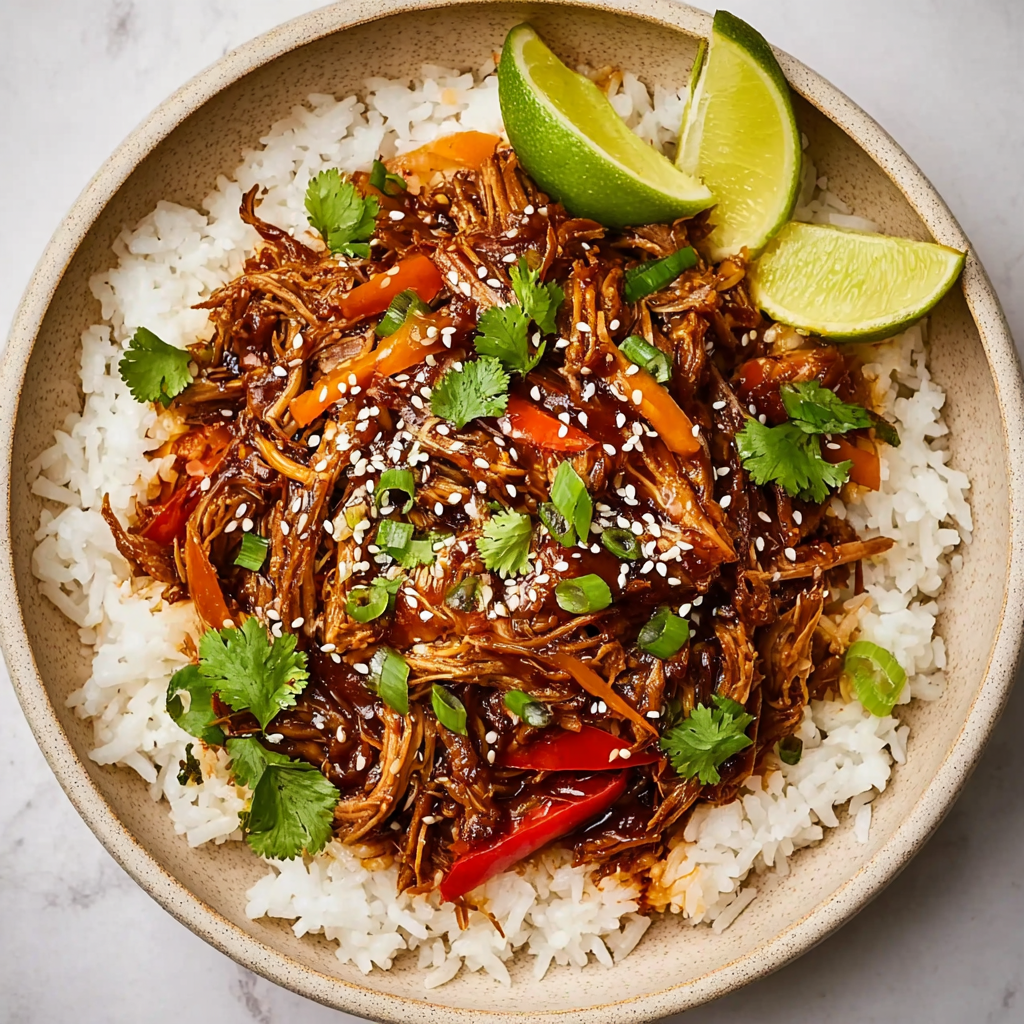
Step-by-Step Asian Braised Pork Shoulder
STEP 1: Heat your oven to 325°F so it is fully ready by the time the pork is seasoned and the braising liquid is mixed.
STEP 2: Stir together the coconut aminos, rice vinegar, coconut sugar, minced garlic, minced ginger, and fish sauce until the sugar is dissolved and the mixture smells balanced, savory, and slightly tangy.
STEP 3: Arrange the pork pieces in a baking dish or casserole with some of the fat facing upward, then season them well with kosher salt and black pepper so the meat has flavor before it ever starts braising.
STEP 4: Pour the braising liquid over the pork, cover the dish tightly, and roast until the meat is very tender. Start checking a bit early, around the 3 1/2-hour mark, because the exact timing can shift depending on the size of the pieces and the cut itself.
STEP 5: Once the pork yields easily, remove the dish from the oven and increase the heat to 425°F. Shred the meat right in the pan so it can soak up the rich cooking juices instead of drying out on a separate board.
STEP 6: Spoon off a little excess fat if the pan looks overly greasy, but keep enough liquid behind to moisten the meat. Return the pork to the oven uncovered and roast until the edges darken slightly and develop those irresistible crisp bits.
STEP 7: Toss the pork once more in the remaining juices, then serve it over hot rice with kimchi, green onions, cilantro, lime, and chili oil so every bite gets richness, freshness, and a little spark.
How to Store & Reheat
Let the pork cool before storing, then transfer it with some of its juices into an airtight container. In the refrigerator, it keeps well for up to 4 days and often tastes even better after the flavors have had time to settle.
For longer storage, freeze it in portioned containers for up to 2 months. Including a little of the braising liquid helps protect the meat from drying out and makes reheating much smoother.
To reheat, warm it gently in a skillet or baking dish with a spoonful of the reserved juices. If you want to bring back those crisped edges, use the oven or a hot pan for the last few minutes rather than microwaving the whole portion from start to finish.
Can I make this ahead of time?
Yes, and it is actually a great make-ahead main. You can braise and shred the pork a day in advance, then reheat and crisp it just before serving so it still has that fresh-from-the-oven texture.
Do I need the final high-heat roast?
That last roast is worth doing. The pork is already tender after braising, but the uncovered finish gives you browned edges and a more layered texture, which keeps the dish from feeling too soft all the way through.
Can I use soy sauce instead of coconut aminos?
You can, but the flavor will be saltier and a little sharper. If you swap it in, use less than the full amount at first and taste carefully so the braising liquid stays balanced.
How do I know the pork is ready to shred?
The best sign is resistance, or rather the lack of it. When you pull at a piece with two forks, it should separate easily without needing force. If it still feels tight, give it more covered roasting time.
What if I do not have kimchi or chili oil?
The pork will still be delicious without them. They mainly bring contrast. A squeeze of lime, a handful of herbs, and some sliced green onions already add plenty of freshness if you want a simpler finish.
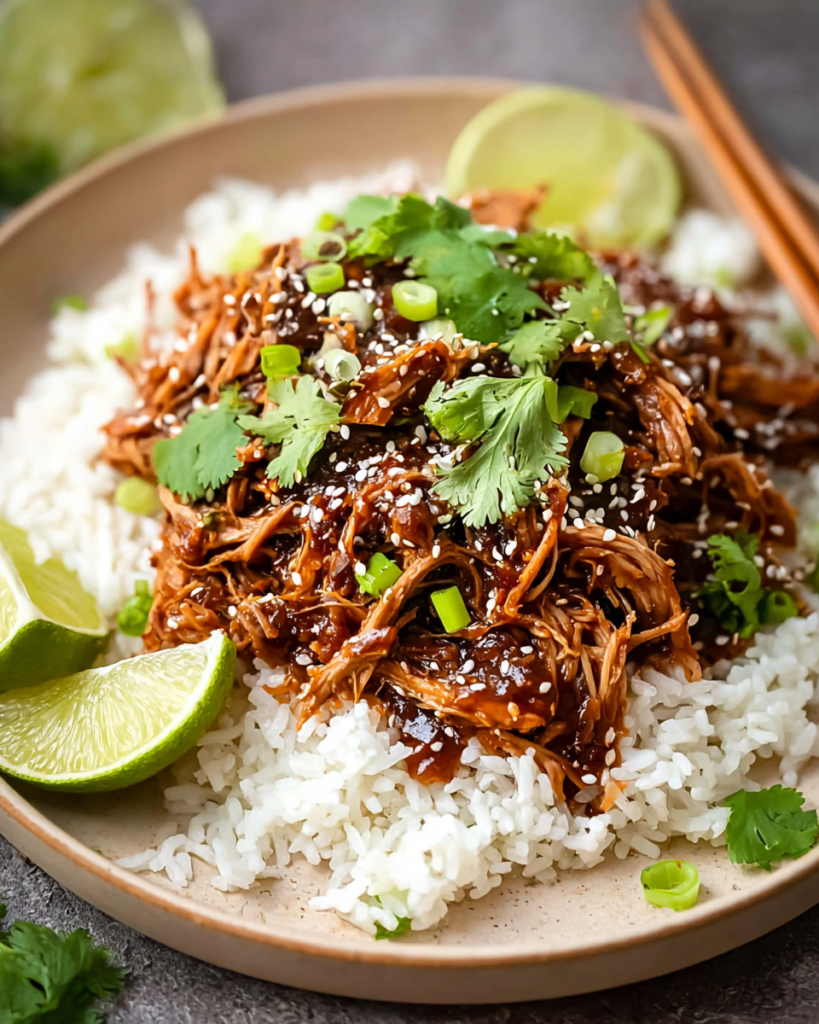
Serving Ideas for Asian Braised Pork Shoulder
Steamed jasmine rice is the most natural pairing because it absorbs the savory juices without competing with the pork. It also gives all the bright toppings room to shine.
Quick pickled vegetables are excellent alongside this dish if you want extra crunch and acidity. Even a simple cucumber or carrot pickle can lighten each bite beautifully.
A crisp cabbage slaw works especially well when you want a fresher plate. It adds texture and keeps the meal lively, especially if you are serving the pork family-style.
Helpful Tips
- Cut the pork into fairly even pieces so it braises at the same rate and shreds more consistently.
- Keep the dish tightly covered during the long roast so the meat softens in its own moisture instead of drying out.
- Do not discard all the pan liquid before the final roast, because that little bit of moisture is what keeps the shredded pork succulent.
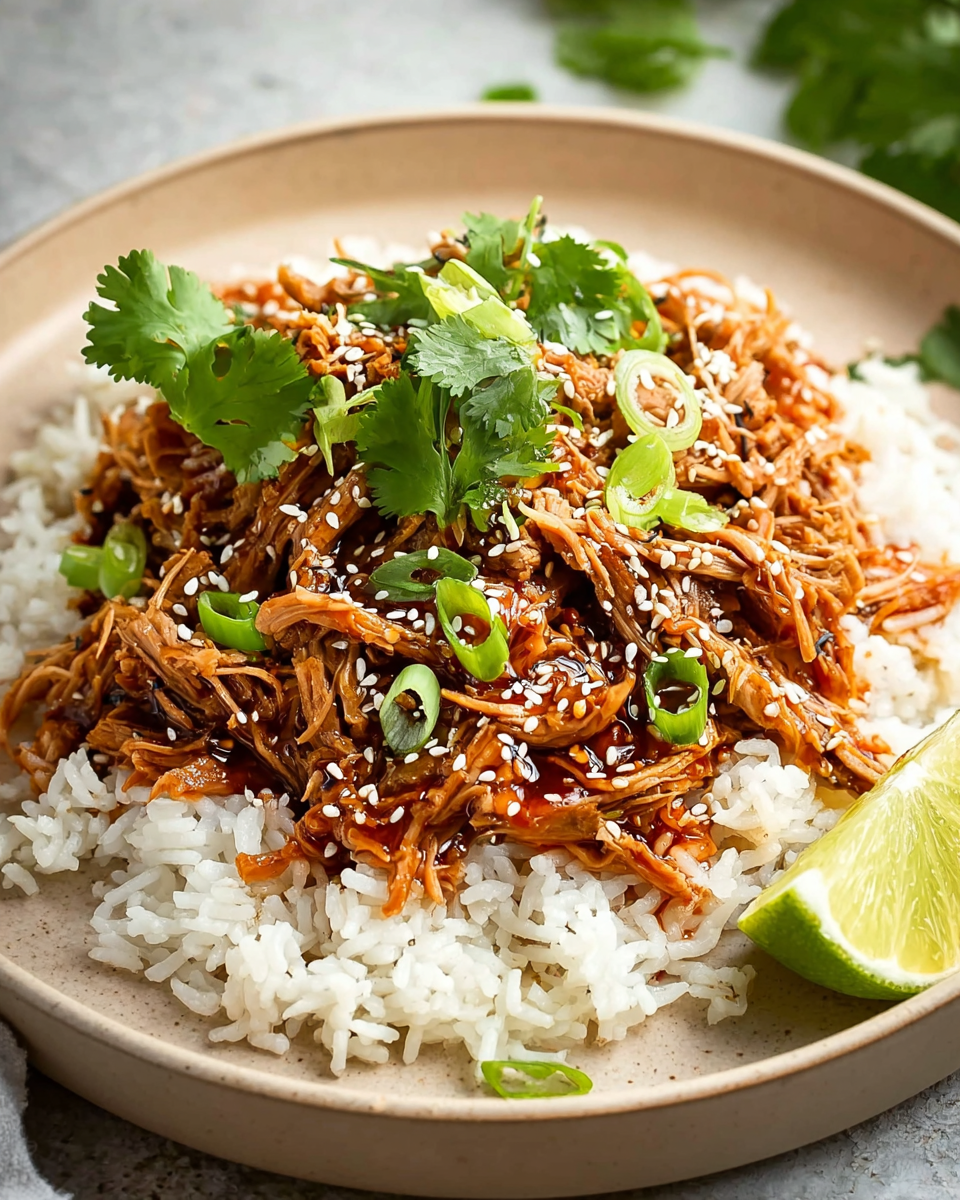
Asian Braised Pork Shoulder
Ingredients
For the pork:
- 3 to 4 pounds pork shoulder preferably Boston butt, cut into 2-inch pieces
- Kosher salt as needed
- Black pepper to taste
For the braising liquid:
- 1 tablespoon fish sauce
- 1/2 cup coconut aminos
- 1/4 cup coconut sugar
- 3 garlic cloves finely minced
- 1/4 cup rice vinegar
- 2 inches fresh ginger minced (about 1 tablespoon)
For serving:
- Fresh cilantro
- Cooked rice
- Chili oil
- Kimchi
- Green onions thinly sliced
- Limes cut for squeezing
Instructions
- Preheat the oven to 325°F.
- In a small bowl or jar, combine the coconut aminos, rice vinegar, coconut sugar, minced garlic, minced ginger, and fish sauce. Whisk thoroughly until the mixture is fully blended.
- Arrange the pork pieces in a casserole dish with the fat side facing upward. Season all sides with kosher salt and black pepper.
- Pour the braising mixture evenly over the pork. Cover the dish with its lid, or seal tightly with aluminum foil if no lid is available.
- Transfer the dish to the oven and roast for 4 hours. Begin checking at the 3 1/2-hour mark; the pork should be tender enough to shred easily.
- Remove the casserole from the oven and raise the oven temperature to 425°F.
- Using two forks, shred the pork directly in the dish, mixing the meat with the rendered juices. If needed, spoon off some of the excess fat, but leave about 1/2 inch of liquid in the dish to keep the pork moist.
- Return the shredded pork to the oven uncovered. Roast for about 20 minutes, or until the edges are lightly browned and crisp without becoming dry.
- Take the dish out of the oven and toss the pork once more in the remaining juices so it is evenly coated.
- Serve the braised pork over cooked rice. Finish with kimchi, sliced green onions, fresh cilantro, a squeeze of lime, and a drizzle of chili oil.


