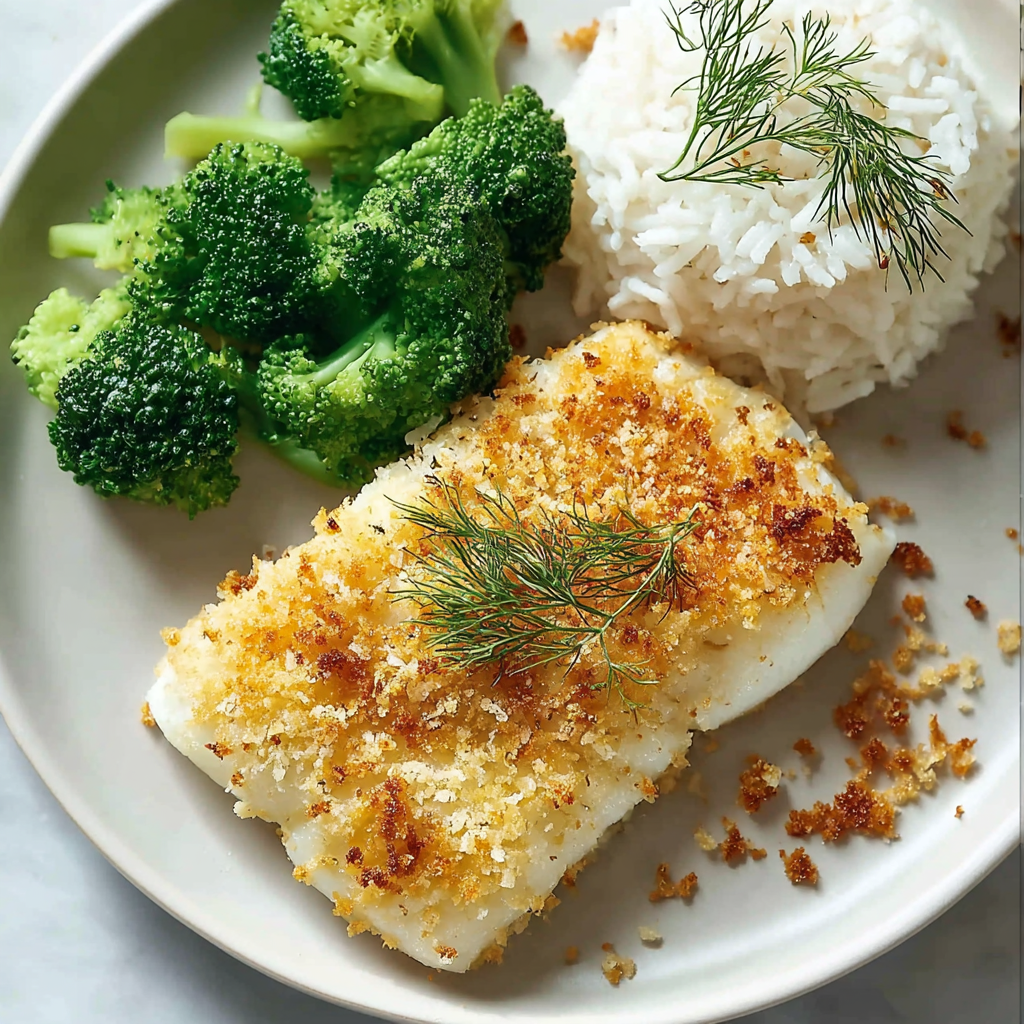
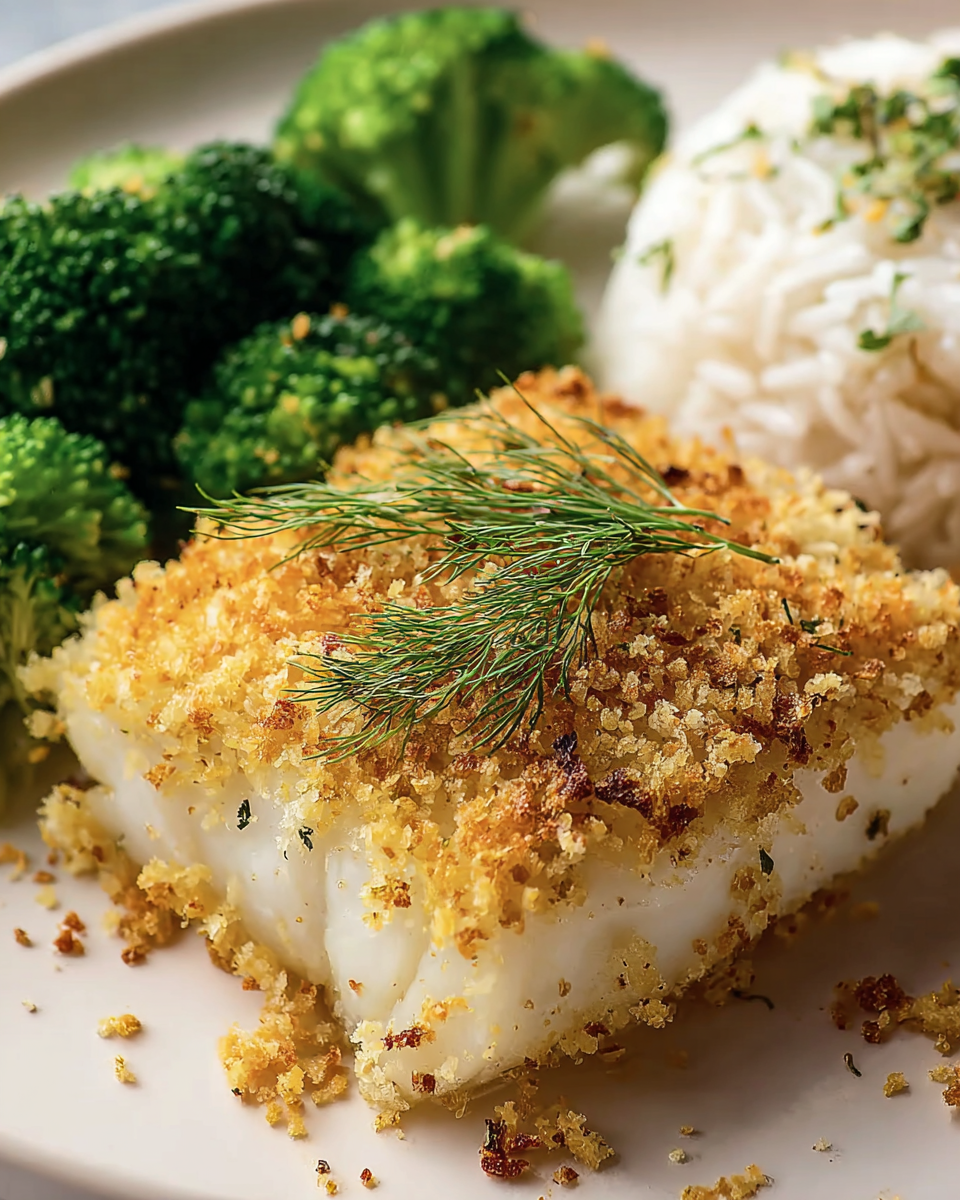
Baked Halibut Bites are a quick, beginner-friendly seafood dinner with a crisp Parmesan-panko topping, bright lemon flavor, and tender flaky fish. They bake fast, feel a little special, and fit busy weeknights without a complicated prep.
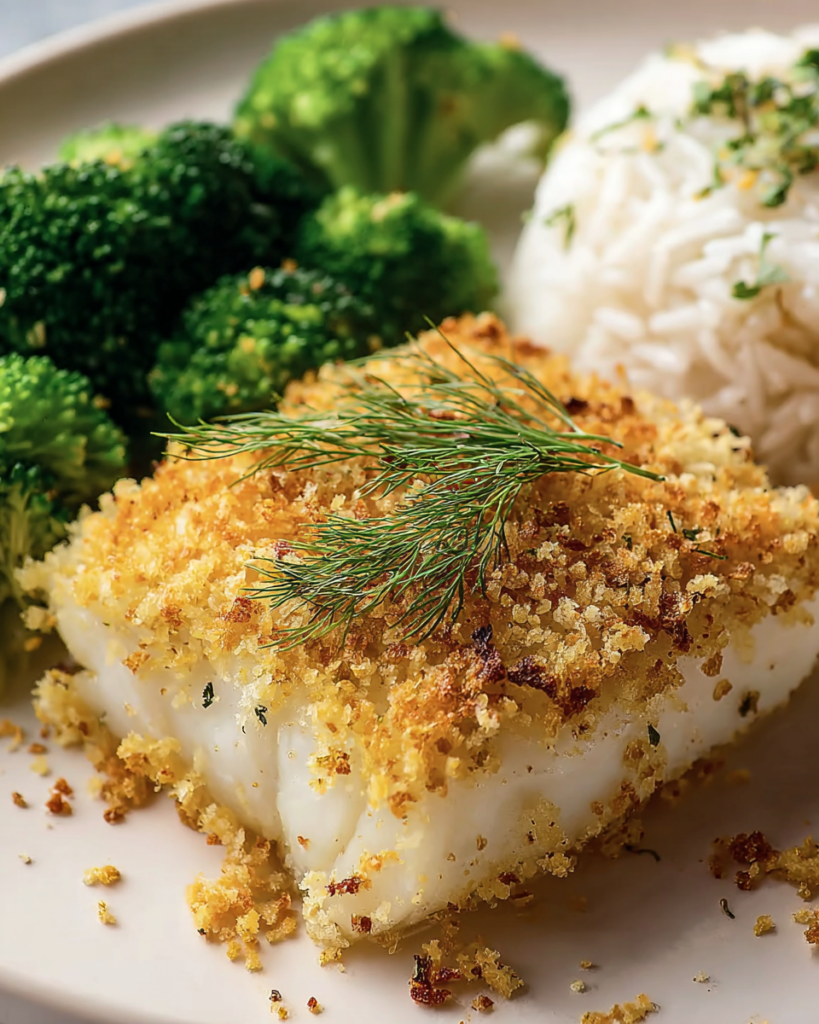
This is the kind of fish dinner that works when you want something lighter but still satisfying. The crust gives you that golden, savory finish that makes baked fish far more exciting than plain fillets, while the Dijon layer keeps everything flavorful and well coated.
What makes this dish so dependable is the contrast. You get a delicate, moist center under a crisp topping that brings texture, saltiness, and just enough richness. A little lemon in the crumb mixture keeps the bites tasting fresh instead of heavy.
It is also a very practical recipe for smaller households. The prep is simple, the ingredient list is short, and the oven does most of the work. Once the fish goes in, dinner is only minutes away.
Baked Halibut Bites Ingredients
Halibut fillets give this dish its clean, mild flavor and firm texture. They hold up beautifully under the topping and bake quickly without drying out when watched closely.
Dijon mustard acts as the flavorful base that helps the crumb coating stick. It adds a subtle tang that wakes up the fish without overpowering it.
Olive oil loosens the mustard slightly so it spreads more easily and helps the crust brown nicely in the oven.
Panko breadcrumbs create the light, crunchy topping. They stay crisp and airy, which is exactly what you want for contrast against tender fish.
Parmesan cheese adds a salty, nutty edge to the crust. It also helps the topping develop a more golden finish as it bakes.
Lemon zest keeps the flavor bright and fresh. Even a small amount makes the crust taste more lively and balanced.
Garlic granules bring a gentle savory depth to the topping. They season the crust without making it too sharp.
Kosher salt and black pepper keep the fish properly seasoned from the inside out and round out the flavor of the topping.
How to Make This Baked Halibut Bites
STEP 1: Start by heating your oven to 400°F. While it warms, stir together the panko, Parmesan, lemon zest, garlic, part of the salt, and a few grinds of black pepper. You want the mixture evenly combined so every bite has the same crisp, savory finish.
STEP 2: In a separate small bowl, whisk the Dijon with the olive oil until smooth. This quick mixture is more than just a coating. It adds flavor, helps the crumbs cling to the fish, and keeps the surface from tasting dry.
STEP 3: Line a baking sheet with parchment and place the halibut on top. Pat the fillets dry very well before seasoning. This matters because excess moisture can soften the topping and keep it from browning the way you want.
STEP 4: Season the fish with the remaining salt and some pepper. Then spread the Dijon mixture over the tops and slightly around the sides. You do not need a thick layer, just enough to lightly coat the surface.
STEP 5: Press the crumb mixture onto each fillet so it forms an even crust. Press gently but firmly so it adheres well. This step gives you the signature texture of the dish, so take a moment to make sure the coating is nicely distributed.
STEP 6: Bake until the halibut is cooked through and the topping is golden, usually about 10 to 12 minutes depending on thickness. The fish should flake easily and reach 145°F in the center. Serve it right away while the crust is crisp and the interior is still juicy.
Perfect Pairings
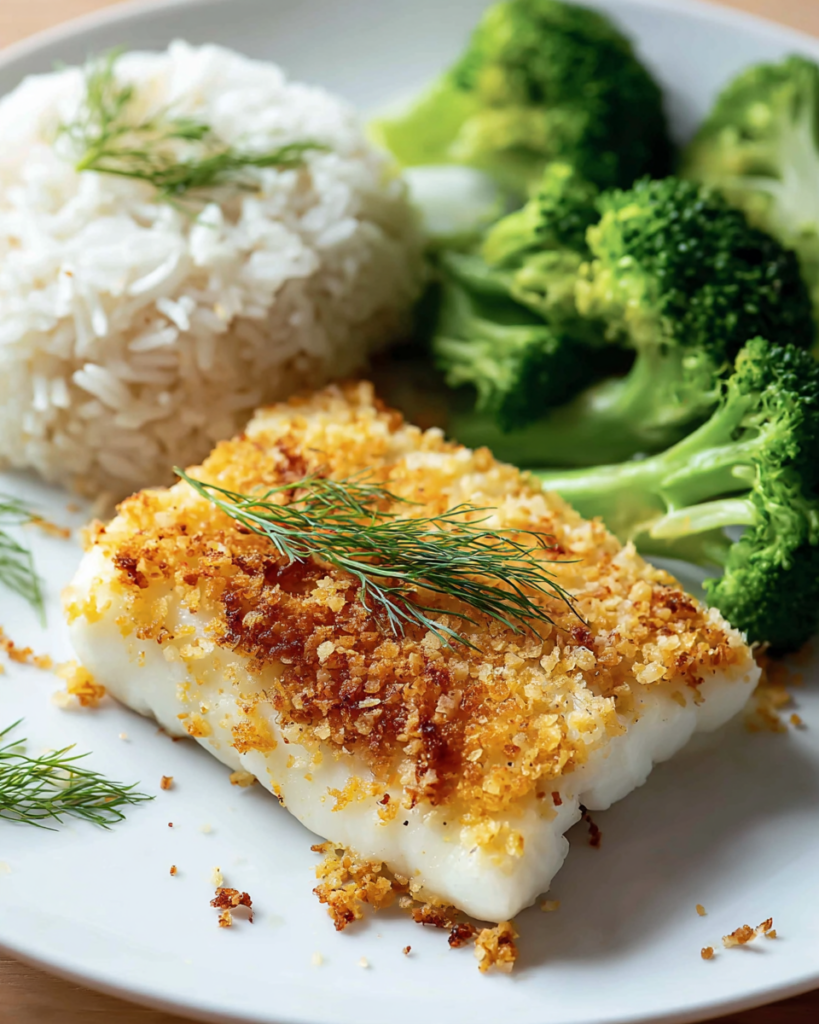
These halibut bites are especially good with simple sides that let the crisp topping stay the star. Roasted asparagus, green beans, or a fresh salad with lemony dressing all work well and keep the plate feeling light.
For something a bit more filling, serve them with baby potatoes, rice pilaf, or buttery couscous. Each one soaks up any little bits of crust and juices from the pan without competing with the fish.
You can also lean into the citrus notes and add lemon wedges at the table. A squeeze right before serving brightens everything and makes the crust taste even fresher.
Can I use another fish instead of halibut?
Yes, a firm white fish works well here. Cod, haddock, or even thick pieces of pollock can take the same topping nicely. Just keep an eye on bake time, since thinner fillets may cook faster than halibut.
How do I know when the fish is done?
The easiest way is to check the center with a thermometer and look for 145°F. Visually, the fish should turn opaque and flake easily with a fork. Pull it from the oven as soon as it is done so it stays moist.
Can I prepare the topping ahead of time?
Yes, the crumb mixture can be stirred together earlier in the day and kept covered until you are ready to cook. For the best texture, wait to spread the Dijon and press on the topping until just before baking.
Why is my topping not turning golden?
Usually that happens when the fish surface is too damp or the crumb layer is packed too loosely. Pat the fillets dry first, use an even coating of mustard, and press the topping on well so it bakes into a crisp crust.
Helpful Tips
- Dry the halibut thoroughly before seasoning so the topping stays crisp instead of steaming.
- Use fillets that are similar in thickness for more even baking and a more reliable finish.
- Serve the fish as soon as it comes out of the oven because the crust is at its best while still hot and freshly crisp.
How to Store & Reheat
If you have leftovers, let the halibut cool slightly, then store it in an airtight container in the refrigerator for up to 2 days. It is best eaten sooner rather than later, since delicate fish and crisp toppings naturally lose some texture over time.
For longer storage, you can freeze it for up to 1 month, though the crust will not stay quite as crisp after thawing. Wrap the pieces well or use a freezer-safe container to protect the fish from drying out.
To reheat, place the halibut on a baking sheet in a moderate oven until warmed through. This helps bring back some of the crispness in the topping. Avoid microwaving when possible, since it can make the crust soft and the fish a little rubbery.
Baked Halibut Bites
Ingredients
For the binder
- 1 tablespoon Dijon mustard Maille brand Dijon preferred
- 1 teaspoon olive oil
For the halibut
- 2 halibut fillets 6 ounces each
- 1 teaspoon kosher salt
- Freshly ground black pepper to taste
For the panko topping
- Finely grated zest of 1/2 lemon
- 1/3 cup grated Parmesan cheese
- 1/2 teaspoon garlic granules McCormick brand used
- 1/3 cup panko breadcrumbs
Instructions
- Preheat the oven to 400°F (200°C).
- In a medium mixing bowl, combine the panko breadcrumbs, Parmesan cheese, lemon zest, garlic granules, half of the kosher salt, and a few grinds of black pepper. Stir until the mixture is evenly blended.
- In a separate small bowl, whisk the Dijon mustard with the olive oil until smooth and fully combined.
- Line a baking sheet with parchment paper. Arrange the halibut fillets on the prepared pan, then pat them dry on both sides with paper towels to remove any excess moisture.
- Season both sides of the fish with the remaining kosher salt and additional black pepper to taste.
- Using the back of a spoon, spread the mustard mixture evenly over the tops of the fillets and lightly down the sides.
- Press the panko mixture firmly onto the mustard-coated surface of each fillet, forming a generous and even crust.
- Bake for 10-12 minutes, or until the halibut reaches an internal temperature of 145°F (63°C) and the topping is golden brown.
- Remove the halibut from the oven and serve at once for the best texture and flavor.