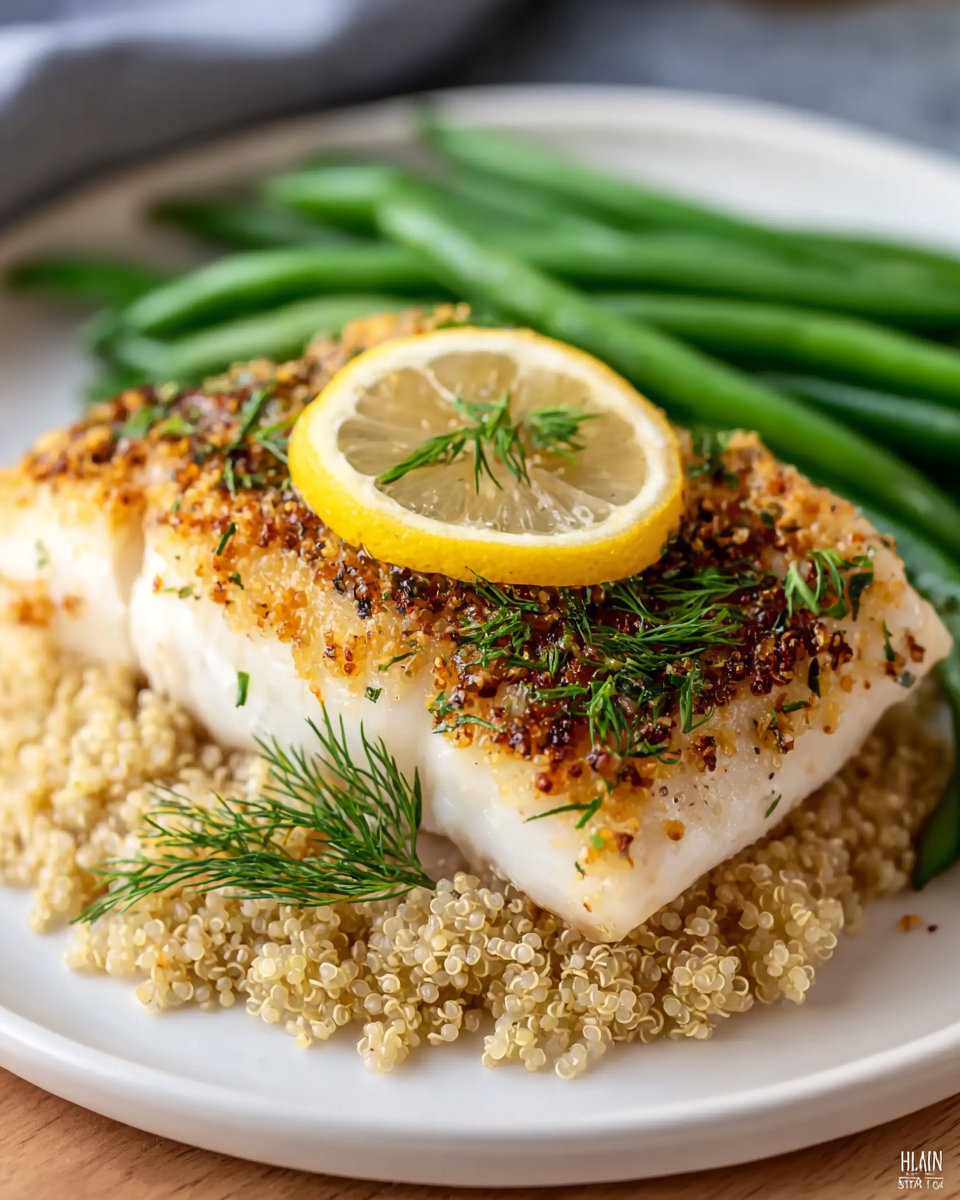
Baked Halibut with Lemon and Dill is a quick, fresh, dependable dinner with tender flaky fish, bright citrus, and a clean herb finish. It feels polished enough for company but stays simple enough for a weeknight meal.
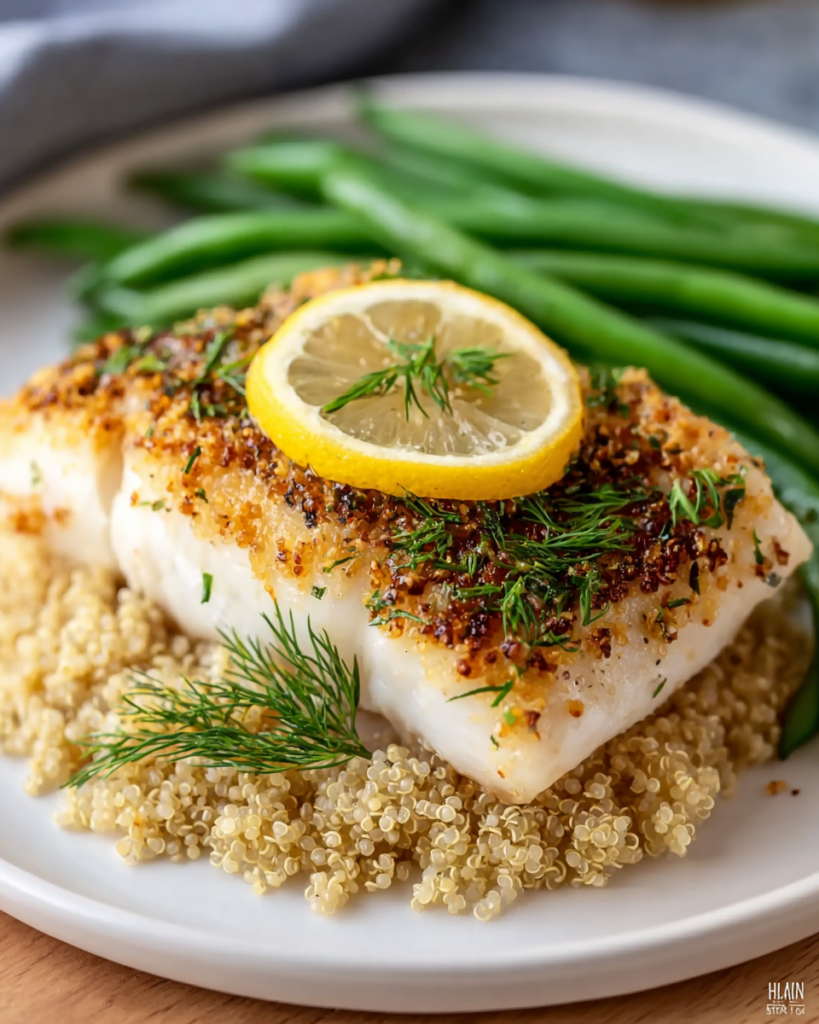
This is the kind of fish dinner that works when you want something lighter on the table without sacrificing flavor. The oven does most of the work, and the prep is minimal, so you can get everything ready without turning the kitchen upside down.
Lemon, garlic, parsley, and dill are a natural match for halibut because they lift its mild, delicate flavor instead of covering it up. You get a savory baked fish with plenty of freshness, a little warmth from the spices, and a finish that tastes crisp and clean.
Another reason this dish is so reliable is the method. A quick seasoning blend, a spoonful of herb mixture over each fillet, and a short bake at high heat are enough to keep the fish moist while giving it plenty of flavor on top.
What You Need to Make This Baked Halibut with Lemon and Dill
Halibut fillets bring the heart of the dish. Thick fillets work especially well here because they stay meaty and tender in the oven while still baking fairly quickly.
Lemon juice and lemon zest build the bright citrus flavor in two ways. The juice adds freshness, while the zest gives the fish a deeper lemon aroma that holds up beautifully during baking.
Fresh dill gives the dish its distinctive herbal finish. It adds a soft, slightly grassy note that pairs especially well with mild white fish.
Fresh parsley rounds out the herb mixture and keeps the topping tasting balanced and vibrant rather than too sharp or too strong.
Garlic adds savory depth. Because it is mixed into the lemon and herbs, it flavors the fish gently instead of overpowering it.
Avocado oil helps the seasoning cling to the fillets and supports even baking. It also keeps the surface from drying out too quickly in a hot oven.
Salt, black pepper, paprika, and garlic powder form a simple seasoning layer that gives the halibut more character without taking it away from the fresh lemon-dill profile.
Lemon slices are optional for garnish, but they make the finished dish look especially inviting and add one more touch of citrus right before serving.
Cooking Steps
STEP 1: Heat your oven to 425°F and prepare a baking dish with either a light coating of spray or a sheet of parchment. This small step helps the fish release easily and makes cleanup much simpler later.
STEP 2: Stir together the lemon juice, lemon zest, minced garlic, parsley, and dill in a small bowl. You want the mixture to look loose, fragrant, and evenly combined so every spoonful brings a little of each flavor.
STEP 3: In another bowl, combine the salt, black pepper, paprika, and garlic powder. Mixing the dry seasonings separately helps you distribute them more evenly over the fish instead of ending up with heavier spots in some places.
STEP 4: Place the halibut fillets in the baking dish and brush the tops lightly with avocado oil. Scatter the seasoning blend over the fish, making sure each fillet gets a good, even coating across the surface.
STEP 5: Spoon the lemon-herb mixture over each fillet, letting some of it rest right on top and some fall around the sides. Add lemon slices over the fish if you like a little extra citrus aroma while it bakes.
STEP 6: Bake the halibut until the flesh turns opaque and flakes easily at the thickest part, which will usually take about 12 to 16 minutes depending on thickness. Keep an eye on the center of the largest fillet rather than relying only on the clock.
STEP 7: Remove the dish from the oven and serve right away while the fish is still moist and tender. Spoon any herby juices from the baking dish over the fillets before bringing them to the table.
Perfect Pairings
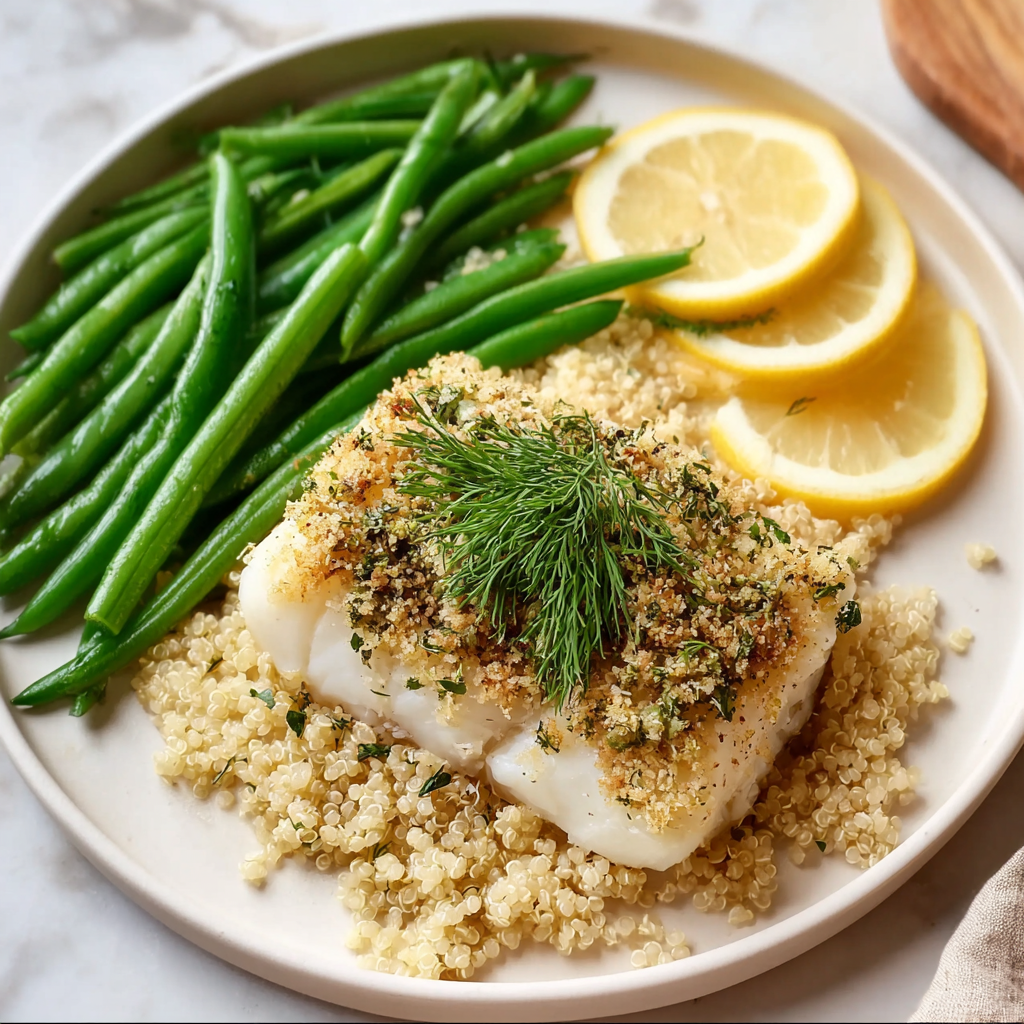
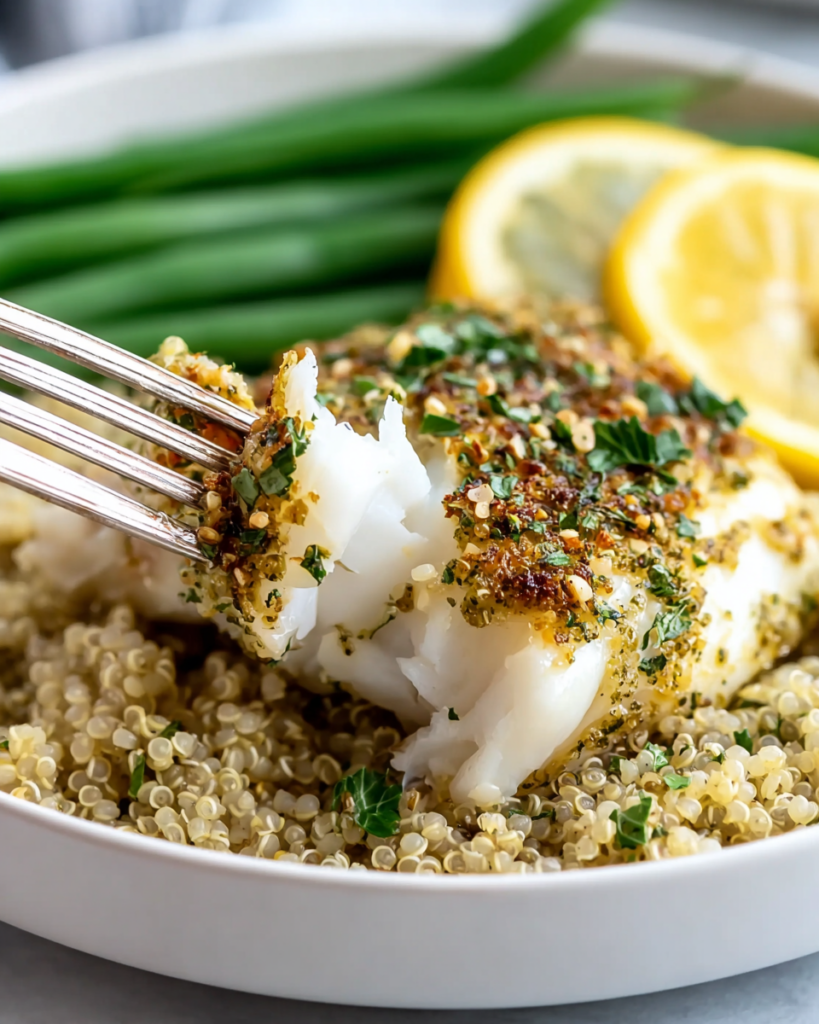
This halibut is especially good with quinoa because the grains soak up the lemony juices without competing with the fish. It turns the plate into a full meal while keeping the overall feel light and fresh.
Roasted or steamed vegetables also fit beautifully here. Green beans, asparagus, broccoli, or zucchini all work well because they echo the clean, simple style of the dish and let the herbs stay front and center.
If you want something a little more comforting, serve it with roasted potatoes or a soft rice pilaf. Both give the flaky fish a more substantial base and make this feel like a dinner you could happily put on repeat.
Can I use frozen halibut for this dish?
Yes, frozen halibut can work well as long as it is fully thawed first and patted dry before seasoning. Too much surface moisture can water down the herb mixture and keep the fish from baking as evenly as fresh or properly thawed fillets.
How do I know when halibut is done baking?
The clearest sign is texture. The flesh should turn opaque and separate easily with a fork at the thickest point. If you press gently with the fork and it still looks glossy and resistant in the center, it needs a little more time.
Can I prepare the lemon and herb topping ahead?
Yes, you can mix the lemon, garlic, parsley, and dill a few hours ahead and keep it chilled. That can make dinner prep even faster. I would wait to season and assemble the fish until just before baking so everything stays fresh and bright.
What if my fillets are thinner than one inch?
Thinner pieces will cook faster, so start checking them earlier than the recipe time suggests. A thinner fillet may be ready closer to the lower end or even slightly before it. Watching the texture is more useful than following the timer too strictly.
Helpful Tips
- Pat the halibut dry before adding oil and seasoning so the surface holds onto the flavors better and bakes more neatly.
- Do not bury the fish under too much topping. A light, even layer keeps the herbs fresh while still allowing the halibut to bake properly.
- Check the thickest fillet first for doneness, since pieces in the same dish are not always exactly the same size.
Keeping Leftovers Fresh
Leftover halibut should be cooled and refrigerated in an airtight container. It is best within about 2 days, while the texture is still pleasant and the herbs still taste fresh.
For reheating, use gentle heat rather than a very hot oven or microwave setting. A low oven works well for preserving moisture, and a short reheating time helps prevent the fish from becoming dry or tough.
Freezing is possible, but baked fish is at its best when enjoyed fresh or from the refrigerator. If you do freeze it, wrap it well and thaw it in the fridge before reheating gently. The flavor will still be good, though the texture may be a little softer than when first baked.
Baked Halibut with Lemon and Dill
Ingredients
- 4 halibut fillets about 8 ounces each and roughly 1 inch thick, preferably freshly caught
- 2 tablespoons freshly squeezed lemon juice
- 1 tablespoon avocado oil
- 3 garlic cloves finely minced
- 1/4 cup fresh parsley chopped very finely
- 1/4 cup fresh dill coarsely chopped
- 1 tablespoon lemon zest
- 1/2 teaspoon salt
- 1/2 teaspoon black pepper
- 1/4 teaspoon paprika
- 1/4 teaspoon garlic powder
- Lemon slices for garnish
Instructions
- Preheat the oven to 425°F. Lightly coat a baking dish with cooking spray or line it with parchment paper to help prevent sticking and to simplify cleanup.
- In a small bowl, combine the chopped parsley, dill, minced garlic, lemon juice, and lemon zest. Stir until the mixture is evenly blended, then set it aside.
- In a separate small bowl, mix the salt, black pepper, paprika, and garlic powder to create the seasoning blend.
- Brush the top of each halibut fillet with avocado oil. Sprinkle the seasoning mixture evenly over the fillets, then arrange them in the prepared baking dish, skin side down if the fillets have skin.
- Spoon the reserved lemon-herb mixture over the top of each fillet. Arrange lemon slices over the fish as desired for additional citrus flavor.
- Transfer the dish to the oven and bake for 12 to 16 minutes, depending on the thickness of the fillets. The halibut is ready when the flesh turns opaque and flakes easily with a fork at the thickest part.
- Remove the baked halibut from the oven and serve immediately, preferably with cooked quinoa and a side of vegetables.