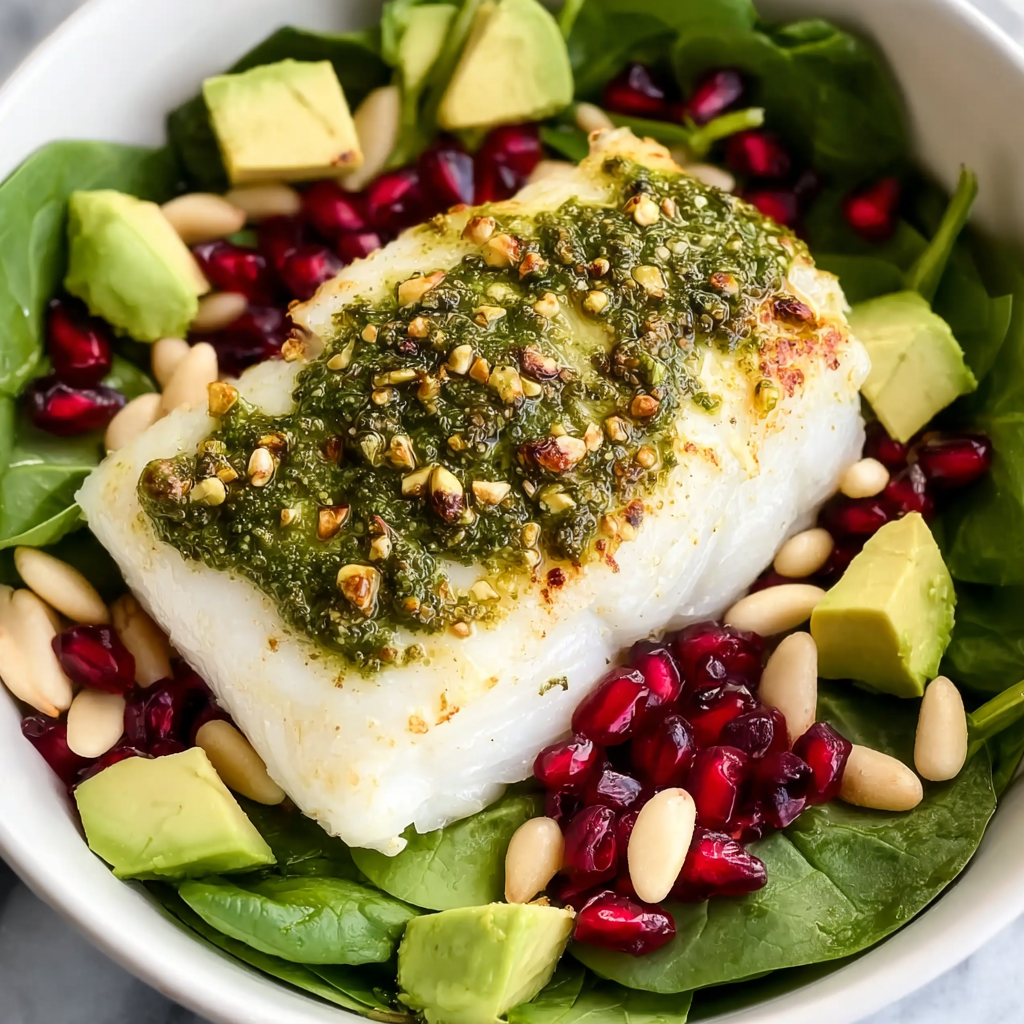
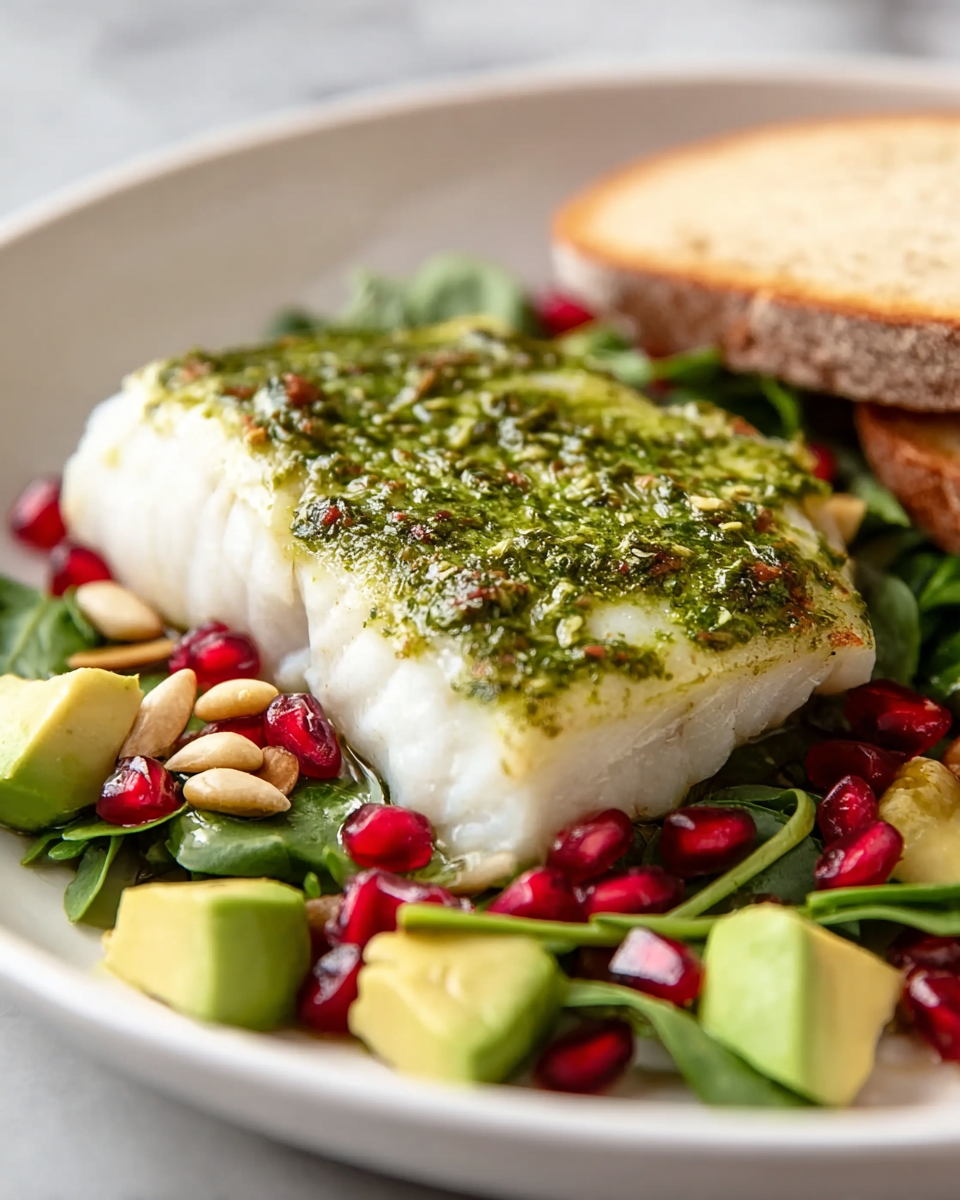
Baked Halibut with Pesto is a quick, buttery seafood dinner with fresh basil flavor, flaky texture, and dependable results. It fits busy weeknights and casual entertaining alike, and the make-ahead option helps you get supper on the table with less last-minute work.
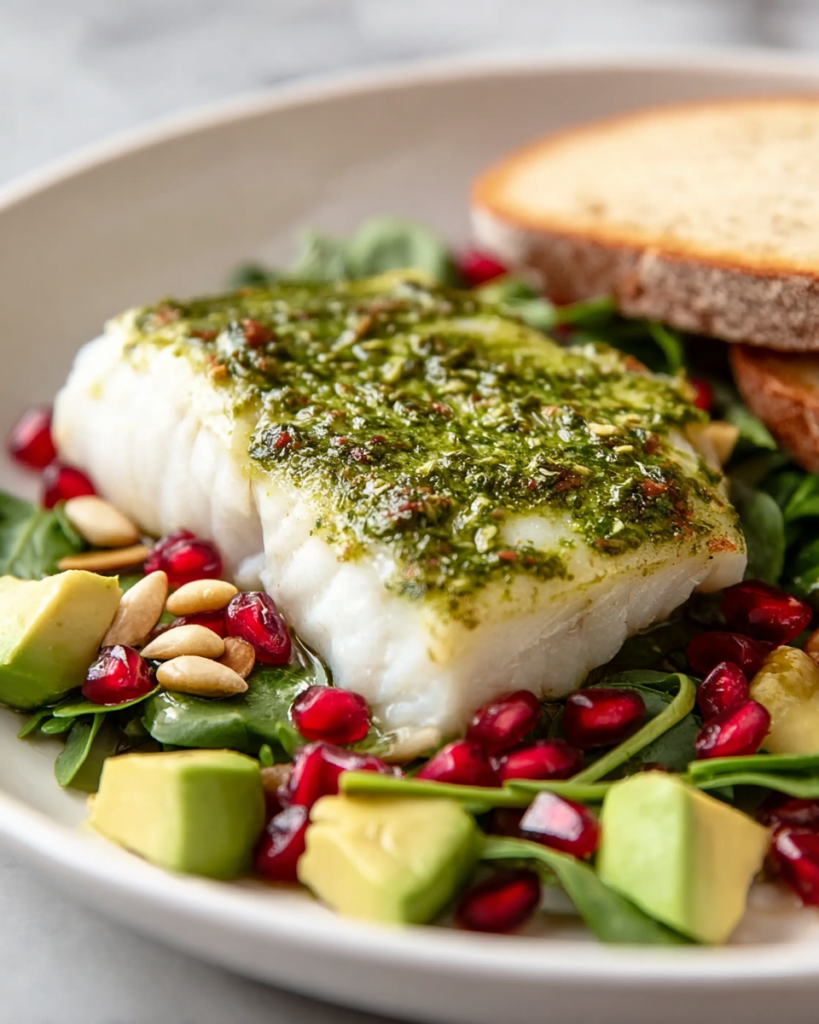
This is the kind of fish dinner that feels a little special without asking much from you. The halibut stays delicate and tender, while the pesto brings in richness, color, and a bright herb finish that makes the whole dish taste fresh.
What makes this one work so well is its simplicity. A little melted butter helps the fish stay moist, and the pesto forms a flavorful top layer that protects the fillets as they bake. You get big flavor from a very short ingredient list.
It is also a practical recipe to keep in your kitchen rotation. You can make the pesto yourself for a more homemade feel, or use prepared pesto when you want dinner to move even faster. Either way, the result is a clean, satisfying main dish that pairs with all kinds of sides.
What You Need to Make This Baked Halibut with Pesto
Halibut fillets are the centerpiece here, and their mild flavor makes them a perfect match for pesto. Choose pieces that are similar in thickness so they cook at the same pace.
Butter melts into the baking dish and lightly coats the fish, adding richness and helping keep the fillets tender as they bake.
Fresh basil leaves give the pesto its bright, classic flavor. They bring freshness that balances the richer notes from the cheese and oil.
Garlic adds a savory backbone to the pesto. It does not need much, but it makes the finished fish taste fuller and more aromatic.
Pine nuts give the sauce a soft, buttery nuttiness. They help round out the pesto and give it that traditional texture.
Parmesan cheese adds saltiness and depth. It also helps the pesto cling to the top of the fish instead of sliding off.
Olive oil blends the pesto into a spoonable, spreadable sauce. It carries the basil flavor through every bite.
Prepared pesto is a handy shortcut when you want the same flavor with less prep. This recipe works well with homemade or store-bought.
Perfect Pairings
Roasted baby potatoes are an easy side because they soak up any extra butter and pesto from the plate. Their crisp edges and soft centers make a great contrast to the flaky fish.
Steamed green beans or asparagus keep the meal feeling light and fresh. A simple squeeze of lemon on the vegetables ties everything together without competing with the pesto.
Rice or orzo works beautifully when you want something simple and filling. The grains catch the flavorful juices from the fish, so nothing good gets left behind.
Cooking Steps
STEP 1: Start by making the pesto if you are going homemade. Blend basil, garlic, pine nuts, olive oil, and Parmesan until the mixture is combined but still has a little texture. You want it smooth enough to spread, but not completely pureed.
STEP 2: Heat your oven to 400°F. Place the butter in a baking dish large enough to hold the halibut in a single layer, then set the dish in the oven just until the butter melts.
STEP 3: Arrange the halibut in the warm, buttered dish and turn each piece once so both sides are lightly coated. If your fillets have skin, leave them skin-side down after turning so the pesto stays on the flesh side.
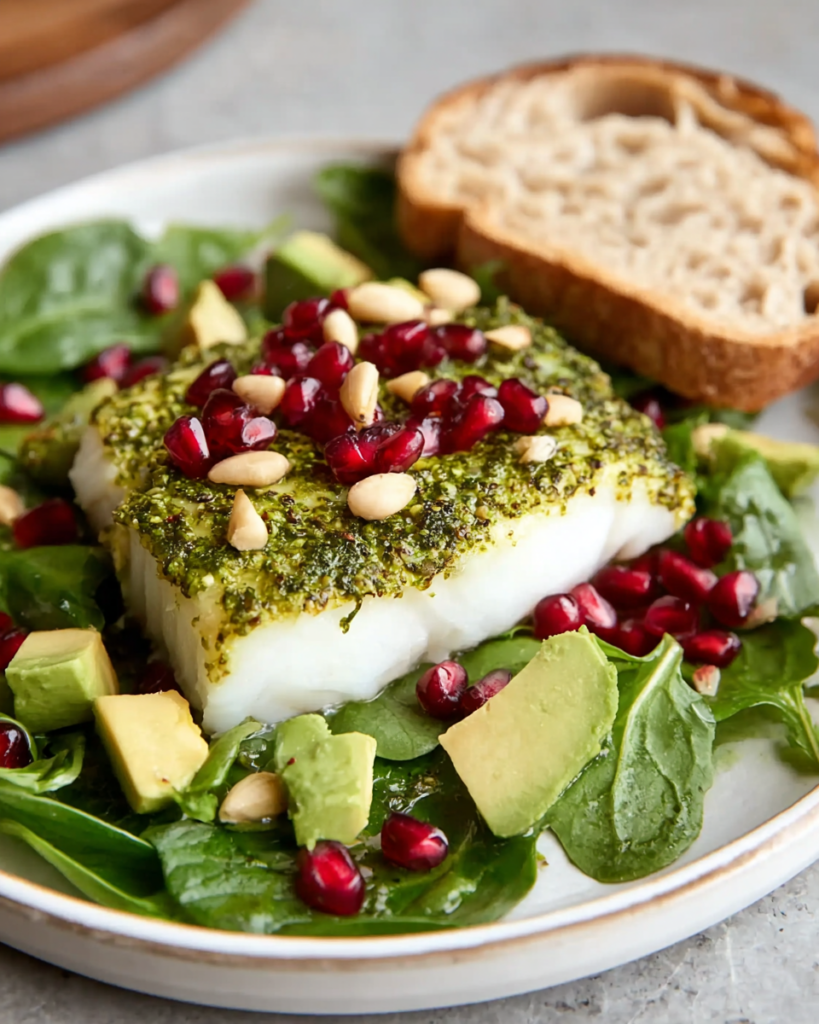
STEP 4: Spoon or brush the pesto over the top of each fillet in an even layer. Cover the surface well, but do not pile it on so thickly that it weighs the fish down. At this point, you can refrigerate the prepared dish for several hours if you want to get ahead.
STEP 5: Bake the halibut until it turns opaque and flakes easily with a fork. Depending on thickness, that usually takes about 15 to 20 minutes. Thin pieces will finish faster, so begin checking on the early side.
STEP 6: Take the fish out as soon as it is done. Halibut is at its best when it is just cooked through, not dry or overbaked. Let it sit for a minute or two, then serve it right away while the butter and pesto are still glossy.
STEP 7: For the alternate slow cooker method, set each buttered and pesto-topped fillet on a sheet of foil and seal it into a packet. Place the packets in the slow cooker and cook according to your card directions until the fish is tender and cooked through, then open the packets carefully because the steam will be very hot.
Can I use store-bought pesto for this dish?
Yes, and it is a very good shortcut when you need dinner fast. A prepared pesto keeps the recipe convenient, while homemade pesto gives you a brighter basil flavor and a little more texture. Both work well with halibut.
How do I know when halibut is done baking?
The fish should look opaque all the way through and separate into gentle flakes when tested with a fork. The flesh should still look moist, not dry. Because halibut thickness varies, it is better to check early than risk overcooking.
Can I prep this ahead of time?
Yes. Once the fish is coated with butter and topped with pesto, you can cover the dish and refrigerate it for up to 12 hours before baking. That makes it especially useful for a dinner party or a busy evening meal.
Is the slow cooker version worth trying?
It can be a helpful hands-off option when you want a set-it-and-leave-it approach. The texture will be softer than the oven version, so the baked method is usually better if you want a firmer, flakier finish.
Helpful Tips
- Use fillets that are close in size and thickness so they finish cooking evenly.
- Spread the pesto over the top only, rather than mixing it into the butter, so the herb flavor stays concentrated on the fish.
- Pull the halibut from the oven as soon as it flakes easily, because it can go from tender to dry fairly quickly.
Keeping Leftovers Fresh
Leftover halibut is best stored in an airtight container in the refrigerator for up to 2 days. Reheat it gently in a low oven or covered skillet just until warmed through, since high heat can dry it out fast. A microwave works in a pinch, but use short bursts at reduced power.
Freezing is possible, but it is not the first choice for this dish because cooked halibut can lose some of its delicate texture after thawing. If you do freeze it, wrap it well and use it within about 1 month for the best quality. For the freshest flavor and texture, this fish is really at its peak when served right after cooking.
Baked Halibut with Pesto
Ingredients
- 1 tablespoon unsalted butter such as Kerrygold
- 2 garlic cloves roughly chopped
- 1/2 cup grated Parmesan cheese
- 2 cups firmly packed fresh basil leaves
- 1/2 cup olive oil
- 1.5 to 2 pounds halibut fillets
- 2 tablespoons pine nuts
- 1/4 cup pesto sauce either homemade or store-bought
Instructions
- To make the pesto, place the basil, chopped garlic, pine nuts, olive oil, and Parmesan cheese into a blender or food processor. Blend until the mixture is combined but still slightly textured, then set it aside.
- Preheat the oven to 400°F.
- Add the butter to a casserole dish large enough to hold the halibut in a single layer. Set the dish in the oven briefly, just until the butter has melted.
- Remove the dish from the oven and arrange the halibut fillets in the melted butter. Turn each piece once so both sides are lightly coated. If the fillets have skin, leave them skin-side down after turning.
- Spread or brush the pesto evenly over the exposed top side of the fish. At this stage, the fillets may be covered and refrigerated for up to 12 hours before baking.
- Bake for 15 to 20 minutes, depending on the thickness of the fillets. The halibut is done when it is opaque throughout and separates easily into flakes. Serve at once.
- For the slow cooker version, place each halibut fillet on a sheet of aluminum foil large enough to fold into a sealed packet.
- Melt the butter, brush it generously over the fillets, and spoon the pesto over the top of each piece.
- Fold the foil securely around the fish to form packets, then place them in the slow cooker, stacking them if necessary.
- Cook on low for 7 to 8 hours or on high for 3 1/2 to 4 hours, until the fish is tender and fully cooked through.
- Carefully lift the foil packets from the slow cooker and let them rest briefly before opening, as hot steam will escape. Transfer the halibut to plates and serve immediately.
Notes
Slow cooker performance can differ by appliance, so adjust the cooking time as needed.
The fish is best served as soon as it is cooked for the finest texture and flavor.