Baked Halibut with Vegetables is a quick, fresh, beginner-friendly dinner that brings together flaky fish, juicy tomatoes, tender green beans, and a bright lemon-garlic finish in one pan. It is simple enough for a weeknight, yet polished enough to serve when you want something light and impressive.
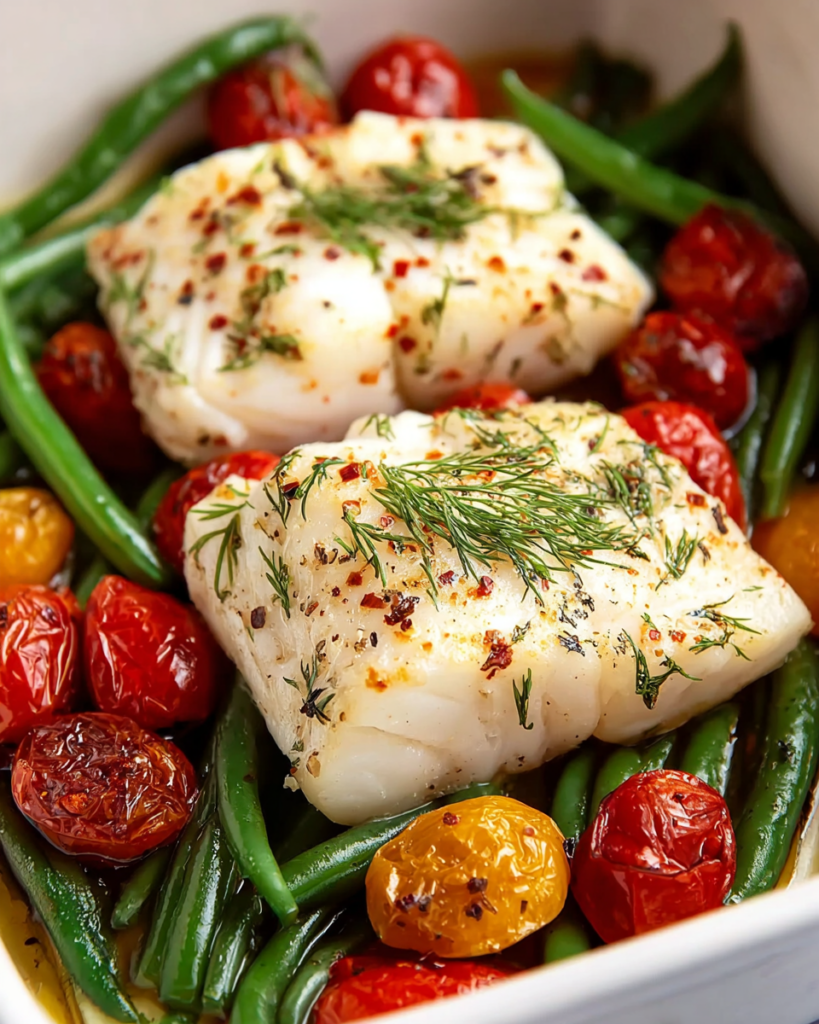
This is the kind of meal that makes seafood feel approachable in your kitchen. Everything goes into one baking dish, the vegetables form a flavorful base, and the fish cooks right on top so the whole pan tastes layered and balanced.
The combination of dill, oregano, coriander, lemon, and garlic gives the dish a clean, herb-forward profile without making it fussy. You get freshness from the vegetables, richness from the olive oil, and a delicate texture from the halibut that feels satisfying without being heavy.
It also helps that the method is very straightforward. Once the fish is seasoned and the vegetables are coated, the oven does the rest, leaving you with a colorful main course that looks beautiful spooned straight from the dish.
Baked Halibut with Vegetables Ingredients
Halibut fillet is the star here, offering a mild, clean flavor and a firm texture that stays tender when baked in chunks.
Green beans add body and a fresh snap, giving the dish a sturdy vegetable base that holds up well in the oven.
Cherry tomatoes soften as they roast and release juices that mingle with the lemon and olive oil for a light pan sauce.
Yellow onion brings sweetness and savoriness, especially once it bakes down beneath the fish.
Extra-virgin olive oil helps the vegetables roast instead of dry out, while also carrying the herb and citrus flavors through the whole dish.
Dill gives the halibut a classic seafood-friendly herbal note that tastes especially fresh with lemon.
Dried oregano adds earthy depth, and crushing it before mixing helps release more aroma into the seasoning blend.
Ground coriander adds a subtle citrusy warmth that rounds out the herbs without overpowering the fish.
Seasoned salt keeps the fish flavorful and helps the vegetables taste more vivid once everything roasts together.
Freshly ground black pepper adds gentle heat and sharper aroma, which makes a real difference in a simple baked dish like this.
Lemon zest and juice bring brightness and lift, cutting through the richness of the olive oil and waking up the baked vegetables.
Fresh garlic gives the topping a bold, savory edge and makes the whole pan smell wonderfully inviting as it cooks.
What to Serve with baked halibut with vegetables
Because this dish already includes fish and vegetables, the best pairings are usually simple sides that can catch the flavorful juices without competing with the lemony finish.
A bowl of rice works beautifully when you want something soft and neutral on the side. It absorbs the olive oil, garlic, and tomato juices from the pan and turns the whole meal into something especially comforting.
Roasted or boiled baby potatoes are another great choice. Their mild flavor makes a nice backdrop for the herb-seasoned halibut, and they make the meal feel a bit heartier without changing the clean overall feel of the dish.
Crusty bread is also a smart option, especially if you want a lighter table. It gives you an easy way to scoop up the roasted tomatoes, onions, and lemony juices so none of that flavor goes to waste.
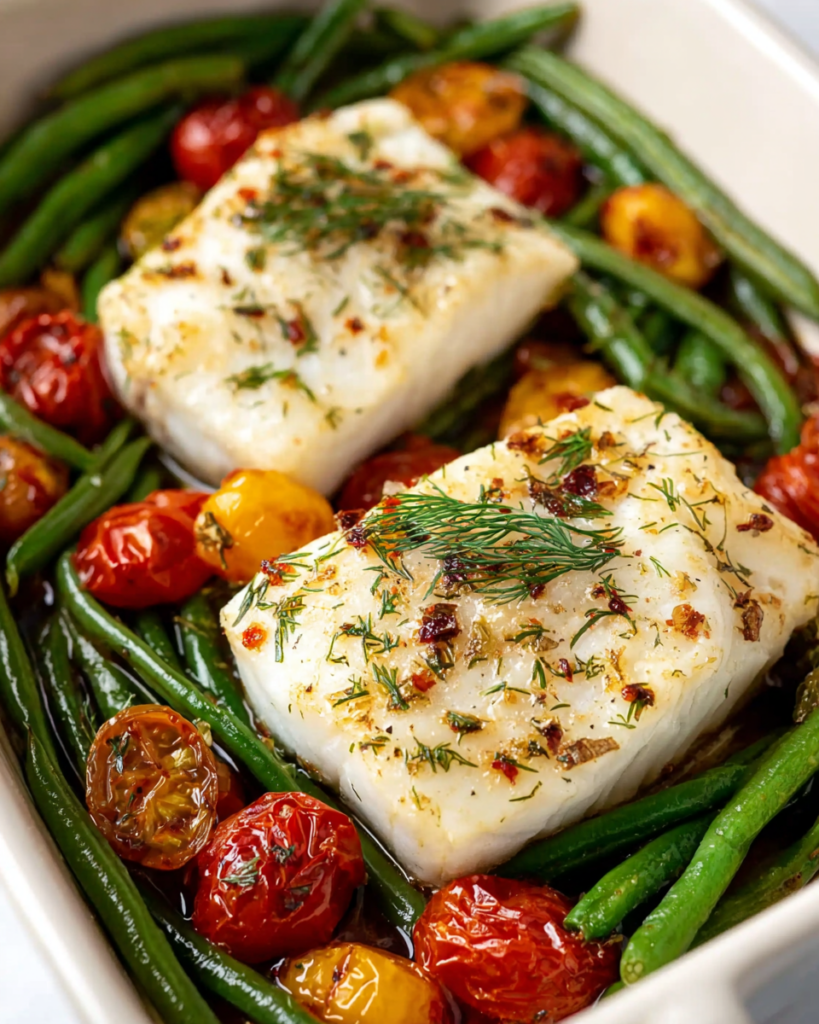
How to Make This baked halibut with vegetables
STEP 1: Preheat your oven to 400°F and cut the halibut into even, bite-size portions. Keeping the pieces close in size helps them bake at the same rate, which is especially useful with a delicate fish like halibut.
STEP 2: In a large bowl, combine the dill, crushed oregano, coriander, seasoned salt, and black pepper. Add the halibut pieces and gently turn them until the seasoning is evenly distributed over the surface of the fish.
STEP 3: Add the green beans, chopped onion, and cherry tomatoes to a large baking dish, then pour over the olive oil. Toss well so the vegetables are fully coated and spread them out into a fairly even layer.
STEP 4: Arrange the seasoned halibut over the vegetables so the fish sits across the top rather than getting buried underneath. This keeps the fish exposed to the oven heat while still letting the vegetables flavor it from below.
STEP 5: Stir together the lemon zest, lemon juice, and freshly minced garlic in a small bowl. Spoon or drizzle this mixture across the fish and vegetables so the citrus and garlic are distributed throughout the dish.
STEP 6: Bake for 20 to 25 minutes, checking near the earlier end of the range if your fish pieces are smaller. The halibut is ready when it flakes easily with a fork and the vegetables are tender but still have some shape.
STEP 7: Let the dish rest for a few minutes before serving. That short pause helps the juices settle in the pan and makes it easier to spoon the fish and vegetables onto plates without breaking up the halibut too much.
Can I use another white fish instead of halibut?
Yes, this method should work well with other firm white fish that can handle baking over vegetables. Just keep in mind that thinner or softer fillets may cook a little faster, so start checking for doneness sooner to avoid drying them out.
Do I need to cut the cherry tomatoes?
Only if they are on the larger side. Small cherry tomatoes can go in whole, but larger ones are better halved so they soften more evenly and release their juices into the pan while the fish bakes.
Can I prepare this dish ahead of time?
You can trim the beans, chop the onion, halve the tomatoes, and mix the lemon-garlic topping ahead of time. For the best texture, it is smarter to season and bake the fish just before serving rather than letting it sit too long once coated.
Why is there so much olive oil in this dish?
The oil helps the vegetables roast properly and creates the glossy, flavorful base that brings the whole pan together. Since the dish includes sturdy vegetables and a lean fish, the olive oil keeps the result from tasting dry or flat.
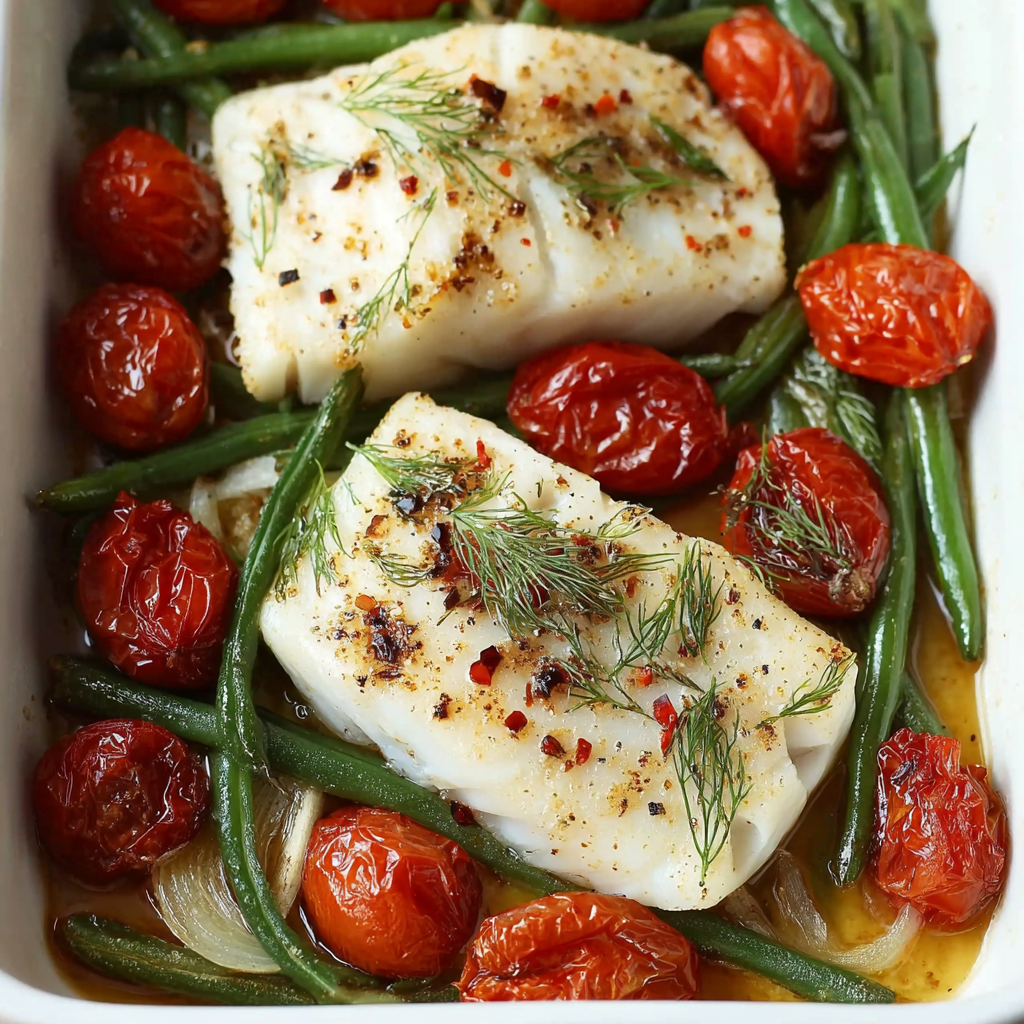
How to Store & Reheat
Store leftovers in an airtight container in the refrigerator once the dish has cooled. It is best enjoyed within 2 to 3 days, while the vegetables still taste fresh and the fish keeps its tender texture.
To reheat, place the halibut and vegetables in a covered baking dish and warm them gently in the oven until heated through. A microwave works for convenience, but use short bursts and lower power if possible so the fish does not turn rubbery.
Freezing is possible, but the texture of baked fish and juicy roasted vegetables is usually best when eaten fresh or from the refrigerator. This is one of those meals that really shines in the first day or two.
Pro Tips for baked halibut with vegetables
- Pat the halibut dry before seasoning so the herbs cling better and the fish bakes with a cleaner surface.
- Crush the dried oregano between your fingers before adding it to the seasoning mix to help release more flavor.
- Start checking the fish early rather than late, because halibut stays much more tender when it is cooked just until it flakes.
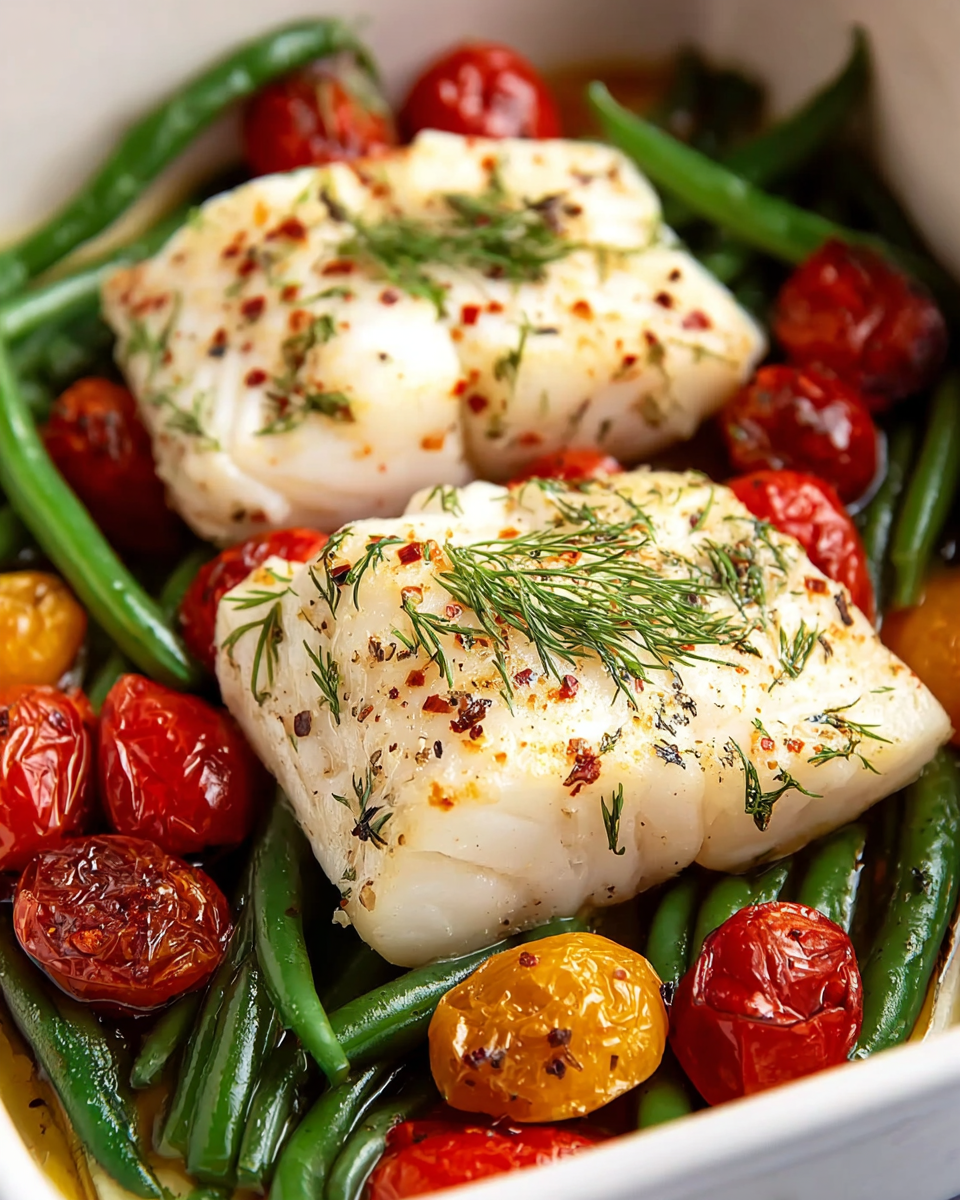
Baked Halibut with Vegetables
Ingredients
- For the vegetables
- 1 pound green beans ends trimmed
- 1 large yellow onion finely chopped
- 1 pound cherry tomatoes halved if large
- 1 cup extra-virgin olive oil
- For the halibut
- 1 1/2 pounds halibut fillet cut into 1 1/2-inch pieces
- 2 teaspoons dill
- 1 teaspoon seasoned salt
- 1 teaspoon dried oregano crushed
- 1/2 to 3/4 teaspoon ground coriander
- 1/2 teaspoon freshly ground black pepper
- For the topping
- Zest and juice of 2 lemons
- 1 1/2 tablespoons freshly minced garlic about 4 cloves
Instructions
- Preheat the oven to 400°F (200°C). Cut the halibut fillet into 1 1/2-inch portions and set aside.
- In a large mixing bowl, combine the dill, crushed oregano, coriander, seasoned salt, and black pepper. Add the halibut pieces and turn them gently until all sides are evenly coated in the seasoning blend.
- Place the green beans, chopped onion, and cherry tomatoes in a large baking dish. Pour the olive oil over the vegetables and toss until they are thoroughly coated.
- Arrange the seasoned halibut pieces evenly over the vegetables in the baking dish.
- In a small bowl, stir together the lemon zest, lemon juice, and minced garlic. Spoon or pour this mixture over the fish and vegetables. Add a little extra seasoned salt at this stage, if desired.
- Transfer the dish to the oven and bake for 20 to 25 minutes, or until the halibut is fully cooked and flakes easily when tested with a fork.
- Remove the baking dish from the oven and allow it to rest for a few minutes before serving.
- Serve warm, with the baked halibut and vegetables spooned directly from the dish.