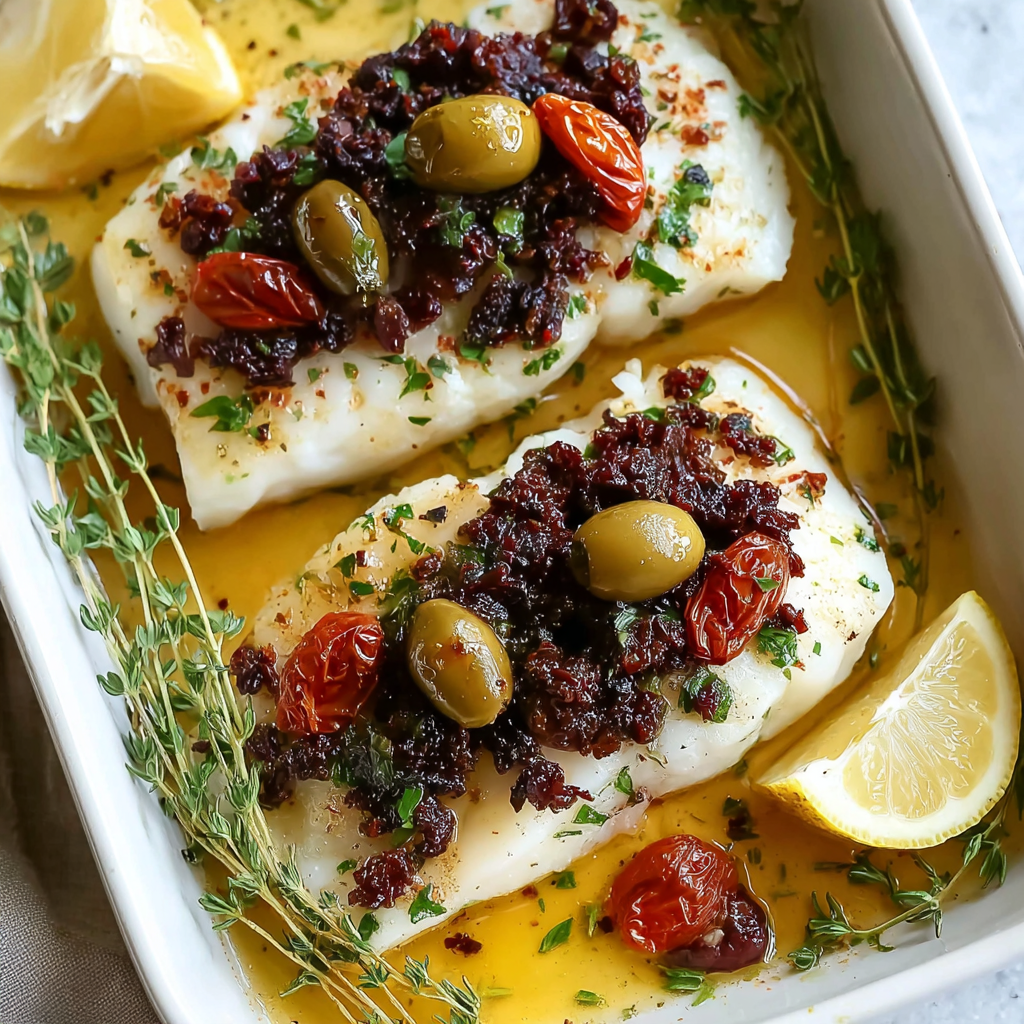
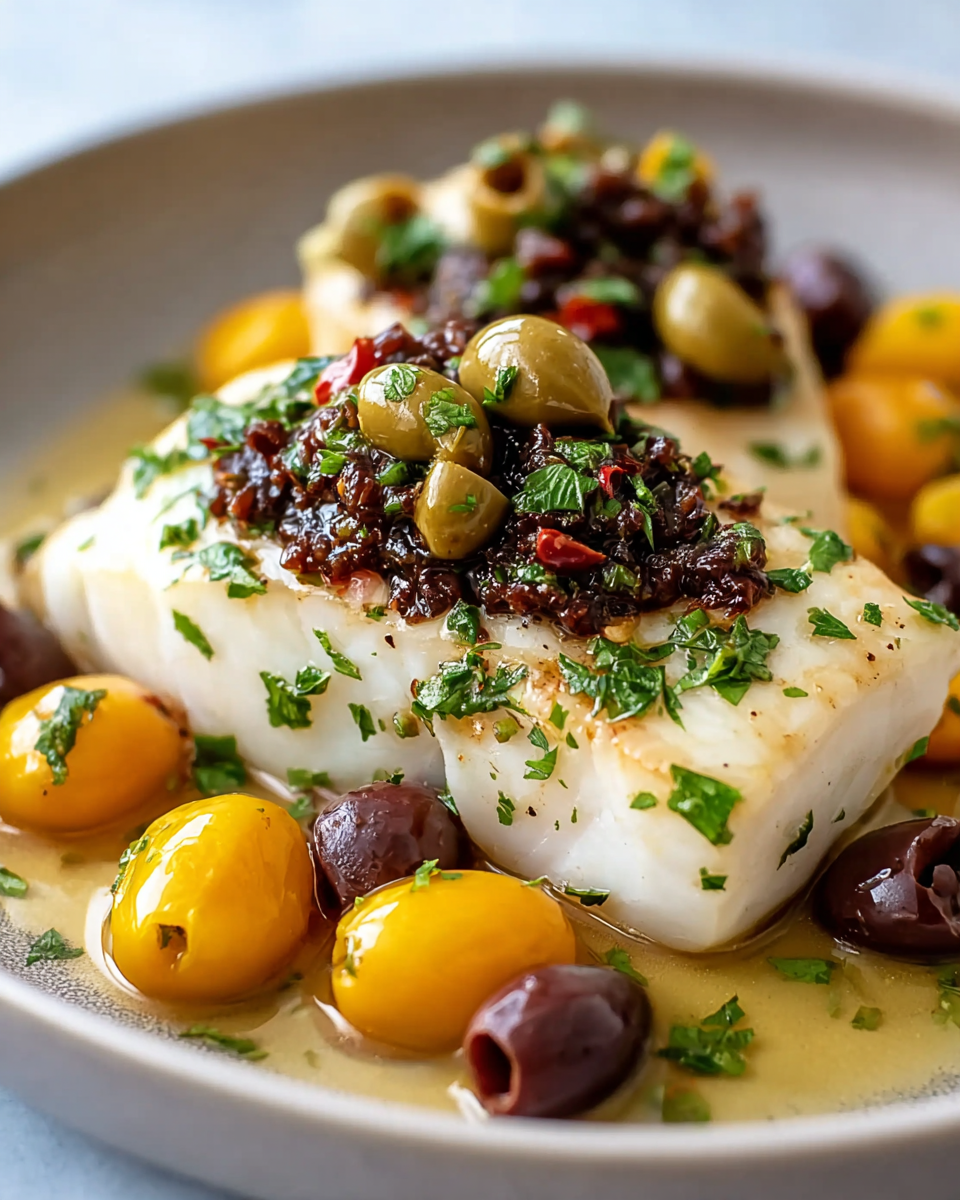
Quick enough for a weeknight and elegant enough for company, Baked Halibut with Wine and Herbs brings together tender fish, a light lemony finish, and the clean flavor of a simple herb-and-wine sauce.
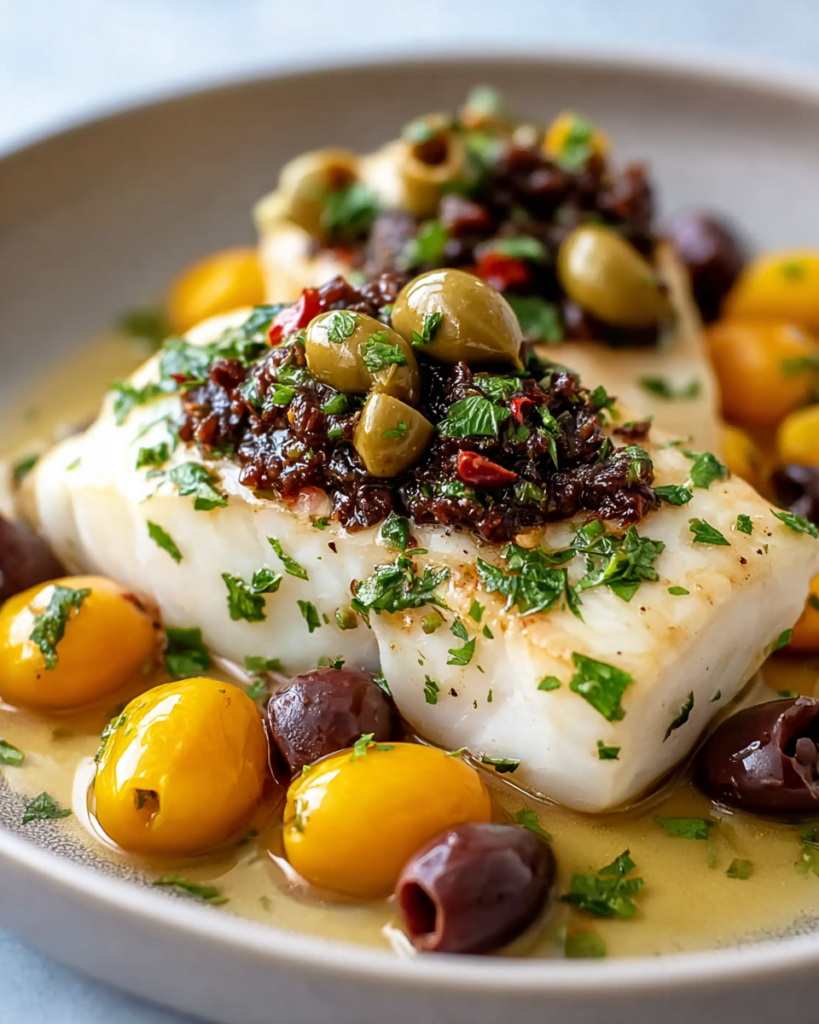
This is the kind of main course that feels refined without making your kitchen feel busy. The halibut bakes over fresh parsley, thyme, bay leaves, and garlic, so the flavor builds gently from the bottom up while the fish stays moist and delicate.
The vermouth gives the dish a subtle depth that tastes polished but not heavy. As the cooking liquid reduces, it turns into a glossy pan sauce with olive oil and lemon juice, which is exactly what makes this meal feel a little special.
It also works beautifully when you want a seafood dinner that does not need a lot of extra fuss. A baking dish, a handful of fresh herbs, and a few pantry basics do most of the work, while the finished plate still looks worthy of a nice dinner table.
Baked Halibut with Wine and Herbs Ingredients
Halibut steaks – Thick halibut steaks are ideal here because they hold their shape well in the oven and stay pleasantly meaty once cooked.
Dry vermouth or dry white wine – This creates the aromatic baking liquid and later becomes the base for the bright finishing sauce.
Extra-virgin olive oil – A portion goes over the fish before baking, and the rest enriches the reduced juices at the end.
Garlic cloves – Lightly crushed garlic perfumes the dish while baking and adds mellow savoriness to the pan juices.
Fresh parsley – Some goes under the fish with the herb bed, and some is reserved for a fresh finish at serving time.
Fresh thyme and bay leaves – These give the halibut its unmistakably fragrant, Mediterranean-inspired backbone.
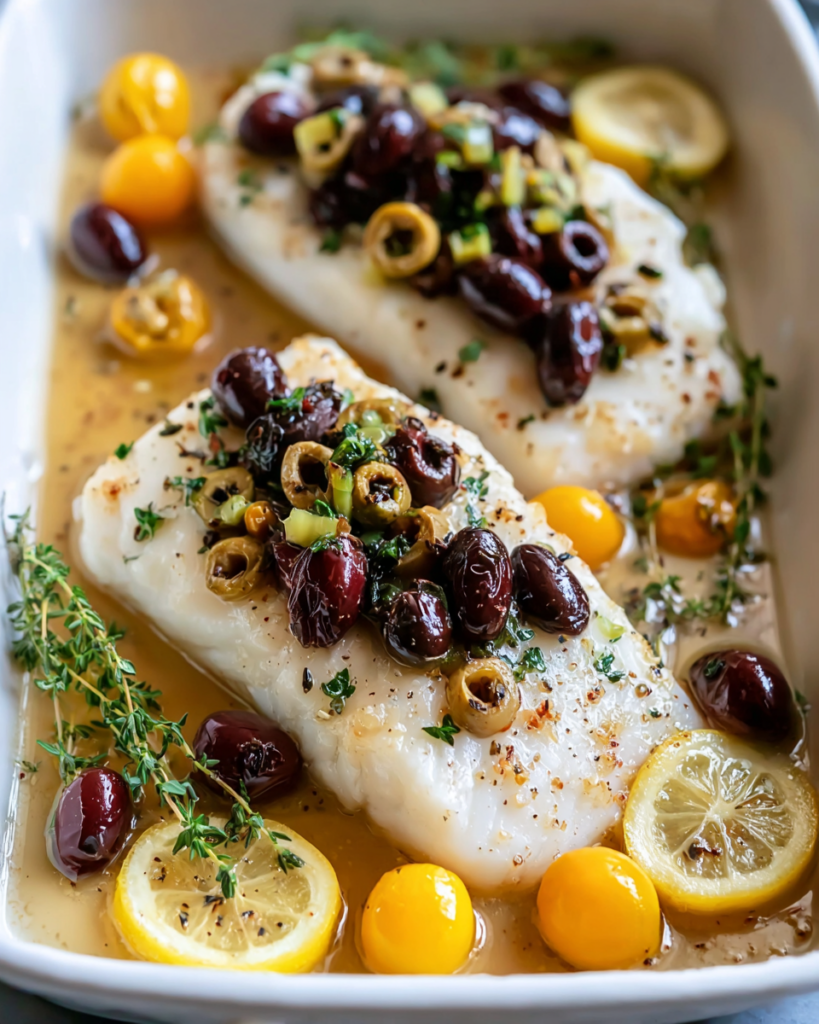
Cherry tomatoes – They are included in the ingredient list and can be nestled around the fish for bursts of sweetness and color.
Lemon juice – A small amount at the end sharpens the sauce and keeps every bite tasting fresh.
Kosher salt and black pepper – Simple seasoning lets the herbs, wine, and halibut stay front and center.
Kalamata olives, lemon zest, and extra thyme – These optional ingredients can be stirred together into a quick olive topping for a briny contrast.
Serving Ideas for Baked Halibut with Wine and Herbs
This halibut is especially good with sides that let the sauce shine. Fluffy rice, couscous, or small roasted potatoes all work well because they catch the lemony pan juices without overwhelming the fish.
For vegetables, keep the flavors clean and direct. Green beans, sautéed spinach, asparagus, or a crisp salad with a light vinaigrette all fit naturally beside the herb-forward sauce.
If you are serving this for a more polished dinner, a bowl of warm grains and a simple green vegetable are usually enough. The fish already brings plenty of flavor, so the best pairings are the ones that stay supportive rather than competing.
How to Make This Baked Halibut with Wine and Herbs
STEP 1: Preheat the oven to 450°F and choose a medium baking dish or gratin dish. Spread parsley, thyme, and bay leaves across the bottom, then scatter the lightly crushed garlic over the herbs to create a fragrant base for the fish.
STEP 2: Pat the halibut dry and season both sides with kosher salt and freshly ground black pepper. Lay the steaks directly on top of the herb mixture so they cook gently over the aromatics instead of sitting in a plain baking dish.
STEP 3: Pour the dry vermouth or white wine around the fish, not directly over the top, then drizzle on half of the olive oil. Cover the dish loosely with foil so the fish bakes in a moist, lightly steamy environment.
STEP 4: Slide the dish into the oven and bake until the halibut turns opaque and flakes with gentle pressure. This usually takes a little over 20 minutes, depending on the thickness of your steaks.
STEP 5: Remove the dish from the oven and carefully pour the cooking juices into a small saucepan. Keep the halibut warm, and if you like, reserve some of the softened garlic and extra thyme for garnish.
STEP 6: Bring the liquid to a boil and let it reduce until it tastes a little more concentrated and looks slightly fuller. Once reduced, whisk in the remaining olive oil and the lemon juice to make a light, glossy sauce.
STEP 7: Transfer the halibut to serving plates, loosening the center bone if needed for easier serving. Spoon the warm sauce over the fish, then finish with the reserved parsley and thyme.
STEP 8: For the optional olive topping, combine the chopped olives with olive oil, thyme, lemon zest, and black pepper. Spoon a little over the plated halibut or serve it on the side so each person can add as much as they like.
Can I use white wine instead of vermouth?
Yes, a dry white wine works very well here. Vermouth gives the sauce a slightly more herbal edge, but a dry wine such as Sauvignon Blanc still keeps the dish bright, clean, and balanced.
Do I have to use the cherry tomatoes?
No, but they make a nice addition. Since the original method does not spell out a separate tomato step, the easiest way to include them is to tuck them around the fish in the baking dish so they soften as the halibut cooks.
How do I know when halibut is done?
The fish should look opaque and separate easily when pressed with a fork. Thick halibut steaks should still feel moist and tender in the center, not dry or stringy. Watching closely near the end helps protect that delicate texture.
Can I make the olive topping ahead?
Yes, that part is very make-ahead friendly. You can mix the olives, thyme, zest, olive oil, and pepper earlier in the day and keep it chilled. Let it sit at room temperature briefly before serving so the flavor opens up.
Helpful Tips
- Keep the foil loose rather than tightly sealed so the halibut stays moist without turning watery.
- Use a baking dish that fits the fish fairly snugly so the wine and juices stay concentrated and reduce into a more flavorful sauce.
- Do not skip the final whisk of olive oil and lemon juice into the reduced pan liquid, because that quick finish is what gives the dish its smooth, bright character.
Keeping Leftovers Fresh
Store leftover halibut in an airtight container in the refrigerator once it has cooled. It is best within 2 days, especially because delicate fish tends to lose some of its texture the longer it sits.
To reheat, place it in a covered baking dish with a spoonful of the leftover sauce and warm it gently in the oven. A low temperature works better than aggressive reheating, which can dry the fish out quickly.
The sauce can also be stored separately and spooned over the fish after warming. That small step helps refresh the dish and brings back some of the moisture and shine it had when first served.
This is not the strongest freezer candidate if texture matters most, so it is better enjoyed fresh or within a short window from the refrigerator.
Baked Halibut with Wine and Herbs
Ingredients
For the halibut
- 2 halibut steaks 1 pound each and about 1 1/4 inches thick
- 3/4 cup dry vermouth or a dry white wine such as Sauvignon Blanc
- 4 tablespoons extra-virgin olive oil divided
- 8 garlic cloves lightly crushed
- 12 cherry tomatoes
- 8 sprigs fresh parsley divided
- 4 sprigs fresh thyme plus 4 additional thyme sprigs for garnish
- 2 bay leaves
- 2 teaspoons freshly squeezed lemon juice
- Kosher salt as needed
- Freshly ground black pepper to taste
For the optional olive spread
- 1/2 cup Kalamata olives pitted and chopped
- 1 tablespoon olive oil
- 1 teaspoon finely chopped fresh thyme
- 1 teaspoon grated lemon zest
- Freshly ground black pepper to taste
Instructions
- Heat the oven to 450°F (232°C). In a medium gratin dish or similar baking dish, arrange a bed of thyme, parsley, and bay leaves. Scatter the crushed garlic over the herbs. Set aside 4 parsley sprigs for the final garnish.
- Season both sides of the halibut steaks with kosher salt and freshly ground black pepper. Place the fish directly on top of the herb mixture in the prepared dish.
- Pour the dry vermouth around the fish, then drizzle 2 tablespoons of the olive oil over the top. Cover the dish loosely with foil so the fish can steam gently as it bakes.
- Transfer the dish to the oven and bake for 20 to 22 minutes, or until the halibut is opaque and cooked through.
- Remove the baking dish from the oven and carefully pour the cooking juices into a small saucepan. Set the fish aside, reserving the garlic and 4 thyme sprigs for garnish. Bring the liquid to a boil over high heat and cook until reduced by roughly half, about 5 minutes.
- Whisk the remaining 2 tablespoons olive oil and the lemon juice into the reduced liquid. Season the sauce with salt and black pepper to taste.
- To serve, run the handle of a spoon along either side of the center bone to loosen it for easy removal. Transfer the fish to plates, garnish with the reserved parsley and thyme, and spoon the warm sauce over the top.
Notes
Ingredients are also provided for an optional olive spread, though no preparation instructions were included.