Fresh, beginner-friendly, and deeply aromatic, Basil Mortar and Pestle Pesto gives you a quick homemade sauce with rustic texture, rich Parmesan depth, and a bright finish that works beautifully for pasta, toast, and simple everyday meals.
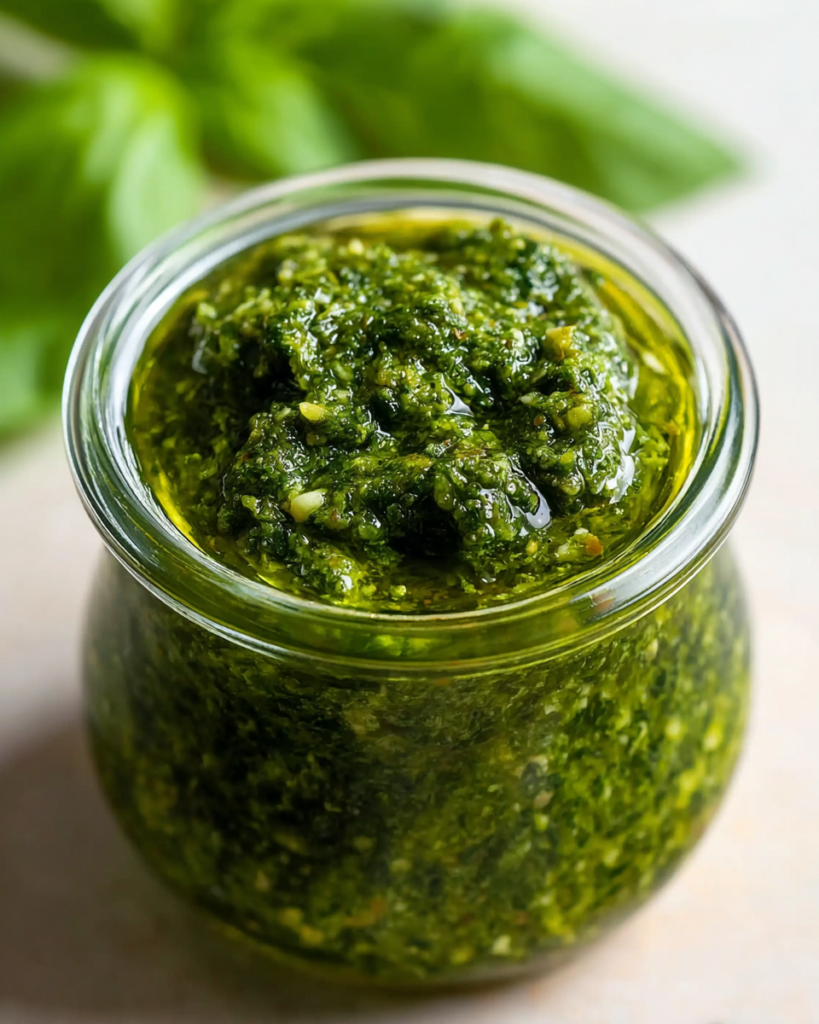
This is the kind of pesto that feels special the moment you start making it. Instead of relying on a machine, you build the sauce slowly by hand, which gives it a fuller aroma and a more naturally textured finish.
The flavor is simple but layered. You get sweet basil, mellow garlic, nutty toasted pine nuts, savory Parmesan, and olive oil that ties everything together into a smooth, spoonable paste with real character.
It also works because the method is straightforward. You are not dealing with complicated cooking here, just a steady rhythm of crushing, stirring, and tasting until everything comes together into a classic sauce that tastes far more luxurious than the short ingredient list suggests.
What You Need to Make This Basil Mortar and Pestle Pesto
- Fresh basil leaves bring the signature fragrance and vibrant green character, so use leaves that look lively and unwilted.
- Garlic cloves create the savory base and become gentler once crushed with salt instead of chopped too aggressively.
- Salt helps break the garlic down into a paste and sharpens the flavor of the finished pesto without needing much.
- Toasted pine nuts add delicate nuttiness and help the pesto take on that slightly creamy, rich body.
- Freshly grated Parmesan gives the sauce its salty, savory depth and helps thicken the mixture as it is worked in.
- Extra virgin olive oil loosens the paste into a cohesive sauce and adds a smooth, rounded finish, so a flavorful oil really matters here.
Cooking Steps
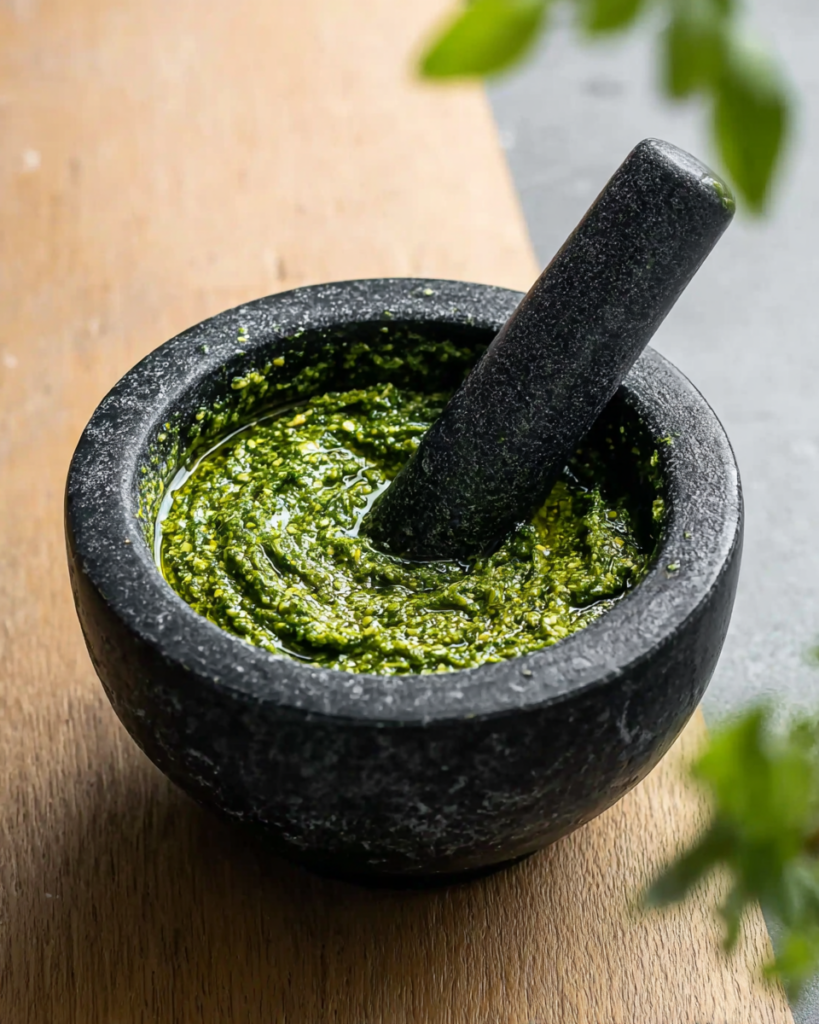
STEP 1: Add the garlic and a pinch of salt to your mortar first. Crush and grind until the garlic turns into a smooth paste. This base is important because it distributes the garlic evenly through the pesto instead of leaving you with sharp little bits.
STEP 2: Add the basil a little at a time rather than all at once. Press, pound, and grind each handful into the garlic paste before adding more. Taking your time here helps release the basil’s oils and gives the pesto its especially fragrant, hand-made quality.
STEP 3: Once the basil has broken down into a thick green paste, add the toasted pine nuts. Crush them into the mixture until they soften and blend in. You want them finely worked through, but not so smooth that the pesto loses all texture.
STEP 4: Stir in the Parmesan in a couple of additions. Press it into the basil mixture with the pestle or a spoon until the cheese is evenly incorporated. At this stage, the pesto should look thick, rich, and slightly creamy from the nuts and cheese together.
STEP 5: Begin adding the olive oil slowly, starting with a few spoonfuls. Stir as you pour so the mixture loosens gradually instead of separating. Keep going until the pesto looks cohesive, glossy, and easy to spoon over warm food.
STEP 6: Taste and adjust the seasoning. Depending on your cheese and olive oil, you may need only a tiny bit more salt. The final pesto should taste bright, savory, nutty, and balanced, with a texture that is rustic rather than completely smooth.
Helpful Tips
- Toast the pine nuts lightly, not deeply, so they stay sweet and delicate rather than tasting overly dark.
- Add the basil in batches and keep working it patiently. That slow process is what gives hand-made pesto its fuller aroma and textured finish.
- If the pesto feels too thick for tossing with pasta, loosen it later with a spoonful of warm pasta water instead of extra oil.
Why use a mortar and pestle instead of a food processor?
A mortar and pestle crushes the ingredients gently, which gives you a more textured sauce and a stronger basil aroma. The flavor feels rounder and less harsh because the ingredients are pressed together slowly instead of being rapidly chopped by blades.
Can I make this pesto without pine nuts?
Yes, although the flavor will shift slightly. Pine nuts give classic pesto its delicate nuttiness and creamy body, but you can still make a very good version with another mild nut or seed if that is what you have on hand. Keep the texture slightly coarse.
How do I keep pesto from turning dark?
Transfer it to a jar or container and smooth the top so there are fewer air pockets. A thin layer of olive oil over the surface also helps protect the color. Refrigerating it promptly keeps the basil tasting fresher and looking brighter for longer.
Can you freeze Basil Mortar and Pestle Pesto?
Yes, it freezes very well. Portion it into small containers or an ice cube tray so you can thaw only what you need. That makes it especially practical when you want a quick pasta sauce, sandwich spread, or flavor boost for soups and grain bowls.
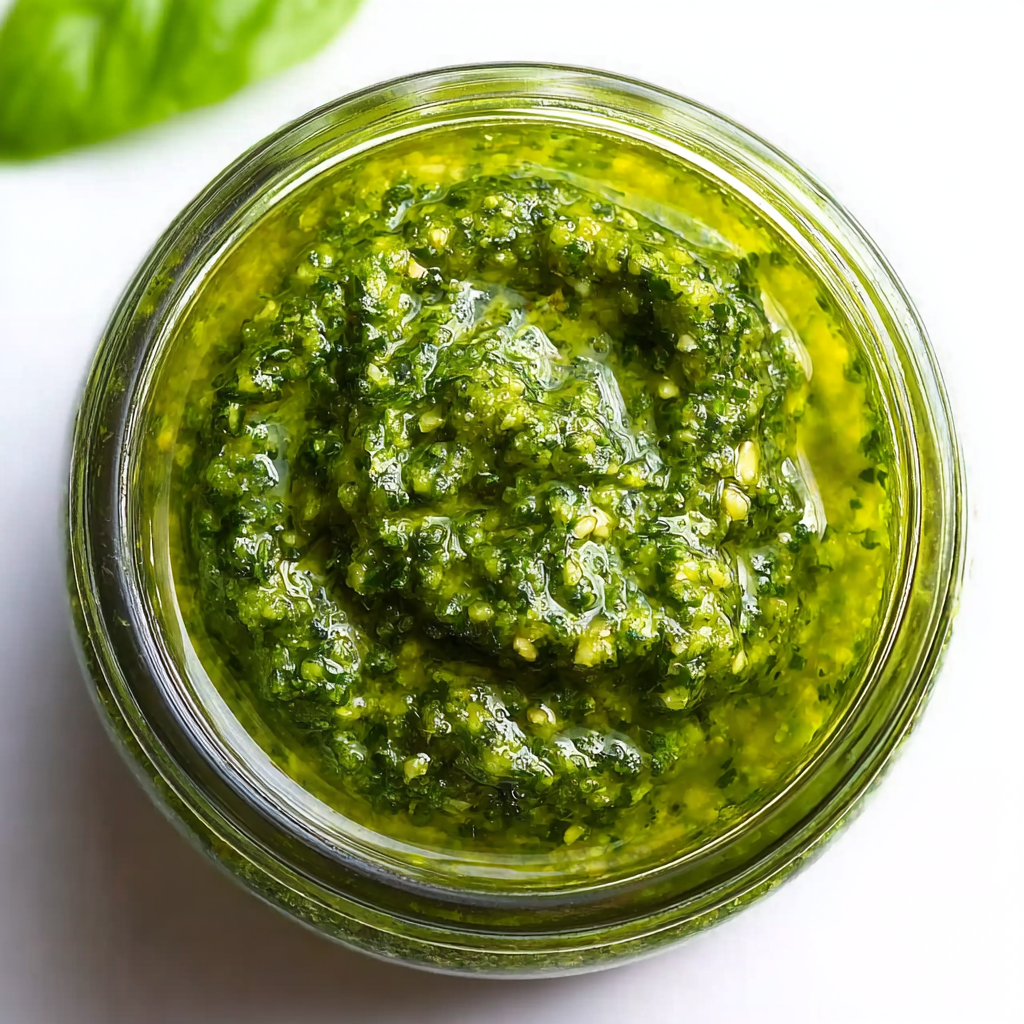
Serving Ideas for Basil Mortar and Pestle Pesto
Toss it with hot pasta for the most classic option. A little pasta water helps the sauce coat the noodles more evenly and keeps the texture silky instead of heavy.
Spread it on toasted bread, sandwiches, or flatbreads when you want something quick but flavorful. The hand-crushed texture works especially well here because it feels hearty and rustic rather than overly slick.
You can also spoon it over roasted vegetables, grilled chicken, or warm potatoes. Since the ingredient list is compact and balanced, it pairs easily with simple foods that need a bright, savory finish.
Keeping Leftovers Fresh
Store the pesto in an airtight container in the refrigerator for up to 4 days. Press it down gently, then cover the surface with a thin film of olive oil before sealing to help reduce browning. For longer storage, freeze it for up to 3 months in small portions. Thaw in the refrigerator or at cool room temperature, then stir before serving. If it seems too thick after chilling, loosen it with a little olive oil or a splash of warm water, depending on how you plan to use it.
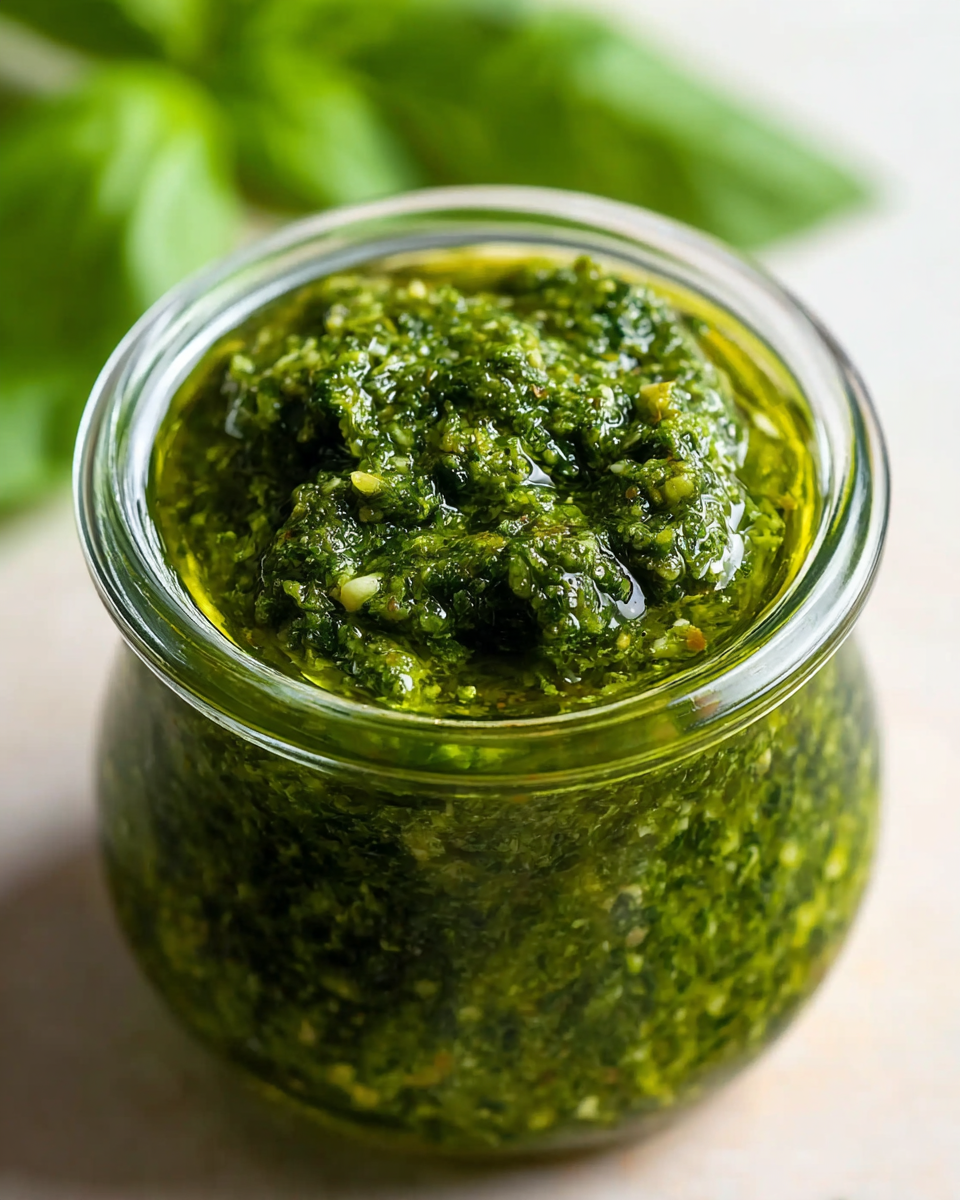
Basil Mortar and Pestle Pesto
Ingredients
- 130 ml extra virgin olive oil preferably a good-quality variety
- 2 medium garlic cloves
- 1 pinch of salt plus more if needed to taste
- 70 g freshly grated Parmesan cheese
- 70 g packed fresh basil leaves about 2.5 cups
- 2 tablespoons lightly toasted pine nuts
Instructions
- Place the garlic cloves in a mortar with a pinch of salt. Crush them firmly with the pestle until a smooth, paste-like base forms, which should take about 2 minutes.
- Add the basil leaves gradually, working in one or two generous handfuls at a time. Pound and grind the leaves into the garlic mixture, allowing each addition to break down fully before adding more. Continue for at least 5 minutes, until the basil is thoroughly incorporated and highly fragrant.
- Add the toasted pine nuts to the mortar. Crush them into the basil mixture for about 1 minute, creating a slightly creamy texture with a mild nutty character.
- Add the grated Parmesan in 2 or 3 additions, stirring and pressing it into the pesto as you go. Mix for about 1 minute, allowing the cheese to blend evenly into the paste.
- Pour in the olive oil slowly to emulsify the mixture. Begin with 2 or 3 tablespoons, then continue adding more in a steady stream while stirring until the pesto reaches a smooth, cohesive consistency.
- Taste the pesto and adjust the salt if necessary. Once balanced, it is ready to serve over pasta, spread onto bread, or use in any preferred way.