Creamy, fresh, and beginner-friendly, Basil Nut Free Pesto gives you all the bright, savory flavor you want from a classic green sauce without relying on nuts. It comes together in minutes and works beautifully for pasta, pizza, grilled chicken, roasted vegetables, and quick weeknight meals.
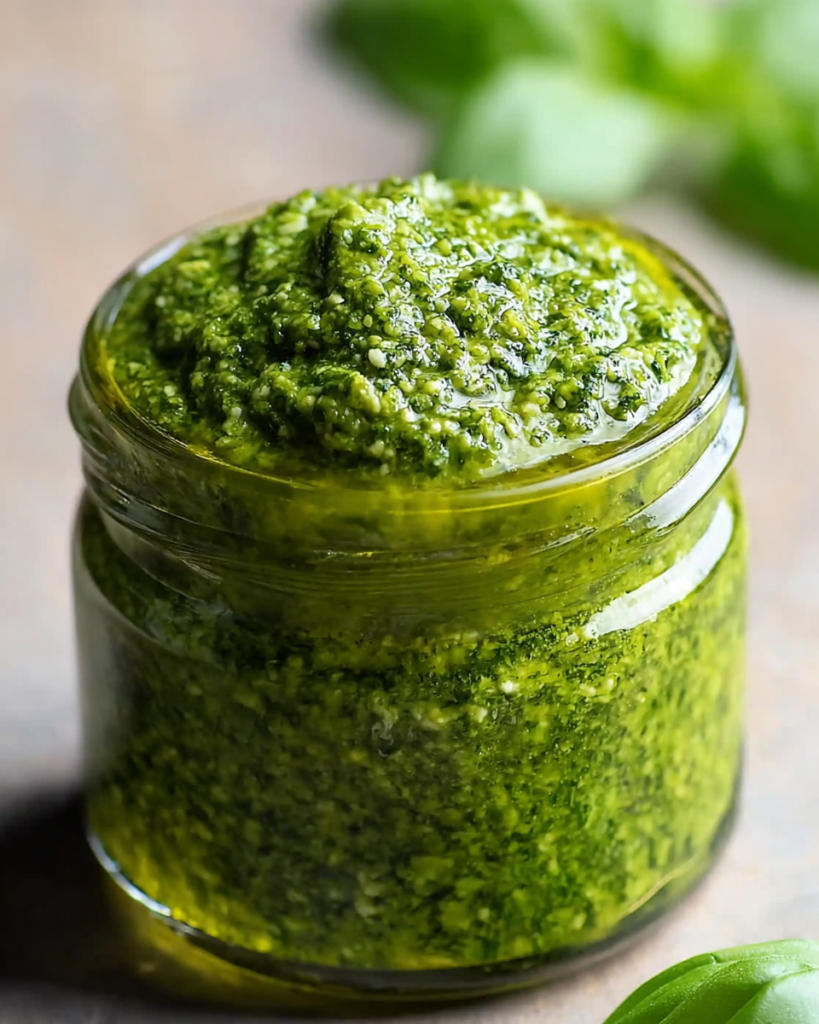
This is the kind of sauce that makes your kitchen feel instantly more put together. With just basil, Parmesan, olive oil, garlic, and a few seasonings, you get a bold, smooth spread that tastes fresh and versatile without a long ingredient list.
It also solves a very practical problem. When you want pesto flavor but need a nut-free option, this version still gives you richness, body, and that familiar herb-forward finish that makes simple food feel special.
You can keep the texture slightly rustic for spooning over warm dishes, or blend it smoother for spreading and marinating. Either way, it is fast, flexible, and easy to fit into real everyday cooking.
Basil Nut Free Pesto Ingredients
Fresh basil leaves bring the signature flavor and vibrant green color. Packed basil gives this sauce its fresh, fragrant base, so using tender leaves makes a big difference.
Extra virgin olive oil helps everything blend into a smooth, spoonable pesto. It also adds richness and rounds out the stronger notes from the garlic and cheese.
Garlic cloves give the sauce its sharp, savory backbone. Roughly chopping them first helps them blend more evenly with the basil.
Freshly grated Parmesan cheese adds saltiness, depth, and that slightly creamy finish that makes the pesto feel complete. Freshly grated cheese usually blends better and tastes cleaner.
Salt sharpens the overall flavor and helps the basil and Parmesan stand out without making the sauce taste heavy.
Black pepper adds a gentle bit of warmth and keeps the flavor from tasting flat.
Cooking Steps
STEP 1: Start by washing the basil well, then dry it thoroughly. This matters more than it may seem, because extra water can thin the pesto and dull its flavor. Remove any thick stems so the final texture stays smooth and pleasant.
STEP 2: Add the basil, chopped garlic, Parmesan, olive oil, salt, and black pepper to a food processor. Pulse a few times first to break everything down before blending more fully.
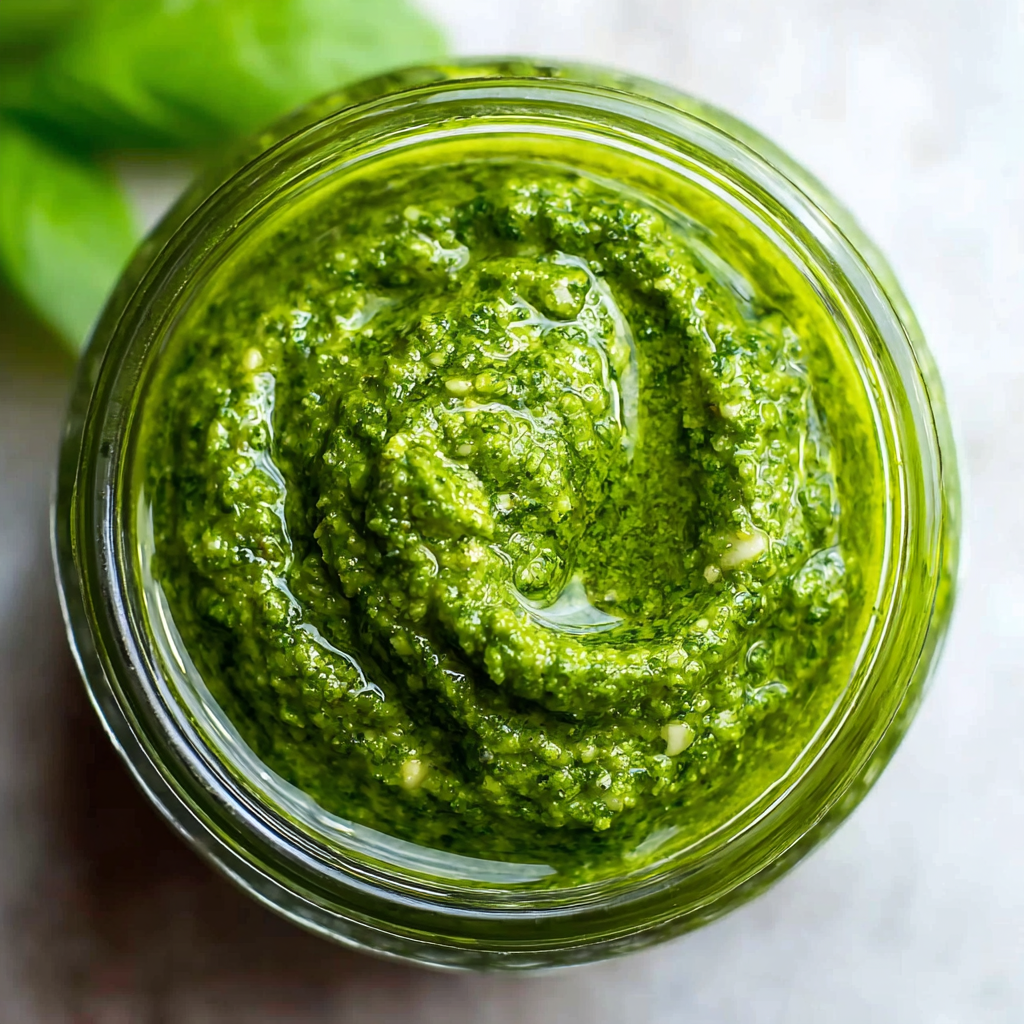
STEP 3: Continue blending until the pesto reaches the texture you like. For a more rustic sauce, stop when it still has a little texture. For a smoother finish, keep pulsing until the mixture looks more cohesive and spreadable.
STEP 4: Taste the pesto before serving. If you want the basil flavor to come through more strongly, leave it as is. If you prefer a slightly looser texture for tossing with pasta or drizzling over vegetables, you can stir in a small splash of olive oil.
STEP 5: Use it right away while the flavor is at its brightest. Spoon it over hot pasta, spread it on flatbread or pizza, brush it onto chicken before or after cooking, or stir it into warm vegetables for a quick finish.
STEP 6: Store any extra in a covered container so you can use it again later in the week. This is one of those sauces that turns leftovers, sandwiches, and grain bowls into something much more flavorful with almost no extra work.
Perfect Pairings
This pesto is especially good with warm pasta because the heat helps the sauce loosen slightly and cling to every bite. A shape with ridges or twists works especially well if you want more sauce in each forkful.
It also shines on pizza or flatbread. Instead of a heavier tomato base, this pesto gives you a fresh, savory layer that pairs nicely with mozzarella, tomatoes, or simple roasted vegetables.
For something lighter, spoon it over grilled chicken or roasted vegetables. It adds instant flavor to zucchini, potatoes, mushrooms, and even simple sheet pan vegetables that need a little boost before serving.
Can I make this ahead of time?
Yes, and it is a great make-ahead sauce for busy days. Blend it in advance, keep it chilled, and use small amounts throughout the week for quick lunches, easy dinners, or last-minute flavor boosts.
Why is my pesto too thick?
That usually means the mixture needs a little more olive oil or a bit more blending time. Basil can pack tightly, so texture can vary depending on how firmly it was measured and how dry the leaves were.
Can I use this as a marinade?
Yes, this works very well as a marinade for chicken or vegetables. Since it has garlic, cheese, and olive oil, it coats ingredients nicely and adds a lot of flavor before cooking.
How do I keep the basil flavor fresh?
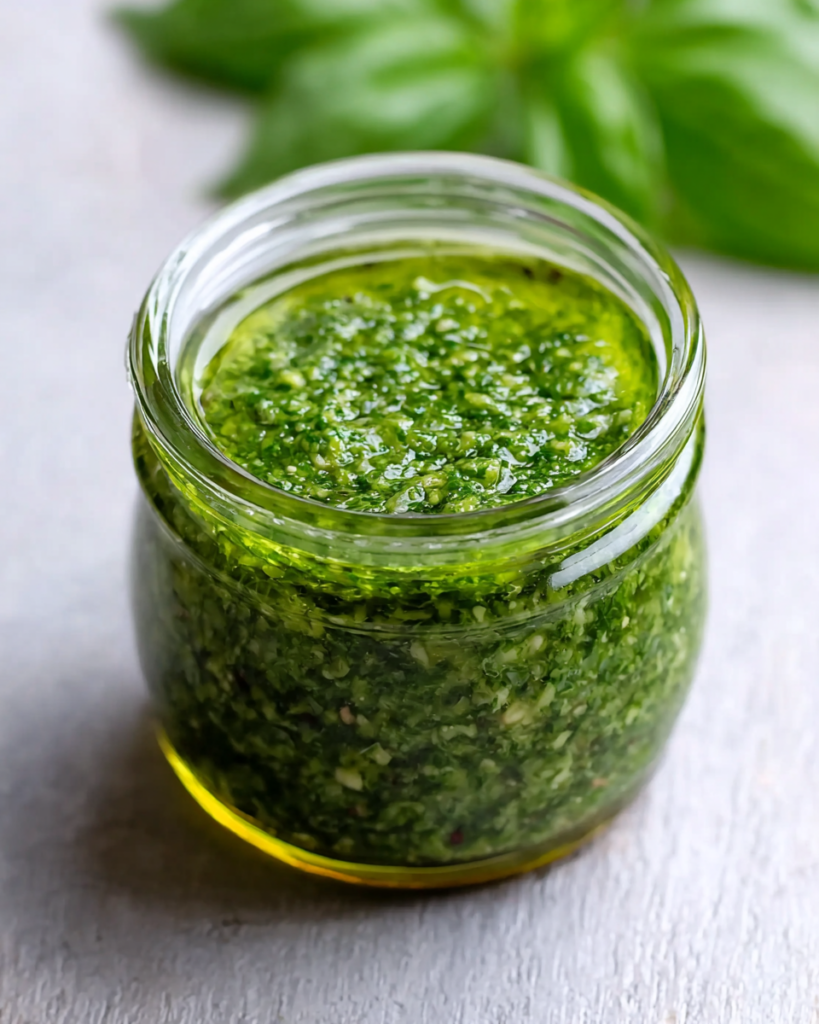
Use fresh, dry basil leaves and store the pesto well covered in the refrigerator. Pressing a thin layer of olive oil over the top can also help protect the surface and keep the color looking fresher.
Helpful Tips
- Dry the basil thoroughly before blending so the pesto stays rich instead of watery.
- Blend in short pulses at first to control the texture and avoid overprocessing the basil.
- Taste before serving, because Parmesan can vary in saltiness and may change how much extra seasoning you want.
Keeping Leftovers Fresh
Store the pesto in an airtight container in the refrigerator for up to 4 days. A thin layer of olive oil on top can help reduce browning and keep the surface fresher.
For longer storage, freeze it in small portions so you can thaw only what you need. Ice cube trays work especially well for this, especially when you want a quick sauce starter for pasta, soup, or roasted vegetables.
Since this is a cold sauce, reheating is usually not necessary. For the best texture, let chilled pesto sit at room temperature for a few minutes, then stir it before using. If you are mixing it into hot pasta or vegetables, the heat from the food will warm it gently without changing the fresh basil flavor too much.
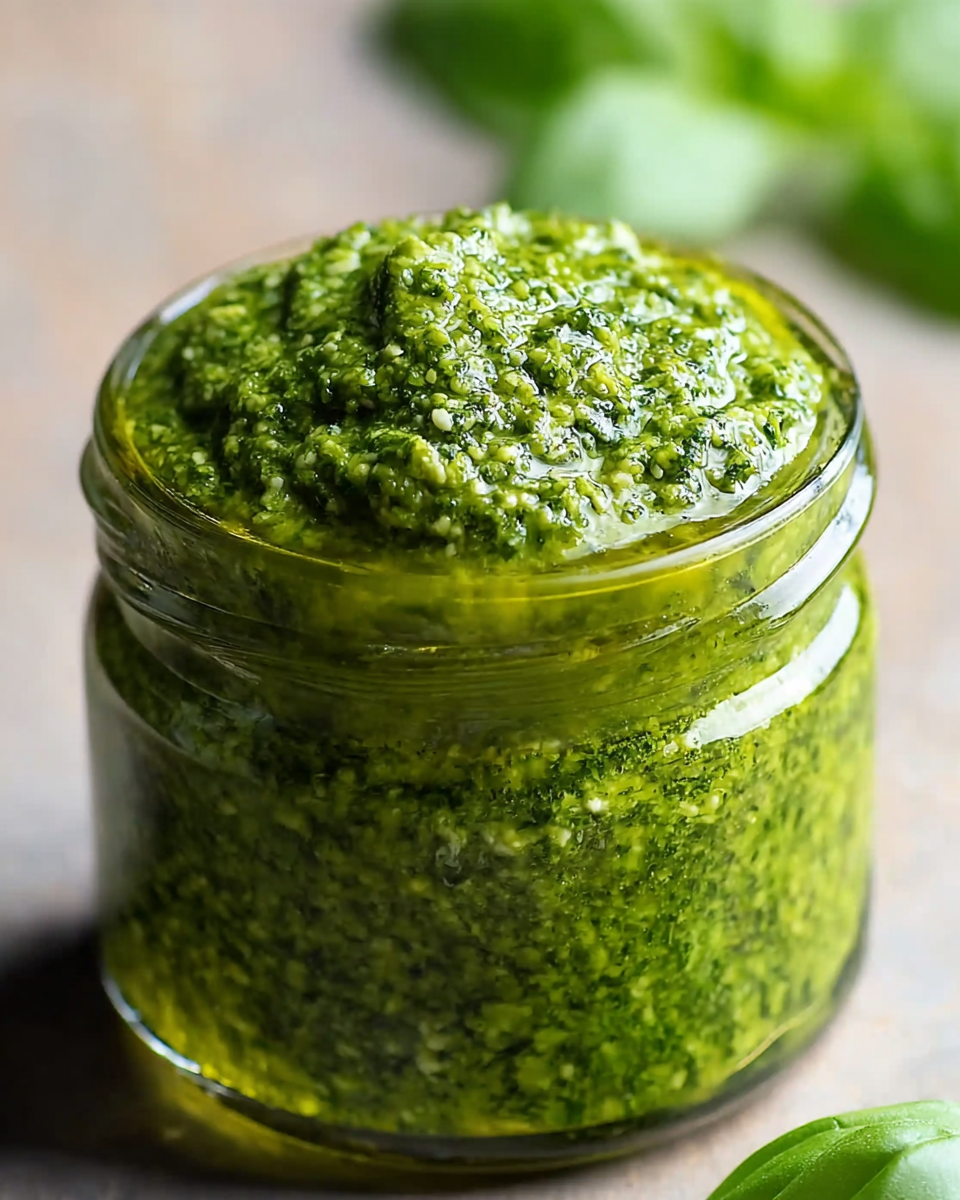
This basil pesto works so well because it keeps things simple. You are not dealing with a long prep list or complicated steps, yet the result still feels polished and full of flavor. The basil brings brightness, the Parmesan adds savory depth, and the olive oil pulls everything together into a sauce that can do far more than one job.
It is also the kind of staple that earns a regular spot in your kitchen because it adapts so easily. One day it can dress pasta, the next it can become a sandwich spread, a pizza base, or a quick finish for roasted vegetables. When a recipe can move that easily between meals, it becomes much more useful than a single-purpose sauce.
If you want a fast homemade condiment that tastes fresh and instantly upgrades simple ingredients, this one is worth keeping on repeat. It is uncomplicated, reliable, and packed with the kind of clean, savory flavor that makes homemade pesto so satisfying.
Basil Nut Free Pesto
Ingredients
- 2 cups tightly packed fresh basil leaves approximately 2 ounces, stems removed
- 1/4 cup extra virgin olive oil
- 2 peeled garlic cloves roughly chopped
- 1/2 cup freshly grated Parmesan cheese
- 1/4 teaspoon salt
- 1/8 teaspoon freshly ground black pepper
Instructions
- Rinse the basil leaves thoroughly to remove any dirt or residue. Pat them dry gently with a clean kitchen towel or paper towels, then discard the stems and keep only the leaves.
- Add the prepared basil leaves to a food processor along with the chopped garlic, grated Parmesan, olive oil, salt, and black pepper. Pulse the mixture until it reaches your preferred texture, whether slightly coarse or more smooth.
- Once blended to the desired consistency, the pesto is ready to use. Serve it with pasta, spread it over pizza, spoon it onto grilled chicken, or pair it with roasted vegetables.