Quick, vibrant, and full of garden-fresh flavor, Basil Pesto is a simple homemade sauce that turns a handful of staple ingredients into something rich, smooth, and endlessly useful. It is perfect for pasta, sandwiches, vegetables, and easy weeknight meals.
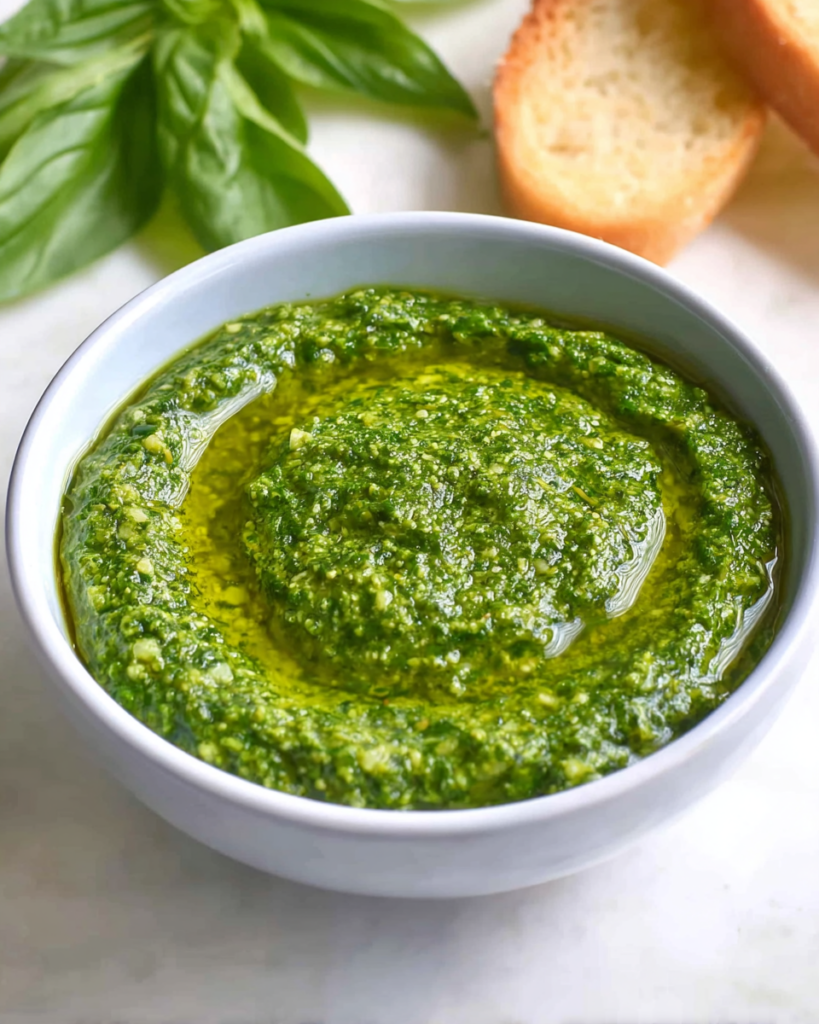
This is the kind of sauce that makes everyday cooking feel a little more special without asking much from you. A few minutes in the food processor gives you a pesto that tastes bright from lemon, savory from Parmesan, and deeply aromatic from fresh basil and toasted pine nuts.
It works because every ingredient has a clear job. The basil keeps it fresh and bold, the nuts add body, the cheese brings saltiness and depth, and the olive oil pulls everything together into a silky texture that coats beautifully.
You can spoon it over warm pasta, spread it on toasted bread, or swirl it into roasted vegetables for a fast flavor boost. Once you make it in your own kitchen, it becomes one of those reliable staples you will want to keep on hand.
What You Need to Make This Basil Pesto
Fresh basil leaves bring the signature herb-forward flavor and give the pesto its vivid color and fresh aroma.
Garlic clove adds a sharp savory edge that keeps the sauce from tasting flat.
Sea salt helps season the pesto from the start and balances the richness of the oil, nuts, and cheese.
Fresh lemon juice brightens everything and keeps the flavor from feeling too heavy.
Toasted pine nuts add a buttery, nutty depth and help create that classic soft, spoonable texture.
Black pepper gives the pesto a gentle bite and rounds out the basil and garlic.
Parmesan cheese adds savory richness and a slightly salty finish that makes the sauce taste fuller.
Extra-virgin olive oil binds the ingredients together and creates the smooth consistency that makes pesto so versatile.
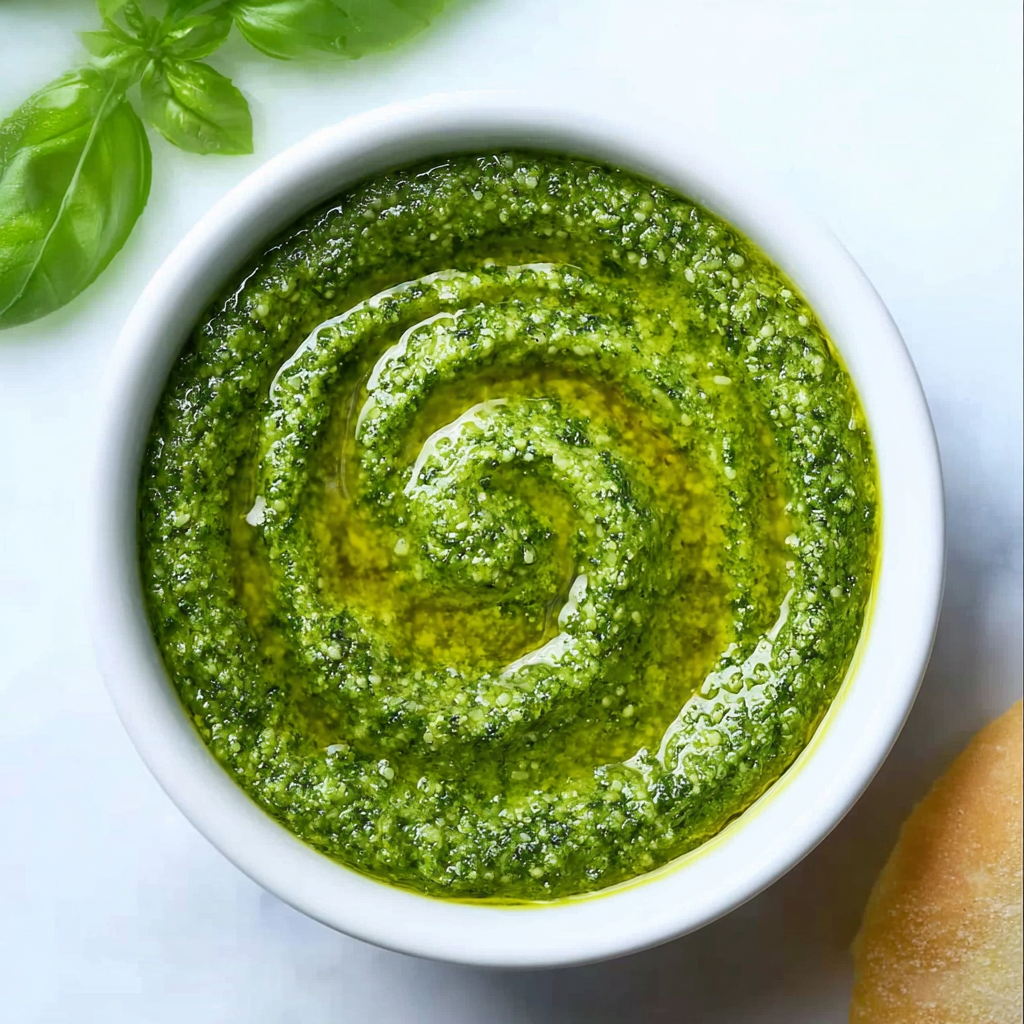
Step-by-Step Basil Pesto
STEP 1: Toast the pine nuts until they are lightly golden and fragrant, then let them cool briefly. This small step makes a big difference because it deepens their flavor and gives the finished pesto more warmth and complexity.
STEP 2: Add the pine nuts, lemon juice, garlic, sea salt, and a few grinds of black pepper to your food processor. Pulse until the mixture looks finely chopped and starts to resemble a rough paste.
STEP 3: Add the fresh basil leaves and pulse again until the leaves are fully broken down and evenly mixed into the base. Stop once or twice to scrape the sides so everything blends evenly.
STEP 4: With the machine running, slowly drizzle in the olive oil. This gradual addition helps the pesto emulsify into a cohesive, silky sauce instead of separating or turning uneven.
STEP 5: Add the grated Parmesan and pulse just long enough to combine. You want the cheese fully mixed in, but not overworked, so the pesto keeps a fresh texture and clean flavor.
STEP 6: Taste and adjust the final seasoning. A little more salt, pepper, lemon juice, or olive oil can fine-tune the pesto depending on how you plan to use it, whether as a spread, dip, or pasta sauce.
Helpful Tips
- Dry the basil well before blending so the pesto stays rich and concentrated instead of watery.
- Add the olive oil slowly rather than all at once for a smoother texture.
- Taste before serving, especially if your Parmesan is salty, so you can adjust the seasoning with balance.
Can I make basil pesto without Parmesan?
Yes, you can leave the Parmesan out if needed. The pesto will still be flavorful from the basil, pine nuts, garlic, and lemon, though it will taste a little lighter and less savory overall.
Why does my pesto taste bitter?
Bitterness usually comes from overly processed basil, very strong olive oil, or garlic that is a little too sharp. Blending just until smooth and balanced usually gives you a fresher, rounder flavor.
Can I use basil pesto straight from the fridge?
You can, but it often tastes better after sitting at room temperature for a few minutes. That takes the chill off the olive oil and helps the flavor open up before serving.
How do I keep basil pesto green?
Use fresh basil, blend only as much as needed, and store it in a sealed container with a thin layer of olive oil on top. That extra layer helps reduce air exposure and slows darkening.
What can I serve with basil pesto besides pasta?
Basil pesto is great on sandwiches, spooned over roasted vegetables, spread on crostini, or stirred into grain bowls. It is one of those sauces that can wake up simple meals without extra effort.
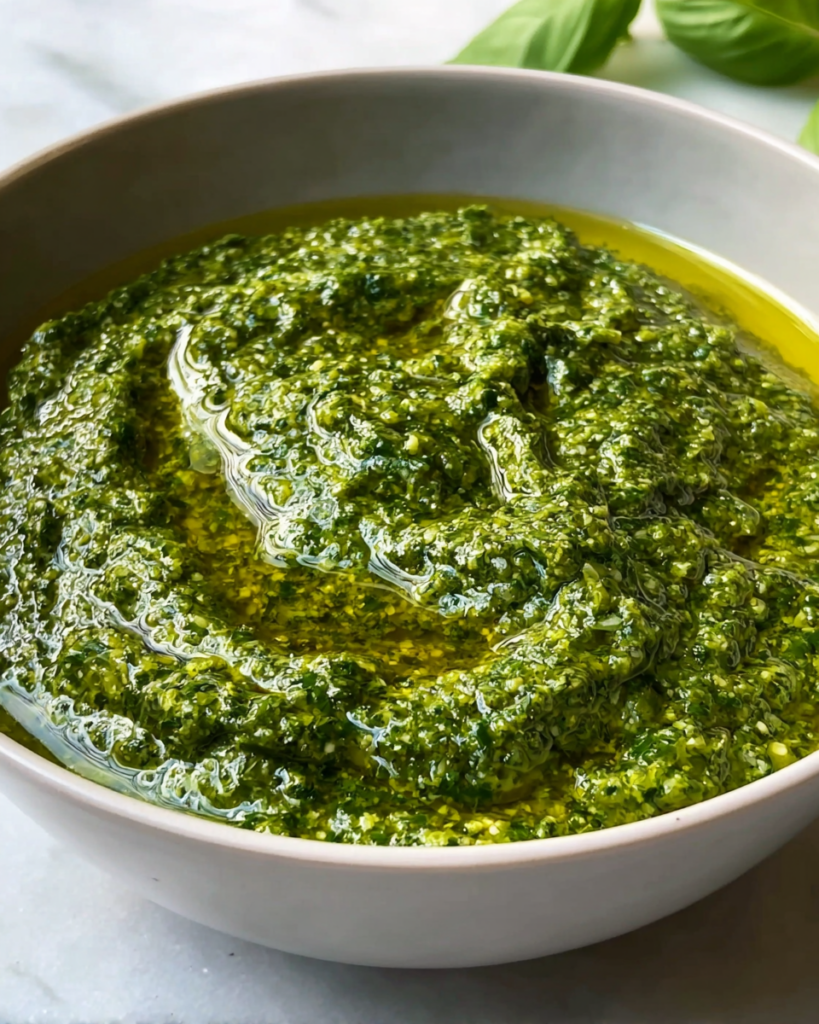
Serving Ideas for Basil Pesto
One of the easiest ways to use this pesto is with hot pasta. Toss it with freshly cooked noodles and a splash of pasta water so the sauce loosens slightly and coats everything evenly without becoming heavy.
It is also excellent in sandwiches. Spread it inside grilled cheese, layer it into turkey or chicken sandwiches, or use it on toasted bread with sliced tomatoes and mozzarella for something quick and satisfying.
For a lighter option, spoon it over roasted or grilled vegetables. Zucchini, potatoes, green beans, and even cauliflower all pair beautifully with the fresh, nutty flavor of basil pesto.
How to Store & Reheat
Basil pesto keeps well in the refrigerator for several days when stored in an airtight container. Press it down gently and add a very thin layer of olive oil over the surface to help protect its color and freshness.
For longer storage, freeze it in small portions so you can thaw only what you need. Ice cube trays work especially well for this because they create ready-to-use amounts that are easy to add to pasta, soups, or sauces.
You do not really need to reheat pesto on its own. Instead, let it come closer to room temperature or stir it into warm food right before serving. Direct high heat can dull the fresh basil flavor and change the texture.
Fresh homemade pesto is one of those small kitchen staples that feels incredibly useful once you start making it yourself. It is fast, dependable, and packed with flavor, but it also gives you flexibility. You can keep it thick for spreading, loosen it for pasta, or use it as a finishing sauce for simple meals throughout the week.
That is what makes this version so worth keeping in your rotation. It is not complicated, and it does not rely on anything fussy. Just a short list of ingredients, a few minutes of blending, and you end up with a classic sauce that tastes fresh, bright, and ready for almost anything on your table.
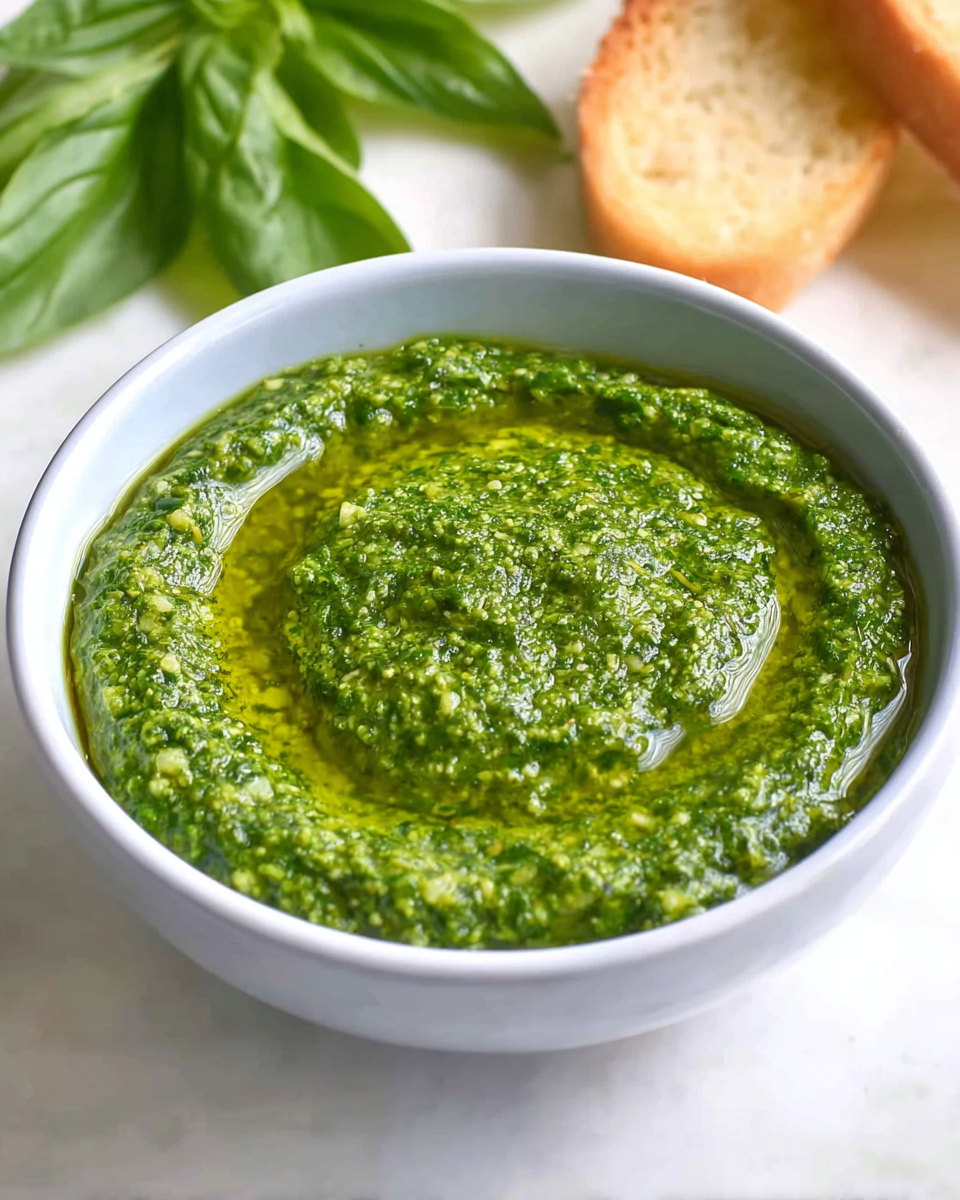
Basil Pesto
Ingredients
- 2 cups tightly packed basil leaves stems discarded
- 1 small garlic clove peeled and lightly crushed
- 1/4 teaspoon sea salt
- 2 tablespoons freshly squeezed lemon juice
- 1/2 cup pine nuts toasted until lightly golden
- Freshly ground black pepper to taste
- 1/4 cup finely grated Parmesan cheese
- 1/4 cup extra-virgin olive oil plus a little more if needed for consistency
Instructions
- Add the toasted pine nuts, lemon juice, crushed garlic, sea salt, and a few grinds of black pepper to a food processor. Pulse until the mixture is finely chopped and forms a rough paste.
- Transfer the basil leaves into the processor with the prepared base. Pulse again until the basil is thoroughly broken down and evenly incorporated into the mixture.
- With the machine running, slowly pour in the olive oil. Continue blending until the pesto becomes cohesive and silky. For a looser texture, add a small additional amount of olive oil until the preferred consistency is reached.
- Add the grated Parmesan cheese, if using, and pulse briefly just until fully mixed in. This adds a deeper savory richness to the pesto.
- Taste the pesto and adjust the seasoning as needed with additional salt, black pepper, or lemon juice. Serve at once, or refrigerate in an airtight container for later use.
Notes
Store refrigerated in a sealed container until ready to use.


