Basil Pesto Fettuccine is a quick, vibrant pasta dinner with fresh basil, pistachios, lemon, and cheese blended into a silky sauce that coats every ribbon. It feels elegant on the table, yet it comes together with very little effort.
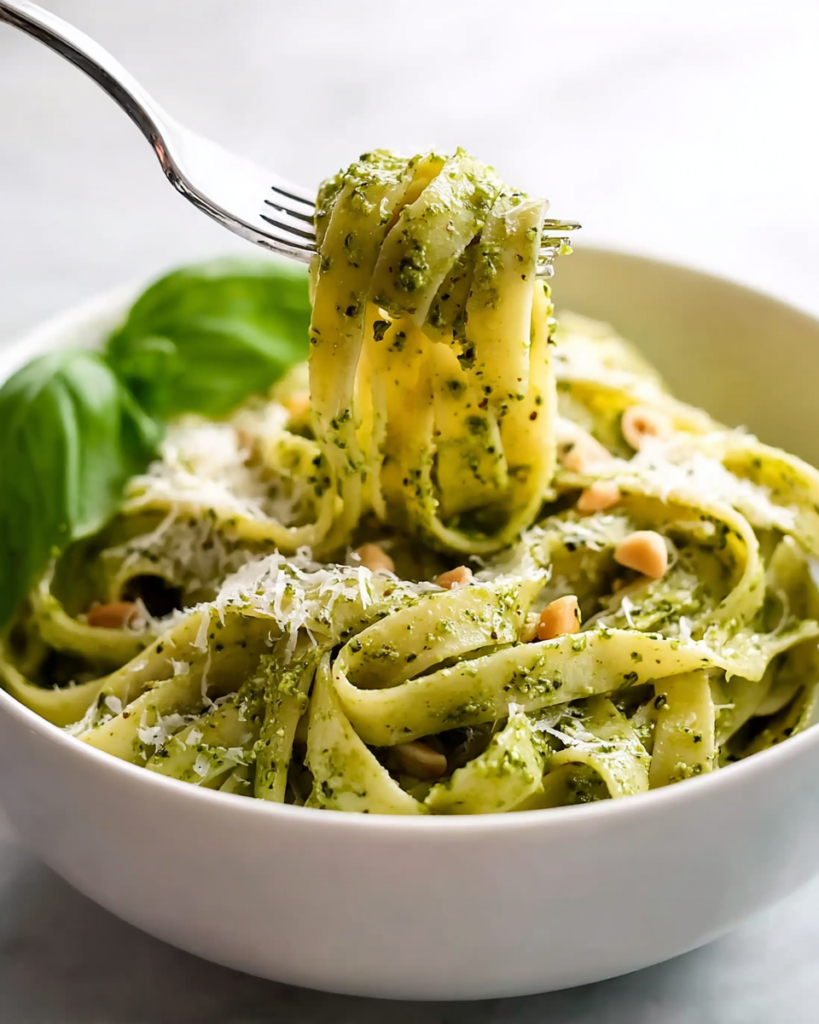
This is the kind of pasta you make when you want something fresh and full of flavor without spending your whole evening at the stove. The pesto is bold, green, nutty, and just sharp enough from the lemon to keep each bite lively.
What makes it work so well is the balance. Tender fettuccine gives the sauce plenty of surface to cling to, while the pistachios add richness without making the pesto feel heavy. A little reserved pasta water helps everything turn glossy and smooth.
It is also a smart choice for real life. You can serve it as a simple weeknight dinner, dress it up for guests with extra cheese and basil, or pair it with a crisp salad and call it done. If you love homemade pesto pasta, this one delivers that fresh-from-the-kitchen feel with a slightly more special pistachio twist.
What You Need to Make This Basil Pesto Fettuccine
Fresh basil leaves bring the signature flavor and bright green body of the pesto. Pack them well so the sauce tastes deeply herbal and fragrant.
Unsalted pistachios add a buttery, slightly sweet nuttiness that makes this pesto feel a little more refined than the classic pine nut version.
Garlic gives the sauce its savory backbone. Two cloves are enough to make the pesto flavorful without overpowering the basil.
Parmesan or Pecorino Romano adds saltiness, depth, and that rich finish that makes the sauce taste rounded and complete.
Extra-virgin olive oil turns the pesto into a smooth, spoonable sauce. It helps everything blend together into a texture that will coat the pasta instead of sitting in clumps.
Fresh lemon juice lifts the whole dish. It wakes up the basil, balances the cheese, and keeps the pesto from tasting flat.
Fettuccine is ideal here because the long, broad strands catch the pesto beautifully. Every forkful gets a good mix of sauce and pasta.
Reserved pasta water is the small detail that makes a big difference. It loosens the pesto just enough and helps it cling to the noodles in a glossy layer.
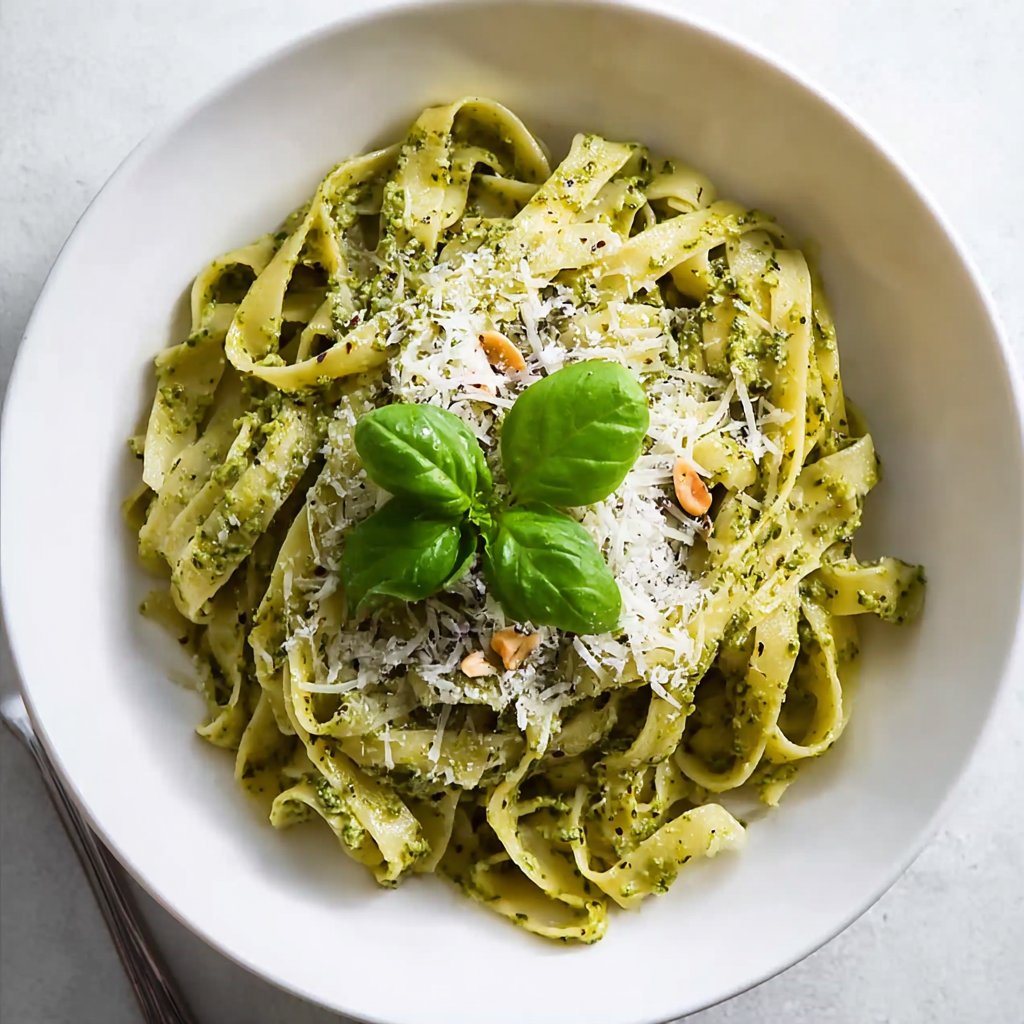
Extra cheese, cracked black pepper, and basil leaves give the final bowl that simple restaurant-style finish.
Cooking Steps
STEP 1: Add the basil, pistachios, garlic, and grated cheese to your food processor and pulse until everything is broken down into a coarse, fragrant mixture. Scrape the sides so the ingredients blend evenly.
STEP 2: Pour in the olive oil and pulse again just until the pesto comes together. Add some of the lemon juice, taste, and adjust with the rest only if the sauce needs more brightness. You want it lively, not overly sharp.
STEP 3: Boil the fettuccine in salted water according to the package directions until tender. Before draining, scoop out some pasta water and keep it nearby. That starchy liquid is what helps the pesto turn silky once it hits the hot noodles.
STEP 4: Transfer the drained pasta to a large sauté pan or warm pot over low heat. Spoon in the pesto and add a splash of reserved pasta water to start loosening the sauce.
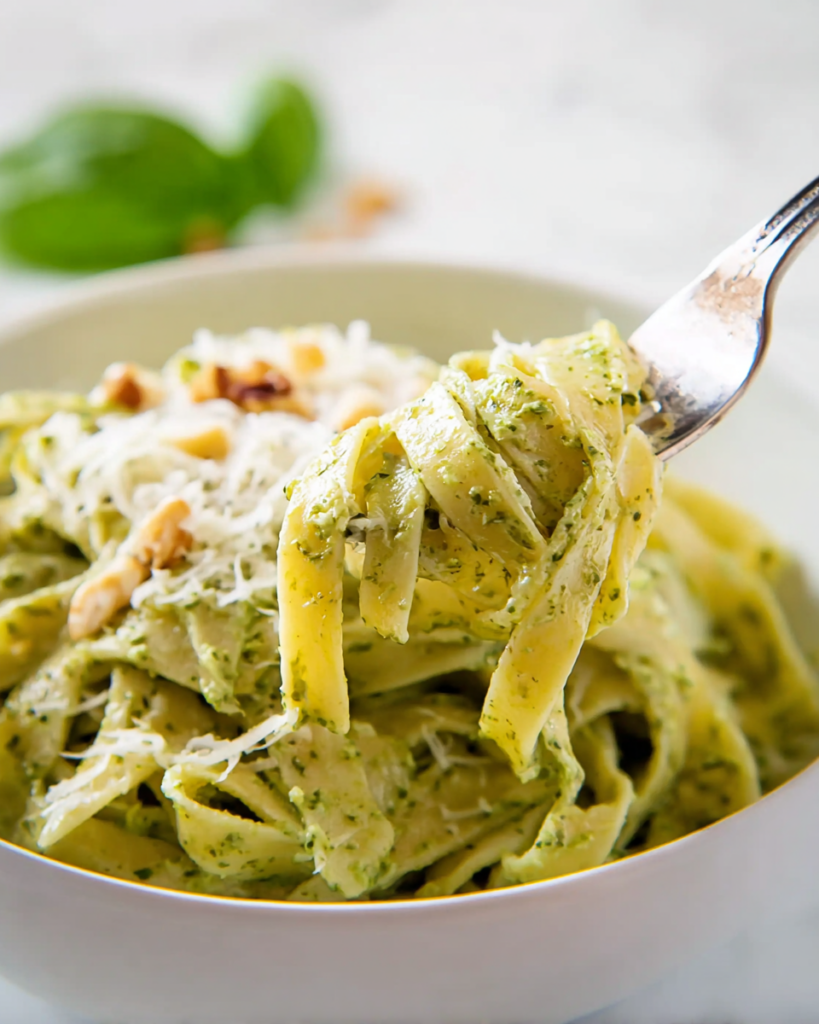
STEP 5: Use tongs to toss the pasta well, adding a little more pasta water as needed until the fettuccine looks evenly coated and glossy. The sauce should cling to the ribbons instead of pooling underneath them.
STEP 6: Divide into bowls and finish with extra cheese, cracked black pepper, and a few basil leaves. Serve right away while the pasta is warm and the pesto still tastes bright and fresh.
Can I make the pesto ahead of time?
Yes, and it is a great time-saver. You can blend the pesto in advance and keep it chilled until you are ready to cook the pasta. This makes dinner feel especially quick on a busy night.
What if the pesto feels too thick?
That is exactly what the reserved pasta water is for. Add a little at a time while tossing the noodles until the sauce relaxes and coats the fettuccine smoothly without turning watery.
Can I use another pasta shape?
Absolutely. Linguine, spaghetti, tagliatelle, or even shorter shapes like penne will work well. Fettuccine feels especially satisfying because the wider noodles hold onto more of that rich basil pistachio sauce.
Will the lemon make it taste too sharp?
Not if you add it gradually. Lemon should brighten the pesto, not dominate it. Start with less, taste, and only add more if the sauce needs a little lift.
Perfect Pairings
A crisp green salad with a simple lemon vinaigrette is one of the easiest sides for this pasta. It keeps the meal feeling fresh and lets the pesto stay the star.
Warm bread is another excellent match, especially if you want something to swipe through any pesto left in the bowl. A rustic loaf or soft garlic bread both work nicely.
For a fuller dinner, serve it with grilled chicken, roasted shrimp, or sautéed vegetables. Those additions make the pasta feel hearty enough for company without changing its simple character.
Helpful Tips
- Toast the pistachios lightly if you want a deeper, warmer nut flavor in the pesto.
- Do not overprocess the sauce. A slightly textured pesto tastes fresher and feels more homemade than one blended completely smooth.
- Toss the pesto with the pasta over low heat only. High heat can dull the basil flavor and make the cheese turn sticky.
Keeping Leftovers Fresh
Store leftover pesto fettuccine in an airtight container in the refrigerator for up to 3 days. The sauce will thicken as it sits, so the pasta may look a little tighter the next day.
To reheat, warm it gently in a skillet or saucepan with a small splash of water to loosen the pesto again. You can also use the microwave in short bursts, stirring in between so the pasta heats evenly.
If you want to freeze something, freeze the pesto by itself rather than the finished pasta. The sauce holds up better that way, and you can toss it with freshly cooked fettuccine whenever you want a fast meal later.
Basil Pesto Fettuccine
Ingredients
For the pesto
- 3 tightly packed cups fresh basil leaves
- 1/2 cup shelled unsalted pistachios
- 2 peeled garlic cloves
- 1/2 cup finely grated Parmesan or Pecorino Romano
- 1/3 cup extra-virgin olive oil
- 2 tablespoons freshly squeezed lemon juice
For the pasta
- 1 pound fettuccine
- 1 teaspoon salt
- Reserved pasta water
For garnish
- Additional Parmesan or Pecorino Romano
- Freshly cracked black pepper
- Extra basil leaves
Instructions
- Add the basil leaves, garlic, pistachios, and grated cheese to the bowl of a food processor. Process for about 15 seconds, or until the mixture is roughly broken down. Scrape the sides of the bowl with a spatula so everything sits near the bottom.
- Pour in the olive oil and pulse again for around 5 seconds, just until the pesto is evenly combined. Taste a small amount with a teaspoon to check the flavor.
- Add 1 tablespoon of the lemon juice and process briefly to incorporate. Scrape down the bowl once more, then taste again. Add the remaining tablespoon of lemon juice only if needed to balance the pesto. Transfer the finished pesto to a small bowl and set it aside.
- Cook the fettuccine in a medium saucepan of salted water, following the package directions. Before draining, carefully remove 1 to 2 cups of the pasta water with a heatproof jug. Drain the pasta in a colander and discard the rest of the cooking water.
- Transfer the cooked fettuccine to a large sauté pan over low heat. Add the prepared pesto along with 1/3 cup of the reserved pasta water. Use kitchen tongs and a wooden spoon to toss and stir until the noodles are thoroughly coated.
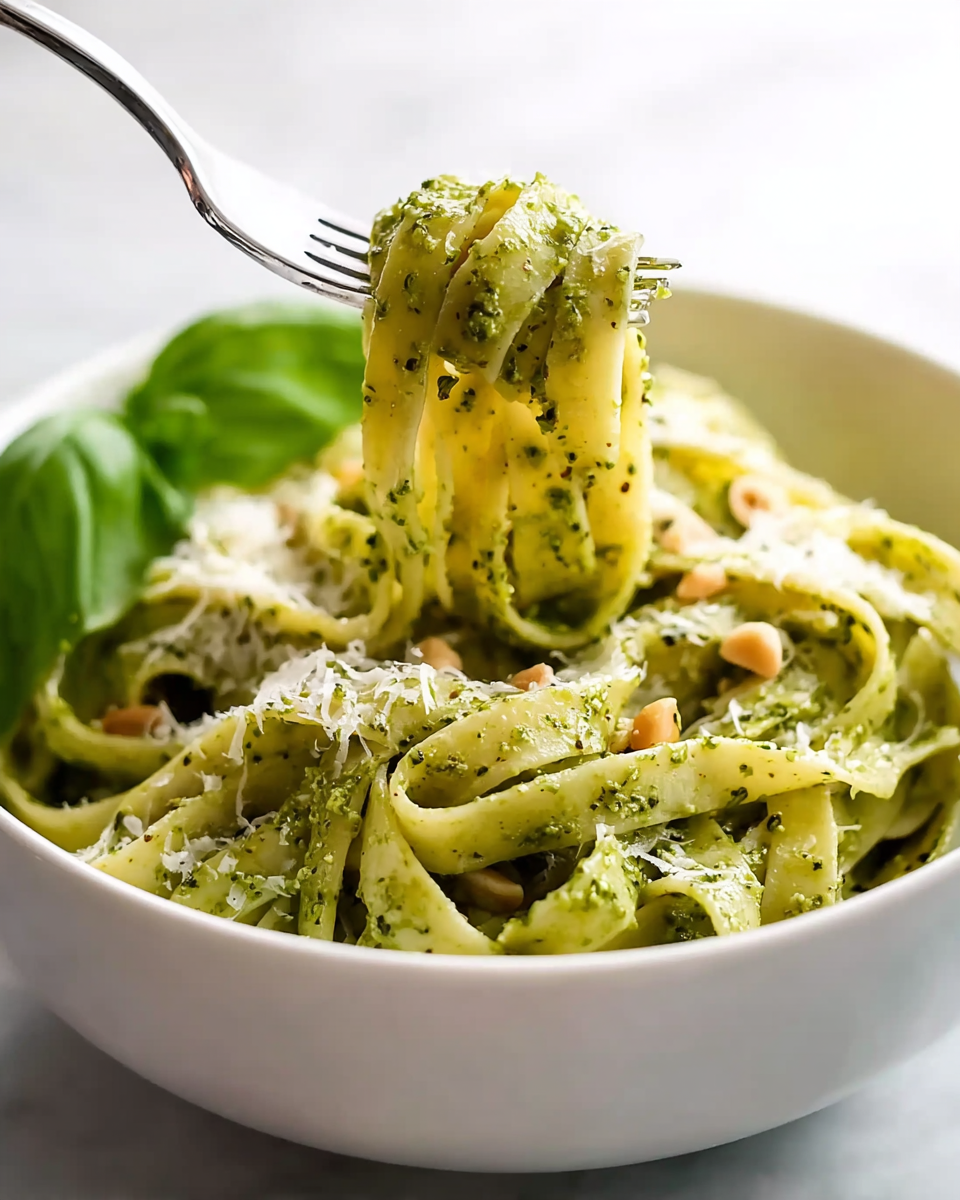
- Divide the pesto fettuccine among serving bowls. Finish with extra grated cheese, cracked black pepper, and fresh basil leaves before serving.


