Creamy, fresh, and beginner-friendly, Basil Pesto Genovese brings together basil, toasted pine nuts, garlic, aged cheeses, and olive oil for a smooth Italian sauce that works beautifully for pasta, sandwiches, and quick weeknight meals.
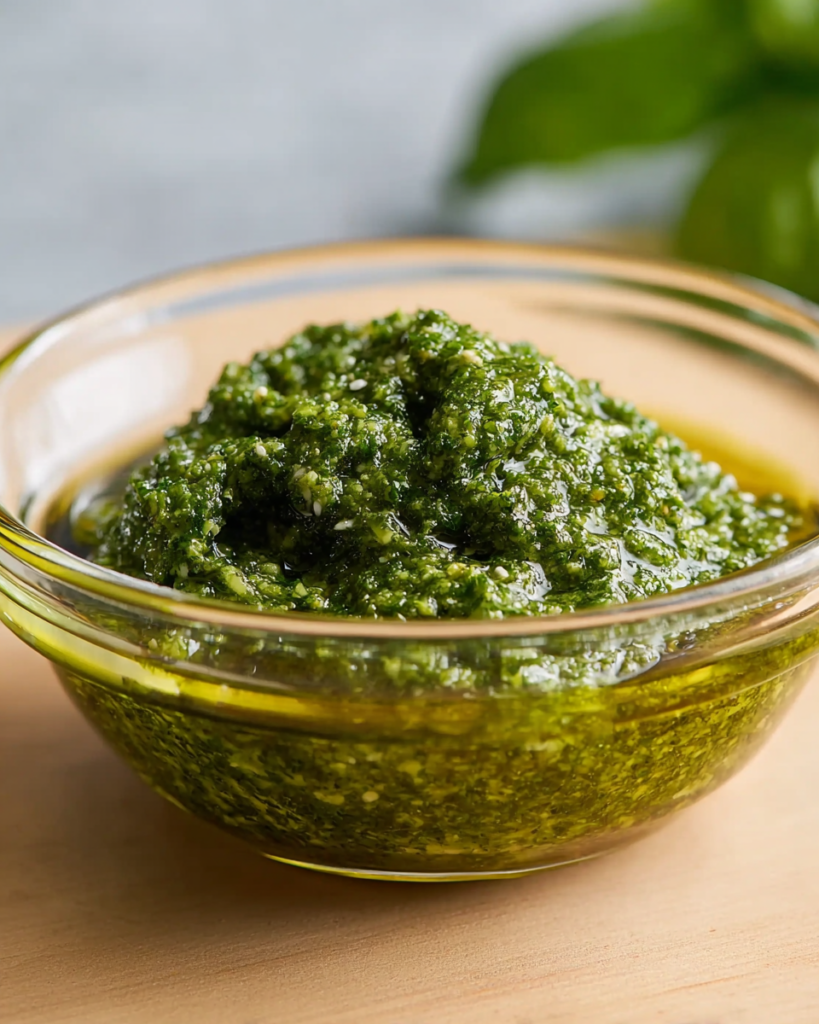
This is the kind of staple you make once and immediately want to keep in your kitchen all season long. It tastes bright and deeply savory at the same time, with that unmistakable basil fragrance that makes even the simplest meal feel special.
What makes this version so appealing is its balance. The garlic adds punch, the pine nuts bring a soft richness, and the two cheeses create a salty, nutty finish that rounds everything out without making it heavy.
It also feels wonderfully hands-on in a way that suits a classic sauce like this. Crushing the ingredients with a mortar and pestle gives the pesto a more rustic, aromatic character, and the final result feels both traditional and incredibly practical for everyday cooking.
What You Need to Make This Basil Pesto Genovese
Fresh basil leaves bring the signature color, fragrance, and sweet herbal flavor that define this sauce.
Parmigiano-Reggiano adds a savory, nutty depth and helps give the pesto its creamy body.
Pecorino Romano sharpens the flavor slightly with a saltier, more assertive edge that keeps the pesto lively.
Toasted pine nuts provide richness and a soft, buttery texture that helps the paste come together smoothly.
Garlic cloves add the bold backbone of flavor that makes the basil and cheese taste even brighter.
Extra virgin olive oil loosens the mixture into a glossy sauce and ties every element together.
Helpful Tips
- Toast the pine nuts lightly, not deeply. You want them fragrant and warm-tasting, not dark or bitter.
- Add the basil gradually so it breaks down evenly and keeps a vibrant texture instead of turning into a wet mash too quickly.
- Stir the olive oil in little by little for a smoother finish and better control over the final consistency.
How to Make This Basil Pesto Genovese
STEP 1: Start by crushing the garlic in a mortar until it turns into a soft, mashed base. This first step matters because it creates a smooth foundation that helps the rest of the ingredients blend more evenly.
STEP 2: Add the toasted pine nuts and continue working them into the garlic until the mixture looks cohesive and lightly creamy. You are not aiming for perfectly fine paste right away, just a consistent texture with no large pieces left behind.
STEP 3: Add the basil a little at a time, using circular motions with the pestle to bruise and crush the leaves into the garlic-nut mixture. Keep going until the basil becomes a fragrant green paste with a slightly rustic texture.
STEP 4: Transfer that basil mixture to a bowl and stir in both grated cheeses. Mixing them in at this stage helps the pesto develop body and gives the finished sauce that classic savory richness.
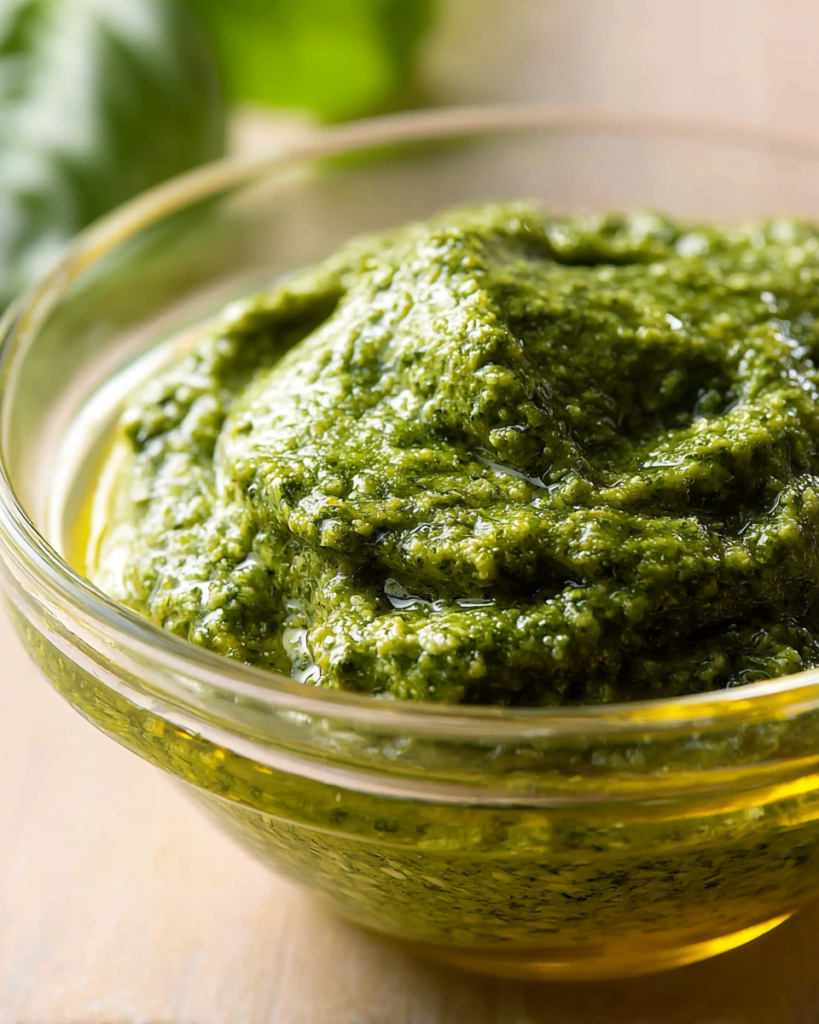
STEP 5: Pour in the olive oil gradually while stirring continuously with a wooden spoon. As the oil blends in, the pesto will loosen into a creamy, spoonable sauce that looks glossy and evenly combined.
STEP 6: Taste and adjust the texture if needed before serving. If you want it a bit looser for pasta, you can stir in a touch more oil; if you prefer a thicker spread, leave it just as it is.
Perfect Pairings
This pesto is especially good tossed with hot pasta, where the warmth helps the sauce coat every strand or shape without needing extra cooking. A spoonful reserved for the top just before serving makes the whole dish smell incredible.
It is also excellent spread onto toasted bread, layered into sandwiches, or spooned over grilled chicken or roasted vegetables. That bright basil flavor gives simple ingredients a quick upgrade without much effort.
For a light appetizer, try it over crostini with a little extra Parmigiano-Reggiano on top. It also works beautifully stirred into warm potatoes or dolloped over tomatoes and fresh mozzarella.
Can I make pesto without a food processor?
Yes, and this version is built for that. A mortar and pestle gives you a more traditional texture and helps release the basil’s aroma gradually, which can make the sauce taste especially fresh and full-bodied.
Why do I add the olive oil slowly?
Adding the oil gradually helps the pesto emulsify more evenly. Instead of separating or turning greasy, it becomes smoother, creamier, and better balanced, with the cheese and basil staying nicely suspended in the sauce.
Can I use this pesto straight from the bowl, or does it need cooking?
It does not need cooking. Pesto is usually stirred into hot foods right before serving, spread onto bread, or used as a finishing sauce. Heating it too aggressively can dull the fresh basil flavor.
How do I keep the basil pesto bright green?
The best way is to work gently and avoid letting it sit exposed to air for too long. Storing it with a thin layer of olive oil on top also helps protect the surface and keeps the color looking fresher.
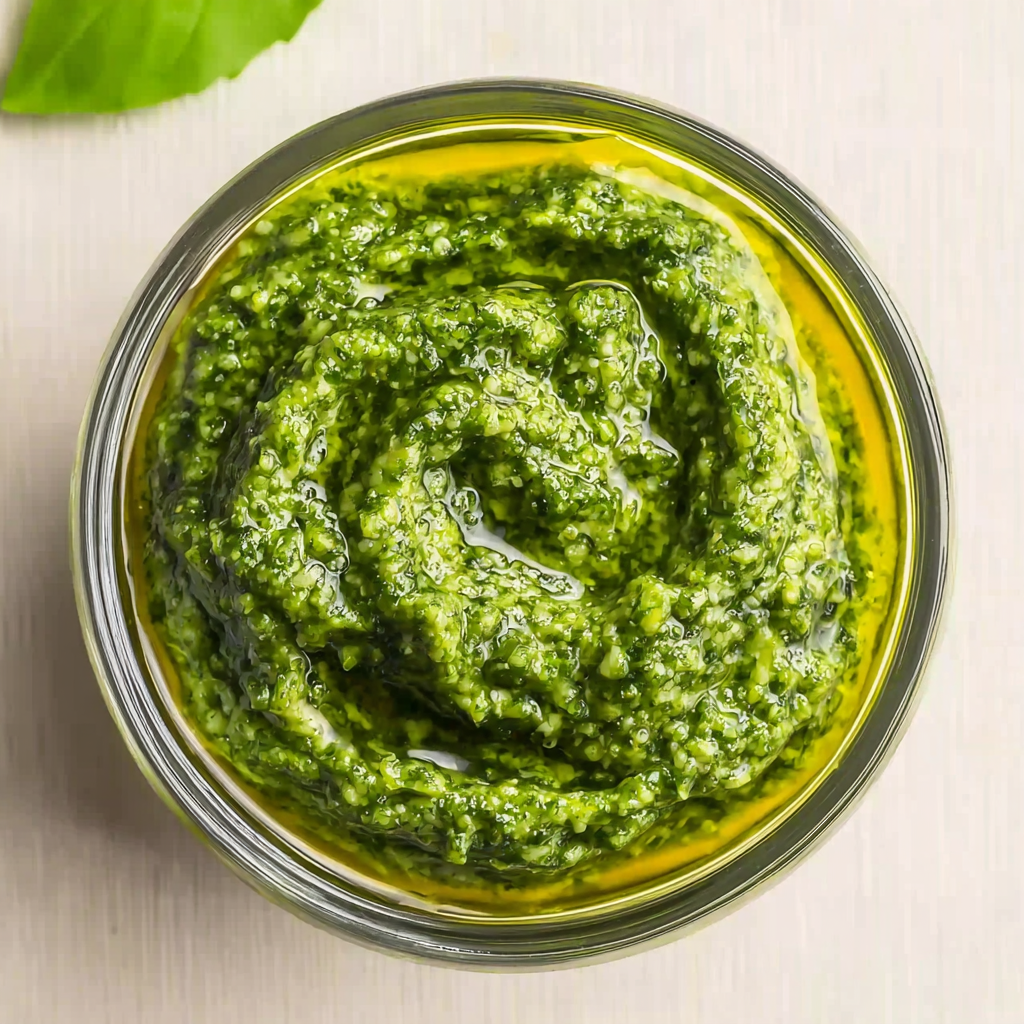
What to Serve with Basil Pesto Genovese
A bowl of simple pasta is the most natural choice, especially shapes that catch sauce well. Long noodles, gnocchi, and short ridged pasta all work beautifully when you want the pesto to be the star.
Roasted vegetables are another great match. Potatoes, zucchini, and tomatoes all pair especially well with the basil and cheese, giving you an easy side or light main dish with very little extra preparation.
You can also serve it with grilled chicken, baked fish, or fresh bread as part of a simple lunch spread. Because the pesto is concentrated and flavorful, a small amount goes a long way on mild ingredients.
Keeping Leftovers Fresh
Store leftover pesto in an airtight container in the refrigerator for up to 4 days. For the best color and flavor, smooth the top and pour a very thin layer of olive oil over it before closing the container.
For longer storage, freeze it in small portions for up to 3 months. Ice cube trays work especially well because you can thaw only what you need for a quick meal or sandwich spread.
This is not a sauce you typically reheat on its own. Instead, let it sit at room temperature for a few minutes, then stir it into warm pasta, vegetables, or other freshly cooked ingredients. If it feels too thick after chilling, loosen it with a drizzle of olive oil before serving.
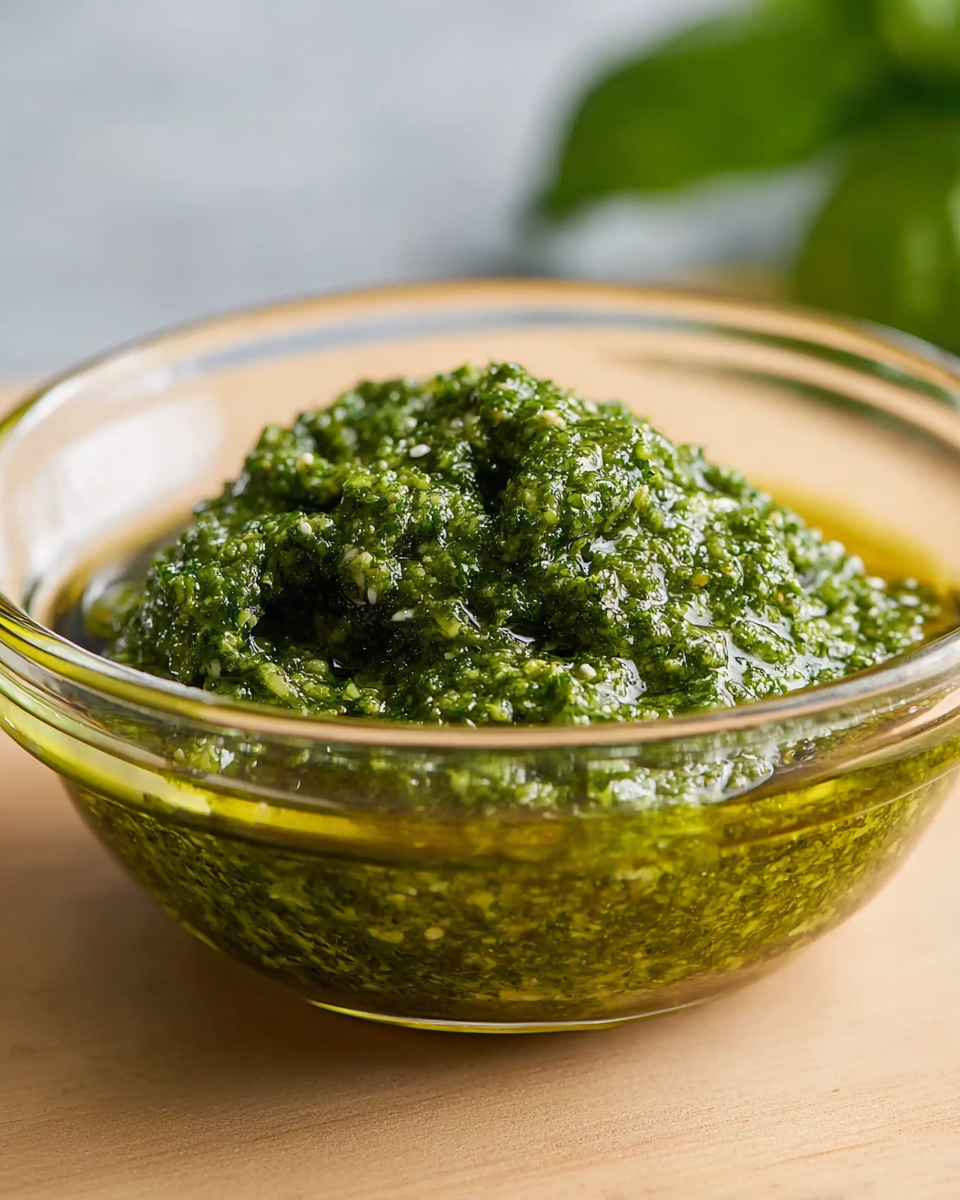
Basil Pesto Genovese
Ingredients
- 1 bunch fresh basil leaves
- 1/2 cup finely grated Parmigiano-Reggiano cheese
- 2 tablespoons lightly toasted pine nuts
- 2 peeled garlic cloves lightly smashed
- 1 1/2 tablespoons grated Pecorino Romano cheese
- 1/2 cup extra virgin olive oil
Instructions
- Crush the garlic cloves in a mortar with a pestle until they become thoroughly mashed.
- Add the toasted pine nuts to the mortar and continue crushing them with the garlic until the mixture is evenly combined and develops a uniform consistency.
- Little by little, add the fresh basil leaves to the mortar. Using circular motions with the pestle, work the basil into the garlic and pine nut mixture until a smooth and fragrant paste is formed.
- Transfer the basil mixture to a mixing bowl. With a wooden spoon, stir in the Parmigiano-Reggiano and Pecorino Romano until both cheeses are fully incorporated.
- Gradually pour in the extra virgin olive oil, stirring constantly as you add it. Continue mixing until the oil is completely absorbed and the pesto becomes smooth, creamy, and evenly blended.