Basil Pesto Pasta is a quick, bright, beginner-friendly dinner that brings together silky spaghetti, peppery greens, toasted pine nuts, and a fresh lemon finish for a simple meal that feels polished enough for both weeknights and casual entertaining.
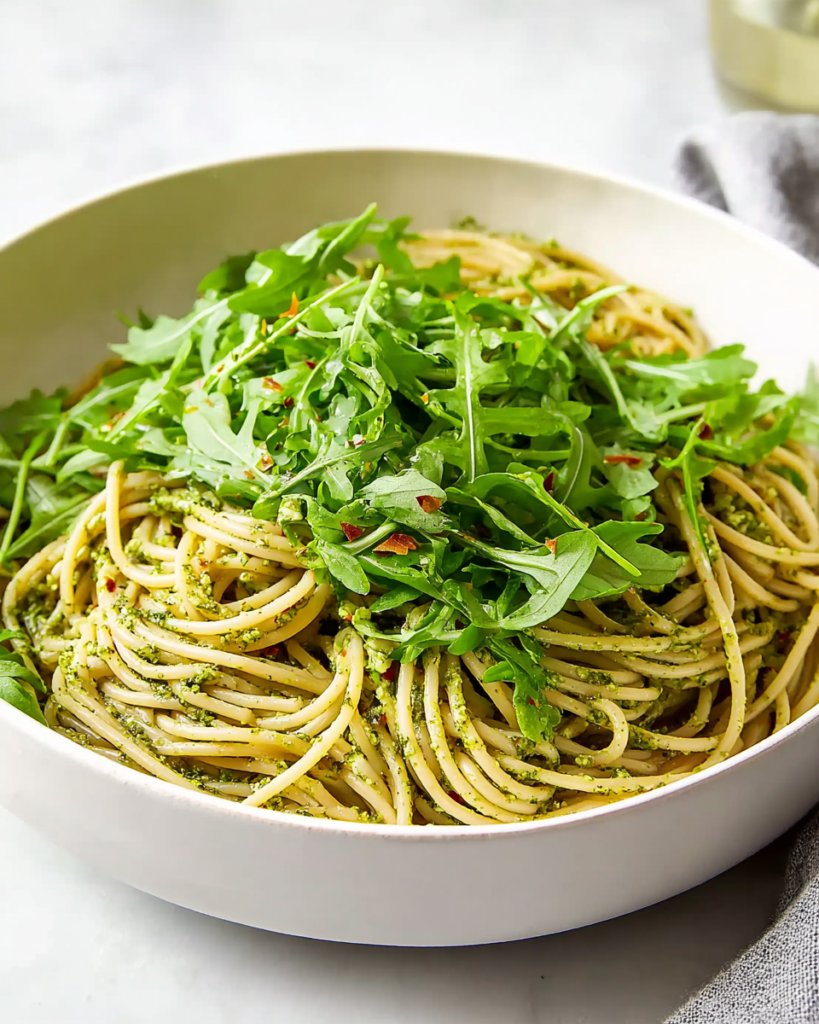
This is the kind of pasta you make when you want something fast but still full of flavor. The pesto coats the noodles with rich herbal depth, while the arugula softens just enough to add freshness without losing its character.
A little reserved pasta water helps everything come together into a glossy sauce instead of a heavy coating. That small step gives you a smoother, more balanced dish with very little effort.
The final touches matter here. Pine nuts add gentle crunch, Parmesan brings salty richness, and red pepper flakes wake up every bite so the whole bowl tastes lively and complete.
Basil Pesto Pasta Ingredients
Spaghetti gives the dish its classic shape and holds the pesto beautifully, especially when cooked just to al dente.
Basil pesto is the heart of the sauce, bringing concentrated herb flavor, richness, and that unmistakable fresh green finish.
Arugula adds a peppery contrast that lightens the pasta and makes the final dish feel fresher and more balanced.
Pine nuts bring a delicate, buttery crunch that works especially well with pesto and lemon.
Lemon juice sharpens the flavors and keeps the pasta from tasting too rich or flat.
Parmesan or dairy-free Parmesan adds a savory finishing layer that melts lightly into the warm noodles.
Extra virgin olive oil helps prevent the pasta from sticking and gives the final bowl a smooth, refined finish.
Sea salt and black pepper help bring the sauce into focus and let you fine-tune the flavor after tossing.
Red pepper flakes add a light kick that makes the basil and lemon feel even brighter.
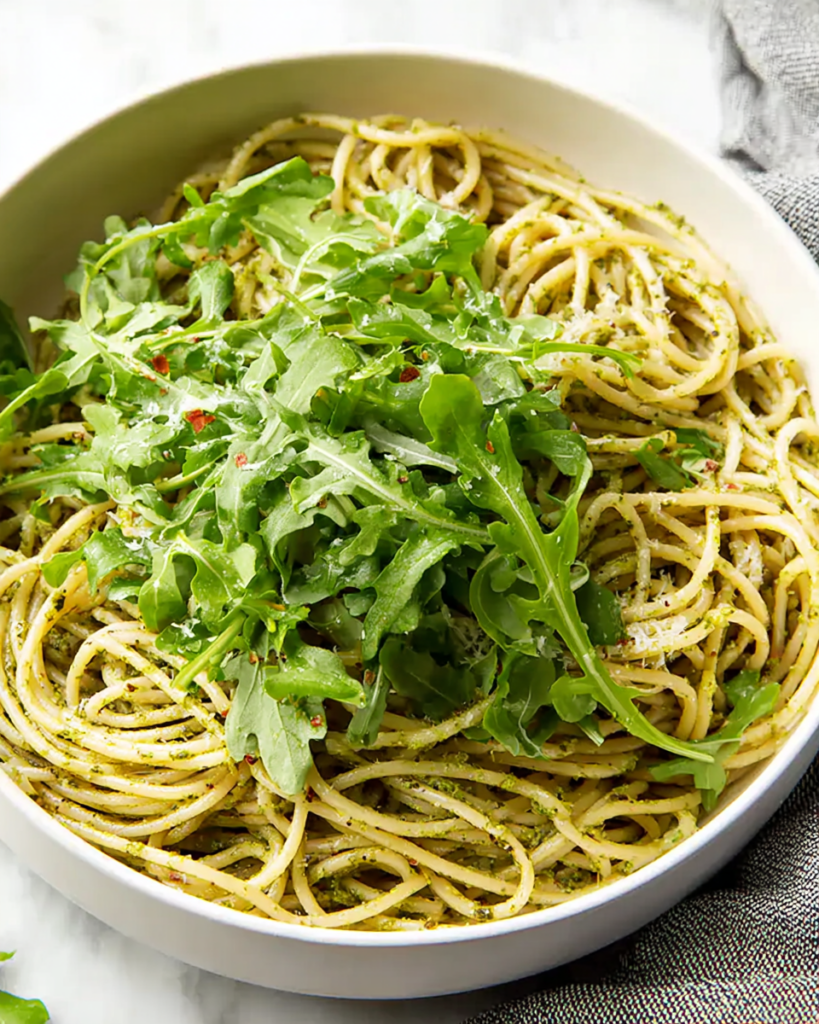
How to Make This Basil Pesto Pasta
STEP 1: Bring a large pot of well-salted water to a boil and cook the spaghetti until al dente. Before draining, scoop out some of the starchy cooking water so you can use it to loosen the sauce later.
STEP 2: Drain the pasta and give it a very light drizzle of olive oil. This keeps the noodles from clumping while you warm the pesto.
STEP 3: Set a large skillet over very low heat and stir the pesto with part of the reserved pasta water. The goal is not to cook the pesto aggressively, but to relax it into a light, glossy sauce.
STEP 4: Add the spaghetti to the skillet and toss until every strand is coated. Add a little more pasta water as needed until the sauce looks silky and clings to the pasta instead of sitting in thick patches.
STEP 5: Remove the pan from the heat and season with lemon juice, salt, and black pepper. Taste here, because this is where the whole dish becomes sharper, brighter, and more balanced.
STEP 6: Add the arugula and toss gently just until it begins to wilt. You want it softened by the residual heat, not fully cooked down.
STEP 7: Plate the pasta and finish with toasted pine nuts, Parmesan, red pepper flakes, and another light drizzle of olive oil if you like. Serve right away while the sauce is glossy and the greens are still vibrant.
Serving Ideas for Basil Pesto Pasta
This pasta works beautifully as a stand-alone main course, especially for a quick lunch or light dinner. Since the flavors are clean and green, it also pairs well with simple sides that do not compete with the pesto.
A crisp tomato salad is a great match because it adds sweetness and juiciness next to the rich noodles. Warm roasted vegetables also fit nicely, especially zucchini, asparagus, or blistered cherry tomatoes.
For something more filling, serve it with a slice of crusty bread to catch any extra pesto left on the plate. That simple addition turns a light pasta bowl into a more complete meal without changing the feel of the dish.
Helpful Tips
- Keep the skillet on very low heat when warming the pesto so the fresh basil flavor stays bright instead of turning dull.
- Toast the pine nuts just until golden and fragrant, because they can go from perfect to overdone very quickly.
- Add the arugula at the very end so it softens slightly but still keeps some bite and color.
Can I use store-bought pesto for this pasta?
Yes, and it works very well here. Since the ingredient list is short, choose a pesto you genuinely enjoy the flavor of. A good store-bought version can still give you a fresh, balanced pasta when paired with lemon, arugula, and pine nuts.
What can I use instead of pine nuts?
You can swap in walnuts, almonds, or even chopped pistachios for a similar crunchy finish. The flavor will change a little, but the dish will still have that important contrast between silky pasta and crisp, nutty texture.
How do I keep pesto pasta from getting dry?
Reserved pasta water is the key. Add it gradually while tossing so the sauce stays loose and glossy. If the pasta sits for a few minutes before serving, another small splash of warm water can help bring it back to life.
Can I make it dairy-free?
Yes. Use a dairy-free pesto or vegan pesto, then finish with your favorite dairy-free Parmesan alternative. The lemon, arugula, and olive oil already bring plenty of flavor, so the dish still tastes vibrant and complete without traditional cheese.
Is arugula necessary in this dish?
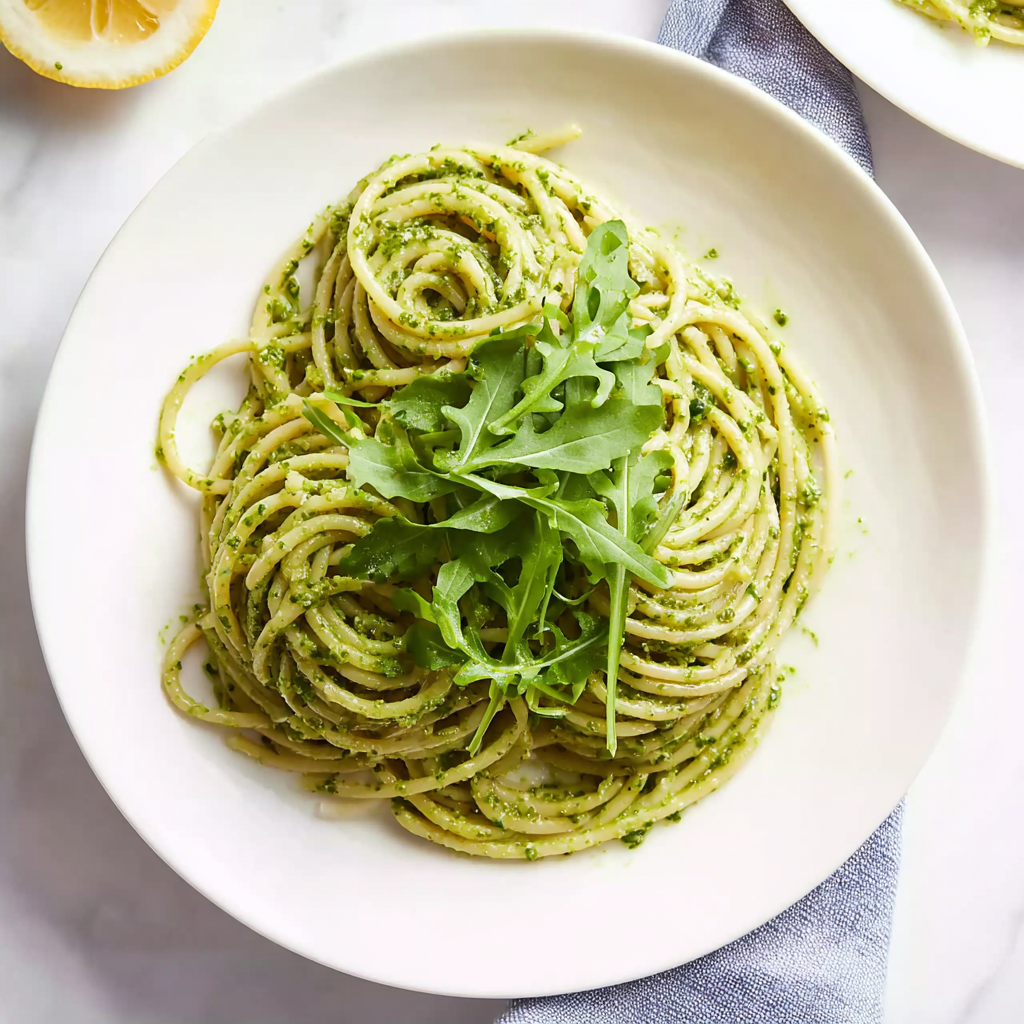
Arugula adds a peppery freshness that makes the pasta feel lighter, but you can replace it with baby spinach if needed. Spinach gives a milder finish, while arugula creates a more lively contrast against the rich pesto.
How to Store & Reheat
This pasta is best served fresh, but leftovers can still be enjoyable if handled gently. Store them in an airtight container in the refrigerator for up to 2 days.
For reheating, place the pasta in a skillet over low heat with a splash of water. Toss gently until warmed through and loosened. The microwave works too, but the stovetop does a better job of keeping the sauce smooth.
Freezing is not the best option for this one. The greens and pesto can lose their fresh texture after thawing, so it is better to make only what you plan to enjoy within a day or two.
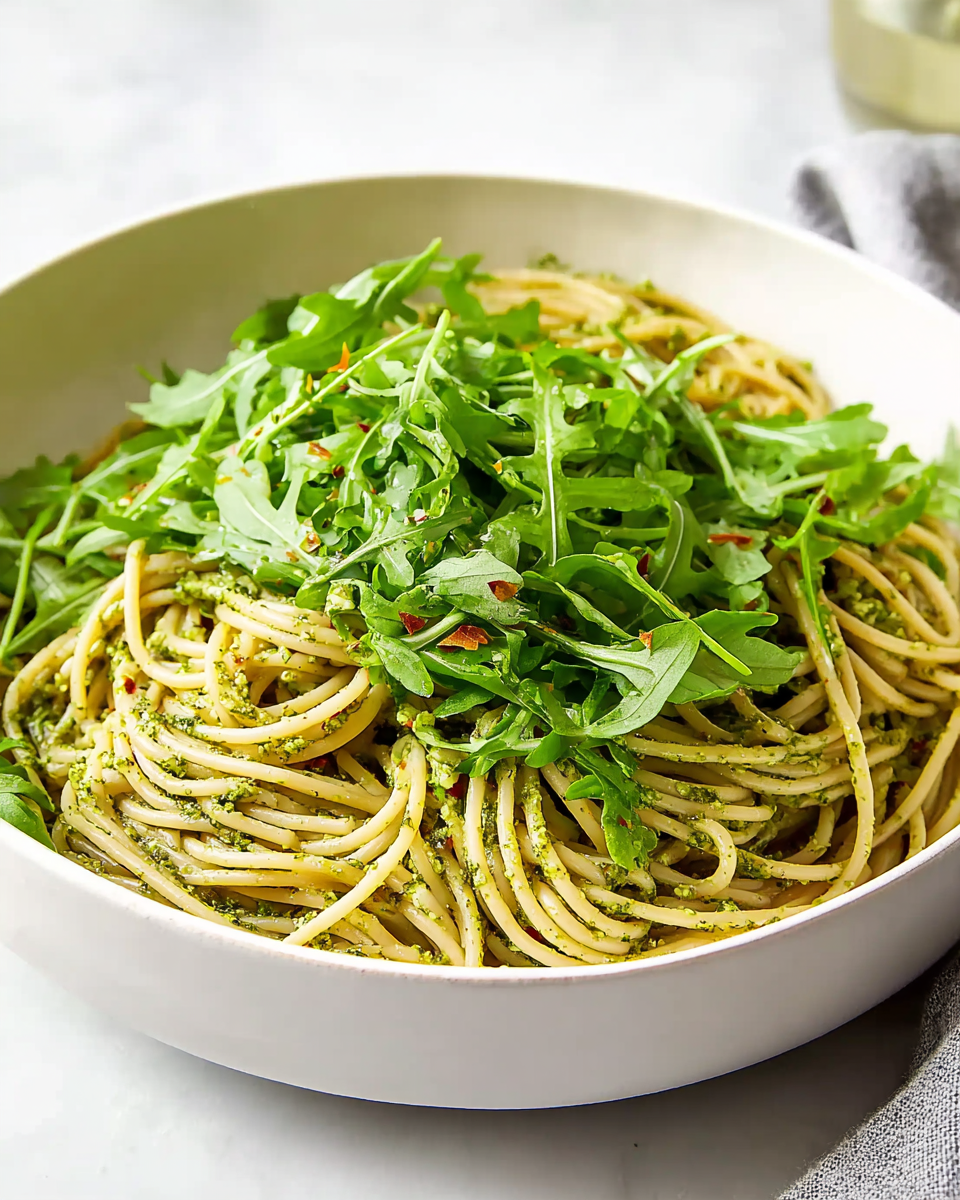
Basil Pesto Pasta
Ingredients
- 6 ounces spaghetti
- 4 cups arugula
- 1/3 to 1/2 cup basil pesto or vegan pesto homemade or prepared
- 2 tablespoons pine nuts lightly toasted for improved flavor
- Freshly squeezed lemon juice to taste
- Freshly grated Parmesan or dairy-free Parmesan for serving
- Sea salt to taste
- Freshly ground black pepper to taste
- Red pepper flakes for garnish
- Extra virgin olive oil for drizzling
Instructions
- Bring a large pot of generously salted water to a boil. Cook the spaghetti according to the package instructions until al dente.
- Before draining the pasta, set aside 1/2 cup of the starchy cooking water. Drain the spaghetti, then lightly coat it with a small drizzle of olive oil to keep it from sticking.
- Place a large skillet over very low heat. Add the pesto along with 1/4 cup of the reserved pasta water, stirring until the mixture loosens into a light sauce.
- Adjust the texture of the sauce as needed by incorporating a bit more of the reserved pasta water, depending on how thick the pesto is.
- Add the drained spaghetti to the skillet and toss thoroughly so the pasta is evenly coated. Add additional pasta water as necessary until the sauce reaches your preferred consistency.
- Remove the skillet from the heat. Season the pasta with lemon juice, sea salt, and black pepper to taste.
- Add the arugula and toss gently just until the leaves begin to soften and wilt slightly while still retaining their freshness.
- Divide the pasta among serving plates. Finish with red pepper flakes, the toasted pine nuts, and freshly grated Parmesan or dairy-free Parmesan. Serve immediately.
Notes
A good-quality extra virgin olive oil gives the pasta a more refined finish.
Homemade pesto works beautifully here, though a well-made store-bought option is also suitable.


