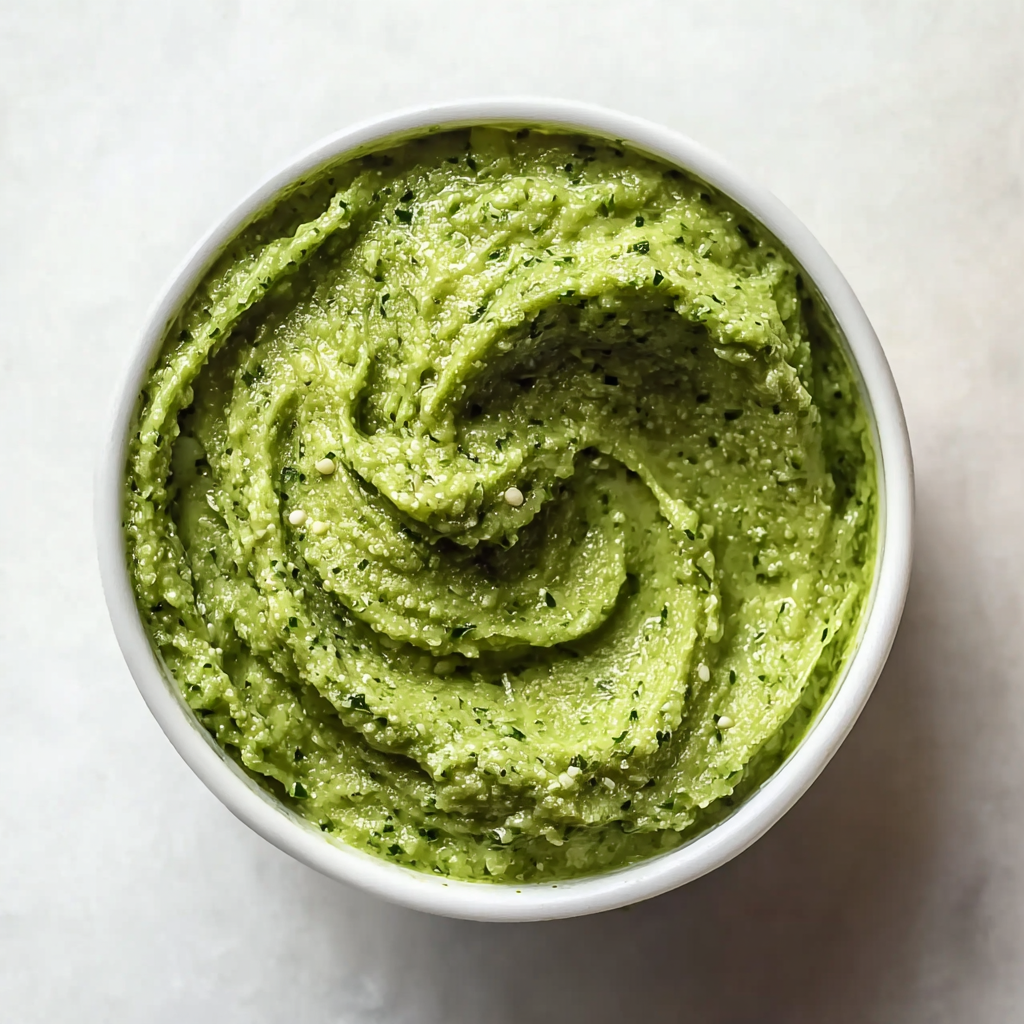
Basil Vegan Pesto No Pine Nuts is a quick, creamy, dairy-free sauce with fresh basil flavor, bright lemon, and a savory finish from nutritional yeast. It blends up fast and works beautifully for pasta, sandwiches, bowls, and simple meal prep.
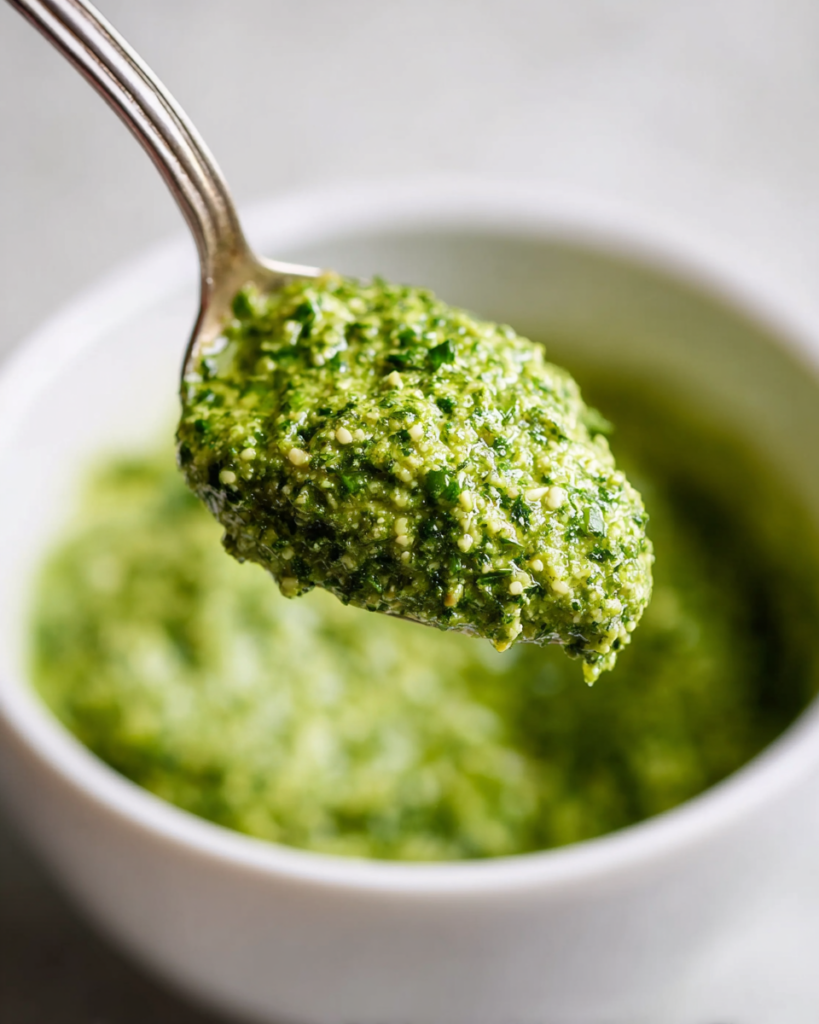
This is the kind of sauce you make when you want something fresh and full of flavor without relying on cheese or pine nuts. It feels light, tastes vibrant, and still gives you that rich, spreadable pesto texture you want.
Roasted pumpkin seeds do a lot of the heavy lifting here. They add body, a gentle nuttiness, and a deeper flavor that pairs really well with basil and garlic. The nutritional yeast rounds everything out and gives the pesto a savory, almost cheesy edge without making it heavy.
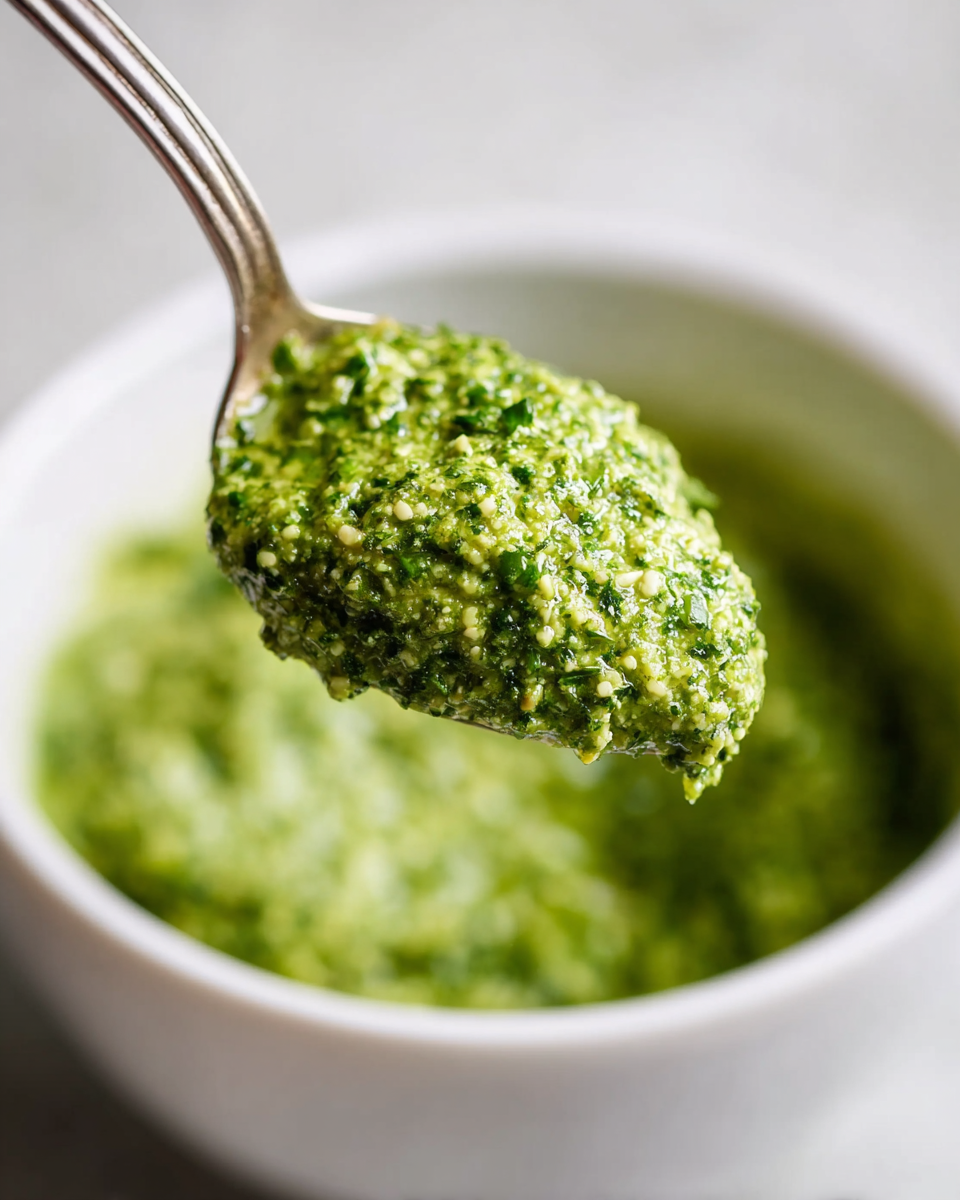
Another reason this one works so well is the texture. Instead of being overly oily, it uses water to create a smooth, creamy blend that is easy to spoon, toss, drizzle, or spread. That makes it especially handy when you want a fresh sauce that feels flexible in your kitchen.
Basil Vegan Pesto Ingredients
Fresh basil leaves: This is the heart of the pesto, giving it that unmistakable herb-forward flavor and bright green color. Use tightly packed leaves for the fullest basil taste.
Pumpkin seeds: Roasting them adds depth and a toasty finish. They replace pine nuts beautifully here and help create a thick, creamy consistency once blended.
Garlic cloves: Fresh garlic brings sharpness and punch. It balances the richness of the seeds and keeps the pesto tasting lively instead of flat.
Lemon juice: A little fresh lemon wakes everything up. It adds brightness and keeps the flavor from feeling too dense or earthy.
Nutritional yeast: This gives the pesto a savory, rounded finish that helps mimic the depth people often expect from a classic pesto, even though this version is completely dairy-free.
Garlic powder and onion powder: These pantry basics reinforce the savory notes and help the sauce taste fuller and more balanced with very little effort.
Salt: A small amount is enough to pull the basil, garlic, and roasted seeds together. You can always fine-tune it after blending.
Water: This is what loosens the mixture into a smooth sauce. It also keeps the pesto feeling fresh and light rather than overly rich.
Cooking Steps
STEP 1: Start by roasting the pumpkin seeds until they smell nutty and look lightly golden. This short oven step makes a big difference because it deepens their flavor and gives the finished pesto a more rounded, savory taste.
STEP 2: While the seeds roast, wash and dry the basil well. You want the leaves clean and mostly dry so the pesto stays bright and smooth instead of turning watery too quickly.
STEP 3: Add the basil, roasted pumpkin seeds, chopped garlic, lemon juice, nutritional yeast, garlic powder, onion powder, salt, and part of the water to a blender or food processor. Starting with a smaller amount of water gives you more control over the final texture.
STEP 4: Blend until the mixture begins to break down into a thick green paste. Pause once or twice to scrape down the sides so the basil and seeds combine evenly.
STEP 5: Add more water gradually until the pesto reaches the consistency you like. For a thicker spread, stop earlier. For something you can toss with hot pasta or drizzle over bowls, blend in a bit more liquid.
STEP 6: Taste the pesto and adjust it before serving. A touch more lemon can brighten it, a little extra salt can sharpen the flavor, and another spoonful of nutritional yeast can make it taste even more savory.
STEP 7: Use it right away or chill it briefly if you want the flavor to settle. Once it rests for a little while, the garlic and basil meld nicely and the texture becomes even more cohesive.
Perfect Pairings
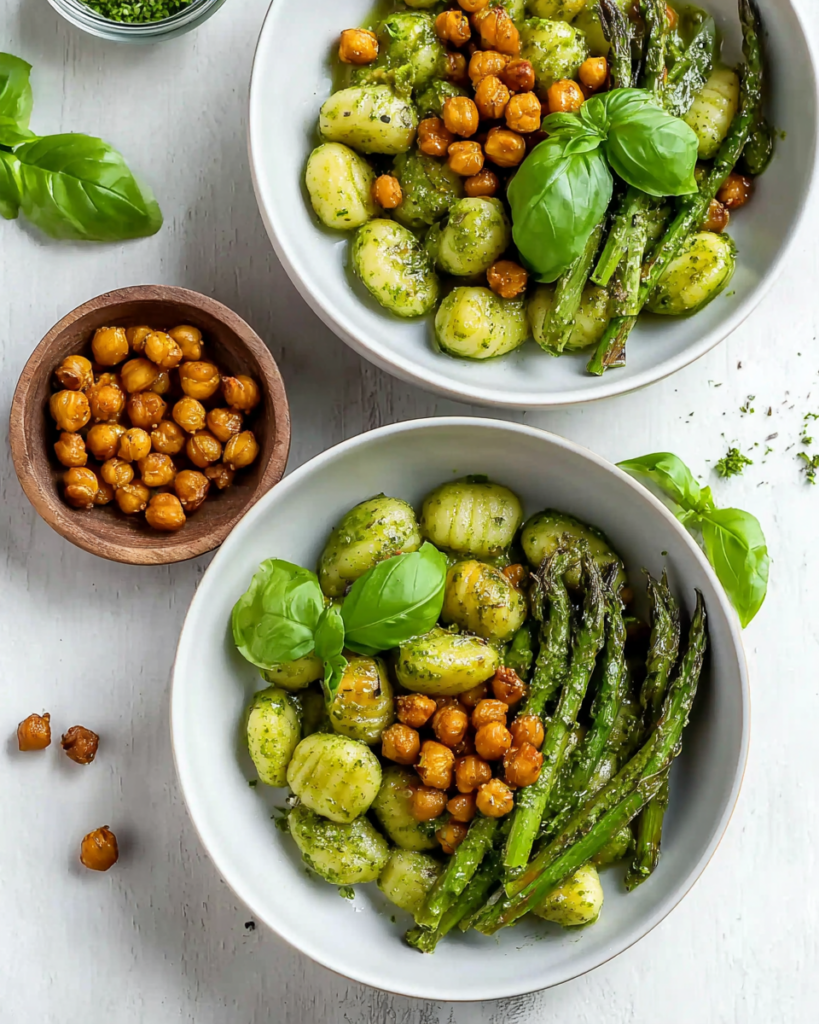
One of the easiest ways to use this pesto is with pasta. Toss it with hot noodles and a splash of pasta water for a quick dinner that tastes fresh and satisfying without needing much else.
It is also great spooned over roasted vegetables, grain bowls, or simple rice dishes. The basil and lemon make earthy vegetables taste brighter, and the creamy texture helps tie a bowl together without a heavy sauce.
For lunches and snacks, spread it onto sandwiches, wraps, or toast. It also works well as a dip for crackers and raw vegetables. If you already have crispy chickpeas on hand, they make a really nice crunchy topping.
Can I make this ahead of time?
Yes. This pesto is a great make-ahead sauce because the flavor stays strong and the texture holds up well after chilling. Just give it a stir before using, especially if it has thickened in the fridge.
Can I use something other than pumpkin seeds?
You can. Sunflower seeds are a good swap if you want a similar texture, and other nuts or seeds can work too. The flavor will change a bit, but the basil, garlic, and lemon still keep it tasting balanced.
How do I keep the pesto from getting too thick?
The easiest fix is adding water a little at a time while blending. If it thickens after chilling, stir in a small splash before serving until it loosens back into a spoonable, spreadable texture.
Is this pesto only for pasta?
Not at all. It is just as useful as a spread, dip, sandwich layer, or finishing sauce for roasted vegetables and grain bowls. That flexibility is one of the best reasons to keep a jar of it in the fridge.
Helpful Tips
- Let the pumpkin seeds cool slightly before blending if you want the basil flavor to stay especially fresh and bright.
- Start with the lower amount of water, then add more gradually so you do not thin the pesto more than you want.
- Taste after a short rest, because the garlic, lemon, and basil become more balanced once the pesto sits for a few minutes.
Keeping Leftovers Fresh
Store the pesto in an airtight container in the refrigerator for up to 4 days. Pressing it down into the container and keeping the surface as level as possible can help it hold its texture better.
For longer storage, freeze it in small portions for up to 2 months. This works especially well if you like having a quick sauce ready for pasta, bowls, or toast without making a fresh batch every time.
This pesto does not really need reheating on its own. For the best flavor, let chilled pesto sit at room temperature for a few minutes, then stir it into warm food. If needed, you can warm it very gently, but avoid cooking it too hard so the basil stays fresh-tasting.
What makes this pesto especially useful is how simple and adaptable it is. You get the brightness of basil, the richness of roasted pumpkin seeds, the tang of lemon, and that savory lift from nutritional yeast in one quick blend. It is the kind of homemade sauce that feels practical on a busy day but still tastes like you put real care into it.
Whether you use it for a fast lunch, a simple pasta dinner, or a flavorful spread to keep in the fridge, this version delivers fresh pesto character without pine nuts or dairy. It is smooth, vibrant, and the sort of staple that can make everyday meals feel a lot more interesting.
Basil Vegan Pesto No Pine Nuts
Ingredients
- 2 cups tightly packed fresh basil leaves
- 1 cup raw unsalted shelled pumpkin seeds
- 3 garlic cloves peeled and coarsely chopped
- 2 tablespoons freshly squeezed lemon juice
- 2 tablespoons nutritional yeast
- 1 tablespoon garlic powder
- 1 tablespoon onion powder
- 1/4 teaspoon salt
- 1/2 to 3/4 cup water added as needed
Instructions
- Preheat the oven to 350°F. Spread the pumpkin seeds across a baking sheet in an even layer so they roast uniformly.
- While the oven is warming, wash the basil leaves thoroughly under cold water. Dry them gently with a clean kitchen towel or spin them dry in a salad spinner.
- Place the baking sheet in the oven and roast the pumpkin seeds for about 10 minutes, or until they become lightly golden and fragrant.
- Once the seeds are roasted and the basil is prepared, assemble all ingredients for blending: basil, roasted pumpkin seeds, chopped garlic, nutritional yeast, lemon juice, garlic powder, onion powder, salt, and water.
- Transfer everything to a blender or food processor. Blend until the mixture becomes smooth and creamy. For a thicker or more textured pesto, blend for less time. Add additional water as needed to reach the preferred consistency.
- Taste the pesto and adjust the seasoning as desired. Add more salt, lemon juice, or nutritional yeast if needed, then serve once the flavor is balanced.