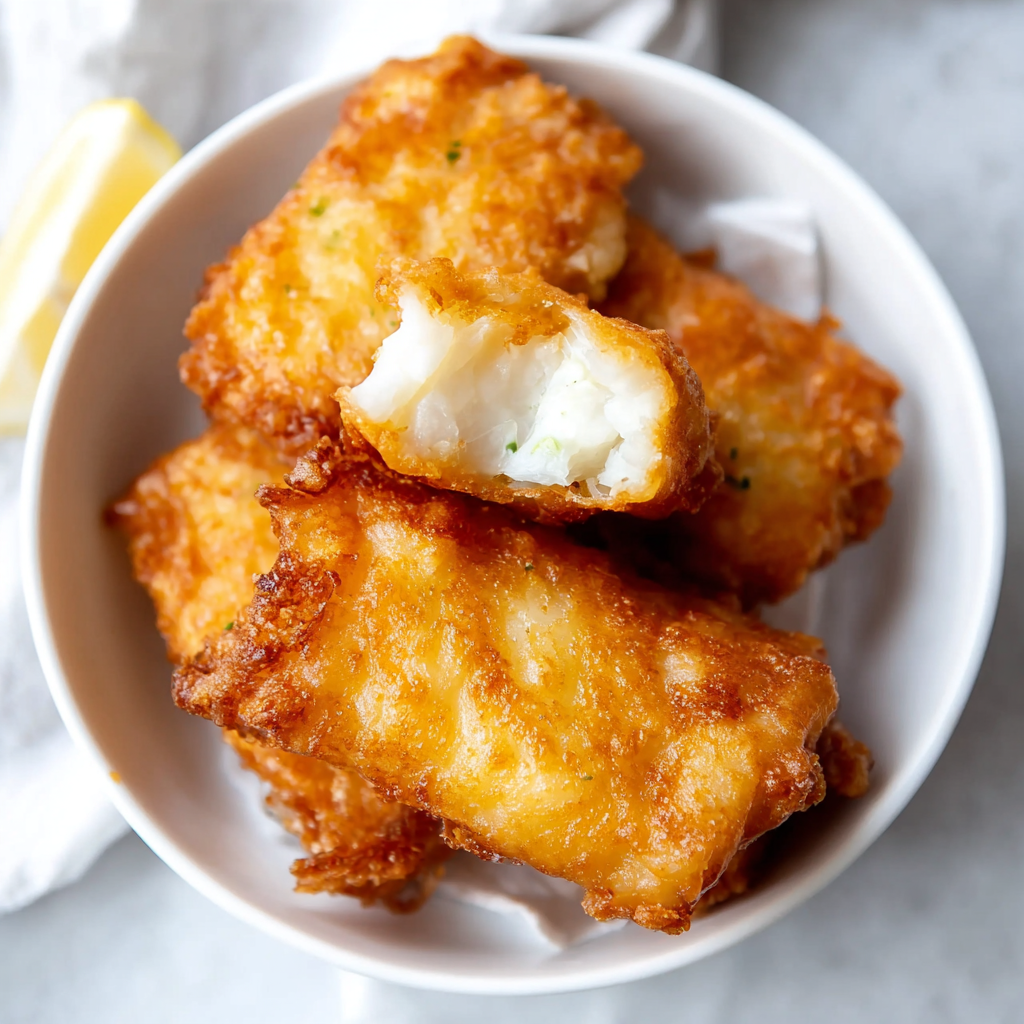
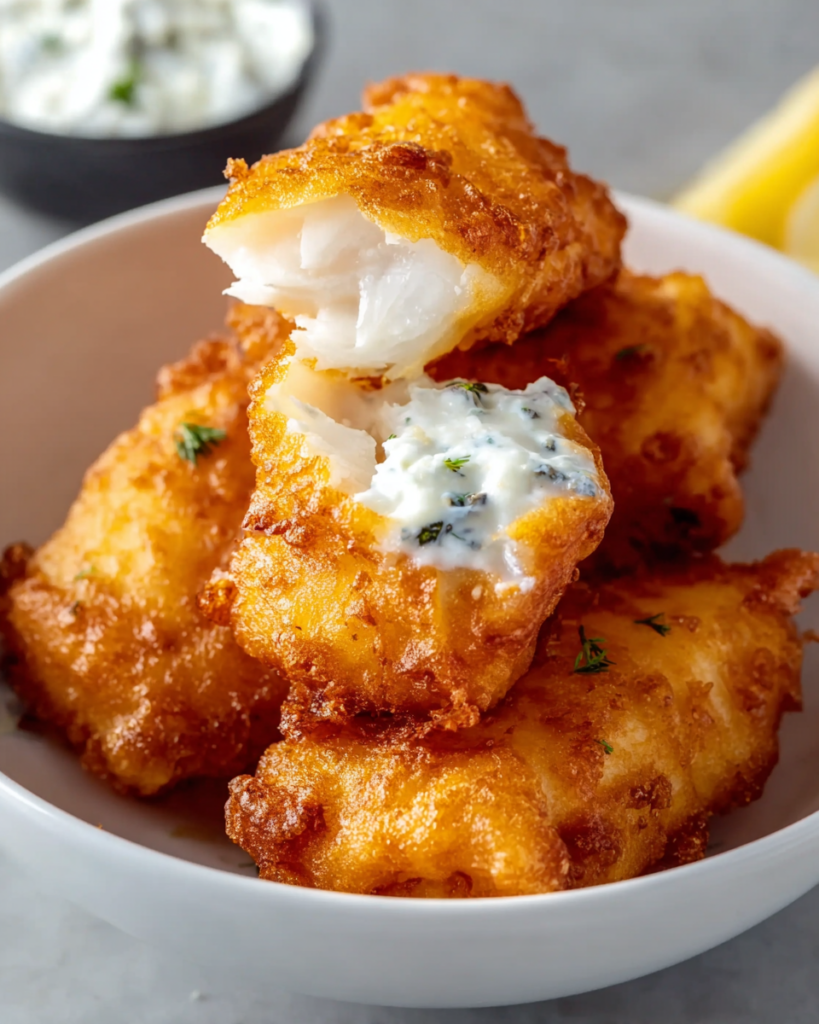
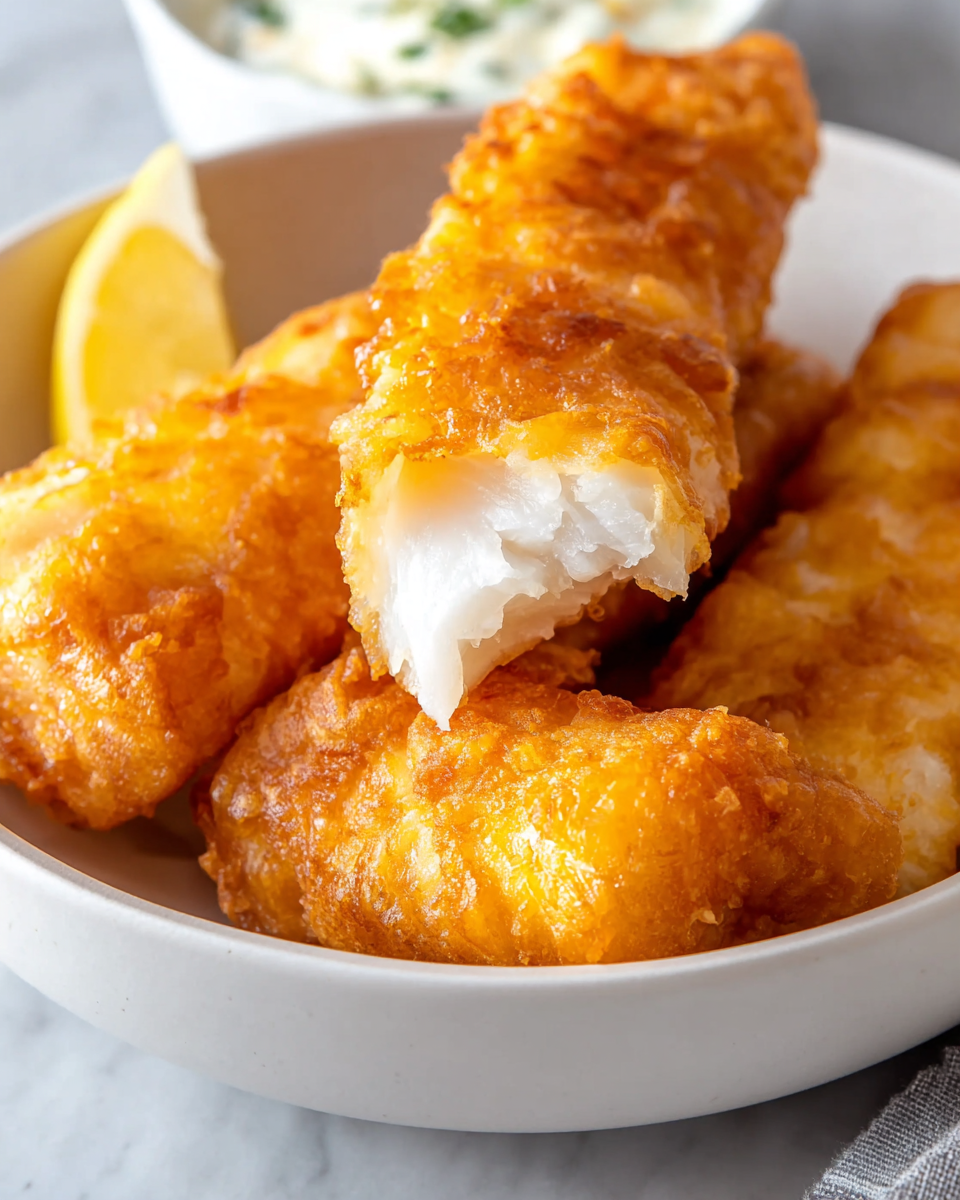
Beer battered halibut is a crisp, golden seafood dinner with a light fry, flaky fish, and a punchy homemade tartar sauce that makes it feel restaurant-worthy without making your kitchen routine feel complicated.
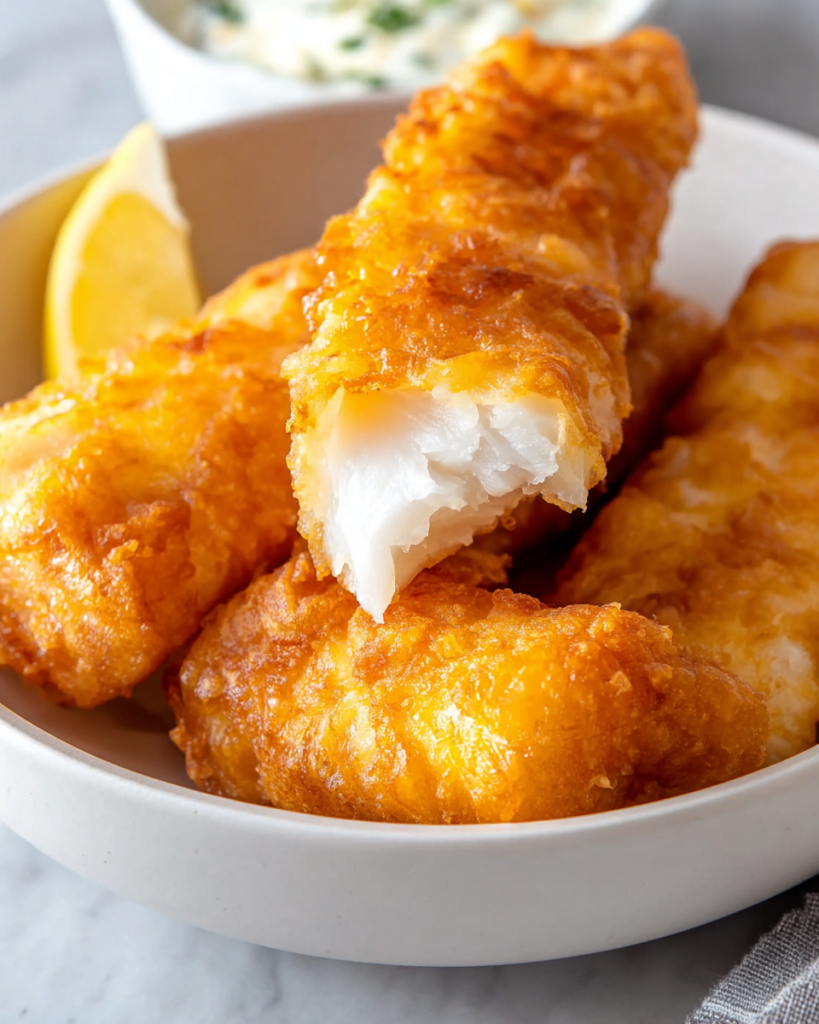
This is the kind of meal that works when you want something a little special but still practical enough to pull off at home. The batter stays light instead of heavy, so the halibut keeps its delicate texture and clean flavor.
What makes this one stand out is the contrast. You get a shatteringly crisp exterior, tender fish inside, and a tartar sauce that brings creaminess, sharp pickle bite, fresh herbs, and just enough tang from Dijon and vinegar.
It also feels flexible in a very real-life way. You can serve it as a main course with fries, tuck it into sandwiches, or plate it with a bright salad and lemon wedges for a dinner that feels fresh, satisfying, and a little bit classic.
What You Need to Make This Beer Battered Halibut
Halibut fillets: Mild, firm fish that holds its shape well in hot oil and stays tender once the coating turns crisp.
Salt: A simple seasoning for the fish that helps bring out the clean flavor before it hits the batter.
Beer: A light lager keeps the batter airy and smooth, helping it fry up delicate instead of dense.
Cake flour: Gives the coating a finer, lighter texture than a heavier flour blend would.
Baking soda: Adds lift to the batter so the crust puffs slightly and fries up beautifully golden.
Frying oil: You need enough oil for safe deep-frying, with room in the pot so the surface stays well below the rim.
Mayonnaise: The creamy base that makes the tartar sauce rich and spoonable.
Pickles: Bring salty bite and sharpness that cuts through the fried coating.
Shallot: Adds a softer, more delicate onion flavor than a stronger raw onion would.
Dijon mustard: Gives the sauce a little edge and ties the creamy and tangy flavors together.
Parsley and tarragon: Fresh herbs brighten the sauce and keep it from tasting flat or overly rich.
Hard-cooked egg: Adds body and a classic tartar sauce feel, making the texture slightly heartier and more satisfying.
White wine vinegar and hot sauce: These finish the sauce with acidity and gentle heat, so every bite of fish tastes fresher.
Lemon wedges and flaky sea salt: The final touch that wakes everything up right before serving.
Cooking Steps
STEP 1: Make the tartar sauce first by stirring together the mayonnaise, chopped herbs, minced pickles, shallot, Dijon, vinegar, salt, diced egg white, crumbled yolk, and a little hot sauce. Let it rest while you cook so the flavors have time to blend.
STEP 2: In a large bowl, whisk the cake flour and baking soda together, then slowly pour in the beer until the batter is smooth and thin enough to coat the fish. Let it sit for a short rest while the oil heats.
STEP 3: Pour the frying oil into a deep, heavy pot, keeping plenty of space at the top, and heat it to 350°F. A small drop of batter should rise quickly and sizzle when the oil is ready.
STEP 4: Pat the halibut dry and season both sides with salt. Dry fish helps the batter cling better and keeps the coating from sliding off too easily in the oil.
STEP 5: Dip each fillet into the batter, let the extra drip away, and lower it into the hot oil carefully. Start by holding each piece near the surface for a moment so the coating begins to set, then release it fully.
STEP 6: Fry the fish until the outside is deep golden and crisp, working in batches so the oil temperature stays steady. Transfer the cooked halibut to a paper towel-lined plate, then serve hot with tartar sauce, lemon wedges, and a light sprinkle of flaky salt.
Perfect Pairings
A pile of hot fries is the classic choice, and it works especially well here because the tartar sauce can do double duty on the plate. If you want that fish-and-chips feeling at home, this is the most natural match.
For something lighter, a crisp cabbage slaw is a great contrast. The crunch and acidity balance the fried coating, and the fresh texture keeps the meal from feeling too heavy.
You can also go with roasted potatoes or a simple green salad dressed with lemon. That kind of side keeps the halibut as the star and lets the herb-filled tartar sauce stand out even more.
Can I use another type of fish?
Yes, as long as it is a firm white fish that can hold together during frying. Cod, haddock, or pollock can work well. The main thing is choosing fillets thick enough to stay juicy inside while the outside gets crisp.
Why is the batter supposed to be thin?
A thinner batter gives you that lighter, more delicate crust instead of a thick, bready shell. You still get crunch, but the coating does not overpower the halibut. It lets the fish stay the center of the bite, which is exactly what you want here.
Can I make the tartar sauce ahead of time?
Absolutely, and it is actually a smart move. Making it a few hours early gives the herbs, pickles, shallot, and Dijon more time to settle into the mayonnaise. Just keep it chilled until serving so it stays fresh and creamy.
How do I keep the fish crispy after frying?
The biggest help is frying in batches and avoiding overcrowding, because crowded oil drops in temperature fast. Once the fish is cooked, serve it promptly. If you need a short hold, place the fillets on a rack instead of stacking them so steam does not soften the crust.
Helpful Tips
- Keep the halibut pieces fairly even in size so they cook at the same pace and finish with the same golden color.
- Stir the batter gently before dipping if it has been resting for a few minutes, but do not overwork it once it is smooth.
- Season with flaky salt right after frying, while the crust is still hot, so the salt catches on the surface instead of falling away.
Keeping Leftovers Fresh
This dish is at its peak right after frying, but leftovers can still be worth saving if you handle them well. Let the fish cool before storing it, then place it in an airtight container in the refrigerator for up to 2 days. Keep the tartar sauce separate so the coating does not get soggy.
If you want to freeze anything, freeze only the cooked fish. The sauce is mayonnaise-based, so it is much better kept in the fridge and enjoyed within about 3 days. Wrap the fish well or store it in a freezer-safe container for up to 1 month.
To reheat, skip the microwave if crispness matters to you. A hot oven or air fryer will bring the coating back to life much better and help the fish stay pleasantly textured instead of soft. A quick squeeze of lemon at the end makes leftovers taste fresher right away.
Beer Battered Halibut
Ingredients
For the tartar sauce
- 1 cup mayonnaise
- 1 tablespoon finely chopped flat-leaf parsley
- 6 small pickles minced
- 1 teaspoon Dijon mustard
- 1 tablespoon chopped tarragon
- 1 teaspoon white wine vinegar
- 1 hard-cooked egg with the yolk crumbled and the white finely diced
- 1 minced shallot
- 1 pinch of salt
- Hot sauce added to taste
For the batter
- 12 fluid ounces beer preferably a lager
- 2 cups cake flour
- 1 teaspoon baking soda
For the halibut
- 6 skinless halibut fillets about 2 ounces each
- 1 teaspoon salt
- 4 cups oil for frying
- Lemon wedges for serving
- Flaky sea salt to taste
Instructions
- Prepare the tartar sauce by combining the chopped parsley, tarragon, minced shallot, and minced pickles in a bowl.
- Add the crumbled yolk and diced white from the hard-cooked egg to the herb mixture.
- Stir in the white wine vinegar, salt, Dijon mustard, mayonnaise, and as much hot sauce as desired. Mix thoroughly, then set the sauce aside so the flavors can blend.
- For the batter, place the cake flour and baking soda in a large bowl and stir with a fork to lighten the mixture.
- Slowly add the beer, stirring continuously, until a thin batter forms that will coat the fish easily. Mix until smooth and free of lumps, then let it stand briefly.
- Pour the oil into a deep, heavy-bottomed pan, ensuring the surface of the oil remains at least 2 inches below the rim. Heat to 350°F (175°C).
- Test the oil by dropping in a small amount of batter. Once it rises and sizzles, the oil is ready. Remove the test pieces with a slotted spoon.
- Season the halibut fillets evenly on both sides with the salt.
- Dip each fillet into the batter, letting any excess drip away before frying.
- Lower each piece partway into the hot oil first so the outer coating can begin to set, then gently release it fully into the oil. Fry until crisp and golden brown, working in batches if necessary.
- Remove the fried fish with a slotted spoon and transfer to a paper towel-lined plate to drain.
- Serve the hot halibut with the tartar sauce on the side, along with lemon wedges and flaky sea salt as desired.