Brazilian Coconut Cake is a quick, moist dessert with an airy sponge, a sweet coconut soak, and a soft finish that makes it perfect for make-ahead gatherings, coffee breaks, or a simple homemade treat with tropical flavor.
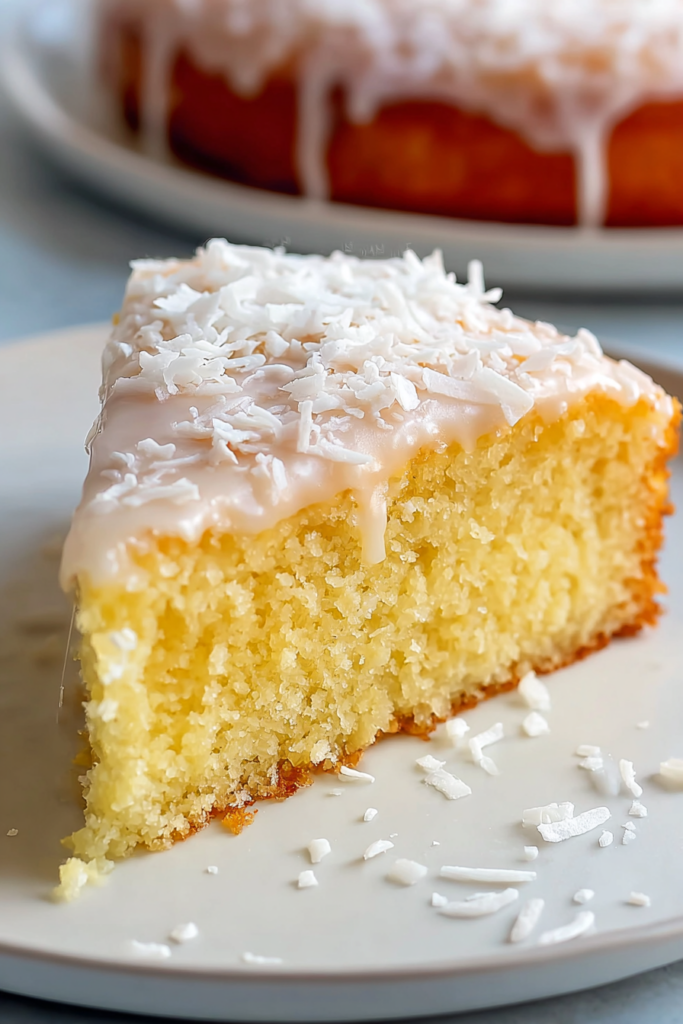
This cake is a lovely choice when you want something that feels special without being complicated. The batter is straightforward, the bake time is manageable, and the coconut glaze does most of the work when it comes to flavor and texture.
What makes it so appealing is the contrast between the light cake and the rich soak. You get a tender crumb that drinks in the coconut and condensed milk mixture, so every slice feels soft, sweet, and satisfying.
It is also the kind of dessert that fits real life beautifully. You can bake it earlier in the day, let it rest while the glaze settles in, and bring it to the table with very little last-minute effort.
Brazilian Coconut Cake Ingredients
Eggs are the foundation of the cake’s airy texture. Separating them and beating the whites helps create a sponge that feels light instead of dense.
Granulated sugar sweetens the cake and helps the egg mixture become smooth and glossy as it is beaten.
All-purpose flour gives the sponge enough structure while keeping the crumb delicate and soft.
Baking powder supports the lift, helping the cake bake up evenly with a tender interior.
Vanilla essence adds warmth and rounds out the coconut flavor without overpowering it.
Unsweetened coconut milk brings clean coconut flavor to both the batter and the glaze, which keeps the cake tasting balanced rather than overly heavy.
Sweetened condensed milk creates the rich soaking mixture that makes this dessert so moist and memorable.
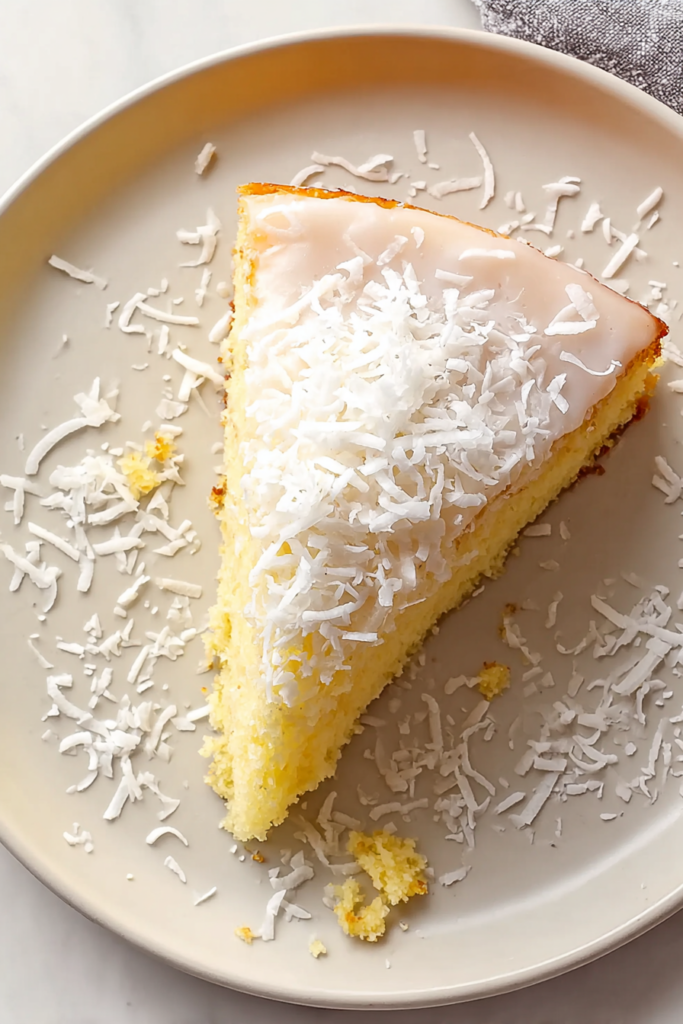
Shredded coconut finishes the top with extra texture and a pretty, snowy look that suits the cake perfectly.
How to Make This Brazilian Coconut Cake
STEP 1: Preheat your oven and lightly grease a square cake pan. Taking a minute to prep the pan properly will make the finished cake easier to remove or slice neatly once it has soaked.
STEP 2: Combine the flour and baking powder in a separate bowl first. This helps distribute the leavening evenly through the batter, which gives you a more consistent rise.
STEP 3: Separate the eggs carefully, then beat the whites until stiff peaks form. This step is what gives the cake its lighter texture, so let the whites get fully whipped before moving on.
STEP 4: With the mixer on low, gradually add the yolks and sugar to the whipped whites, finishing with the vanilla. Mix until the sugar dissolves and the mixture looks smooth and airy rather than grainy.
STEP 5: Add the dry mixture in stages, mixing gently after each addition, then stir in the coconut milk until the batter looks even. Try not to overwork it, because too much mixing can reduce the lift you built into the eggs.
STEP 6: Pour the batter into the prepared pan and bake until the top is set and a toothpick inserted in the center comes out clean. The cake should look lightly golden and feel springy when touched.
STEP 7: While the cake bakes, stir together the condensed milk and coconut milk for the glaze. Once the cake comes out of the oven, poke plenty of holes across the surface, then pour the glaze slowly over the warm cake so it can soak down into the crumb. Finish with shredded coconut after the liquid has had a little time to settle in.
Serving Ideas for Brazilian Coconut Cake
A small cup of strong coffee is one of the nicest companions for this cake. The mild bitterness balances the sweetness of the glaze and keeps each bite from feeling too rich.
Fresh fruit works well too, especially berries or sliced mango. Their brightness adds contrast and makes the dessert feel a little lighter on a warm day.
For a more dessert-style presentation, serve each slice slightly chilled with a spoonful of softly whipped cream. That keeps the texture elegant while letting the coconut flavor stay front and center.
Can I make this cake ahead of time?
Yes, and this is actually one of the best things about it. A little rest time helps the glaze absorb more fully, so the cake often tastes even better a few hours later or the next day.
Why are the egg whites beaten separately?
Beating the whites creates volume and helps the cake stay light and airy. Without that step, the crumb would be more compact, and the finished dessert would lose some of its soft sponge-like character.
Can I use unsweetened coconut for the topping?
You can, especially if you want the finish to be less sweet. The glaze already brings plenty of richness, so unsweetened coconut still tastes good and gives you that classic texture on top.
Should I serve it cold or at room temperature?
Both work well, but many people prefer it slightly chilled. Cooling the cake gives the glaze more time to settle into the sponge, which makes the slices feel moist, neat, and especially refreshing.
Keeping Leftovers Fresh
Because this cake is soaked with condensed milk and coconut milk, it is best stored in the refrigerator. Cover the pan tightly or transfer slices to an airtight container so the surface does not dry out.
It should keep well in the fridge for about 3 to 4 days. In fact, the texture is often at its best after several hours of resting, since that gives the coconut mixture time to fully absorb.
There is no real need to reheat it. This cake is delicious chilled, but you can let a slice sit at room temperature for 10 to 15 minutes before serving if you want a softer bite.
For freezing, wrap individual slices well and freeze for up to 1 month. Thaw them overnight in the refrigerator so the cake keeps its soft texture. The topping may look slightly less fluffy after freezing, but the flavor will still be lovely.
Pro Tips for Brazilian Coconut Cake
- Pour the glaze over the cake while it is still warm, because that is when the crumb is most ready to absorb the liquid evenly.
- Use a skewer or toothpick to make lots of holes across the surface, not just a few in the middle, so every slice gets some of the coconut soak.
- Let the cake rest longer than the minimum soaking time when possible, since the flavor and texture improve noticeably after a little extra time.
This is the kind of dessert that proves a simple cake can still feel memorable. The sponge is light, the glaze is rich without being fussy, and the coconut on top gives every slice a soft, sweet finish that looks just as inviting as it tastes.
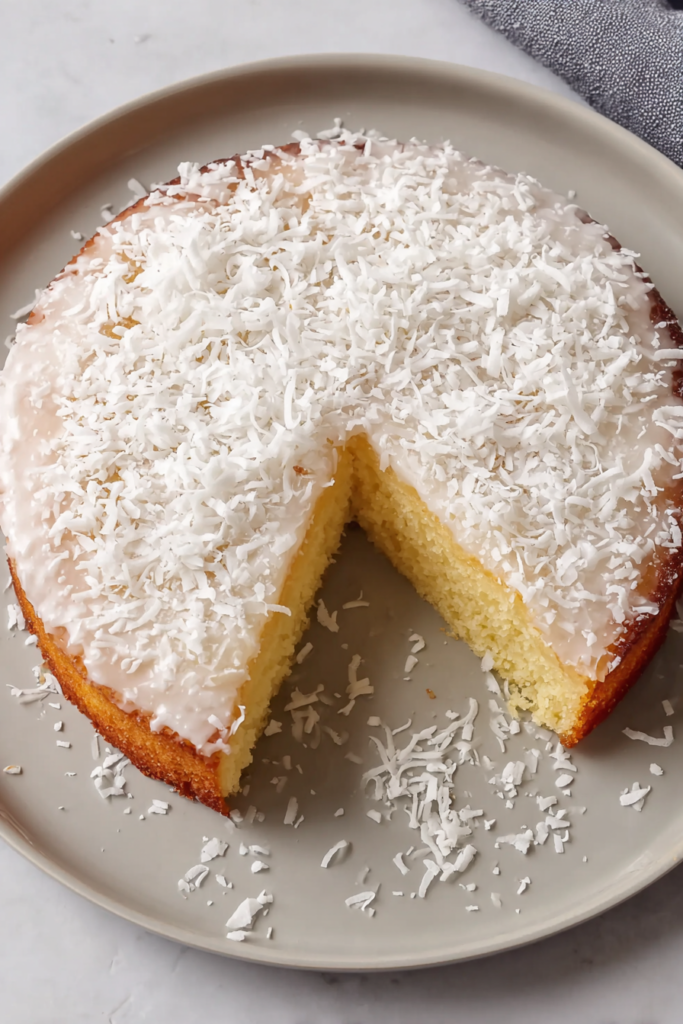
It is especially nice when you want something a little different from the usual frosted cake. Instead of layers and heavy icing, you get a tender square of coconut-soaked sponge that feels comforting, polished, and easy to share.
For family gatherings, casual celebrations, or a weekend baking session, this cake fits beautifully. It brings a gentle tropical flavor, a moist texture, and that satisfying make-ahead convenience that always makes homemade dessert more enjoyable.
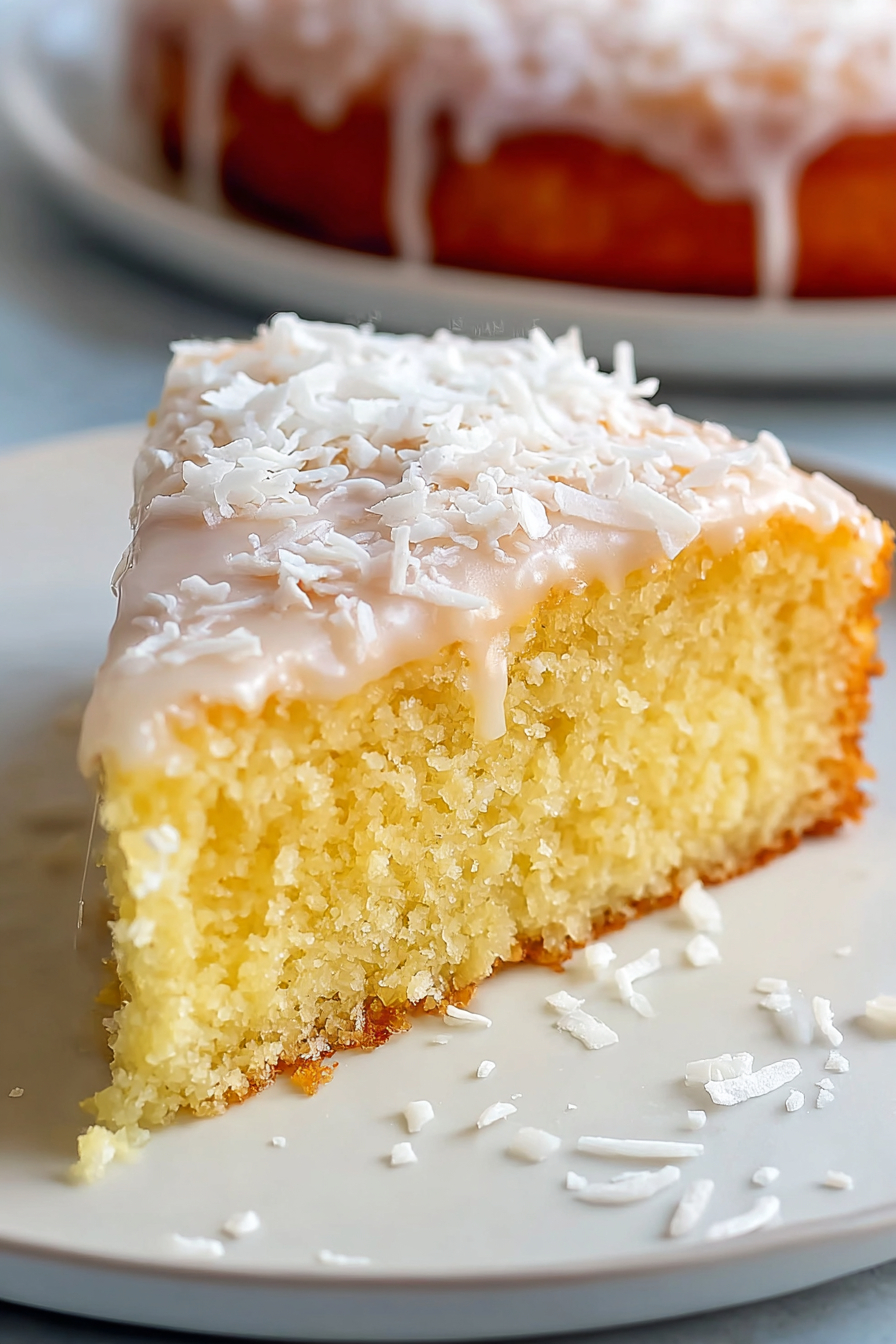
Brazilian Coconut Cake
Ingredients
For the cake
- 1/2 cup unsweetened coconut milk
- 3/4 cup granulated sugar
- 1 teaspoon baking powder
- 4 large eggs separated
- 3/4 cup plain all-purpose flour
- 1 teaspoon vanilla essence
For the glaze
- 3/4 cup sweetened condensed milk
- 1/3 cup unsweetened coconut milk
For the topping
- 3/4 cup sweetened shredded coconut
Instructions
- Preheat the oven to 350°F (175°C). Lightly grease a 9×9-inch cake pan, or a pan of similar size.
- In a medium bowl, sift together the all-purpose flour and baking powder until evenly combined. Set aside.
- Separate the eggs, placing the yolks in a small bowl and the whites in a large mixing bowl or the bowl of a stand mixer. Beat the egg whites on medium-high speed until stiff peaks form.
- Reduce the mixer speed to low and gradually incorporate the yolks and sugar, alternating between one yolk and a portion of the sugar. With the final addition, mix in the vanilla essence. Continue beating until the sugar has dissolved and the mixture appears smooth.
- Add the sifted dry ingredients gradually to the egg mixture, mixing after each addition until the batter is uniform and free of lumps. Stir in the coconut milk until fully blended.
- Transfer the batter to the prepared pan and bake for 25 to 30 minutes, or until a toothpick inserted into the center comes out clean.
- While the cake bakes, prepare the glaze by stirring together the sweetened condensed milk and the coconut milk in a medium bowl until smooth.
- Once the cake is out of the oven, use a skewer or toothpick to poke holes all over the surface. Make plenty of holes so the glaze can soak in thoroughly.
- Pour the glaze evenly over the warm cake and allow it to absorb for at least 10 minutes at room temperature, or chill longer in the refrigerator for a more deeply soaked texture.
- When the cake has absorbed the glaze, scatter the shredded coconut evenly over the top.
- Slice and serve.