Brisket au Jus is a hearty, make-ahead friendly oven braise with deep savory flavor, fork-tender slices, and rich pan juices that make it especially reliable for Sunday dinners, holiday tables, and cozy family meals.
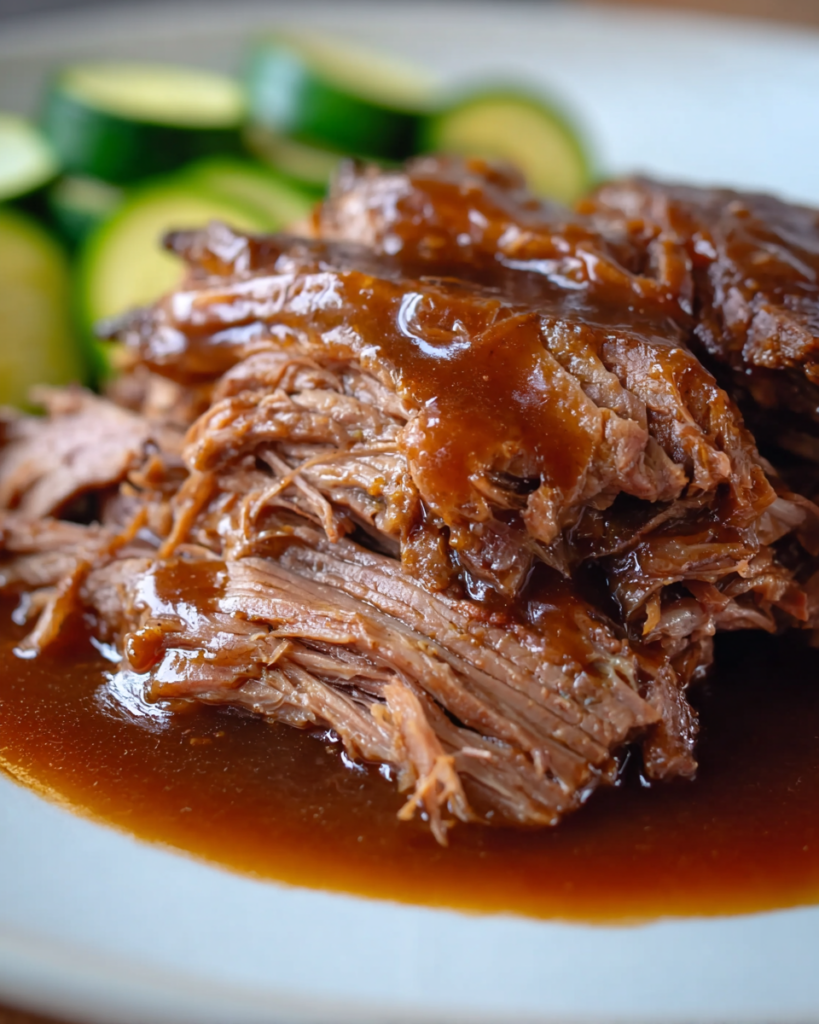
When you want a centerpiece that feels special without demanding constant attention, this is the kind of roast to make. Most of the work happens in the oven, where the brisket slowly softens and the vegetables melt into the cooking juices.
What makes this dish so appealing is the contrast between its simple ingredient list and its full, developed flavor. Onion, garlic, carrots, and herbs build a fragrant base, while the tomato sauce helps the braising liquid turn rich and concentrated.
It also happens to be one of those meals that often tastes even better later. Once chilled, the fat is easier to remove, the brisket slices more neatly, and reheating is simple when you are ready to serve.
Brisket au Jus Ingredients
- Brisket brings the rich, beefy foundation and becomes wonderfully tender after a long, gentle braise.
- Onion creates a sweet, savory bed under the meat and helps flavor the pan juices from the very beginning.
- Carrots add softness and subtle sweetness that round out the richness of the beef.
- Garlic cloves give the roast a deeper, more aromatic backbone without overpowering the finished dish.
- Fresh thyme adds earthy flavor that works beautifully with slow-cooked beef and braising liquids.
- Fresh rosemary gives the roast a more robust herbal note and helps the kitchen smell incredible while it cooks.
- Salt seasons the meat and draws out the full flavor of the brisket as it roasts and braises.
- Tomato sauce enriches the cooking liquid, adding body, color, and a gentle tang that balances the richness.
Cooking Steps
STEP 1: Heat your oven and prep the vegetables first so the roasting pan can be assembled without rushing. Having everything ready makes the process smoother, especially with a large cut like brisket.
STEP 2: Pat the brisket dry, then place it fat side up over a layer of sliced onion in the roasting pan. Scatter the carrots, crushed garlic, and fresh herbs around and over the meat, then season well with salt.
STEP 3: Roast the brisket uncovered at the higher temperature first. This early stage helps the surface take on some color and starts the fat rendering process before the braising liquid is added.
STEP 4: Once the brisket has browned, pour the tomato sauce over it, cover the pan tightly, and continue cooking at a lower temperature. This is when the meat begins its long, slow transformation from firm to tender.
STEP 5: After several hours, check the roast and look at the fat layer. If it has rendered down well, turn the brisket, lower the oven temperature again, and finish cooking until the meat is deeply tender and easy to slice after resting.
STEP 6: Let the brisket rest before cutting. During that time, skim the excess fat from the pan juices and set the softened vegetables aside so you have both the au jus and the vegetables ready for serving.
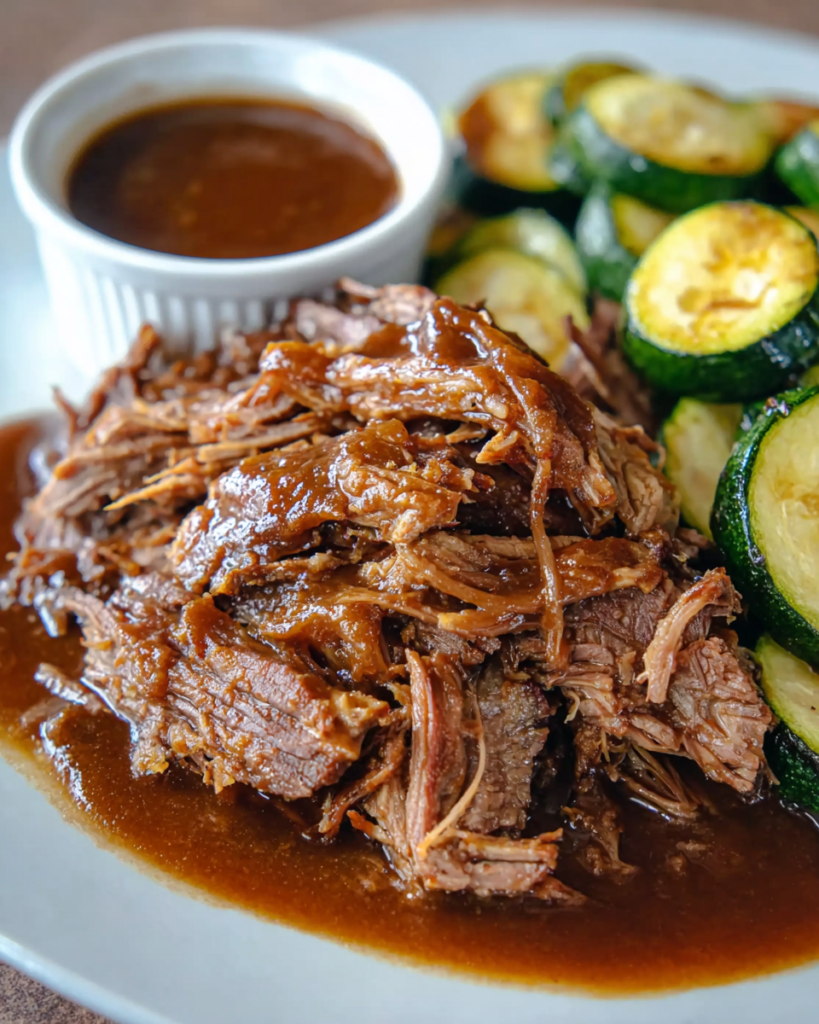
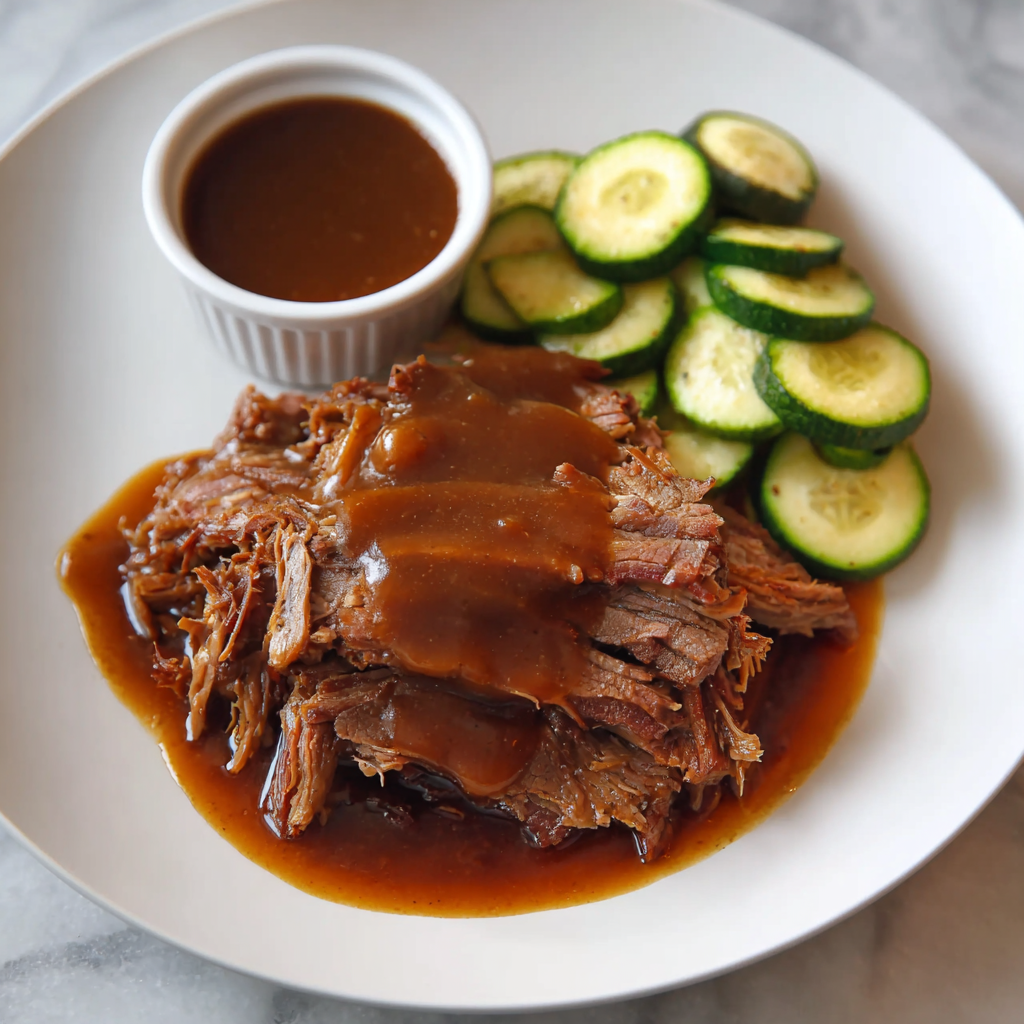
STEP 7: Slice the brisket against the grain and spoon the warm juices over the top. Serve with the cooked vegetables for a full, comforting plate that feels classic and generous.
Can I make this ahead of time?
Yes, and it is a smart choice for entertaining. Chilling the whole brisket overnight helps the juices settle, makes the fat easier to remove, and allows you to slice cleaner portions the next day without the meat falling apart.
Why does brisket need such a long cook time?
Brisket comes from a hardworking part of the animal, so it starts out firm and full of connective tissue. Slow roasting and braising give that tissue time to soften, which is what creates the tender texture you want in the finished dish.
Should I slice the brisket before storing it?
It is better to refrigerate the brisket whole when possible. Keeping it intact helps it stay juicier, and you can slice only what you need when reheating so the remaining meat does not dry out too quickly.
Is tomato sauce traditional in au jus?
In this version, tomato sauce is less about making the dish taste tomatoey and more about deepening the braising liquid. It adds body, richness, and a subtle brightness that helps balance the natural heaviness of a large beef roast.
Helpful Tips
- Use a pan that fits the brisket fairly snugly so the meat stays close to the vegetables and juices as it braises.
- Rest the cooked brisket before slicing so the juices stay in the meat instead of running out onto the cutting board.
- Always slice against the grain for the most tender bite, especially with a cut as substantial as brisket.
What to Serve with Brisket au Jus
A roast like this pairs beautifully with sides that can soak up the extra jus. Creamy mashed potatoes are an obvious favorite because they catch every bit of that savory liquid and make the plate feel extra comforting.
Buttered egg noodles are another great option, especially if you want something simple and family-friendly. Their soft texture works well with the tender beef and the silky spoonfuls of au jus.
For a more traditional roast-style dinner, serve the brisket with green beans or a simple roasted vegetable side. A fresh green element helps lighten the richness of the meat without competing with it.
How to Store & Reheat
Leftover brisket keeps well in the refrigerator for up to 4 days when stored properly. For the best texture, store the meat, vegetables, and juices separately if you can. That makes it easier to skim the chilled fat from the top of the juices before serving again.
For longer storage, freeze the brisket in well-wrapped portions for up to 3 months. It is helpful to freeze some of the jus with the meat so it stays moist when reheated. The vegetables can be frozen too, though their texture may soften more after thawing.
To reheat, place sliced brisket in an oven-safe dish with a small amount of beef stock or some of the reserved cooking juices in the bottom. Cover tightly with foil and warm it in a 300°F oven until heated through. Gentle reheating matters here because brisket can dry out if warmed too aggressively.
Warm the au jus separately on the stovetop so you can spoon it over the beef just before serving. That final addition brings the whole dish back to life and gives the reheated slices the same rich, glossy finish that made the roast so good the first time.
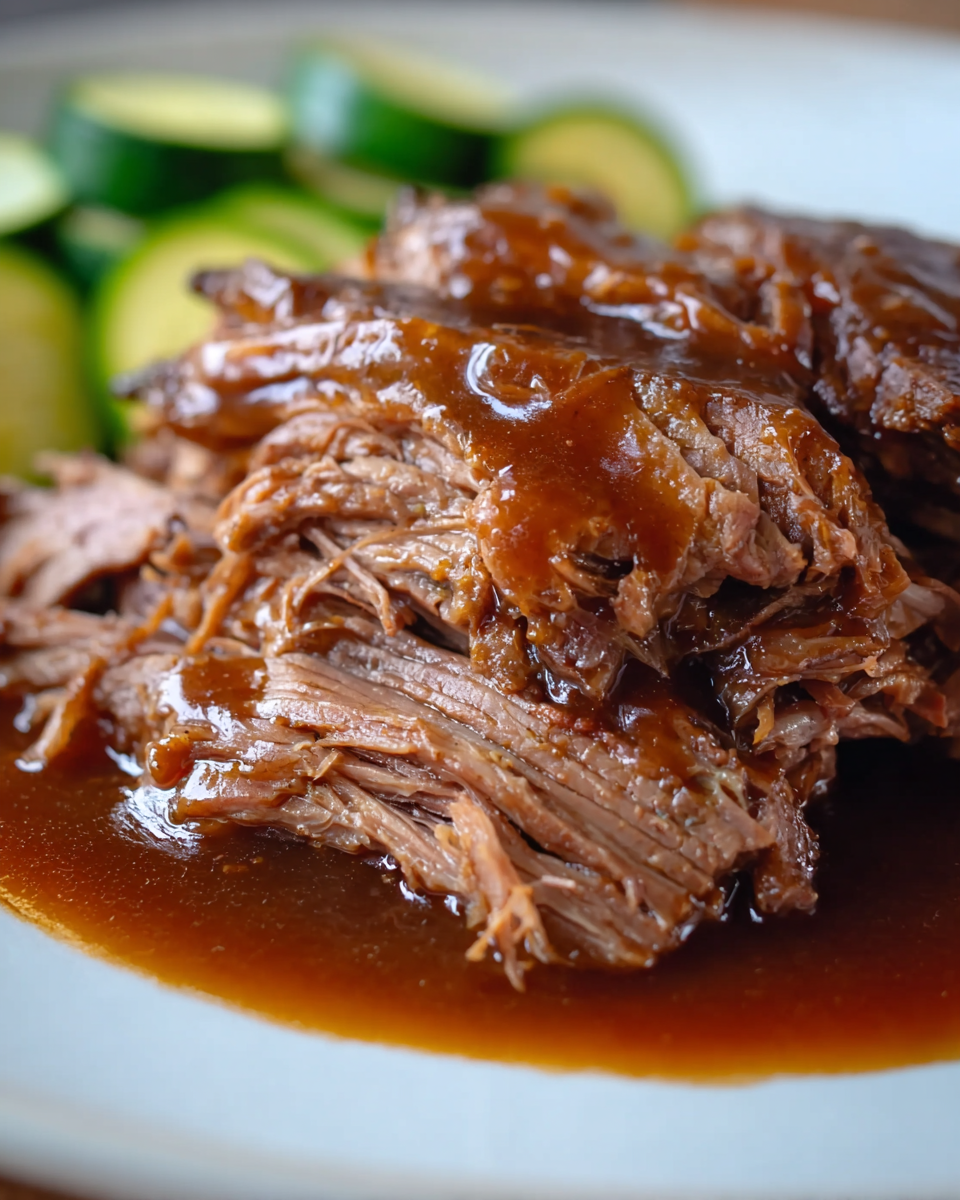
Brisket au Jus Recipe
Ingredients
For the brisket
- 7- pound brisket
- 1 large onion halved and cut into slices
- 3 carrots peeled and chopped
- 6 garlic cloves peeled and lightly crushed
- 4 to 5 sprigs fresh thyme
- 2 to 3 sprigs fresh rosemary
- Salt to taste
For the au jus
- 2 cups tomato sauce
Instructions
- Preheat the oven to 350°F (175°C). While the oven is heating, prepare all of the vegetables so everything is ready before assembling the roast.
- Pat the brisket dry thoroughly with paper towels to remove excess moisture. Arrange the sliced onion in a roasting pan, then set the brisket on top with the fat side facing upward. Scatter the chopped carrots, rosemary sprigs, and crushed garlic around the meat. Season generously with salt, then distribute the thyme over the surface of the brisket.
- Place the roasting pan in the oven uncovered and roast the brisket for 1 hour. This stage allows the meat to brown and begins rendering the fat.
- Lower the oven temperature to 325°F (160°C). Pour the tomato sauce over the browned brisket, cover the pan, and return it to the oven. Continue cooking for 4 hours so the meat becomes tender and fully infused with flavor.
- Check the brisket after this period. If the fat has completely rendered, turn the brisket over, cover the pan again, and reduce the oven temperature to 250°F (120°C). Cook for 1 final hour.
- Remove the brisket from the oven and let it rest for 30 minutes. While it rests, skim the fat from the pan juices and reserve the cooked vegetables for serving.
- Slice the brisket and serve it with the au jus and the reserved vegetables.
- For later reheating, refrigerate the brisket whole. Store the vegetables in one container and the pan juices in another. The following day, once the fat has solidified, remove it and keep the au jus ready for serving.
- To reheat, slice the portion of brisket needed and place it in an oven-safe dish with enough beef stock to lightly cover the bottom. Cover tightly with foil and warm in a 300°F (150°C) oven for 30 to 45 minutes. Heat the au jus on the stovetop and serve alongside the warmed brisket.