Broccoli Pesto Pasta is a quick, vibrant main dish with tender pasta, basil, green olives, Parmesan, garlic, and toasted pine nuts blended into a smooth green sauce that works warm, chilled, or at room temperature.
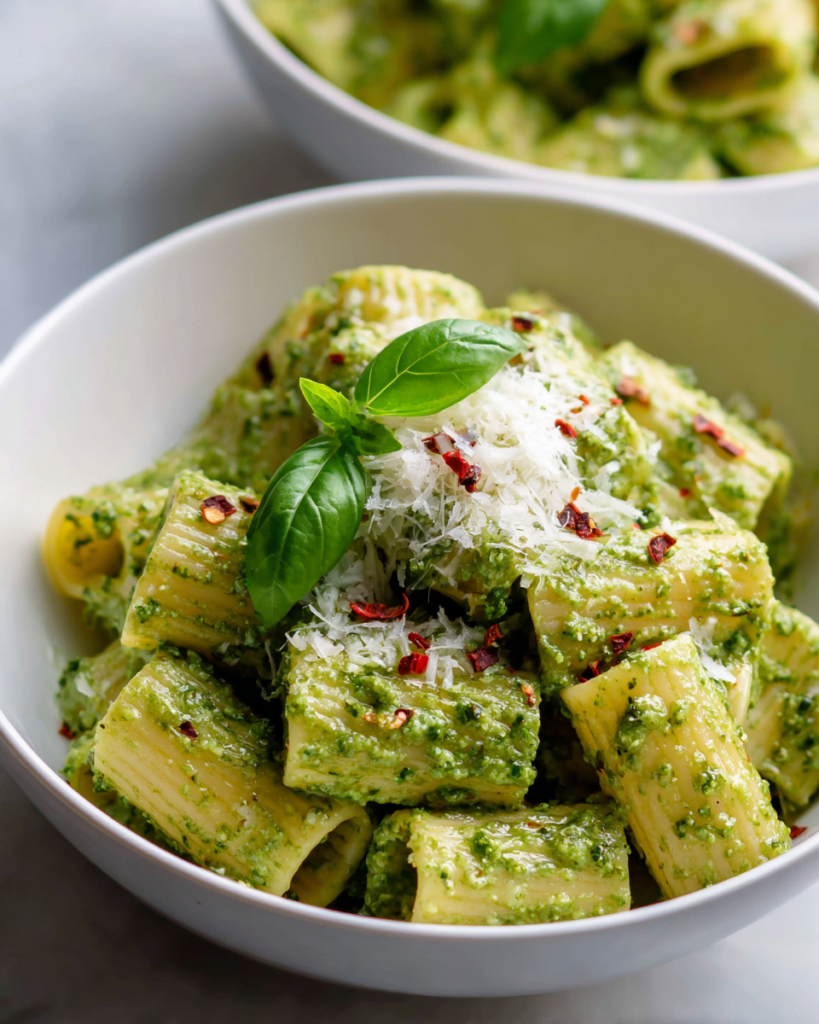
This is the kind of pasta you make when you want something fresh but still satisfying. It has the comfort of a saucy bowl of rigatoni or penne, but the broccoli and basil keep it bright, green, and lively.
The flavor is savory, herby, and gently briny from the olives, with toasted pine nuts adding a rounded richness. A splash of pasta water helps the pesto cling to every ridge and curve, so the finished dish feels glossy rather than heavy.
It is also wonderfully flexible for real life. Serve it right after tossing, pack it for lunch, or let it cool for a simple pasta salad-style dinner with a spoonful of ricotta on top.
What You Need to Make This Broccoli Pesto Pasta
Pasta gives the dish its hearty base. Rigatoni or penne work especially well because their shape catches the pesto and holds onto the sauce.
Broccoli florets add body, color, and a mild vegetable sweetness. Briefly cooking them first softens their texture so they blend smoothly into the pesto.
Fresh basil brings the classic pesto flavor. Use bright, fresh leaves for the cleanest herbal taste.
Green olives add a savory, briny note that makes the sauce taste layered without needing many extra ingredients.
Pine nuts give the pesto richness and a lightly nutty finish. Toasting them first makes their flavor deeper and more aromatic.
Parmesan cheese adds salty, savory depth and helps the sauce taste full and balanced.
Garlic sharpens the flavor and gives the pesto a bold backbone. Rough chopping it before blending helps it mix evenly.
Extra-virgin olive oil turns the blended mixture into a silky sauce and gives the pasta a smooth finish.
Salt and black pepper bring everything into balance. Taste after blending because the olives and cheese already add saltiness.
Ricotta and red pepper flakes are optional toppings. Ricotta makes the bowl creamier, while red pepper flakes add gentle heat.
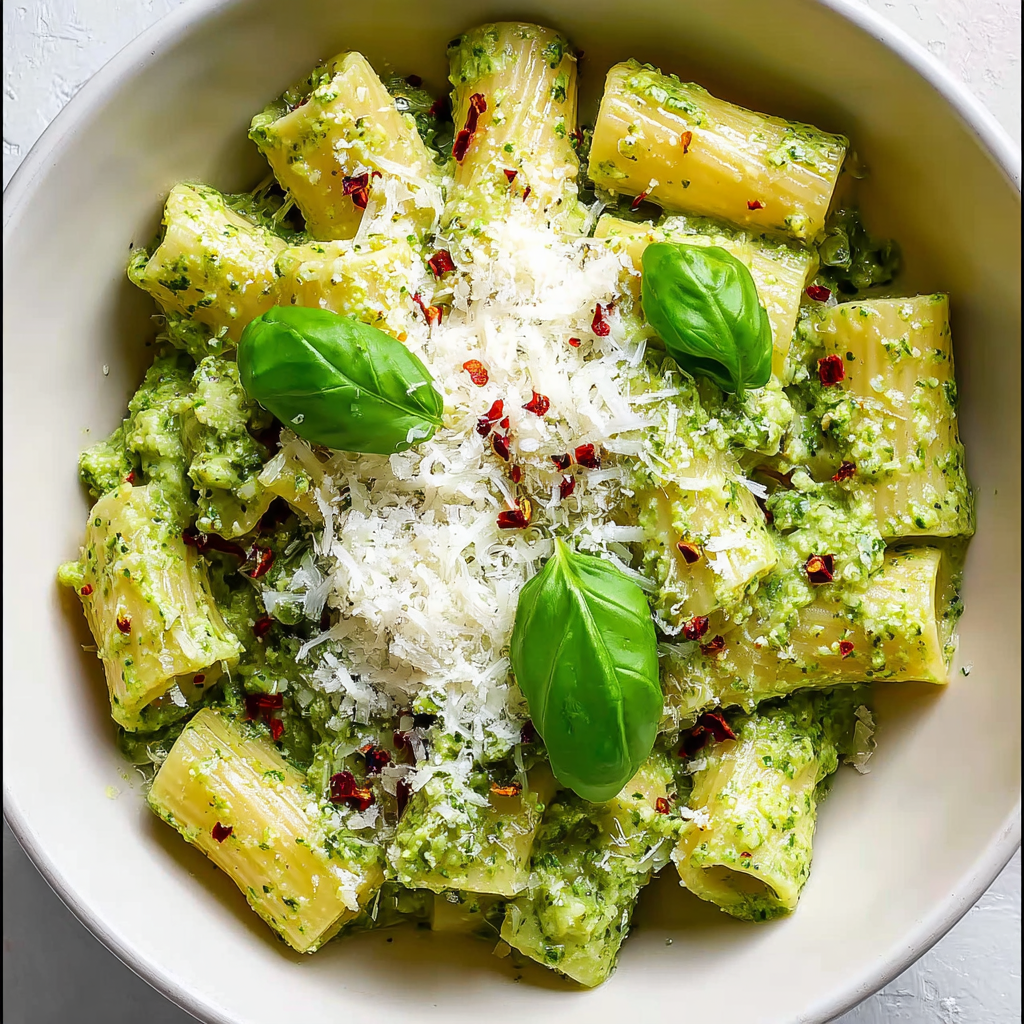
Step-by-Step Broccoli Pesto Pasta
STEP 1: Bring a large pot of salted water to a boil. Add the broccoli florets and cook them briefly, just until their color brightens and they begin to soften. Lift them out with a slotted spoon and transfer them straight to a blender.
STEP 2: Keep the same pot of water boiling and add the pasta. Cook until al dente, following the package timing as a guide. Before draining, scoop out about 1 cup of the starchy pasta water so you can loosen the pesto later.
STEP 3: While the pasta cooks, toast the pine nuts in a small dry pan over medium heat. Stir or shake the pan often, and remove them once they smell nutty and look lightly golden. They can darken quickly, so keep a close eye on them.
STEP 4: Add the toasted pine nuts to the blender with the broccoli. Add the basil, green olives, Parmesan, garlic, black pepper, and part of the reserved pasta water. Pulse until the mixture starts to break down.
STEP 5: Blend again while slowly drizzling in the olive oil. Stop to scrape down the sides as needed, then continue blending until the pesto looks smooth and spoonable. Taste and adjust with salt, pepper, or a small splash of pasta water.
STEP 6: Place the drained pasta in a large mixing bowl. Add enough broccoli pesto to coat the pasta generously, tossing until the sauce clings evenly. Add more pasta water, a couple of tablespoons at a time, until the texture turns glossy and loose enough to coat.
STEP 7: Serve warm right away, or let it cool slightly for a room-temperature pasta dish. Finish each bowl with ricotta, red pepper flakes, extra Parmesan, or a light drizzle of olive oil if you want a richer final touch.
Can I use frozen broccoli?
Yes, frozen broccoli can work well. Cook it just until tender, then drain it thoroughly before blending so the pesto does not become watery. Because frozen broccoli can taste milder, you may want a little extra Parmesan, black pepper, or garlic to brighten the sauce.
Can I make the pesto without pine nuts?
You can make it without pine nuts if needed. The sauce will still blend nicely because the broccoli gives it body. For a similar richness, you can use toasted almonds, walnuts, or simply leave the nuts out and rely on olive oil and Parmesan for depth.
Should this pasta be served hot or cold?
It works both ways. Warm pasta gives the pesto a softer, silkier texture, while chilled or room-temperature pasta makes it feel more like a fresh pasta salad. If serving it cold, toss it again before eating and add a splash of olive oil if it seems tight.
Why is my pesto too thick?
The pesto likely needs more reserved pasta water. Add it gradually, about 2 tablespoons at a time, and toss until the sauce becomes smooth and glossy. Pasta water is better than plain water because its starch helps the sauce cling to the noodles.
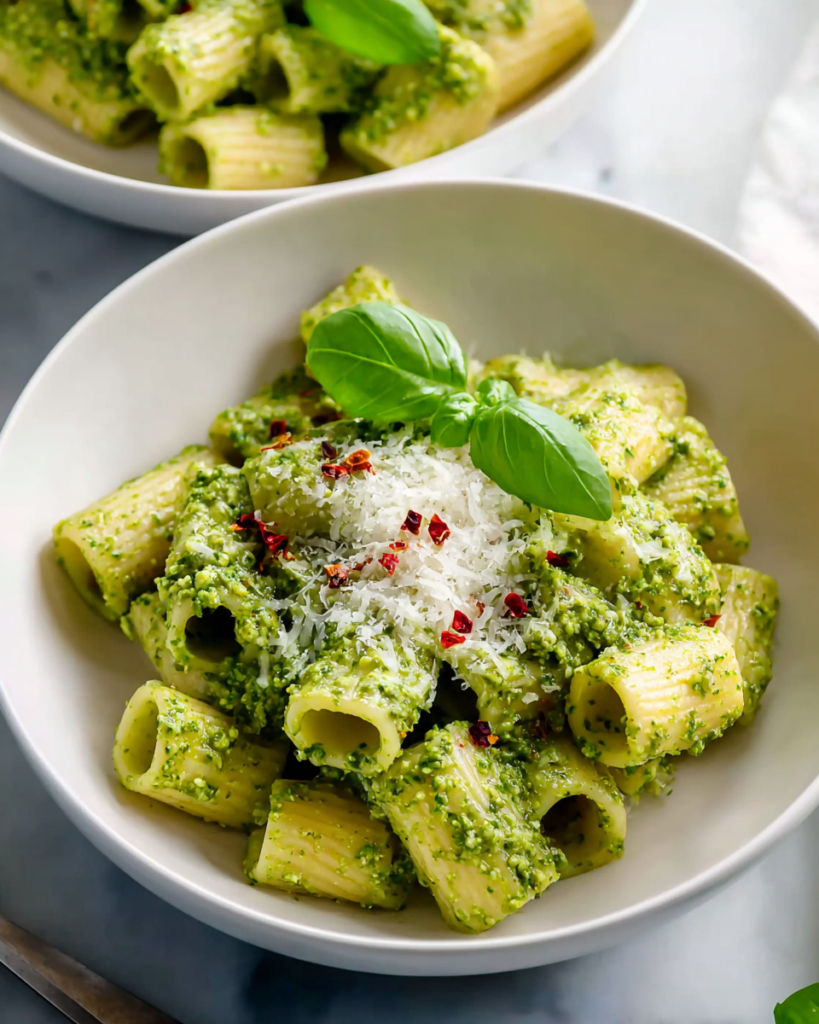
Helpful Tips
- Salt the pasta water well because it seasons both the pasta and the broccoli before the sauce is even blended.
- Do not overcook the broccoli; a quick blanch keeps the flavor fresh and the color bright.
- Add the olive oil slowly while blending so the pesto turns smoother and more cohesive.
What to Serve with Broccoli Pesto Pasta
A crisp green salad is a simple pairing that keeps the meal fresh. Choose lettuce, cucumber, or arugula with a light vinaigrette so the side does not compete with the basil and olive flavor in the pasta.
Garlic bread or a warm crusty loaf also works beautifully. The pesto is smooth and savory, so bread is perfect for scooping up any extra sauce left at the bottom of the bowl.
For a more filling dinner, serve it with roasted vegetables such as zucchini, asparagus, or bell peppers. Their lightly caramelized edges add contrast without making the meal feel too heavy.
Keeping Leftovers Fresh
Store leftover pasta in an airtight container in the refrigerator for up to 4 days. The sauce may thicken as it sits because the pasta continues to absorb moisture, but that is easy to fix before serving.
To reheat, warm the pasta gently in a skillet over low heat with a splash of water or olive oil. Stir often until the sauce loosens and coats the pasta again. You can also microwave it in short intervals, stirring between each round.
This pasta is also good cold, so you do not always need to reheat it. For a lunchbox-style meal, let it come closer to room temperature and refresh it with a small spoonful of ricotta, a sprinkle of Parmesan, or a quick drizzle of olive oil.
Freezing is not ideal for the fully tossed pasta because the basil flavor can dull and the noodles may soften after thawing. If you want to prep ahead, freeze only the pesto in a small container for up to 2 months, then thaw it in the refrigerator and toss it with freshly cooked pasta.
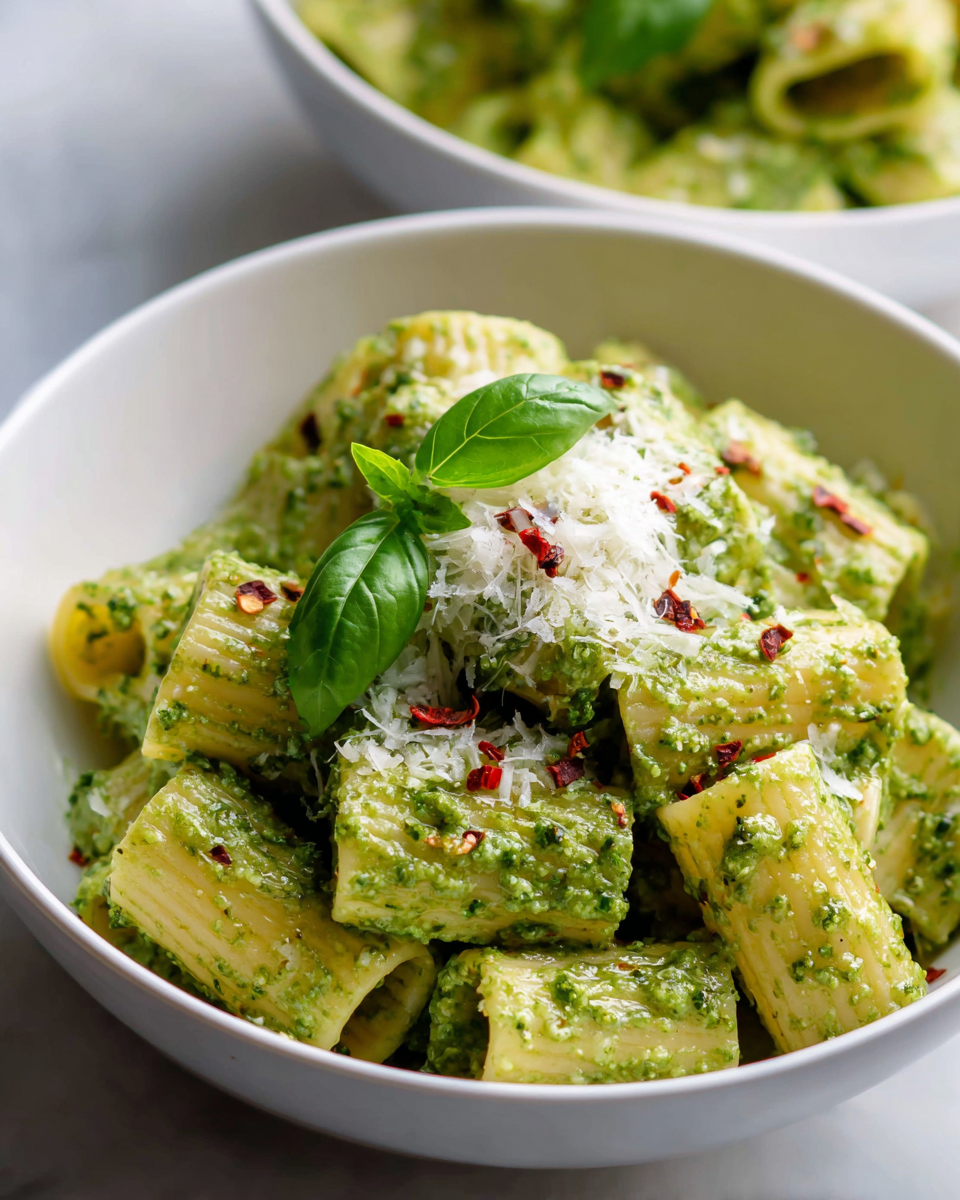
Broccoli Pesto Pasta
Ingredients
- 1 pound pasta such as rigatoni or penne
- 3 tablespoons pine nuts gently toasted to enhance their flavor
- 2 cups broccoli florets
- 1 cup drained pitted green olives preferably Castelvetrano
- 3 tablespoons freshly grated Parmesan cheese
- Freshly ground black pepper to taste
- 2 cups fresh basil leaves roughly the amount from 2 bunches
- 1/4 cup high-quality cold-pressed extra-virgin olive oil
- 3 garlic cloves coarsely chopped for easier blending
- Salt to taste
- Red pepper flakes optional, for serving
- Ricotta optional, for serving
Instructions
- Bring a large pot of salted water to a rolling boil. Add the broccoli florets and cook them for 1 minute.
- Lift the broccoli from the water with a slotted spoon and place it in a blender.
- Return the same pot of water to a boil. Add the pasta and cook until al dente, about 10 to 12 minutes, or follow the timing listed on the pasta package.
- Drain the pasta, reserving 1 cup of the starchy cooking water before discarding the rest.
- Place the pine nuts in a small saucepan over medium heat. Toast them for about 3 minutes, stirring or shaking the pan often, until they become aromatic and lightly golden. Watch carefully so they do not burn.
- Add the toasted pine nuts to the blender with the broccoli. Include the green olives, basil, garlic, Parmesan, black pepper, and 1/2 cup of the reserved pasta water.
- Pulse until the mixture begins to come together, pausing to stir and scrape down the mixture as needed.
- With the blender running, gradually pour in the olive oil. Stop occasionally to scrape the sides, then continue blending until the pesto becomes smooth and fully puréed.
- Taste the pesto, then season with salt and more black pepper as desired.
- Transfer the cooked pasta to a large bowl. Add the desired amount of broccoli pesto and toss until the pasta is evenly coated.
- Loosen the sauce with more reserved pasta water if needed, adding 2 tablespoons at a time until the texture is smooth and glossy.
- Serve the pasta warm, chilled, or at room temperature. Garnish individual portions with ricotta, red pepper flakes, a small drizzle of olive oil, or extra grated Parmesan as desired.