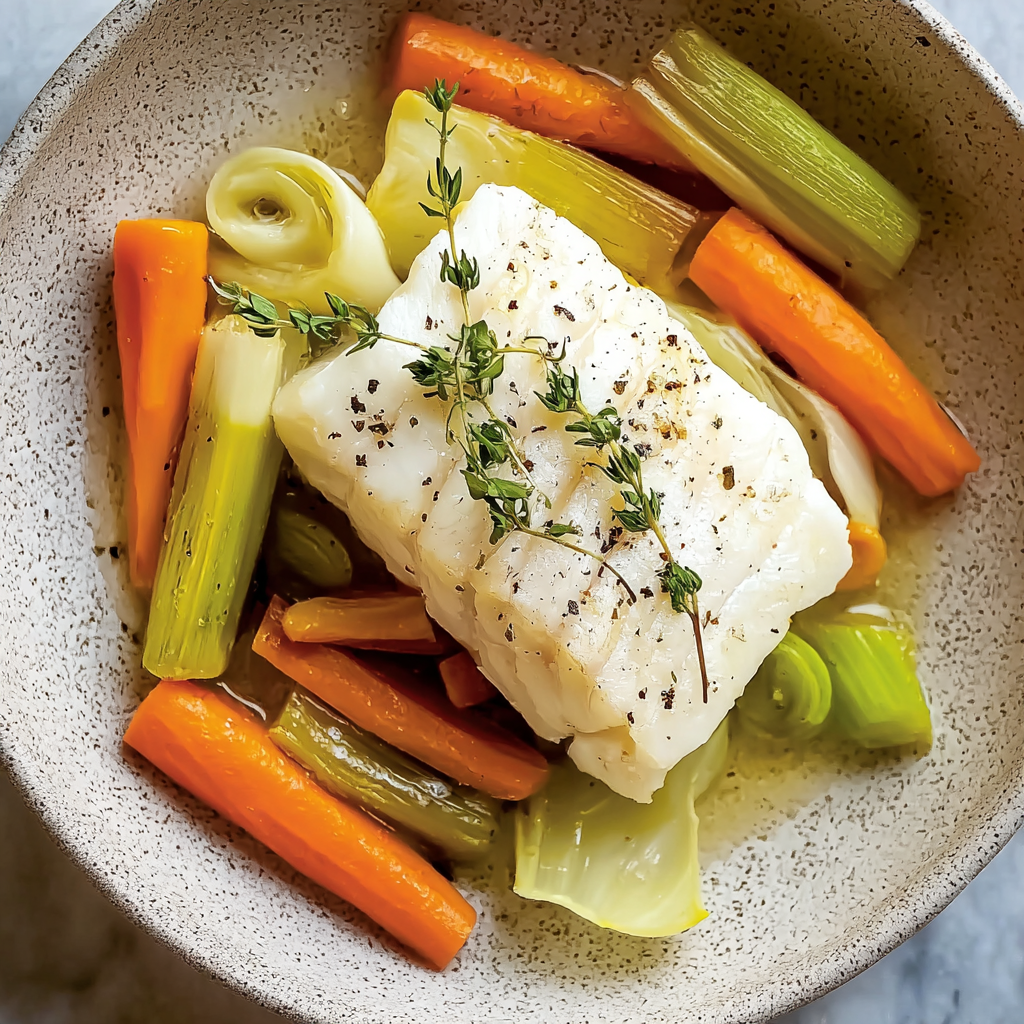
Quick, elegant, and beginner-friendly, Casserole Baked Halibut pairs tender fish with buttery leeks, sweet carrots, and fragrant thyme for a light main dish that feels special without a heavy sauce. It is reliable for both weeknight cooking and simple entertaining.
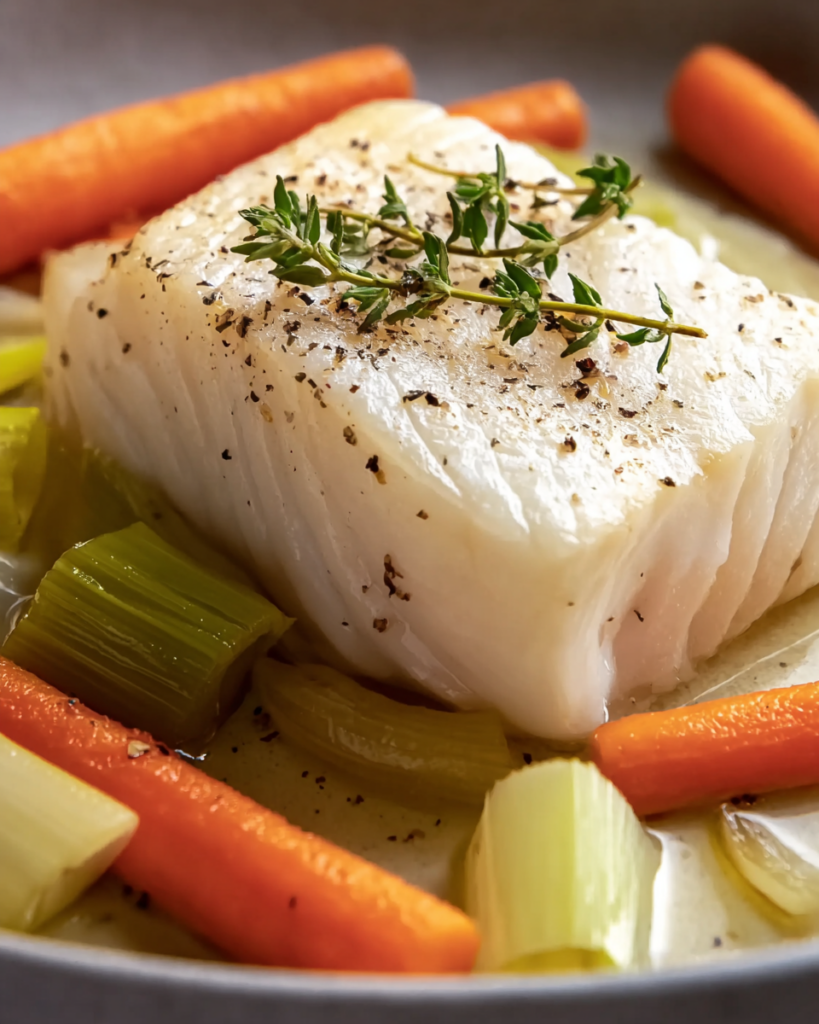
This is the kind of seafood dinner that looks quietly impressive on the table but stays very practical in your kitchen. The vegetables do double duty here, building flavor underneath the fish while also becoming the ready-made side.
You get a gentle, moist bake instead of an aggressive roast, which is exactly what halibut needs. The parchment and lid help hold in steam, so the fillets stay delicate while the pan juices turn into something worth spooning over every bite.
It also helps that the ingredient list is short and classic. Leeks, carrots, thyme, bay, and olive oil give the dish a clean, savory backbone that lets the halibut remain the star.
What You Need to Make This Casserole Baked Halibut
Halibut fillets bring the main substance to the dish and bake up firm yet flaky when cooked gently over the vegetables.
Leeks create a soft, mellow base with a subtle onion flavor that feels sweeter and more refined than regular onions.
Carrots add color, light sweetness, and enough texture to balance the tenderness of the fish.
Olive oil helps soften the vegetables, carries the herb flavor, and adds richness to the finished pan juices.
Fresh thyme sprigs perfume the whole skillet with an earthy aroma that pairs beautifully with mild white fish.
Bay leaves deepen the savory flavor in a quiet way and round out the vegetable bed.
Salt seasons both the vegetables and the fish so every layer tastes finished rather than flat.
White pepper gives gentle warmth without overpowering the delicate flavor of halibut.
Cooking Steps
STEP 1: Start by heating your oven and getting a large ovenproof skillet ready. This dish works best when you build the vegetables on the stovetop first, so they have a head start before the fish goes into the oven.
STEP 2: Cook the carrots in olive oil until they begin to pick up a little color. That small bit of browning adds depth and keeps the finished dish from tasting too soft or watery.
STEP 3: Add water, cover, and let the carrots soften just until crisp-tender. Then add the leeks with a bit more water and continue cooking until they begin to slump and turn silky.
STEP 4: Season the vegetables well and add the thyme sprigs and bay leaves. At this stage, the skillet should smell fragrant and savory, with the leeks looking softened but not browned.
STEP 5: Season the halibut separately, then nestle the fillets over the leek and carrot mixture in an even layer. This keeps the fish slightly elevated while letting it absorb all the aromatic steam rising from below.
STEP 6: Drizzle the remaining olive oil over the fish, cover the top with parchment, and seal the skillet with a heavy lid. That covered bake is what keeps the halibut moist and helps the vegetables finish gently underneath.
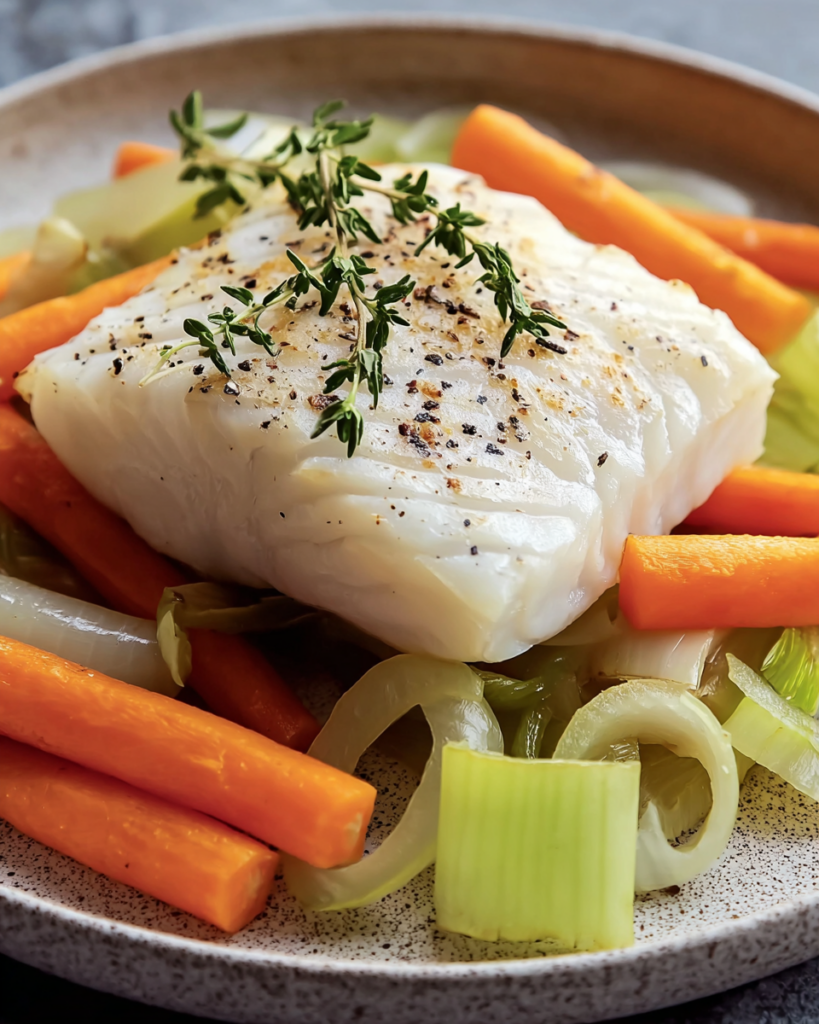
STEP 7: Bake until the fillets are just opaque and flake easily with a fork. Remove the herb stems and bay leaves, then plate the fish with generous spoonfuls of vegetables and all those light, savory juices from the pan.
Helpful Tips
- Do not overcook the halibut. Pull it from the oven as soon as it flakes easily, since it can dry out quickly if left too long.
- Wash leeks very well after slicing. They often hold grit between the layers, and a good rinse keeps the finished dish clean and delicate.
- Use a skillet or baking dish that lets the fillets sit in a single layer so they cook evenly and stay tender.
Can I use another fish instead of halibut?
Yes. Cod, haddock, or another firm white fish can work well here. Choose fillets of similar thickness and begin checking a little early, since leaner fish may cook faster than halibut.
Why is parchment placed over the fish?
The parchment helps trap moisture close to the fillets while still allowing a gentle oven bake. It creates a softer cooking environment, which is especially helpful for keeping halibut tender instead of dry.
Can I prepare the vegetables ahead of time?
Yes. You can soften the carrots and leeks a few hours ahead, then refrigerate them in the skillet or baking dish. When ready to cook, top with the seasoned fish and bake as directed.
How do I know when halibut is done?
The fish should look opaque and separate into tender flakes when pressed lightly with a fork. It should feel moist and delicate, not tight or dry. Thicker fillets may need a minute or two more than thinner ones.
Perfect Pairings
A scoop of buttered rice is a great match because it catches the pan juices without competing with the light flavors of the fish and herbs.
Small roasted potatoes also work beautifully if you want a heartier plate. Their crisp edges contrast nicely with the soft leeks and tender carrots.
For something fresh, serve it with a simple green salad dressed with lemon vinaigrette. The brightness balances the sweet vegetables and makes the whole meal feel even lighter.
Storage & Reheating
Store leftovers in an airtight container in the refrigerator for up to 2 days. Keep the fish and vegetables together so the halibut stays moist in the juices.
For reheating, use a covered skillet over low heat or a low oven until just warmed through. Gentle reheating is important here because halibut can become dry when exposed to high heat for too long.
Freezing is possible, but this dish is best enjoyed fresh or from the refrigerator. The leeks and carrots freeze reasonably well, but the texture of cooked halibut can become a little firmer after thawing.
This dish stands out because it feels elegant without becoming fussy. You are not relying on cream, cheese, or a heavy crust to make dinner satisfying. Instead, the flavor comes from a thoughtful combination of sweet leeks, softened carrots, olive oil, and herbs that naturally support the fish.
That makes it especially useful when you want a seafood dinner that feels calm and balanced. It is light enough for spring and summer, yet still cozy enough to serve on a cooler evening. The vegetables become silky and aromatic, and the pan juices tie everything together in a way that feels complete even though the ingredient list is refreshingly short.
It is also a nice recipe for people who say they want to cook fish more often but worry about getting it right. The covered baking method gives you a little protection against dryness, and the bed of vegetables adds moisture from below. You end up with a plate that looks polished and tastes layered, even though the technique is straightforward.
For serving, bring the skillet to the table only after removing the thyme stems and bay leaves. Spoon the vegetables first, then set the halibut on top or alongside, and finish with some of the juices from the pan. That simple plating style suits the recipe perfectly and lets the ingredients speak for themselves.
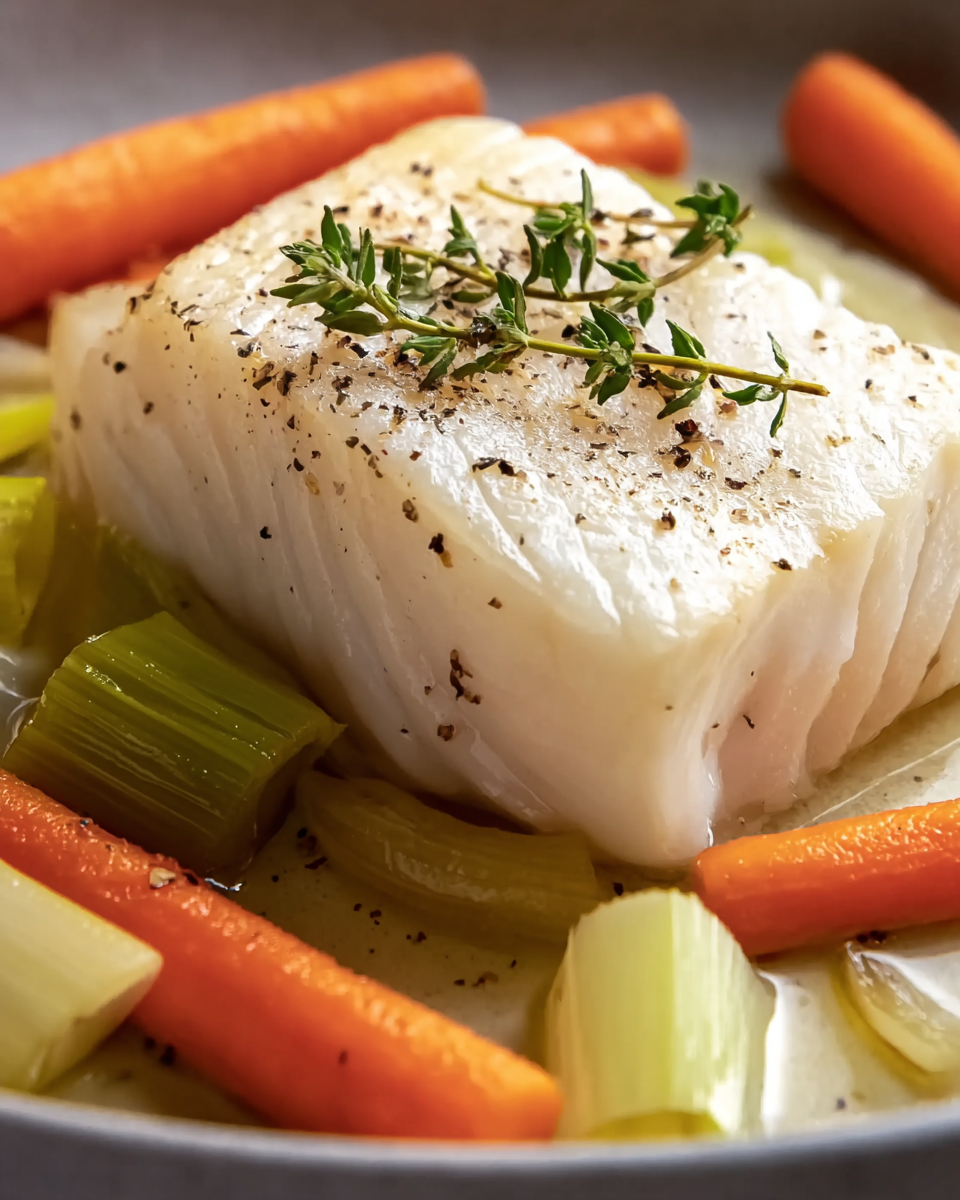
Casserole Baked Halibut
Ingredients
For the vegetables:
- 6 medium leeks thinly sliced, using only the white and pale green portions
- 3/4 pound baby carrots or larger carrots cut into slender sticks
- 5 tablespoons extra-virgin olive oil
- 7 fresh thyme sprigs leaves and stems intact
- 2 bay leaves
- Salt to taste
- Ground white pepper to taste
For the fish:
- 4 halibut fillets 6 ounces each
- Salt to taste
- Ground white pepper to taste
Instructions
- Preheat the oven to 375°F.
- In a large deep ovenproof skillet, warm 3 tablespoons of the olive oil over moderately high heat. Add the carrots and cook, stirring often, until they take on a light golden color, about 3 minutes.
- Pour in 1/2 cup water, cover the skillet, and cook over moderate heat until the carrots are crisp-tender, about 5 minutes.
- Add the sliced leeks along with another 1/2 cup water. Cover again and cook, stirring from time to time, until the leeks begin to soften, about 5 minutes.
- Season the vegetables with salt and white pepper. Add the thyme sprigs and bay leaves, allowing the aromatics to perfume the mixture.
- Season the halibut fillets with salt and white pepper. Arrange them evenly over the vegetables in the skillet.
- Drizzle the remaining 2 tablespoons olive oil over the fish. Lay a sheet of parchment paper over the fillets, then cover the skillet tightly with a heavy lid.
- Transfer the covered skillet to the oven and bake for 15 minutes, or until the halibut is just cooked through and flakes easily with a fork.
- Remove and discard the thyme sprigs and bay leaves. Carefully place the halibut on serving plates, then spoon the vegetables and their cooking juices alongside. Serve at once.