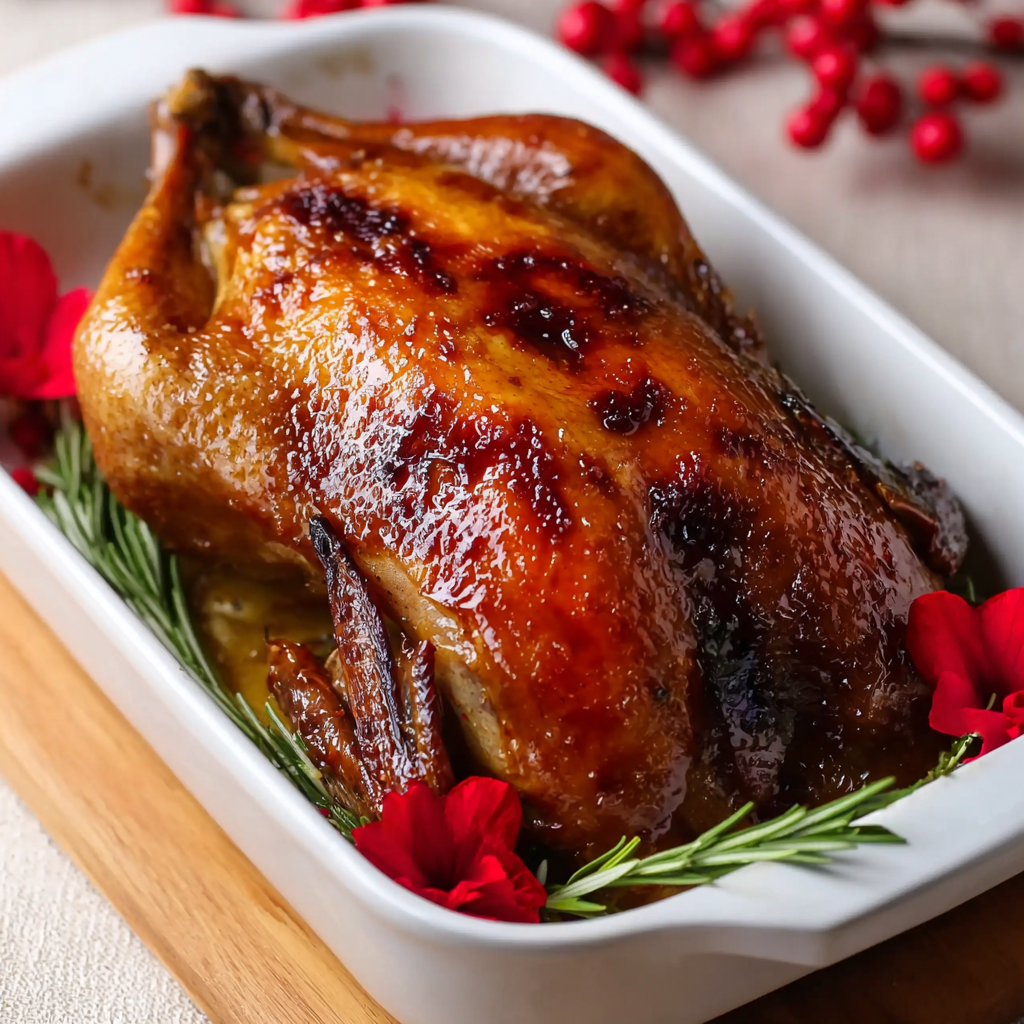
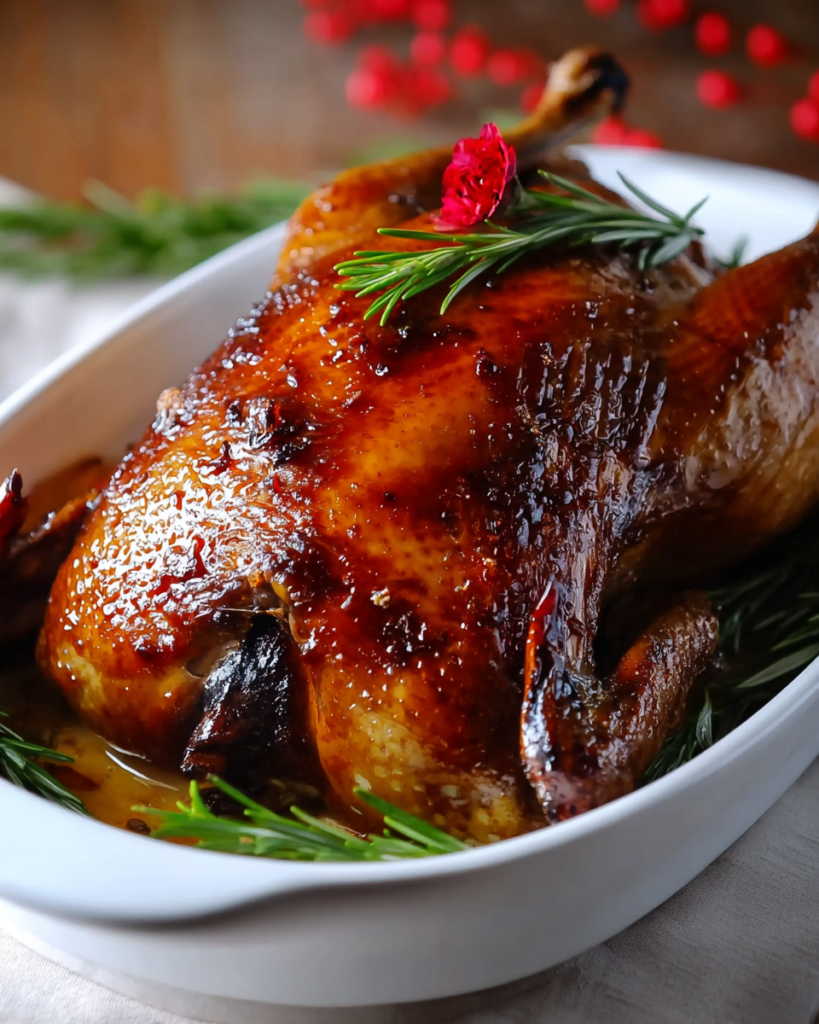
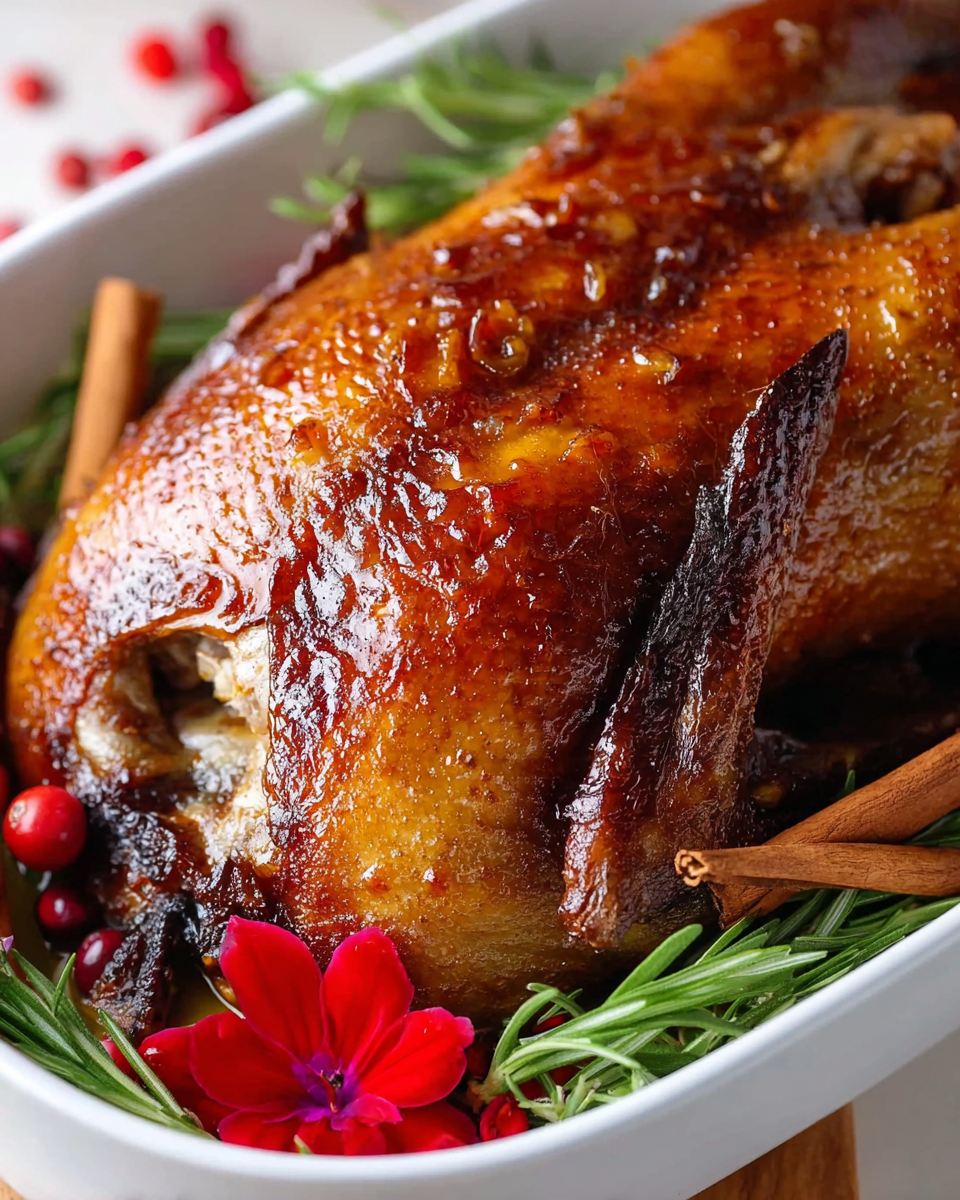
Christmas Roasted Duck is a festive, make-ahead main dish with crisp skin, rich flavor, and a glossy cranberry-orange sauce that feels special without being complicated. It is ideal for a holiday duck dinner, easy to prep ahead, and beautifully reliable for the Christmas table.
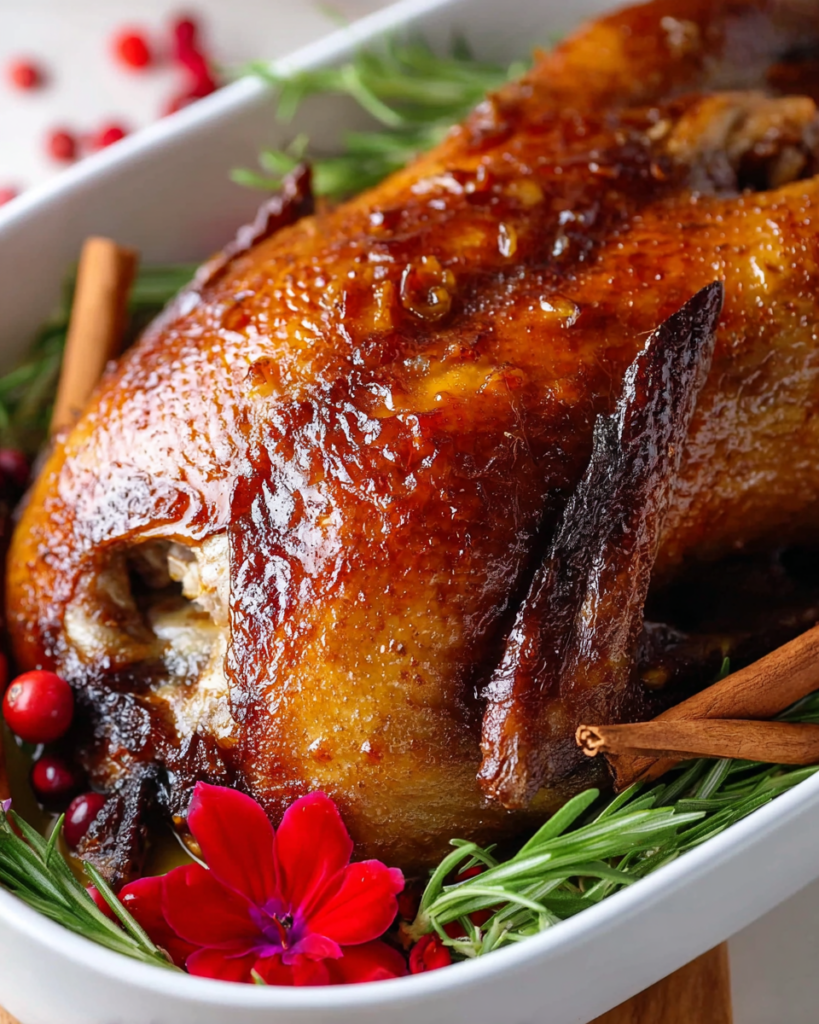
This is the kind of centerpiece that makes a holiday meal feel instantly more memorable. You get the deep, savory richness of roast duck, the brightness of citrus and herbs, and a sauce that brings just enough sweet-tart contrast to keep every bite balanced.
What makes this dish work so well is the simple prep. The uncovered chill in the fridge dries the skin so it roasts up beautifully, while the cavity aromatics quietly flavor the bird from the inside as it cooks.
The sauce is just as practical as it is festive. Cranberry juice, orange, molasses, ginger, and cinnamon give you that warm holiday flavor without turning the dish heavy, and brushing on only part of it keeps the serving sauce glossy and clean.
What You Need to Make This Christmas Roasted Duck
Whole duck brings the rich, distinctive flavor that makes this dish feel worthy of a holiday table. A bird in the 4- to 5-pound range roasts evenly and gives you a manageable cooking time.
Kosher salt is the key to well-seasoned meat and crisp skin. The generous pre-salting also helps draw out surface moisture during the air-drying stage.
Onion and lemon fill the cavity with moisture and aroma, gently perfuming the duck as it roasts without overpowering its natural flavor.
Rosemary, sage, and thyme add classic holiday character. Their woodsy aroma pairs especially well with duck and with the warm spices in the sauce.
Paprika, black pepper, and garlic powder create a simple outer seasoning that complements the bird instead of masking it. This blend adds color, warmth, and a little savory depth.
Cranberry juice and orange juice form the bright, fruity base of the sauce. Together, they give the finished plate that unmistakable festive feel.
Molasses adds body, gloss, and a deeper sweetness than sugar alone. It helps the sauce feel rich enough to stand beside duck.
Fresh ginger, garlic, and orange zest keep the sauce lively. They cut through the richness and make the whole dish taste more polished.
Cinnamon sticks and balsamic vinegar round everything out with warmth and subtle complexity, while a touch of cornstarch gives the sauce its smooth, spoonable finish.
Cooking Steps
STEP 1: Pat the duck very dry, trim any excess fat, and lightly score the breast skin in a crosshatch pattern. You want to cut through the skin and fat layer only, which helps the fat render without piercing the meat underneath.
STEP 2: Fill the cavity with the onion, lemon, and herb sprigs, then tie the legs together. Season the bird generously with kosher salt all over and refrigerate it uncovered for at least 8 hours or up to a full day so the skin can dry thoroughly.
STEP 3: About 30 minutes before roasting, take the duck from the fridge so it loses some of its chill. Rub it with the paprika, black pepper, and garlic powder mixture while the oven heats to a high starting temperature.
STEP 4: Set the duck on a rack in a foil-lined roasting pan and insert a thermometer into the thickest part of the thigh without touching bone. Roast it hot at first to jump-start browning, then lower the heat and continue cooking until the duck reaches 165 degrees F.
STEP 5: While the duck roasts, simmer the cranberry juice, orange juice, molasses, cinnamon, garlic, ginger, balsamic vinegar, salt, and optional cayenne until the flavors meld and the mixture reduces slightly.
STEP 6: Stir together cornstarch and cold water, then whisk that slurry into the simmering sauce. Let it come back to a boil for about a minute so it thickens into a glossy finish, then stir in the fresh orange zest off the heat.
STEP 7: During the last 15 minutes of roasting, transfer a little sauce to a separate bowl and brush that portion over the duck. This gives the skin a beautiful sheen while keeping the remaining sauce fresh for the table.
STEP 8: Rest the duck for 10 to 15 minutes before carving. Serve it with the reserved cranberry-orange sauce on the side so everyone can add as much or as little as they like.
Helpful Tips
- Do not skip the uncovered refrigeration step. That long chill is what helps the skin roast up crisp instead of soft or rubbery.
- Keep your scoring shallow. If the knife cuts into the flesh, the juices can escape too quickly and the breast can lose some tenderness.
- Use a separate small bowl for basting sauce near the end of roasting. That way, the serving sauce stays clean, glossy, and ready for the platter.
Can I prepare the duck the day before Christmas?
Yes, and this recipe actually benefits from it. Salting and air-drying the duck overnight improves the skin texture and takes pressure off your holiday cooking schedule, so the roasting day feels much easier.
How do I know when roast duck is done?
The most reliable way is to use a leave-in or instant-read thermometer. Check the thickest part of the thigh and make sure it reaches 165 degrees F without the probe touching bone, then let the duck rest before carving.
Why do you start the duck at a higher temperature?
That initial blast of heat helps the skin begin crisping and browning right away. After that, lowering the oven temperature lets the duck roast through more gently so the meat cooks evenly while the fat continues to render.
Can I make the cranberry-orange sauce ahead of time?
Yes. The sauce can be made in advance, cooled, and refrigerated until you need it. Reheat it gently on the stove and whisk if needed to bring it back to a smooth, glossy consistency before serving.
Is the sauce very sweet?
Not overly. It has sweetness from molasses and orange juice, but the cranberry juice, balsamic vinegar, ginger, and optional cayenne keep it balanced. The result is more festive and complex than sugary, which works especially well with rich duck meat.
Perfect Pairings
A creamy mashed potato or buttery potato purée is a natural side here. It catches the extra cranberry-orange sauce beautifully and gives the plate that classic holiday comfort.
Roasted green beans or Brussels sprouts add a welcome contrast. Their savory, slightly caramelized edges balance the richness of the duck and keep the meal from feeling too heavy.
A simple wild rice or herbed rice pilaf also works well, especially if you want a side that feels a little dressier for Christmas dinner without adding much extra work.
Keeping Leftovers Fresh
Store leftover carved duck in an airtight container in the refrigerator for up to 3 to 4 days. Keep the sauce in a separate container so the skin and meat hold their texture a little better.
For longer storage, freeze the duck for up to 2 to 3 months. The sauce can also be frozen, though it is best whisked well after thawing and reheating so it regains a smooth consistency.
To reheat, warm the duck gently in a 325-degree F oven until heated through. If you want to refresh some of the exterior texture, leave it uncovered for part of the reheating time. Reheat the sauce separately on the stove over low heat and stir until glossy again.
Christmas Roasted Duck
Ingredients
For the duck:
- 1 onion cut into quarters
- 1 whole duck 4 to 5 pounds, preferably Pekin or Muscovy
- Kosher salt for generous seasoning
- 1 lemon quartered
- A few sprigs of rosemary
- A few sprigs of sage
- A few sprigs of thyme
For the spice rub:
- 1 teaspoon paprika
- 1 teaspoon freshly ground black pepper
- 1 teaspoon garlic powder
For the sauce:
- 1/4 teaspoon salt
- 1 garlic clove minced
- 2 cinnamon sticks
- 1/4 cup molasses
- 1/2 teaspoon freshly grated orange zest
- 2 teaspoons cornstarch
- A small amount of cold water
- 1/2 cup orange juice
- 2 teaspoons fresh ginger finely grated
- 1 teaspoon balsamic vinegar
- 1 cup cranberry juice 100% juice rather than cocktail
- A pinch of cayenne pepper optional
- 1/4 cup orange juice
Instructions
- Pat the duck thoroughly dry with paper towels. Trim away any excess fat from the side opposite the cavity.
- Using a sharp knife, score the skin over the breast in a crosshatch pattern, taking care not to cut into the flesh.
- Fill the cavity with the onion quarters, lemon quarters, rosemary, thyme, and sage. Tie the legs together, then pat the bird dry once more to remove any remaining surface moisture.
- Season the duck generously all over with salt. Place it uncovered in the refrigerator for at least 8 hours and up to 24 hours so the skin can dry and roast to a crisp finish.
- About 30 minutes before roasting, remove the duck from the refrigerator and let it stand at room temperature. Preheat the oven to 425 degrees F.
- Combine the paprika, black pepper, and garlic powder, then rub the mixture evenly over the duck.
- Line a roasting pan with foil and set a rack inside. A large baking sheet fitted with a wire rack may be used instead. Place the duck on the rack and insert a leave-in meat thermometer into the thickest part of the thigh, making sure it does not touch the bone.
- Roast the duck at 425 degrees F for 15 minutes. Lower the oven temperature to 350 degrees F and continue roasting until the internal temperature reaches 165 degrees F. Allow at least 1 hour and 15 minutes total roasting time, though a larger bird may require more time.
- While the duck cooks, make the sauce. In a small saucepan, combine the cranberry juice, orange juice, molasses, cinnamon sticks, minced garlic, grated ginger, balsamic vinegar, salt, and cayenne pepper, if using.
- Bring the sauce to a boil over medium-high heat, then reduce it to a simmer and cook until it has reduced slightly.
- In a small bowl, stir the cornstarch with a little cold water until smooth. Whisk this slurry into the simmering sauce, then return the mixture to a boil. Continue whisking for about 1 minute, or until the sauce thickens.
- Remove the saucepan from the heat and stir in the orange zest.
- During the final 15 minutes of roasting, spoon a portion of the sauce into a separate small bowl and brush it over the duck.
- Once the duck reaches the proper internal temperature, take it out of the oven, tent it loosely with foil, and let it rest for 10 to 15 minutes.
- Carve the duck and present it with the remaining sauce served alongside.