Coconut Cake Made with Coconut Milk is a rich, tender layer cake that feels special without being fussy, with moist coconut-scented layers, a sweet chewy filling, and a creamy frosting that makes it ideal for holidays, birthdays, and make-ahead dessert tables.
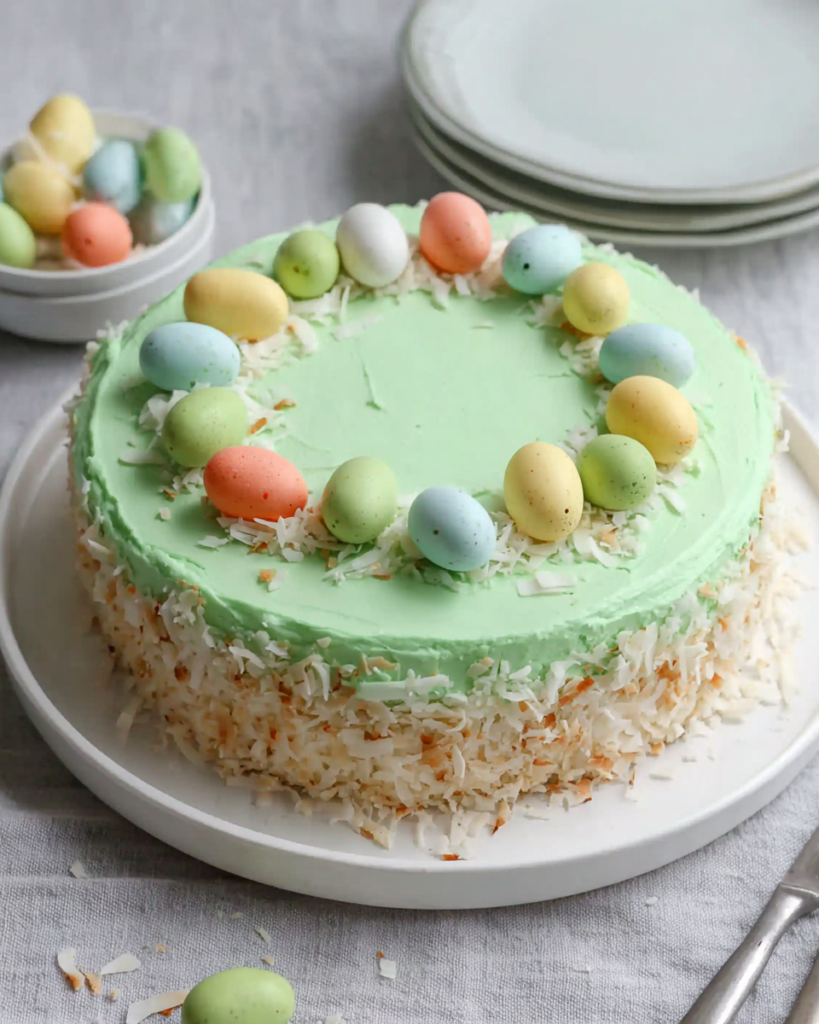
This is the kind of cake that looks elegant on the table but still feels completely doable in a home kitchen. The coconut milk keeps the layers soft and plush, while the coconut flavoring and coconut milk solids bring a deeper flavor than a standard vanilla cake.
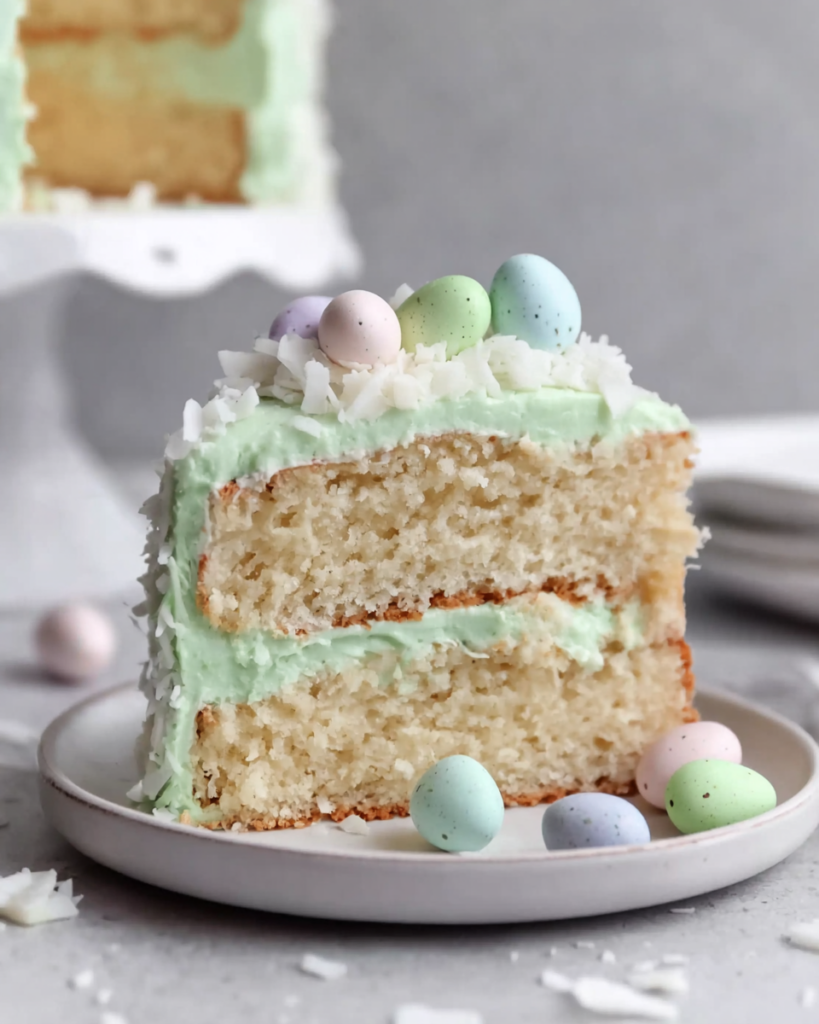
What makes it especially appealing is the contrast in texture. You get light cake layers, a sweet coconut filling with a little chew, and a smooth frosting with just enough richness from cream cheese to keep everything balanced.
It is also a wonderful choice when you want a dessert that can be assembled ahead and presented later. Once stacked and frosted, it holds beautifully, and the optional toasted coconut on the outside gives it that bakery-style finish people always notice.
Ingredients
All-purpose flour gives the cake enough structure for three layers while still keeping the crumb tender.
Full-fat coconut milk with lemon juice creates a rich, slightly tangy liquid mixture that supports moisture and a soft texture.
Butter and granulated sugar form the base of the cake and help create that light, fluffy crumb you want in a celebration cake.
Egg yolks and whipped egg whites work together to give the layers both richness and lift, so the cake feels substantial without turning heavy.
Coconut milk solids and coconut flavoring deepen the coconut character, making the cake taste layered and full rather than faintly flavored.
Sweetened coconut flakes, condensed milk, melted butter, and powdered sugar come together for the filling, which adds sweetness, texture, and a classic coconut center between the layers.
Butter, cream cheese, powdered sugar, coconut essence, and a little coconut milk create a frosting that is creamy, spreadable, and sturdy enough for a three-layer cake.
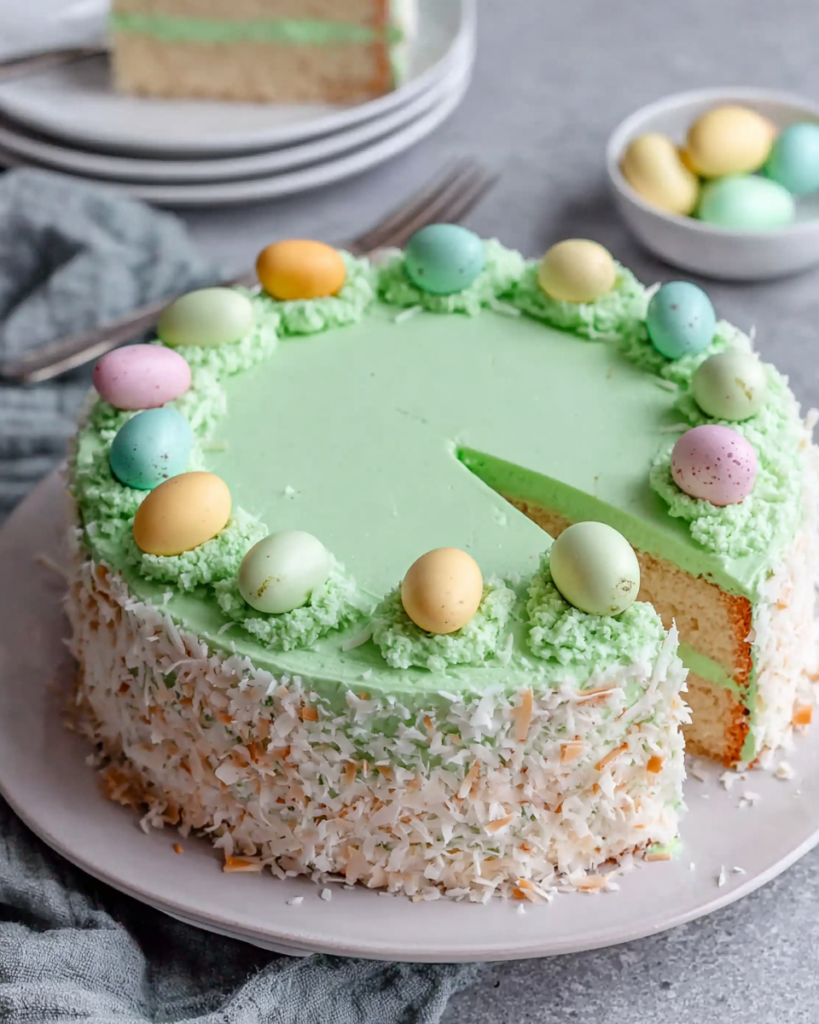
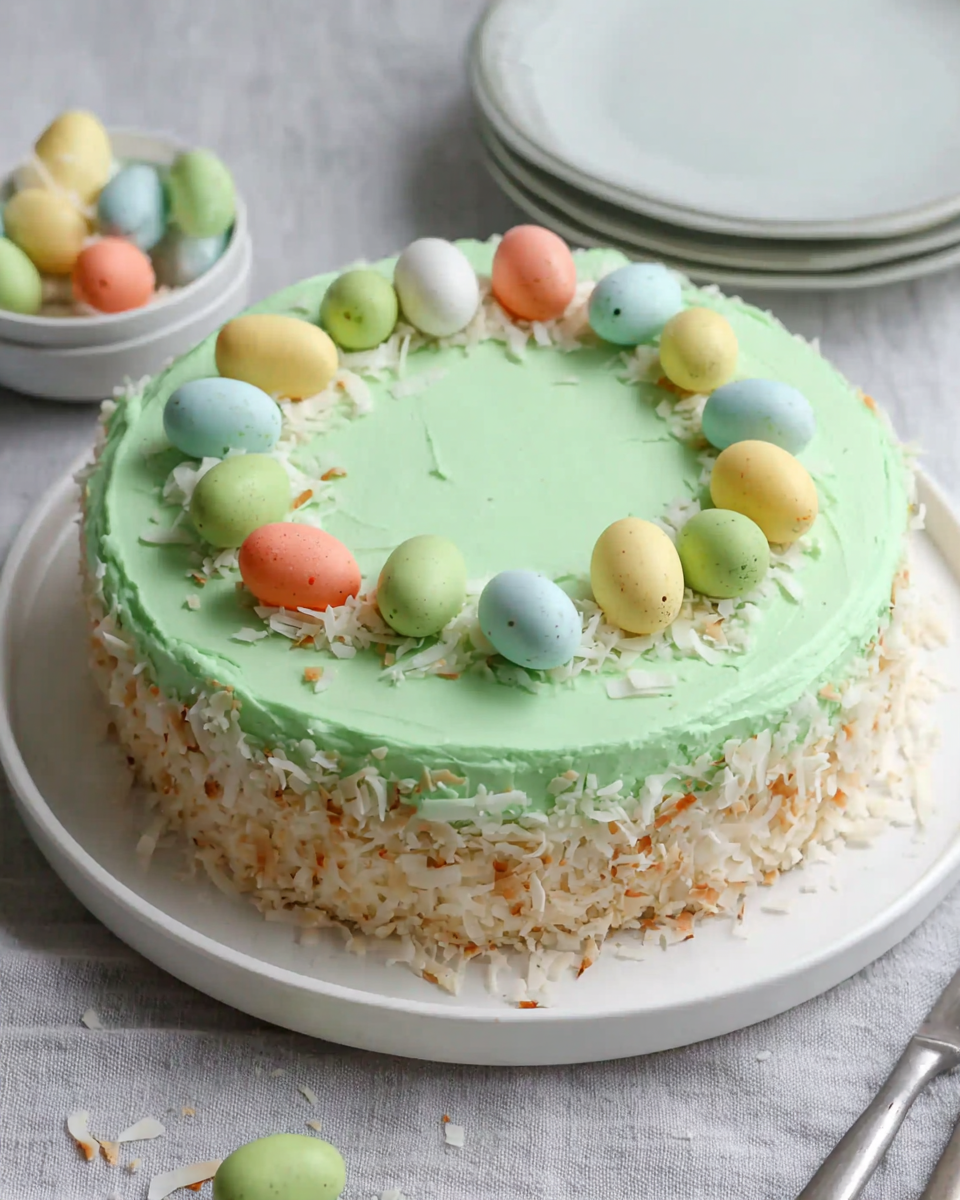
Toasted shredded coconut and chocolate eggs are optional for finishing, but they add texture, color, and a festive touch that makes the cake feel especially polished.
Cooking Steps
STEP 1: Start by preparing three 8-inch cake pans and heating the oven. Having the pans lined and ready matters here because this batter benefits from going straight into the oven once the egg whites are folded in.
STEP 2: Make the coconut milk mixture by combining the lemon juice with enough coconut milk to reach the full measure. In a separate bowl, whisk together the dry ingredients so they are evenly distributed before they go into the batter.
STEP 3: Cream the softened butter and sugar until the mixture looks pale and airy. Add the egg yolks one at a time, then mix in the water, coconut milk solids, and coconut flavoring until the batter base looks smooth and evenly blended.
STEP 4: Add the dry ingredients and coconut milk mixture in alternating additions. Mix gently and stop as soon as the batter comes together, because overmixing can make layer cakes lose some of their softness.
STEP 5: Beat the egg whites to stiff peaks in a clean bowl, then fold them into the batter with a light hand. This step helps give the cake a softer, lighter texture, so it is worth taking a little extra care.
STEP 6: Divide the batter evenly between the pans and bake until the tops spring back lightly. Let the layers rest briefly in the pans, then turn them out and cool them fully before filling and frosting.
STEP 7: While the cakes cool, stir together the coconut filling until evenly combined. Then beat the frosting until fluffy and smooth, adding only enough coconut milk to make it easy to spread without becoming loose.
STEP 8: Assemble the cake by layering the cooled rounds with the coconut filling, then frost the top and sides. Finish with toasted coconut and chocolate eggs if you want a more decorative look.
Helpful Tips
- Use room-temperature butter, egg yolks, and cream cheese so the batter and frosting mix more smoothly and hold a better texture.
- Fold the whipped egg whites in gently with a spatula rather than stirring, so you keep as much air in the batter as possible.
- Chill the assembled cake briefly before serving if your kitchen is warm, especially after adding the frosting and garnish.
Perfect Pairings
This cake pairs beautifully with fresh berries. Their brightness cuts through the sweetness and gives each slice a lighter finish.
A simple cup of coffee works especially well alongside it, since the slight bitterness balances the creamy frosting and sweet coconut filling.
For a holiday table, serve it with hot tea or a mild vanilla-based dessert drink so the coconut flavor stays front and center.
Can I make this cake ahead of time?
Yes. You can bake the layers a day ahead, cool them completely, and wrap them well before assembling. The finished cake also holds nicely in the refrigerator, which makes it a great option for a holiday or party dessert.
Why are the egg whites beaten separately?
Beating the egg whites separately helps lighten the batter and gives the cake a softer, more delicate crumb. It is a simple extra step that makes the layers feel less dense and more bakery-style.
Can I skip the toasted coconut garnish?
Absolutely. The cake will still taste complete without it. The garnish mainly adds texture and presentation, so you can leave it off for a simpler finish or when you want the frosting to stay clean and classic.
How do I know the frosting is the right consistency?
It should be smooth, fluffy, and easy to spread without sliding. If it feels too thick, add a little more coconut milk. If it starts getting too soft, beat in a bit more sifted powdered sugar until it firms up.
Keeping Leftovers Fresh
Because of the cream cheese frosting, this cake should be stored in the refrigerator. Cover the cake well or keep slices in an airtight container, and it will stay fresh for about 4 to 5 days.
For the best texture, let chilled slices sit at room temperature for about 20 to 30 minutes before serving. That takes the cold edge off the frosting and helps the coconut flavor come through more clearly. This is a cake that is better gently brought back to room temperature than actually reheated.
If you want to freeze it, the unfrosted cake layers are the easiest option. Wrap each cooled layer tightly and freeze for up to 2 months. Thaw them in the refrigerator overnight before filling and frosting. Frosted slices can also be frozen, though the finish may look a little less polished after thawing.
This cake works so well because every part supports the coconut flavor in a different way. The layers are moist and tender, the filling adds sweetness and texture, and the frosting gives the whole dessert a creamy finish that feels celebration-worthy. Whether you dress it up with toasted coconut and chocolate eggs or keep it simple and snowy white, it is the kind of homemade layer cake that feels generous, pretty, and absolutely worth slicing into.
Coconut Cake Made with Coconut Milk
Equipment
- A rich, tender layer cake prepared with coconut milk, coconut milk solids, and coconut flavoring, then filled with a sweet coconut center and finished with a creamy coconut-cream cheese frosting. Optional toasted coconut and chocolate eggs provide an elegant decorative finish.
Ingredients
For the cake:
- 2 cups all-purpose flour
- 1 cup unsweetened full-fat coconut milk
- 1 teaspoon baking soda
- 1 teaspoon lemon juice
- 2 cups granulated white sugar
- 1 cup butter softened to room temperature
- 4 egg yolks
- 4 egg whites
- 1/4 teaspoon salt
- 1/2 cup water
- 1/4 cup coconut milk solids
- 1 1/2 teaspoons coconut flavoring
For the filling:
- 2 1/2 cups sweetened coconut flakes
- 1/3 cup powdered sugar
- 1/3 cup sweetened condensed milk
- 3 tablespoons butter melted
- For the frosting:
- 1 1/2 cups unsalted butter softened
- 4 ounces cream cheese softened
- 8 cups powdered sugar sifted
- 2 teaspoons coconut essence
- 2 to 4 tablespoons coconut milk
- 1 pinch salt
Optional food color gel
- For the garnish optional:
- 1 cup toasted shredded coconut
- 1 cup chocolate eggs
Instructions
- Preheat the oven to 350°F (175°C). Line the bases of three 8-inch round cake pans with parchment paper, then coat the pans with baking spray to help ensure clean release after baking.
- Place the lemon juice into a measuring cup, then add unsweetened coconut milk until the liquid reaches the full 1-cup mark. Set this mixture aside for later use.
- In a medium bowl, combine the flour, baking soda, and salt by whisking thoroughly. Reserve this dry mixture.
- In a large mixing bowl, beat the softened butter with the granulated sugar until the mixture becomes pale and fluffy. Add the egg yolks one at a time, mixing well after each addition.
- Blend in the water, coconut milk solids, and coconut flavoring until evenly incorporated. Add the flour mixture and the prepared coconut milk mixture in alternating additions, beginning and ending with the dry ingredients. Mix only until the batter comes together.
- In a separate bowl, beat the egg whites until stiff peaks form. Fold them gently into the batter, taking care not to deflate the mixture.
- Distribute the batter evenly among the prepared cake pans and smooth the tops with a spatula. Bake for about 30 minutes, or until the cake layers spring back lightly when touched.
- Let the cakes rest in their pans on wire racks for 5 minutes. Turn them out, remove the parchment paper, and allow the layers to cool completely before filling and frosting.
- To prepare the filling, stir together the sweetened coconut flakes, melted butter, sweetened condensed milk, and powdered sugar until the mixture is fully combined.
- For the frosting, beat the softened butter and cream cheese until light and airy, about 5 minutes. Add the coconut essence, a pinch of salt, and 2 tablespoons of coconut milk, then mix until smooth. Gradually incorporate the sifted powdered sugar and continue beating for about 5 more minutes, adding additional coconut milk as needed to reach the desired consistency. Blend in food color gel only if using.
- To assemble, place one cooled cake layer on a serving plate and spread a portion of the coconut filling over the top. Repeat with the next layer, then position the final cake layer on top.
- Cover the top and sides of the cake with the coconut frosting in an even layer. Finish with toasted shredded coconut and chocolate eggs, if desired.


