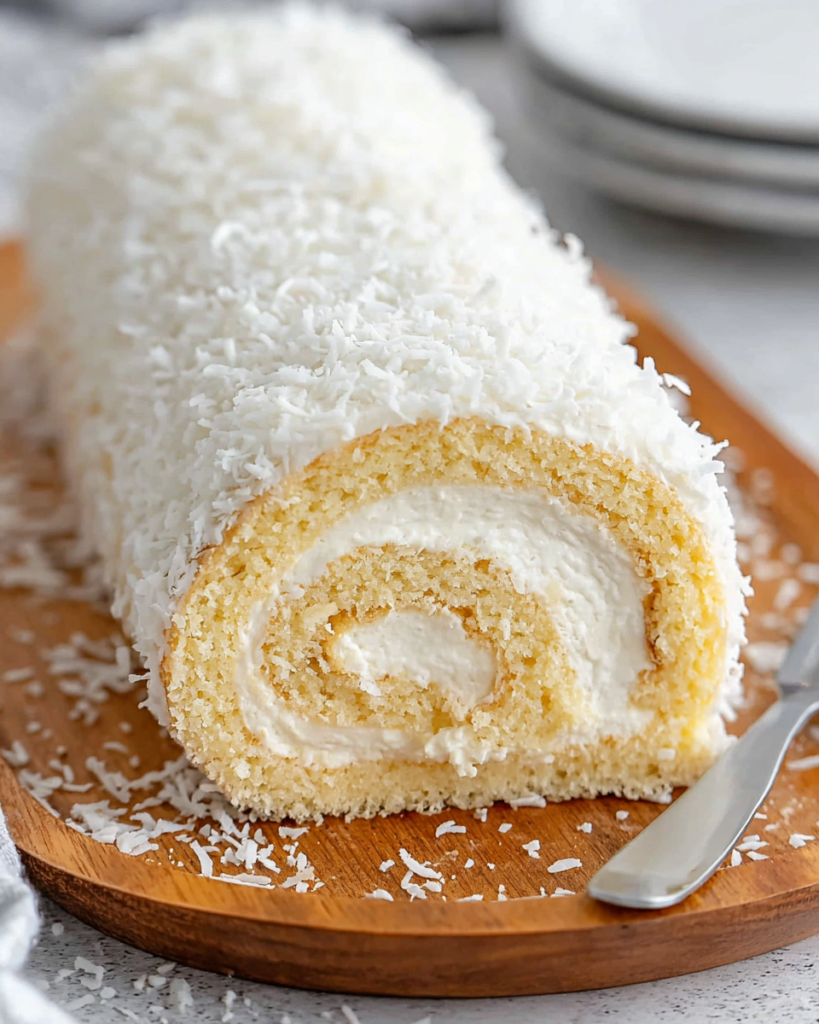
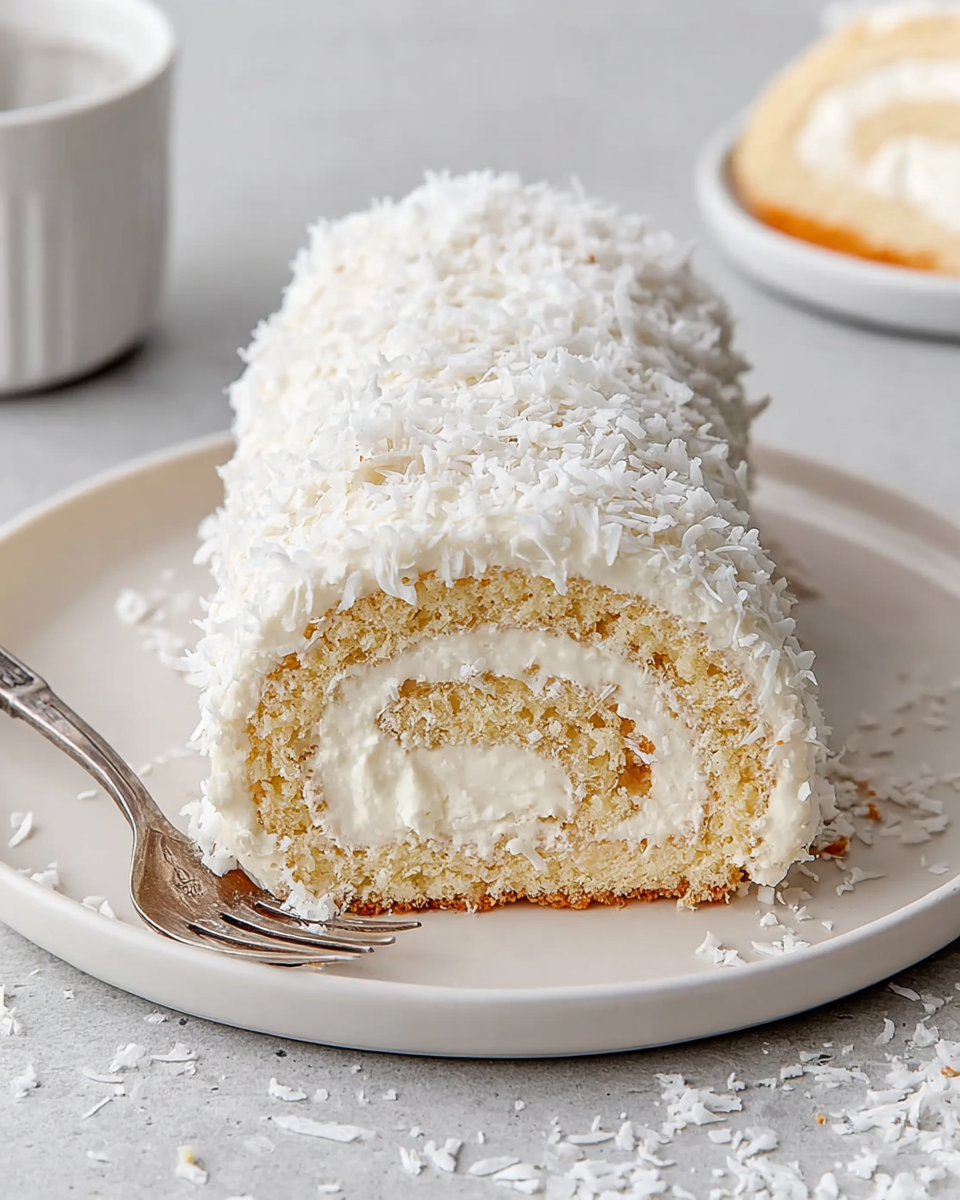
Coconut Cake Roll is a creamy, make-ahead dessert that pairs a light sponge with a rich coconut cream cheese filling for a finish that feels elegant without being overly complicated. It is soft, sliceable, and perfect when you want a dessert that looks special for gatherings, holidays, or weekend baking.
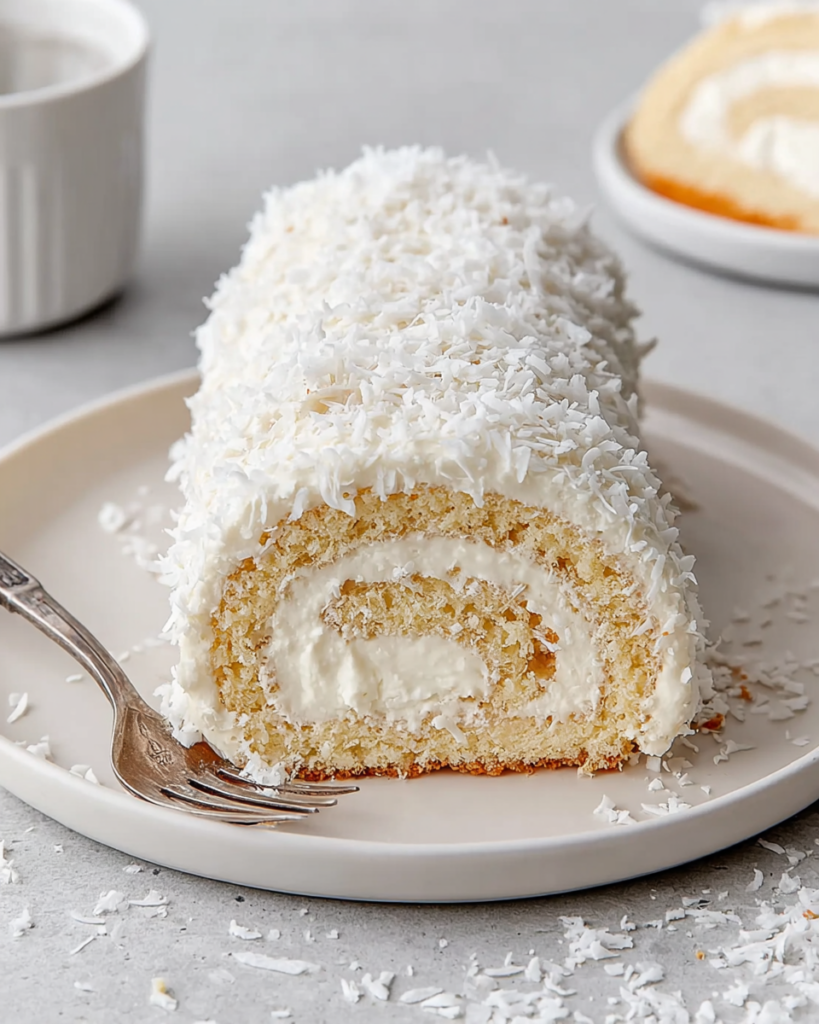
This cake works so well because the sponge is rolled while warm, which helps create that classic spiral without making the texture heavy. Once chilled, each slice holds together beautifully and shows off the creamy center and coconut-coated exterior.
You also get a really nice balance of flavors here. The cake itself stays delicate, while the filling adds richness and the grated coconut brings extra texture and a fuller coconut taste. It is the kind of dessert that feels bakery-worthy but still very doable in a home kitchen.
Coconut Cake Roll Ingredients
Eggs are the foundation of the sponge and give the cake its airy, flexible texture, which is exactly what you want in a roll cake.
Granulated sugar sweetens both the cake and the filling while also helping the eggs whip up with the volume needed for a tender sponge.
Coconut flavoring gives the dessert its clear coconut profile without making the sponge too heavy or dense.
Milk or coconut milk adds a little moisture to the batter. Coconut milk deepens the flavor, but regular milk still works well.
All-purpose flour provides structure while keeping the cake soft enough to roll neatly after baking.
Baking powder adds a little extra lift, helping the thin cake bake up light and even.
Salt keeps the sweetness balanced and gives both the cake and filling a more rounded flavor.
Powdered sugar is used on the towel so the warm cake can roll up without sticking.
Cream cheese makes the filling thick, smooth, and slightly tangy, which keeps the dessert from tasting too sweet.
Heavy whipping cream turns the filling lighter and fluffier, giving it that whipped, creamy finish.
Unsweetened grated coconut adds texture inside and out, and it gives the finished roll that classic coconut-covered look.
How to Make This Coconut Cake Roll
STEP 1: Preheat your oven and prepare the pan before you start whipping the eggs. A lined and lightly greased jelly roll pan helps the sponge release cleanly, which matters a lot when you need to turn it out while still hot.
STEP 2: Beat the eggs until foamy, then gradually add the sugar and continue beating until the mixture becomes pale, thick, and ribbon-like. This step creates most of the cake’s light structure, so it is worth taking the full time to get plenty of volume.
STEP 3: Mix in the milk and coconut flavoring, then sift the flour, baking powder, and salt over the bowl. Fold the dry ingredients in gently with a spatula until the batter is smooth and fully combined, but stop as soon as the flour disappears so the mixture stays airy.
STEP 4: Spread the batter evenly in the prepared pan and bake just until the cake springs back lightly when touched. You do not want to overbake it, because a drier sponge is much more likely to crack when rolled.
STEP 5: Turn the hot cake onto a clean kitchen towel dusted with powdered sugar, peel off the parchment, and roll it up from the short end right away. Rolling it while warm helps the sponge set into shape and makes it easier to fill later.
STEP 6: Let the rolled cake cool completely on a wire rack. While it cools, whisk the cream cheese with sugar, salt, and coconut flavoring until smooth, then slowly add the cold cream and whip until the filling becomes thick and holds firm peaks.
STEP 7: Carefully unroll the cooled cake and spread the filling over the surface, leaving a small border around the edges. Sprinkle part of the grated coconut over the filling so every slice has a little extra coconut texture inside.
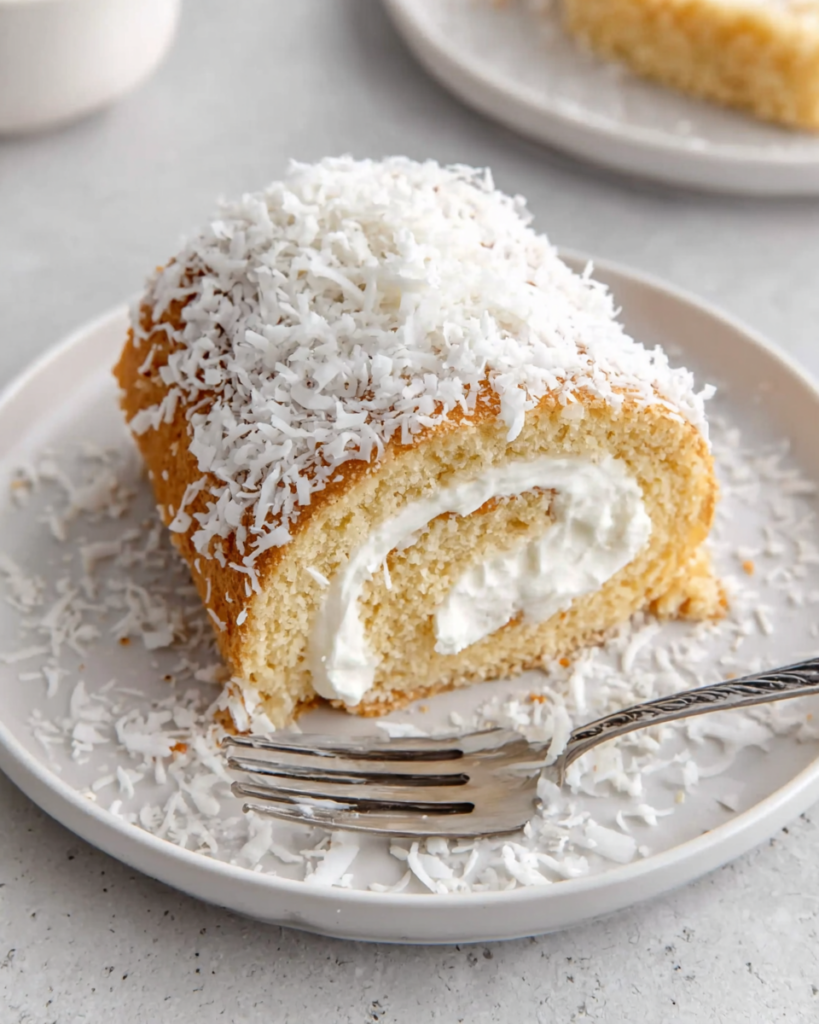
STEP 8: Roll the cake back up gently, place it seam-side down, and frost the outside with the remaining filling. Finish by pressing the rest of the grated coconut over the top and sides, then chill until the roll is firm enough to slice cleanly.
Pro Tips for Coconut Cake Roll
- Whip the eggs and sugar until the mixture is truly thick and ribboned, because that trapped air is what gives the sponge its soft, flexible crumb.
- Let the cream cheese soften slightly, but keep it cool enough that the filling still whips up thick rather than loose.
- Leave a small border around the edges when spreading the filling so it does not squeeze out too much as you roll the cake back up.
Can I make this cake roll a day ahead?
Yes, this dessert is a great make-ahead option. In fact, it often slices even better after a longer chill because the filling firms up and the rolled shape settles nicely. Just keep it covered in the refrigerator until you are ready to serve it.
Why do I need to roll the cake while it is still warm?
That first roll shapes the sponge before it cools and becomes less flexible. If you wait too long, the cake is more likely to resist the curve and crack when you try to roll it around the filling later.
What should I do if the filling feels too soft?
Add a little powdered sugar and keep whipping just until the filling thickens. The cream cheese should be softened but still cool, and the heavy cream needs to be cold. Those two details make a big difference in helping the filling hold its shape.
Can I use sweetened coconut instead of unsweetened?
You can, but the finished dessert will be sweeter and slightly heavier in texture. Unsweetened coconut keeps the balance cleaner, especially since the filling already has plenty of sweetness. If using sweetened coconut, the cake will still work, just with a richer overall finish.
Perfect Pairings
Fresh berries are one of the nicest things to serve with this cake. Their brightness cuts through the creamy filling and makes the plate feel lighter and fresher.
Coffee is another smart pairing, especially if you are serving this after dinner or for a celebration dessert table. The slight bitterness of coffee balances the sweet coconut flavor very well.
For a softer, more dessert-style presentation, you can add a small spoonful of lightly whipped cream alongside each slice. It keeps the plate simple and elegant without taking attention away from the roll itself.
How to Store & Reheat
Because this dessert has a cream cheese and whipped cream filling, it should be stored in the refrigerator. Cover the whole cake well or transfer slices to an airtight container. It will keep nicely for up to 4 days.
For longer storage, freeze the cake after it has chilled and firmed up. Wrap the roll or individual slices tightly, then place them in a freezer-safe container for up to 1 month. Thaw it in the refrigerator overnight before serving.
This is not a cake you would reheat. It is best served chilled or after sitting out for a few minutes so the filling softens slightly and the texture becomes extra creamy.
This coconut roll is a lovely dessert when you want something lighter than a layer cake but still rich enough to feel special. The sponge stays soft, the filling is fluffy and creamy, and the coconut on the outside gives every slice a finished look that feels right at home on a holiday table or at a family gathering. Once you make it, it is easy to see why this style of cake stays such a favorite.
Coconut Cake Roll
Ingredients
For the cake:
- 4 room-temperature eggs
- 1 teaspoon coconut flavoring
- 1 cup granulated sugar
- 2 tablespoons whole milk or coconut milk
- 1 cup all-purpose flour
- 1/4 teaspoon salt
- 1 teaspoon baking powder
- 1/4 cup powdered sugar for rolling
For the filling and topping:
- 16 ounces cream cheese softened slightly
- 1 1/2 cups cold heavy whipping cream
- 1 cup granulated sugar
- 1 teaspoon coconut flavoring
- 1/8 teaspoon salt
- 2 1/2 cups unsweetened grated coconut
- 1/4 to 1/2 cup powdered sugar as needed
Instructions
- Preheat the oven to 375°F (190°C). Grease a 15 x 10 x 1-inch baking pan, line it with parchment paper, and lightly coat the parchment with nonstick spray. Set aside.
- Place the eggs in a large mixing bowl and beat for 3 minutes, until foamy. Gradually add the granulated sugar and continue beating for 6 to 10 minutes, or until the mixture has nearly tripled in volume and falls in ribbons from the whisk. Blend in the milk and coconut flavoring.
- Sift the flour, baking powder, and salt over the egg mixture. Using a broad spatula, fold gently just until the dry ingredients are fully incorporated, taking care not to deflate the batter.
- Spread the batter evenly into the prepared pan. Bake on the center rack for 13 to 16 minutes, or until the cake springs back lightly when touched. Remove from the oven and run a knife around the edges to loosen it from the pan.
- Dust a clean kitchen towel with the powdered sugar. Invert the hot cake onto the towel, remove the pan, and carefully peel away the parchment paper. Beginning at the short end, roll the cake up with the towel into a log. Transfer to a wire rack and allow it to cool completely.
- For the filling, place the cream cheese, granulated sugar, salt, and coconut flavoring in the bowl of a stand mixer fitted with the whisk attachment. Beat briefly until smooth and free of lumps, scraping down the bowl as needed.
- With the mixer on low speed, slowly pour in the chilled heavy cream. Gradually increase the speed and whip until the mixture becomes thick, creamy, and holds firm peaks.
- Once the cake has cooled, gently unroll it. Spread a generous layer of the filling over the surface, leaving about 1 inch uncovered around the edges. Scatter 1 cup of the grated coconut over the filling.
- Roll the cake back up carefully. Coat the outside with the remaining filling, then cover the exterior with the remaining grated coconut. Place the cake seam-side down on a serving platter.
- Cover and refrigerate for 1 to 2 hours before serving. Keep any remaining cake stored in the refrigerator.