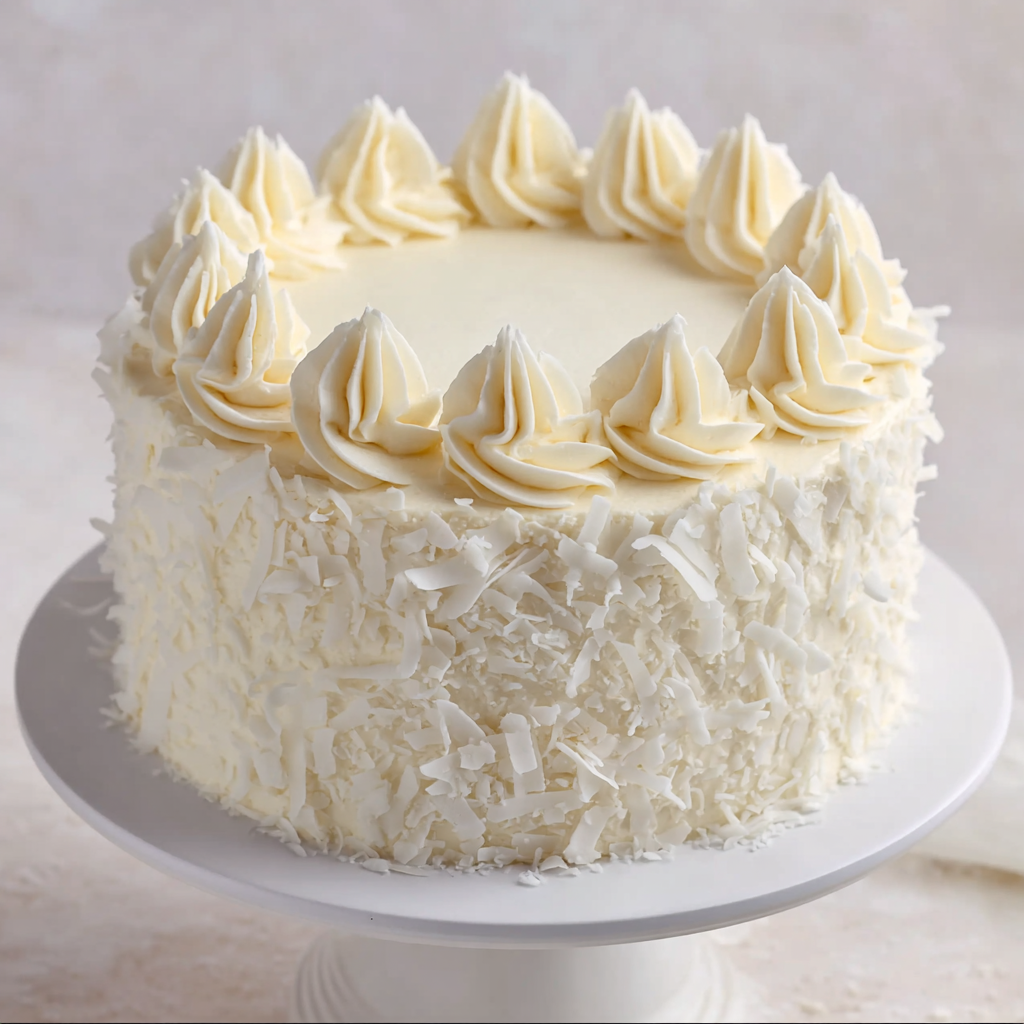
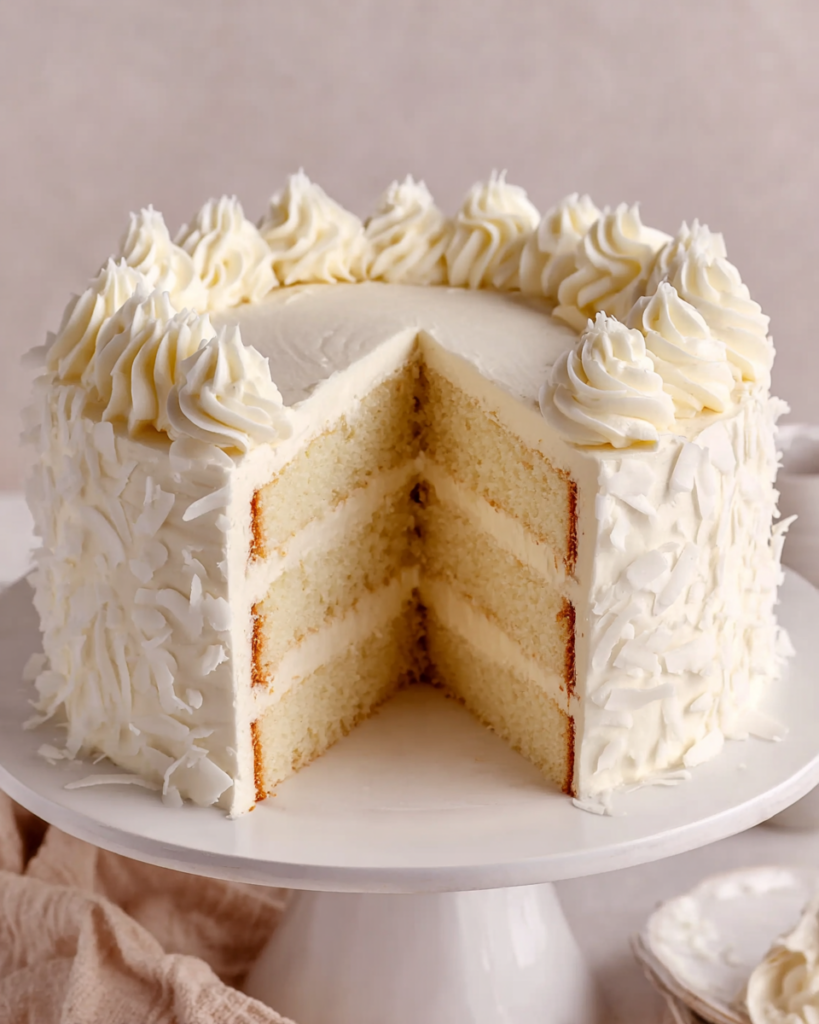
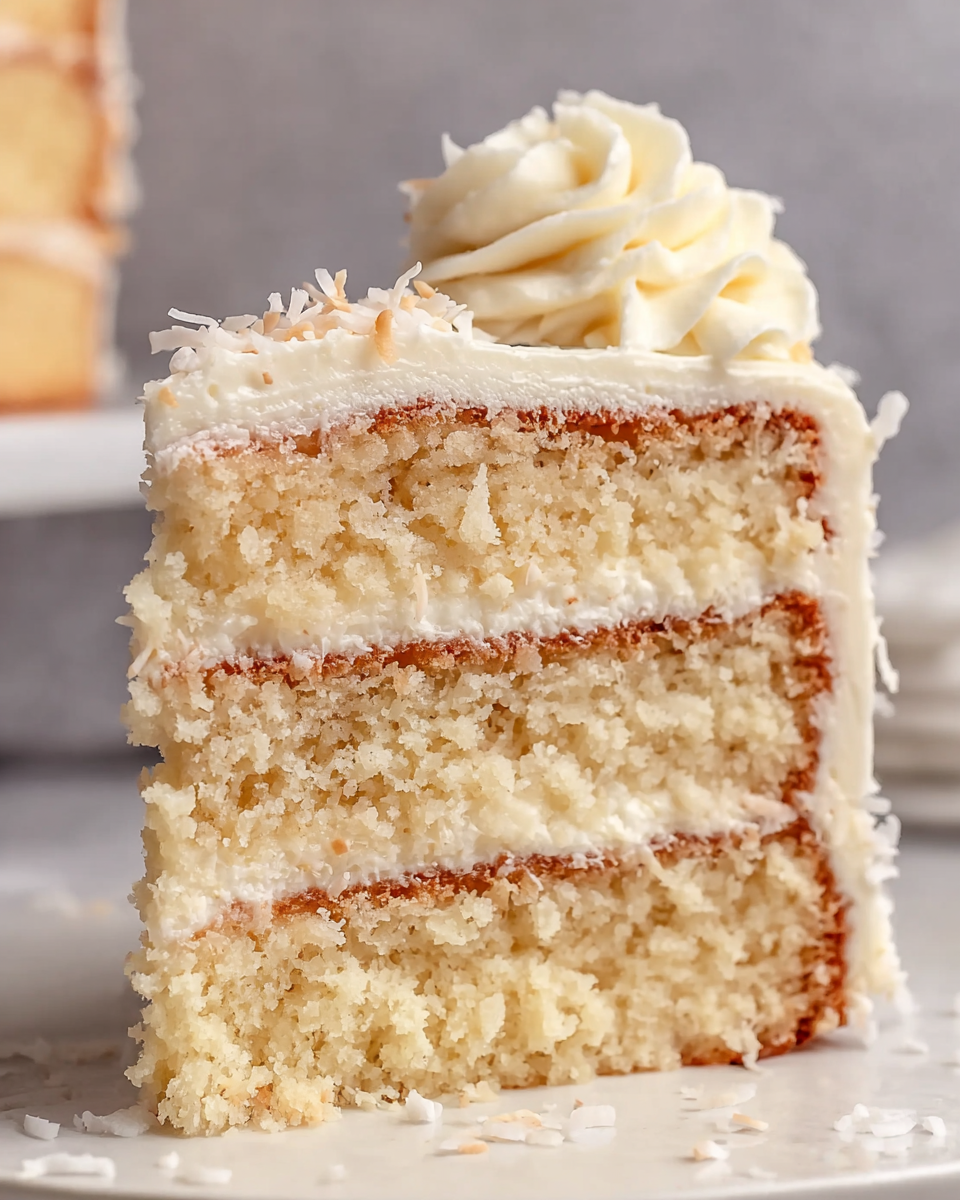
Coconut Cake with Cream Cheese Frosting is a tender, bakery-style layer cake with soft crumb, rich coconut flavor, and a smooth tangy finish. It’s a beautiful make-ahead dessert for birthdays, holidays, and any gathering where you want an impressive slice without fussy decorating.
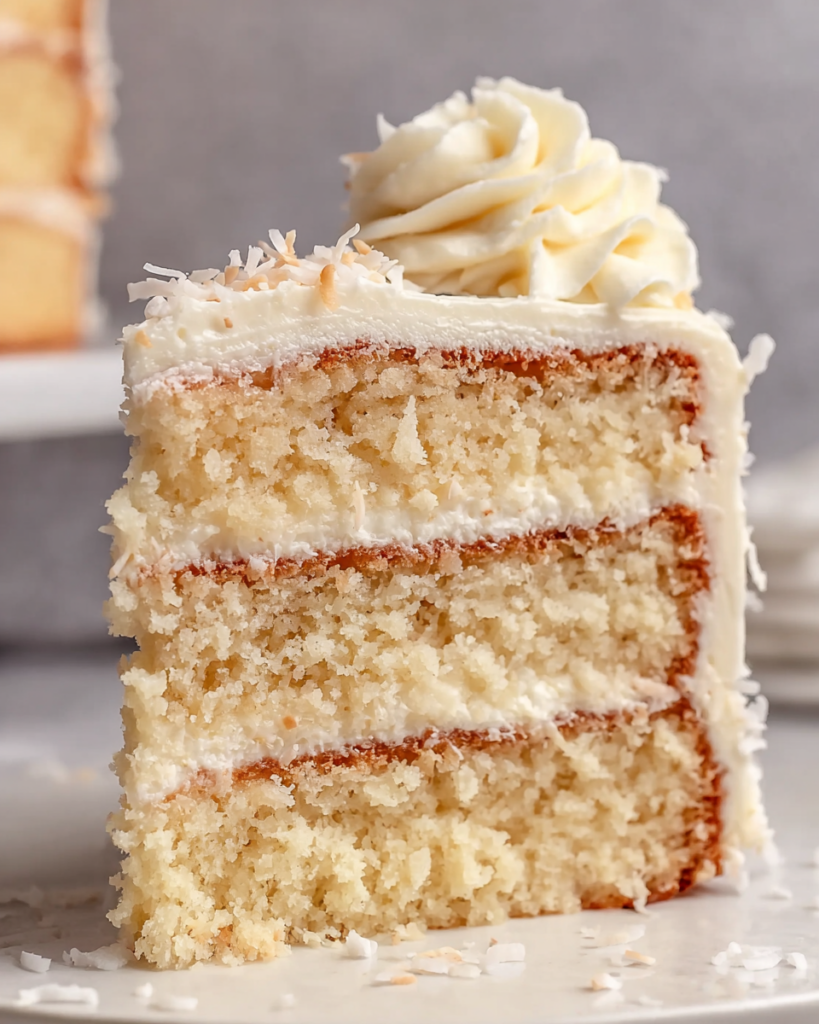
This is the kind of cake that feels special the moment you cut into it. The layers stay soft thanks to buttermilk, butter, and coconut oil, while whipped egg whites help keep the texture light instead of heavy.
The frosting brings everything together in the best way. It is creamy, rich, and just a little tangy, which keeps the sweet coconut flavor balanced and gives each bite that classic layer-cake finish.
What I really like about this cake is that it looks elegant but follows a very workable process. Once your layers are baked and cooled, assembly is straightforward, and the coconut on the outside makes the whole cake look polished with very little extra effort.
Coconut Cake with Cream Cheese Frosting Ingredients
All-purpose flour gives the cake its structure while still keeping the crumb tender enough for soft, neat slices.
Buttermilk adds gentle tang and moisture, which helps the layers bake up plush rather than dry.
Butter and coconut oil work together for flavor and texture. The butter adds richness, while the coconut oil supports that unmistakable coconut character.
Granulated sugar sweetens the cake and also helps create a light, fluffy base when beaten with the fats.
Egg yolks and egg whites each play an important role. The yolks enrich the batter, and the whipped whites give the layers lift and a lighter finish.
Coconut flavoring and vanilla extract deepen the overall flavor so the cake tastes clearly coconutty without needing anything artificial or overpowering.
Toasted sweetened shredded coconut adds texture, color, and that classic coconut-cake look. It also gives the filling and garnish a more pronounced flavor than plain coconut alone.
Cream cheese is the key to the frosting’s tangy balance. It keeps the finish from tasting flat or overly sweet.
Butter for the frosting makes the icing smoother, richer, and easier to spread between layers and over the outside of the cake.
Powdered sugar builds the body of the frosting so it holds its shape well for layering, coating, and optional piping on top.
Step-by-Step Coconut Cake with Cream Cheese Frosting
STEP 1: Start by preparing the pans and toasting the larger portion of shredded coconut until lightly golden. Keep a close eye on it because coconut can go from pale to overly dark very quickly. Let it cool completely before it goes anywhere near the batter or frosting.
STEP 2: Whisk together the flour, baking powder, baking soda, and salt so the dry ingredients are evenly distributed. In a separate container, stir the buttermilk with the coconut flavoring and vanilla. This makes the mixing process smoother and helps the flavor spread evenly through the cake.
STEP 3: Beat the softened butter with the softened coconut oil until smooth, then gradually add the sugar and mix until the texture looks pale and fluffy. Add the egg yolks one at a time, mixing well after each addition. This step builds a rich base and gives the finished cake a soft, fine crumb.
STEP 4: Add the dry ingredients and buttermilk mixture in alternating additions, starting and ending with the dry ingredients. Mix only until combined so the batter stays tender. Fold in the cooled toasted coconut, which gives the cake a little extra texture and a deeper coconut taste.
STEP 5: In a clean bowl, whip the egg whites until foamy, add the cream of tartar, and continue whipping until they reach semi-stiff peaks. Gently fold the whites into the batter in stages. This is what keeps the layers airy and delicate, so use a light hand and stop folding once the batter looks evenly blended.
STEP 6: Divide the batter evenly among the prepared pans and bake until the layers are set and a skewer comes out clean. Let them rest briefly in the pans, then turn them out onto a rack to cool completely. Chilling the layers before frosting makes assembly much easier and helps you get cleaner, straighter edges.
STEP 7: For the frosting, beat the butter until smooth, then add the cream cheese in small pieces and mix until fully blended. Add the powdered sugar gradually, then finish with the coconut flavoring and salt. Level the cake layers, stack them with frosting between each one, apply a thin crumb coat, chill, and then finish with a thicker outer layer. Press the remaining coconut onto the sides and pipe the top if you want a more dressed-up look.
Keeping Leftovers Fresh
Because this cake uses cream cheese frosting, it should be stored in the refrigerator. Keep the finished cake covered so the frosting stays smooth and the layers do not dry out. Whole cake or leftover slices will keep well for about 4 days.
For longer storage, you can freeze individual slices or even the assembled cake once it is chilled and firm. Wrap the pieces well and freeze for up to 1 month for the best texture. Unfrosted cake layers can usually be frozen a bit longer, up to about 2 months, if they are tightly wrapped.
This is not really a cake you would reheat. Instead, let refrigerated slices sit at room temperature for about 20 to 30 minutes before serving so the frosting softens slightly and the cake tastes more tender and flavorful. The frosting can safely stand at room temperature for a few hours during serving, which is helpful for parties.
Can I make this cake ahead of time?
Yes, and it actually works very well as a make-ahead dessert. You can bake the layers a day in advance, wrap them well, and chill or freeze them before frosting. Cold layers are easier to level, stack, and crumb-coat neatly.
Why are the egg whites whipped separately?
Whipping the egg whites adds air that helps the cake stay light and soft. Without that step, the layers would still taste good, but they would be a bit denser and less delicate than the finished texture this style of coconut cake is meant to have.
Does coconut cake with cream cheese frosting need to stay chilled?
Yes. Since the frosting contains cream cheese, the cake should be refrigerated when it is not being served. Take it out a little before slicing so the texture softens, but return leftovers to the fridge once you are done.
Can I use plain coconut instead of toasted coconut?
You can, but the flavor will be milder and the texture a little less interesting. Toasted coconut gives the cake a warmer, fuller coconut taste and also makes the outside look more finished and golden rather than flat.
Pro Tips for Coconut Cake with Cream Cheese Frosting
- Make sure the buttermilk, egg whites, egg yolks, butter, and cream cheese are at room temperature before mixing. That helps the batter blend evenly and keeps the frosting smooth.
- Chill the cake layers before assembly. Cold layers are less fragile, easier to stack, and much simpler to frost cleanly.
- Add the powdered sugar to the frosting gradually instead of all at once so you get a smoother finish and better control over the texture.
Serving Ideas for Coconut Cake with Cream Cheese Frosting
Fresh berries are a great match because they bring brightness and a little acidity that pairs nicely with the sweet coconut and tangy frosting.
Hot coffee or tea works beautifully with this cake, especially when you want to serve it for a shower, brunch, or afternoon dessert table.
A simple fruit plate with pineapple, strawberries, or sliced citrus makes the whole dessert spread feel lighter and gives you an easy way to round out the presentation.
Coconut Cake with Cream Cheese Frosting
Ingredients
For the cake layers
- 11 ounces all-purpose flour
- 1/2 teaspoon fine salt
- 2 teaspoons coconut flavoring
- 4 ounces unsalted butter softened
- 4 large egg yolks
- 1 teaspoon baking powder
- 8 fluid ounces buttermilk at room temperature
- 1/2 teaspoon baking soda
- 2 cups granulated sugar
- 4 large egg whites at room temperature
- 4 ounces coconut oil melted and cooled
- 1/4 teaspoon cream of tartar
- 1 teaspoon vanilla extract
For the coconut filling and topping
- 1 ounce sweetened shredded coconut
- 6 ounces sweetened shredded coconut lightly toasted
For the cream cheese frosting
- 36 ounces powdered sugar sifted
- 1/2 teaspoon salt
- 16 ounces cream cheese softened
- 8 ounces unsalted butter softened
- 1 teaspoon coconut flavoring
Instructions
- Position an oven rack in the center of the oven and preheat to 350°F (176°C). Prepare three 6-inch round cake pans with cake goop, parchment, or another preferred pan release, coating both the bottoms and sides thoroughly.
- Scatter the 6 ounces of shredded coconut across a cookie sheet in an even layer. Broil on high for 2 to 3 minutes, then stir to encourage even color. Return to the broiler for 1 to 2 minutes more, just until the coconut turns lightly golden. Watch closely so it does not burn, then remove it from the oven and let it cool completely.
- In a medium bowl, whisk together the flour, baking powder, baking soda, and salt. Set aside.
- Warm the coconut oil in the microwave until it is very soft but not hot. In a separate container, stir the coconut flavoring and vanilla extract into the room-temperature buttermilk, then set that mixture aside.
- Fit a stand mixer with the paddle attachment. Add the softened butter and softened coconut oil, then beat on medium-high speed for about 30 seconds, until the mixture appears smooth and glossy.
- Gradually add the granulated sugar and continue mixing until the mixture becomes pale and fluffy, about 3 to 5 minutes. Add the egg yolks one at a time, mixing well after each addition.
- Reduce the mixer speed to low. Add the dry ingredients and buttermilk mixture in alternating additions, beginning and ending with the dry ingredients, mixing only until combined. Fold in the cooled toasted coconut.
- In a clean mixing bowl fitted with the whip attachment, beat the egg whites on medium-high speed until foamy. Add the cream of tartar and continue whipping until the whites reach semi-stiff peaks.
- Gently fold the whipped egg whites into the batter, taking care not to deflate the mixture. Divide the batter evenly among the prepared pans.
- Bake for 30 to 35 minutes, or until a skewer inserted into the center comes out clean. Let the cakes rest in their pans on a wire rack for 10 minutes, then turn them out and cool completely.
- For immediate assembly, place the cooled layers in the freezer for 30 minutes. For later use, wrap them well in plastic wrap and freeze overnight.
- To make the frosting, ensure the butter and cream cheese are both at room temperature. Using a stand mixer fitted with the whisk attachment, beat the butter on low speed until smooth. Add the cream cheese in small pieces and continue mixing on low until fully blended and smooth.
- Add the sifted powdered sugar gradually, about 1 cup at a time, mixing until incorporated after each addition. Add the coconut flavoring and salt, then mix until the frosting is smooth and evenly combined. Cover with plastic wrap and refrigerate until needed.
- Trim the tops of the cake layers so they are level. Place the first layer on a cake board or serving base and spread an even coating of cream cheese frosting over the surface. Repeat with the remaining layers.
- Apply a thin crumb coat over the entire cake and refrigerate for 15 minutes. Once chilled, cover the cake with a final thicker layer of frosting.
- Press the remaining shredded coconut onto the sides of the cake, if desired. Finish by piping swirls around the top edge with a star tip.
Notes
The cream cheese frosting may remain at room temperature for up to 4 hours.