Dairy-Free Vegan Pesto is a quick, bright, and beginner-friendly basil sauce with fresh garlic, lemon, toasted nuts, and nutritional yeast for savory depth without cheese. It blends into a thick, spoonable sauce you can toss with pasta, drizzle over vegetables, spread on sandwiches, or freeze in small portions for later.
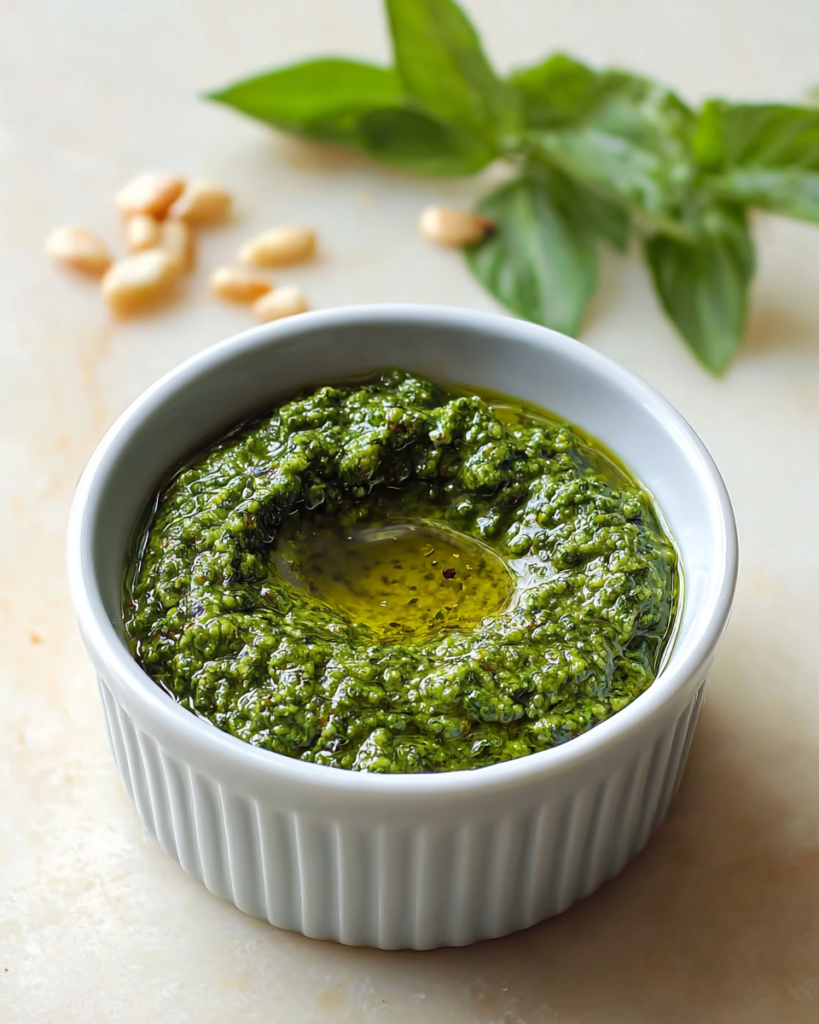
This is the kind of sauce that makes simple meals feel fresh with very little effort. A spoonful can wake up noodles, grain bowls, roasted vegetables, veggie wraps, or a warm slice of crusty bread.
What makes it work is the balance: basil brings the herbal freshness, lemon keeps it lively, garlic gives it a bold edge, toasted nuts add body, and nutritional yeast creates that familiar savory flavor you want from pesto without using Parmesan.
The texture is flexible, too. Keep it thicker for spreading, loosen it with water for dressing, or blend it slightly smoother for tossing with pasta-style dishes, zucchini noodles, or carrot noodles.
Dairy-Free Vegan Pesto Ingredients
Fresh basil leaves bring the classic pesto flavor, color, and garden-fresh aroma. Remove thick stems so the sauce blends smoothly.
Toasted pine nuts add richness and a lightly nutty base. Walnuts also work well if you want a deeper, earthier flavor.
Garlic cloves give the pesto its bold, sharp bite. Start with the listed amount, then add more only after tasting.
Fresh lemon juice brightens the sauce and helps balance the richness from the nuts and olive oil.
Nutritional yeast adds the savory, cheesy-style depth that makes this pesto satisfying without dairy.
Sea salt sharpens the flavors and helps the basil, garlic, and lemon taste more complete.
Extra virgin olive oil helps the sauce emulsify and gives it a silkier texture. Use a good-quality oil with a flavor you enjoy.
Water loosens the pesto gradually so it becomes thick, smooth, and pourable without getting too thin.
Vegetable broth can replace the oil if you prefer an oil-free version with a lighter finish.
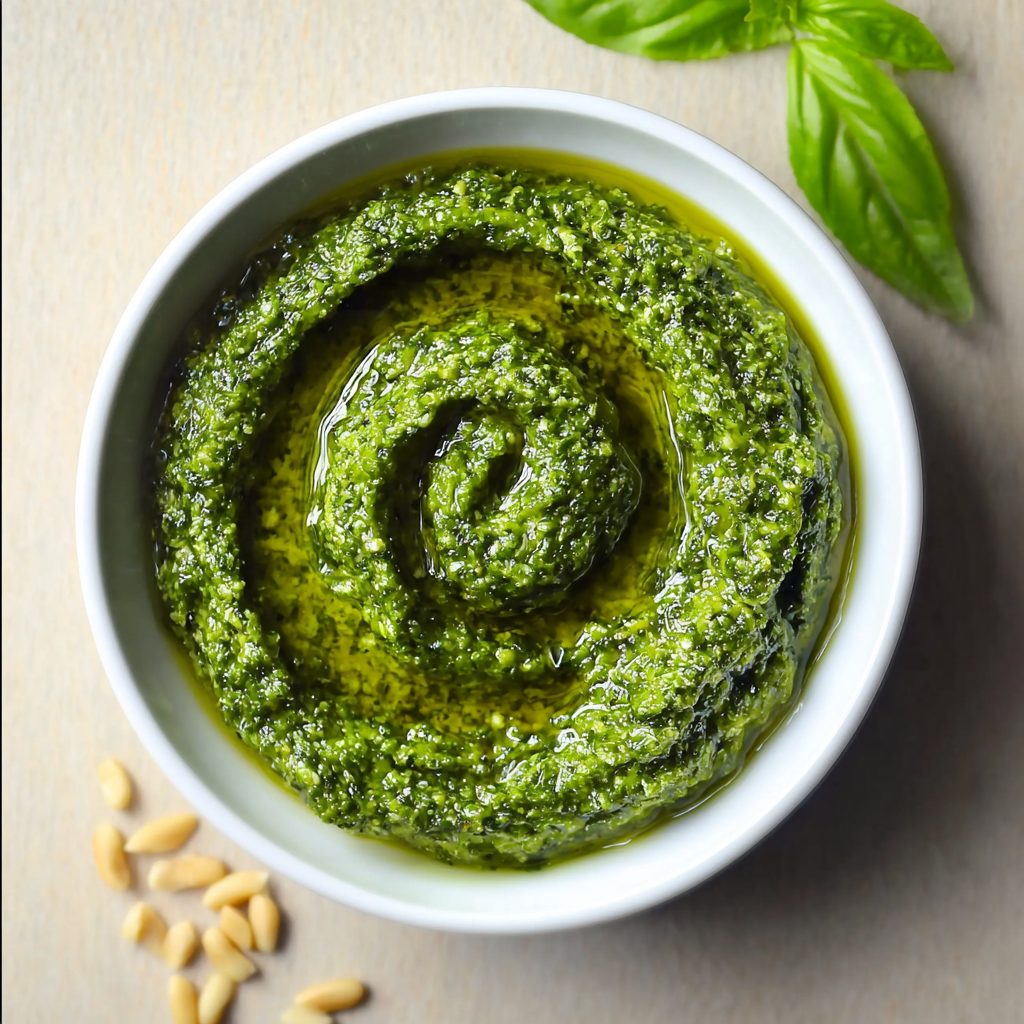
How to Make This Dairy-Free Vegan Pesto
STEP 1: Add the basil, toasted pine nuts or walnuts, garlic, lemon juice, nutritional yeast, and sea salt to a food processor or small blender.
STEP 2: Blend on high until the ingredients break down into a coarse green paste. Stop and scrape the sides as needed so the basil and nuts process evenly.
STEP 3: With the machine running, slowly stream in the olive oil. Add it gradually instead of all at once so the pesto turns smoother and creamier.
STEP 4: Pause again to scrape the sides and check the texture. The mixture should look thick and blended, but it does not need to be completely silky.
STEP 5: Add water one tablespoon at a time, blending between additions, until the pesto becomes thick, smooth, and pourable.
STEP 6: Taste and adjust. Add more nutritional yeast for savory depth, more lemon juice for brightness, a pinch more salt for balance, or a little extra garlic for a stronger bite.
STEP 7: Use immediately, or transfer the pesto to a covered container for chilling. For the freshest color and flavor, press it into the container smoothly and cover it tightly.
Perfect Pairings
This pesto is especially good with pasta, but it also fits into lighter vegetable-forward meals. Toss it with warm noodles and a splash of pasta water for a simple dairy-free sauce that coats every bite.
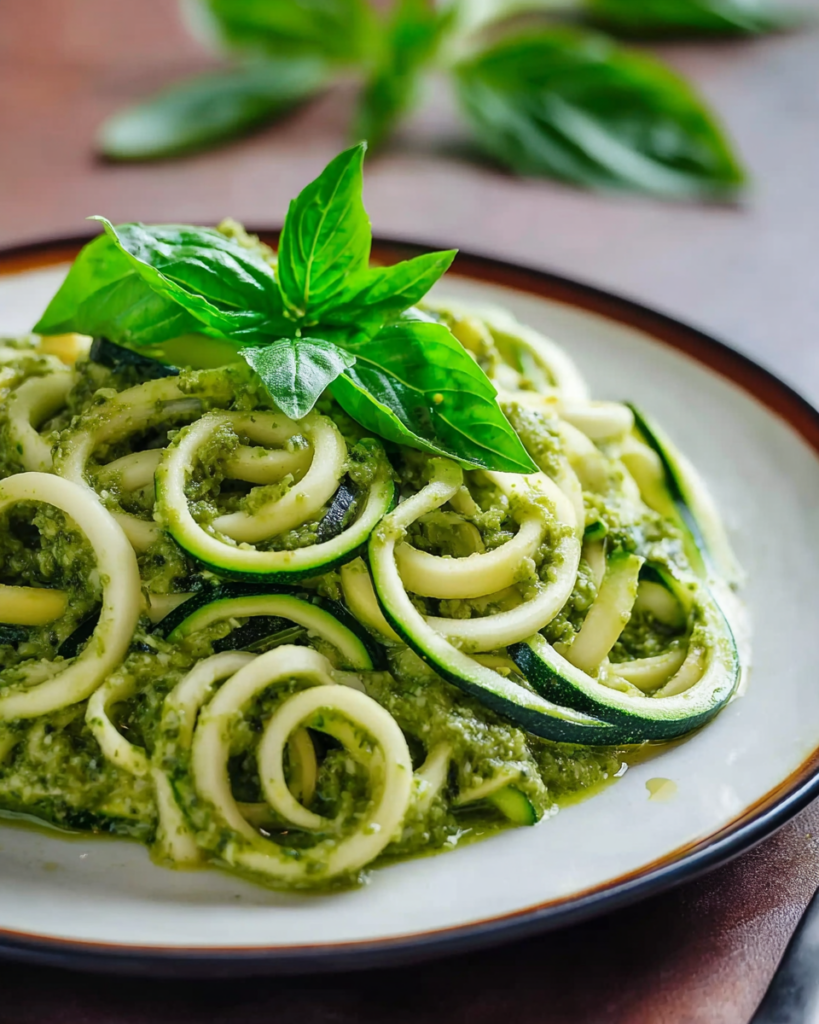
For a colorful side dish, mix it with zucchini noodles or carrot noodles. The pesto clings nicely to spiralized vegetables, and the lemon-garlic flavor keeps everything fresh rather than heavy.
It also works as a spread for sandwiches, wraps, toast, or flatbread. Add a thin layer under roasted vegetables, grilled mushrooms, sliced tomatoes, or crispy chickpeas for a quick lunch with big flavor.
Can I make this pesto without oil?
Yes, you can make it oil-free by replacing the olive oil with vegetable broth or water. Add the liquid slowly and blend well between additions. The pesto will be a little lighter and less silky, but it will still have plenty of basil, garlic, lemon, and savory flavor.
Helpful Tips
- Toast the nuts lightly before blending to bring out a warmer, richer flavor without overpowering the basil.
- Add water slowly because pesto can go from thick to too thin quickly. One tablespoon at a time gives you more control.
- Taste at the end, not just the beginning. Basil, garlic, lemon, and nutritional yeast can vary in strength, so final adjustments matter.
Can I use walnuts instead of pine nuts?
Yes, walnuts are a great substitute for pine nuts. They create a slightly deeper, more earthy pesto, while pine nuts give a softer and more classic flavor. Sunflower seeds can also work if you need a nut-free option, though the flavor will be a little different.
Why is my pesto bitter?
Bitterness can come from overprocessing olive oil, using older basil, or adding too much garlic. Blend the dry ingredients first, then stream in the oil slowly. If the flavor tastes too sharp, add a little more lemon juice, nutritional yeast, or nuts to round it out.
Can I use this pesto with pasta?
Absolutely. For pasta, keep the pesto a little thicker at first, then loosen it with a splash of warm pasta water when tossing. This helps the sauce coat the noodles smoothly without needing extra oil or dairy.
Keeping Leftovers Fresh
Store the pesto in an airtight container in the refrigerator for up to 1 week. Because basil can darken as it sits, keep the surface covered tightly. You can press a small piece of parchment directly over the top before sealing the container if you want extra protection from air.
For longer storage, spoon the pesto into ice cube molds and freeze until solid. Once firm, transfer the cubes to a freezer-safe container or bag. This makes it easy to use small portions for pasta, soups, sandwiches, or roasted vegetables without thawing the whole batch.
Frozen pesto keeps well for at least 1 month, and the cubes can often be used straight from the freezer. Stir one into hot pasta, warm grains, or a skillet of vegetables, or thaw a cube in the refrigerator when you need a spreadable sauce.
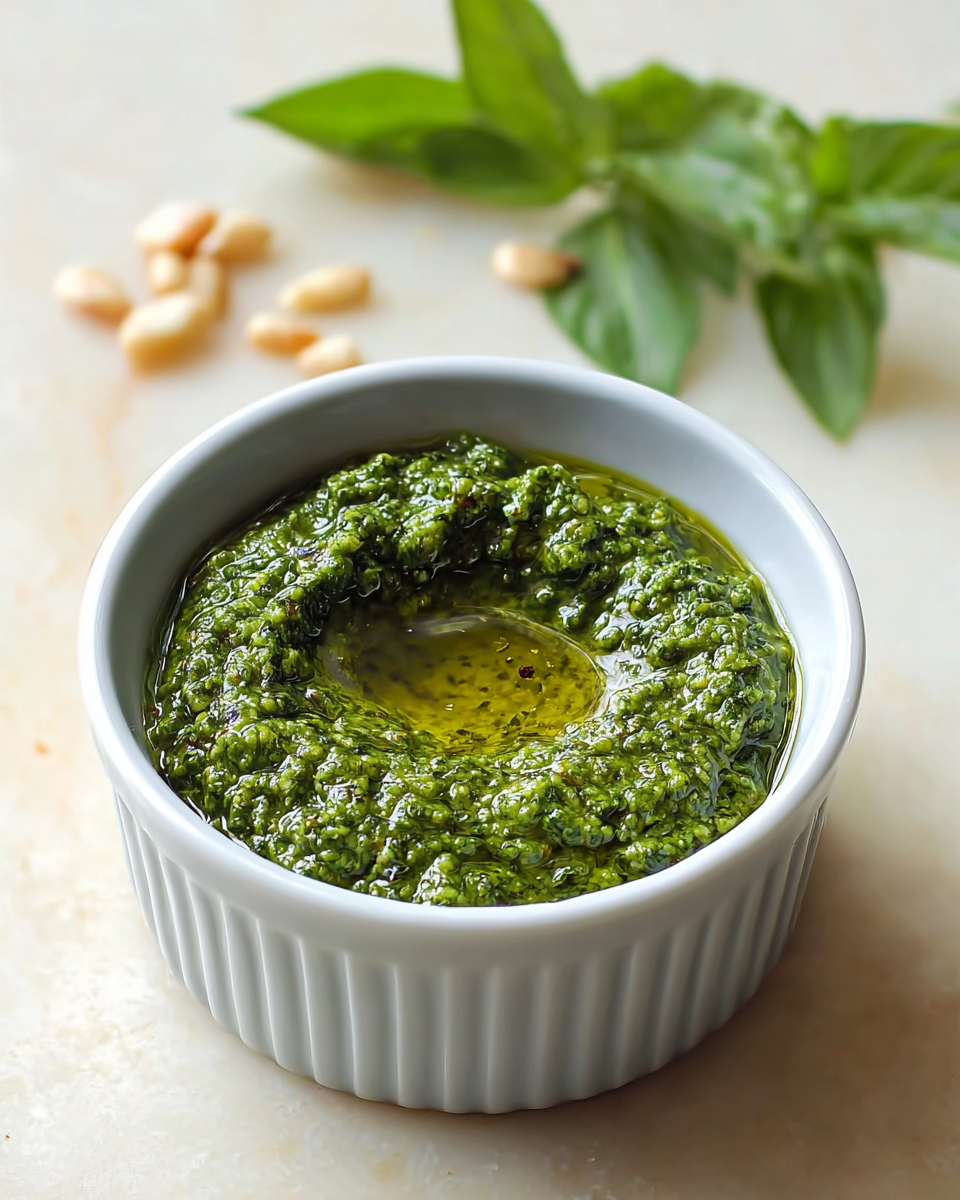
Dairy-Free Vegan Pesto
Ingredients
- 3 to 6 tablespoons water added gradually as needed
- 2 cups firmly packed fresh basil leaves thick stems removed
- 2 to 3 tablespoons extra virgin olive oil preferably a good-quality variety such as Bertolli’s
- 3 large garlic cloves peeled and roughly cut
- 2 tablespoons freshly squeezed lemon juice plus more for adjusting
- 3 tablespoons pine nuts lightly toasted for a fuller flavor; walnuts may also be used
- 1/4 teaspoon sea salt with extra added to taste
- 3 to 4 tablespoons nutritional yeast plus more as desired
- Additional garlic if a stronger bite is preferred
- Additional pine nuts walnuts, or sunflower seeds, as needed for flavor adjustment
Instructions
- Place the basil leaves, pine nuts or walnuts, peeled garlic cloves, fresh lemon juice, nutritional yeast, and sea salt into a food processor or small blender.
- Process on high speed until the ingredients break down into a loose, coarse paste.
- Stop as necessary to scrape the sides of the bowl so the mixture blends evenly.
- While the processor is running, slowly drizzle in the extra virgin olive oil a little at a time, pausing when needed to scrape down the sides.
- After the oil has been incorporated, add water one tablespoon at a time until the pesto becomes thick, smooth, and pourable.
- For an oil-free version, replace the olive oil with vegetable broth or use water only.
- Taste the pesto once the texture is correct, then adjust the seasoning and flavor balance as needed.
- Add more nutritional yeast for extra savory depth, additional sea salt for stronger seasoning, more nuts for a richer flavor, extra garlic for sharpness, or more lemon juice for added brightness.
- Use the pesto immediately as a sauce, dressing, or spread.
- Toss it with zucchini noodles or carrot noodles for a colorful vegetable-based side dish.
- To store, cover and refrigerate for up to 1 week.
- For extended storage, spoon the pesto into ice cube molds and freeze until firm, then transfer the frozen portions to an airtight container and keep frozen for 1 month or longer.