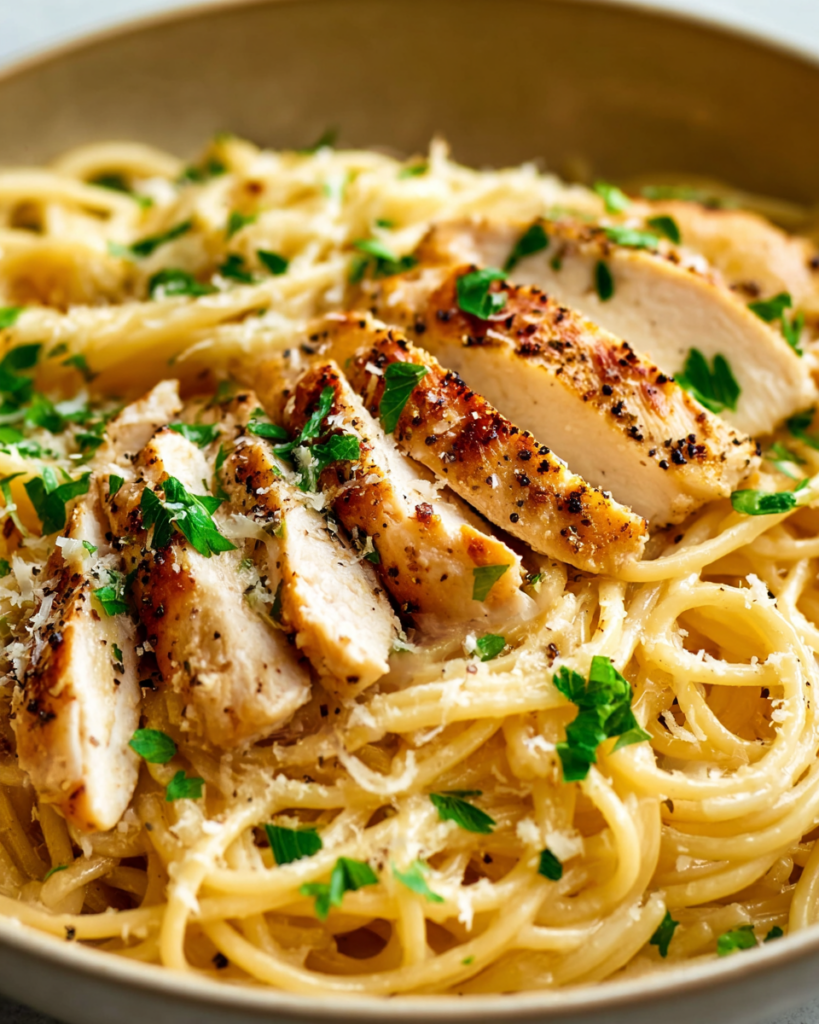
Garlic Butter Chicken Pasta is a quick, cozy stovetop dinner with juicy seasoned chicken, silky spaghetti, savory Parmesan, and a rich garlic-butter coating that comes together without heavy cream.
This is the kind of pasta you make when you want something comforting but still simple enough for a regular weeknight. The chicken cooks quickly in a skillet, the pasta uses pantry-friendly ingredients, and the sauce relies on butter, garlic, Parmesan, and reserved pasta water to create that glossy finish.
What makes this dish work so well is the balance between bold garlic flavor and a lighter sauce texture. The butter gives richness, the Parmesan adds salty depth, and the starchy pasta water helps everything cling to the spaghetti instead of sitting at the bottom of the pan.
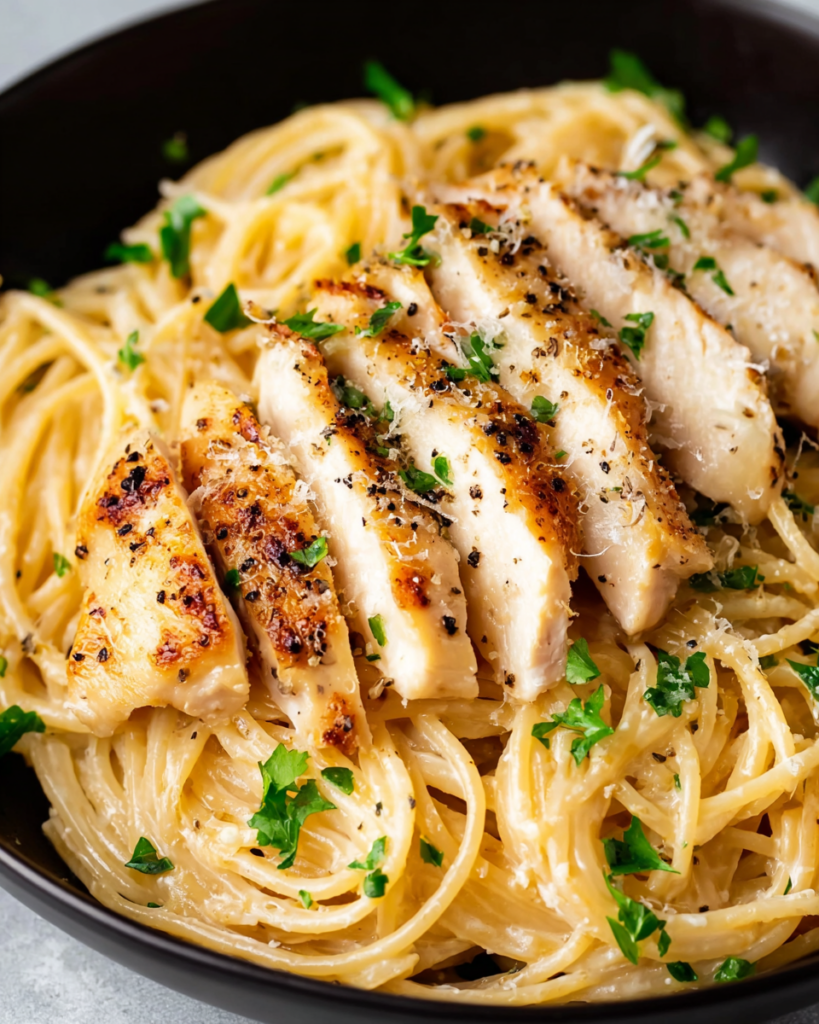
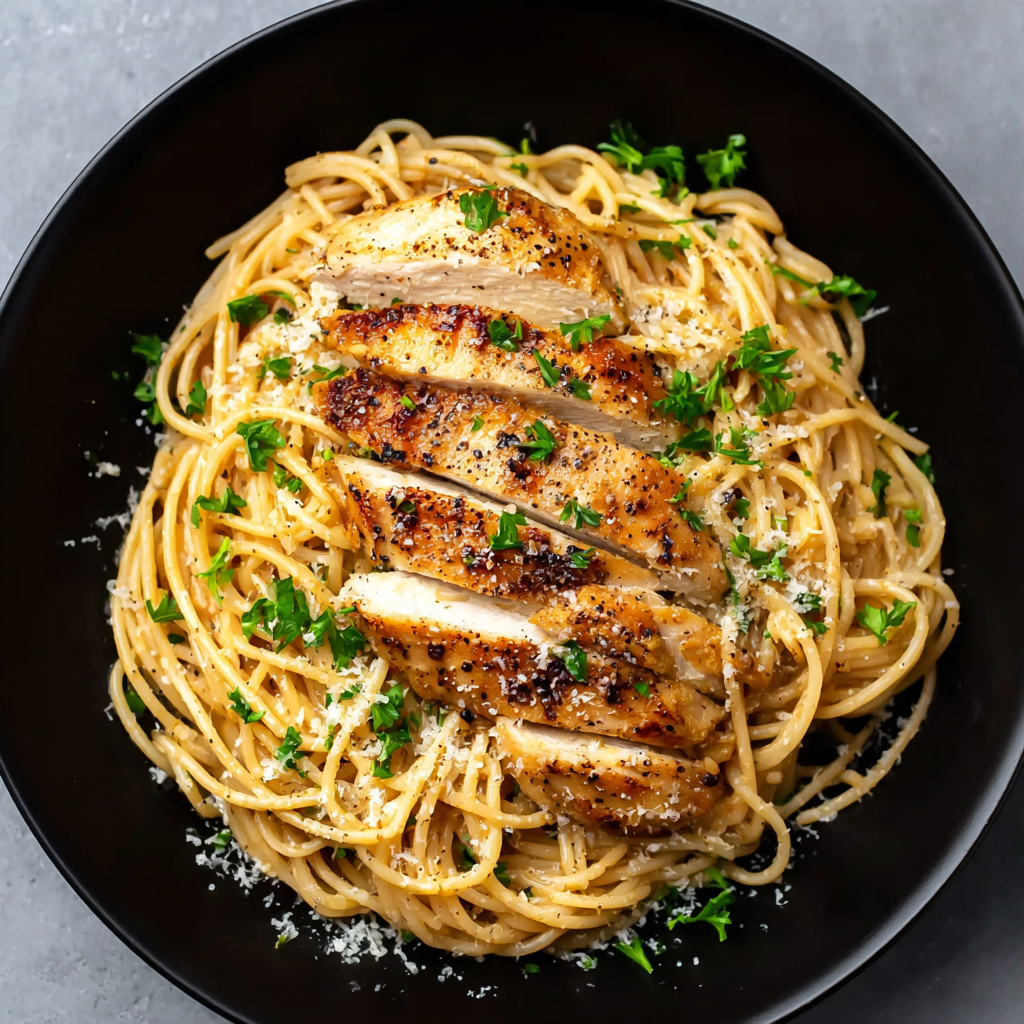
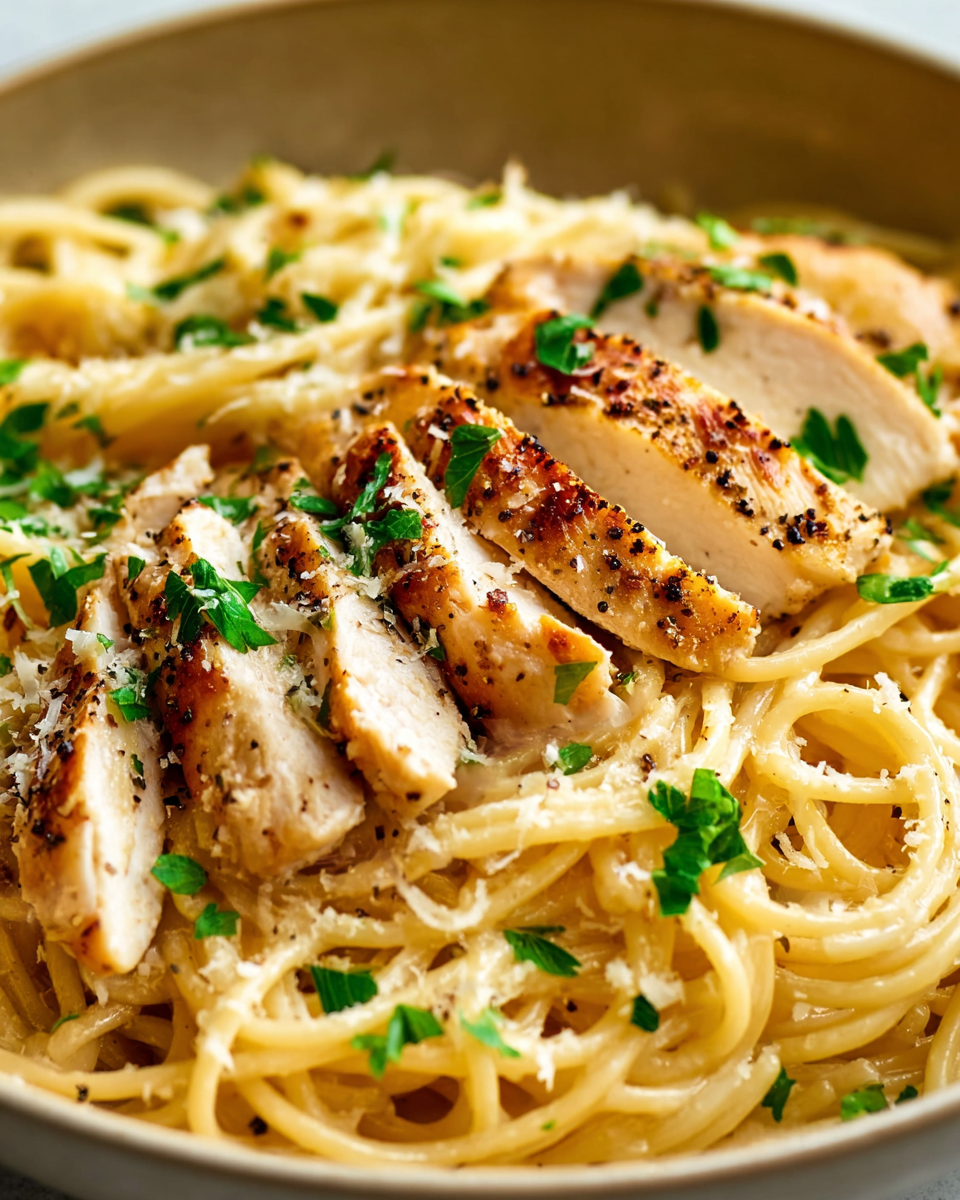
It also feels a little more special than plain buttered noodles. Sliced golden chicken over twirls of garlicky pasta makes the dish hearty, satisfying, and easy to serve straight from the skillet with fresh parsley and extra black pepper on top.
Garlic Butter Chicken Pasta Ingredients
Spaghetti gives the dish its classic pasta base and holds the garlic-butter sauce nicely. Cook it just until al dente so it can finish well when tossed in the skillet.
Boneless, skinless chicken breasts cook quickly once butterflied into thinner pieces. Cutting them evenly helps the chicken brown faster and stay tender.
Olive oil helps the seasonings coat the chicken and supports better browning in the skillet.
Garlic powder builds a savory base on the chicken before the fresh garlic goes into the sauce.
Dried parsley adds a mild herb flavor to the chicken seasoning without overpowering the butter and Parmesan.
Fine sea salt seasons the chicken and helps bring out the flavor of the simple sauce.
Black pepper adds gentle warmth and a little bite, especially when sprinkled again before serving.
Salted butter forms the base of the sauce, giving the pasta a rich, smooth coating.
Fresh garlic is the key flavor in the sauce. Mince it finely so it softens quickly and spreads through the butter.
Parmesan cheese adds salty, nutty flavor and helps the sauce cling to the spaghetti.
Fresh parsley brightens the finished plate and gives the rich pasta a fresh final touch.
Reserved pasta water loosens the sauce and helps create a light, silky coating without cream.
Cooking Steps
STEP 1: Bring a large pot of well-salted water to a boil. Add the spaghetti and cook it until al dente according to the package directions. Before draining, scoop out about 1 cup of the starchy cooking water and set it aside for the sauce.
STEP 2: While the pasta cooks, stir together olive oil, garlic powder, dried parsley, salt, and black pepper in a medium bowl. Slice the chicken breasts into thinner fillets so you have evenly sized pieces, then coat them well in the seasoning mixture.
STEP 3: Heat a large nonstick skillet over medium-high heat. Add the chicken and cook for about 3 minutes on each side, or until golden on the outside and fully cooked in the center. The safest way to check is with an instant-read thermometer; the chicken should reach 165°F.
STEP 4: Transfer the cooked chicken to a plate and cover it loosely so it stays warm. Reduce the heat to medium-low, then melt the butter in the same skillet. Add the minced garlic and stir for about 2 minutes, just until fragrant. Keep the heat gentle so the garlic does not burn.
STEP 5: Spoon about half of the garlic butter into a small bowl and reserve it for serving. Add the drained spaghetti to the skillet with the remaining garlic butter and toss until the noodles are evenly coated.
STEP 6: Add part of the Parmesan and a splash of reserved pasta water. Toss the pasta until the sauce turns smooth and lightly glossy. Add more pasta water a little at a time until the spaghetti looks coated but not watery.
STEP 7: Slice the rested chicken into thin strips. Serve it over the spaghetti or tucked alongside the pasta, then drizzle with the reserved garlic butter. Finish with the remaining Parmesan, fresh parsley, and extra black pepper if you like a little more bite.
Perfect Pairings
A crisp green salad works beautifully with this pasta because it balances the richness of the butter and Parmesan. Keep it simple with lettuce, cucumber, and a light vinaigrette so the garlic-butter flavor stays the focus.
Roasted vegetables are another great side, especially broccoli, asparagus, zucchini, or green beans. Their lightly browned edges pair well with the savory chicken and make the meal feel more complete without adding much extra effort.
Garlic bread or warm dinner rolls also fit naturally here, especially if you want a cozy pasta-night plate. Since the main dish already has plenty of garlic butter, a lightly toasted bread with a mild buttery finish is enough.
Can I use a different pasta shape?
Yes, you can use linguine, fettuccine, angel hair, or short pasta like penne. Spaghetti works especially well because it catches the garlic butter evenly, but any pasta that can hold a light Parmesan sauce will be delicious.
How do I keep the chicken from drying out?
Slice the chicken into even fillets and avoid overcooking it. Medium-high heat gives the outside a golden finish quickly, but once the chicken reaches 165°F, move it to a plate and let it rest before slicing.
Can I make this without Parmesan?
You can, but the sauce will taste less savory and may not cling quite as well. For a simpler version, toss the pasta with garlic butter and pasta water, then season well with salt, pepper, and parsley before serving.
Why does my garlic butter sauce look too thin?
It may need more tossing time or a little more Parmesan. Add pasta water gradually instead of all at once, and keep tossing over low heat until the butter, cheese, and starch come together into a light coating.
Helpful Tips
- Cook the garlic gently. Garlic can turn bitter if the skillet is too hot, so lower the heat before adding it to the butter.
- Save more pasta water than you think you need. A little extra gives you control over the final sauce texture.
- Slice the chicken after resting. This keeps the juices in the meat and gives you cleaner, more tender strips for serving.
Keeping Leftovers Fresh
Store leftovers in an airtight container in the refrigerator for up to 3 days. For the best texture, keep any extra sliced chicken and pasta together with a little of the sauce so the noodles do not dry out too much.
To reheat, warm the pasta gently in a skillet over low heat with a small splash of water. Toss until the butter loosens and the spaghetti becomes glossy again. You can also microwave it in short intervals, stirring between each one, but the stovetop gives better control.
Freezing is possible, though this pasta is best fresh. Butter-based pasta sauces can separate slightly after thawing, and spaghetti may soften. If you do freeze it, use a freezer-safe container and store it for up to 2 months. Thaw overnight in the refrigerator, then reheat slowly with a splash of water and a fresh sprinkle of Parmesan.
Garlic Butter Chicken Pasta
Ingredients
For the pasta:
- 8 ounces spaghetti prepared according to the package directions
For the garlic butter sauce and garnish:
- 1 tablespoon finely minced fresh parsley for finishing
- 1/2 cup grated Parmesan cheese
- 6 fresh garlic cloves minced for maximum flavor
- 1/2 cup salted butter preferably a high-quality option such as Land O’Lakes salted butter
For the chicken:
- 1 1/2 teaspoons dried parsley flakes
- 1 pound boneless skinless chicken breasts
- 1/2 teaspoon ground black pepper
- 2 tablespoons olive oil such as Pompeian Pure Olive Oil
- 1 teaspoon fine sea salt
- 1 1/2 teaspoons garlic powder
Instructions
- Bring a large pot of salted water to a boil. Add the spaghetti and cook until al dente, using the timing provided on the package.
- Before draining, set aside 1 cup of the starchy pasta cooking liquid. Drain the spaghetti and keep it ready for the sauce.
- In a medium mixing bowl, combine the olive oil, garlic powder, dried parsley, fine sea salt, and black pepper until a seasoned coating forms.
- Slice the chicken breasts all the way through using a butterfly-style cut, creating 4 evenly sized fillets.
- Place the chicken pieces into the seasoning mixture and turn them until each fillet is thoroughly coated.
- Warm a large nonstick skillet over medium-high heat. Add the seasoned chicken and cook until both sides are golden, about 3 minutes per side.
- Check that the chicken reaches an internal temperature of 165°F with an instant-read meat thermometer. Transfer the cooked chicken to a plate and cover it with aluminum foil to retain warmth.
- In the same skillet, melt the salted butter over medium-low heat. Stir in the minced garlic and cook for about 2 minutes, just until fragrant.
- Spoon half of the garlic butter into a small bowl and reserve it for serving.
- Add the cooked spaghetti to the skillet with the remaining garlic butter. Toss until the pasta is evenly coated.
- Stir in 1/4 cup of the grated Parmesan cheese, then add 1/3 cup of the reserved pasta water. Toss until the sauce lightly coats the spaghetti.
- Add more reserved pasta water in small amounts as needed until the sauce reaches the preferred consistency.
- Cut the cooked chicken into thin strips. Arrange the sliced chicken over the spaghetti or serve it alongside the pasta.
- Drizzle the reserved garlic butter over the chicken and spaghetti.
- Finish with the chopped fresh parsley, the remaining Parmesan cheese, and extra black pepper, if desired. Serve hot.