Garlic Roasted Duck Breast is a quick, beginner-friendly dinner that delivers crisp skin, rich flavor, and a savory finish without a long ingredient list. This oven-finished duck breast combines garlic, herbs, light smokiness, and a touch of sweetness for a satisfying main course that feels special but fits an ordinary evening.
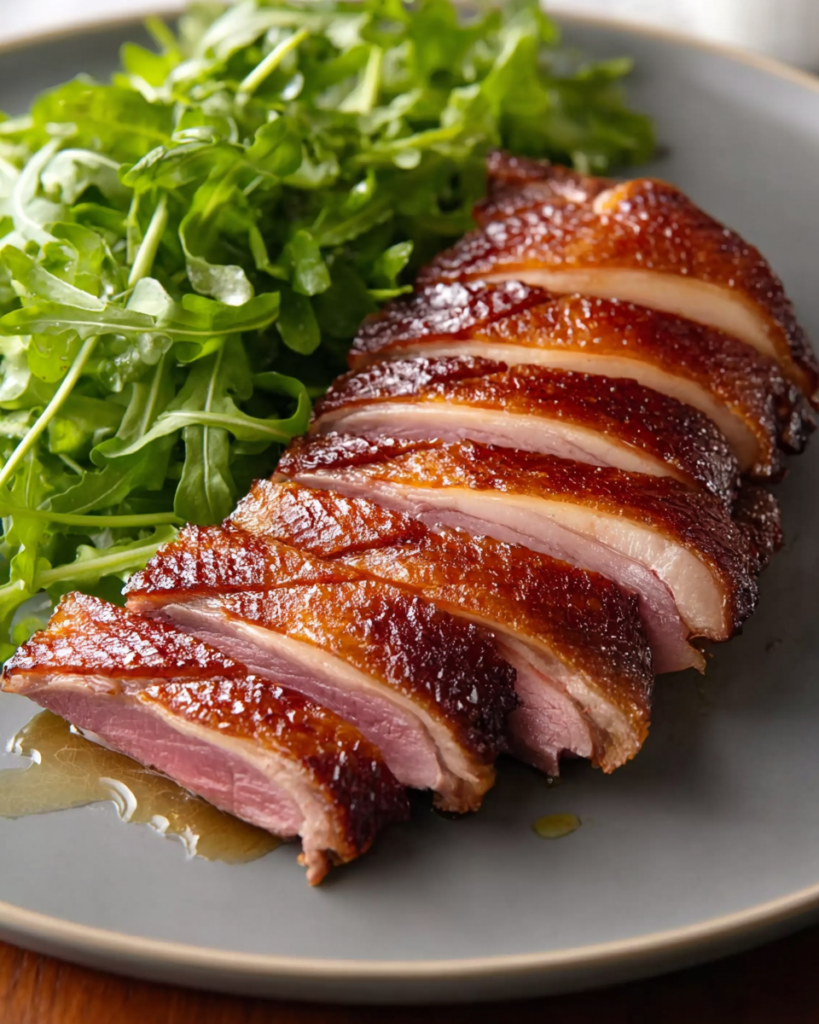
Duck breast is one of those meals that looks restaurant-worthy on the plate while still being very manageable in your kitchen. Starting it on the stovetop gives the skin a head start, so you get that deeply golden exterior and beautifully rendered fat before the oven takes over.
The seasoning profile here is simple but smart. Garlic, onion, parsley, and red pepper bring a savory backbone, while a little smoke essence and sugar round everything out and help the surface develop more flavor as it cooks.
This is also a great choice when you want something a little different from chicken or steak without turning dinner into a project. It cooks fast, rests briefly, and slices beautifully for serving with potatoes, vegetables, or a fresh salad.
What You Need to Make This Garlic Roasted Duck Breast
Boneless duck breast brings the rich, meaty base of the dish and cooks quickly while still feeling hearty enough for a full main course.
Sea salt seasons the meat and helps draw out moisture from the skin so it can crisp more effectively in the pan.
Dried garlic or fresh minced garlic gives the duck its bold savory flavor. Fresh garlic will taste a little fuller and more pronounced, while dried garlic keeps prep extra simple.
Dried onion adds depth and rounds out the seasoning blend without overpowering the duck itself.
Dried parsley flakes lighten the overall flavor and add a gentle herb note that works well with the richer meat.
Dried red bell pepper brings a mild sweet-pepper note and a little extra color to the seasoning mixture.
Turbinado sugar adds just a hint of sweetness and helps balance the savory spices and smoky finish.
Hickory smoke essence gives the duck a subtle smoked quality without needing a grill or smoker, which makes this recipe especially convenient on busy days.
Filtered water and assorted spices can be used to loosen and distribute the seasoning mixture, depending on how you prefer to apply it.
Cooking Steps
STEP 1: Pat the duck breast very dry before you do anything else. Dry skin is one of the biggest keys to good browning, so take a moment here and remove as much surface moisture as possible. If your duck was frozen, thaw it fully in the refrigerator first for the most even cooking.
STEP 2: Warm a sauté pan over medium heat while the oven preheats to 400°F. This gives you a smooth transition from stovetop to oven and helps the duck start rendering as soon as it hits the pan.
STEP 3: Score the skin in a shallow crosshatch pattern, cutting only through the fat layer and not into the flesh. This step helps the fat melt out more efficiently and encourages the skin to become crisp instead of chewy.
STEP 4: Season the duck with salt, garlic, onion, parsley, red pepper, sugar, smoke essence, and your preferred spices. Keep the seasoning balanced so the natural flavor of the duck still comes through clearly.
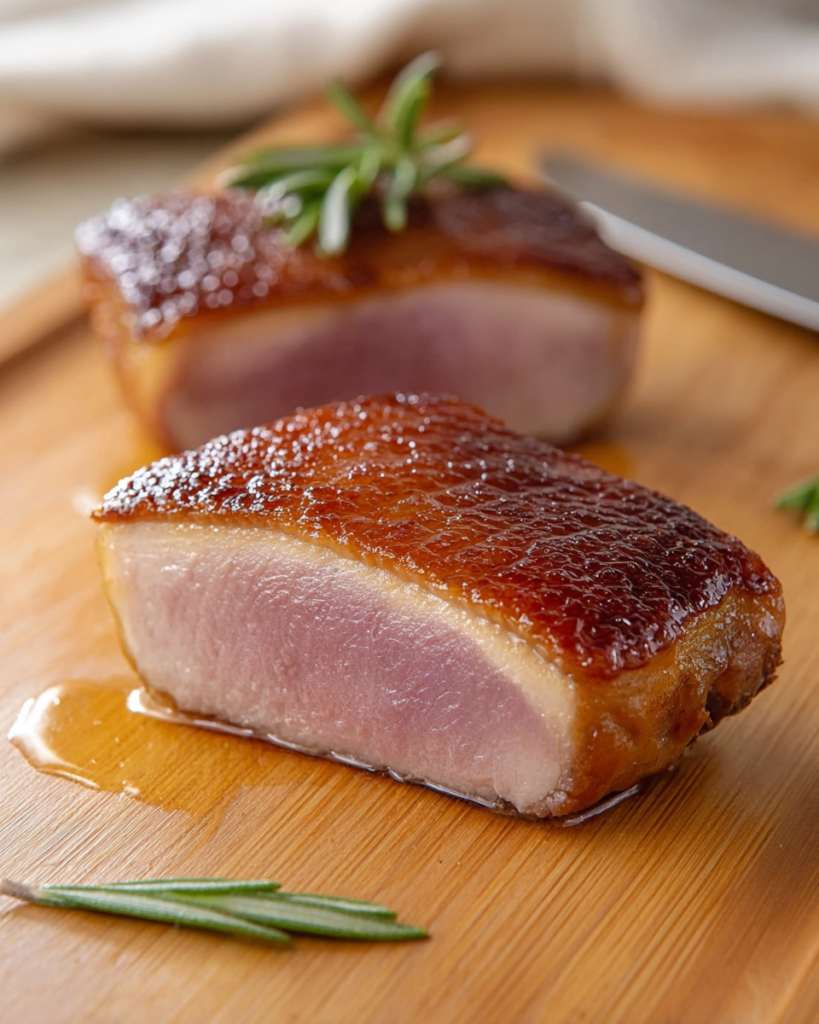
STEP 5: Place the duck skin-side down in the heated pan, cover it, and let it cook for about 10 minutes. During this time, the fat will slowly render and the skin will begin turning golden and crisp. Turn the duck and cook the meat side briefly to build a little color.
STEP 6: Transfer the duck to a baking sheet with the skin facing up and roast until it reaches your desired doneness, about 13 minutes in a 400°F oven. Let it rest for a couple of minutes before slicing so the juices can settle and the meat stays tender when served.
Do I need to score the skin?
Yes, it makes a big difference. Scoring helps the fat render more evenly, which means better texture, crispier skin, and less rubbery fat left on the finished duck breast.
Can I use fresh garlic instead of dried garlic?
You can, and it works especially well here. Fresh minced garlic gives the duck a stronger, more aromatic flavor, while dried garlic keeps the seasoning simple and a little more mellow.
How do I know when the duck is ready?
The skin should look crisp and deeply golden, and the meat should feel firm but not hard. Using an instant-read thermometer is the most reliable way to check doneness before slicing.
Is this a good recipe for a small dinner?
Absolutely. Duck breast is ideal for smaller meals because it cooks quickly and feels special without requiring a huge pan of ingredients. It works well for a weeknight dinner for two or a simple weekend meal.
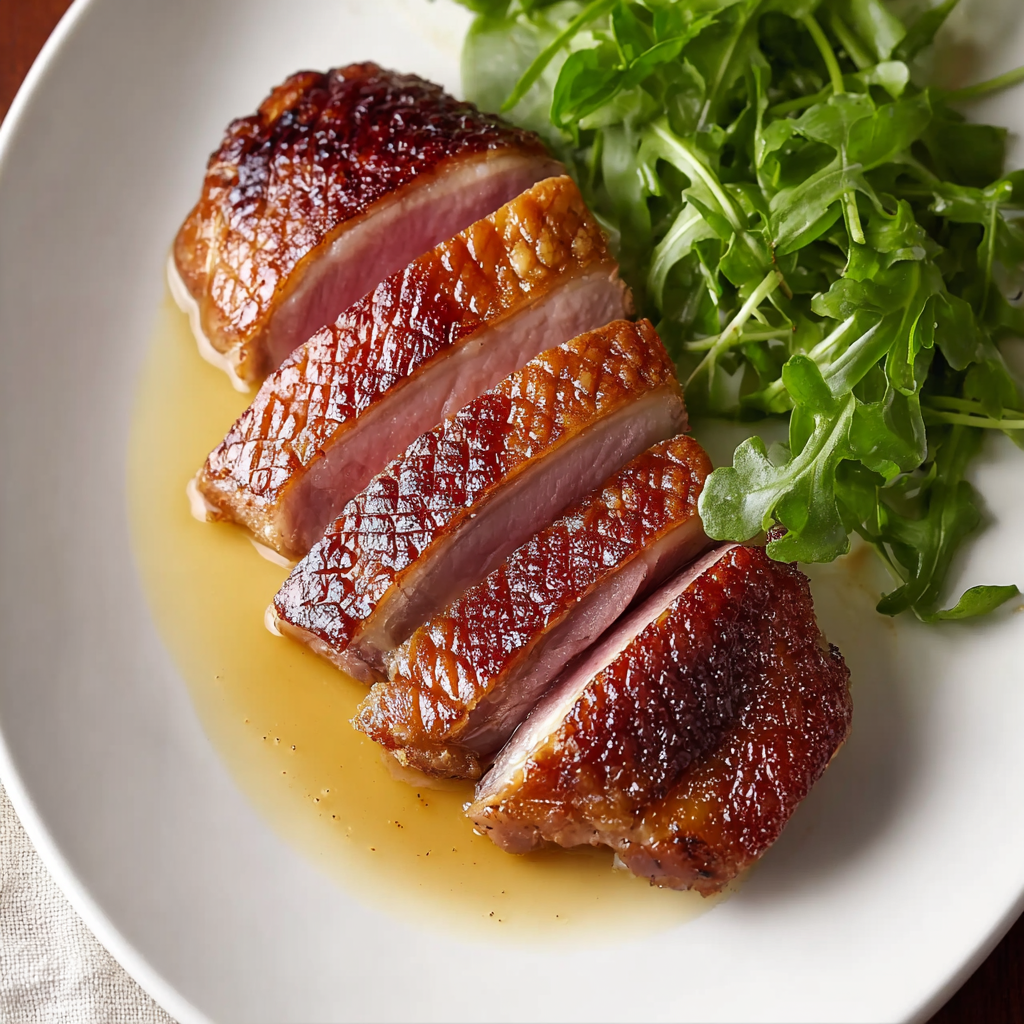
Perfect Pairings
Roasted potatoes are a natural match because they soak up some of the rich duck juices and bring a crisp, hearty side that keeps the plate balanced.
A simple green salad with a sharp vinaigrette works beautifully if you want contrast. The freshness and acidity cut through the richness of the duck and keep the meal from feeling too heavy.
Steamed or roasted green beans, asparagus, or carrots also fit well here. They add color, texture, and enough freshness to round out the savory garlic and smoke flavors.
Helpful Tips
- Start the duck in a dry pan so the skin can render its own fat instead of steaming.
- Keep your scoring shallow to avoid cutting into the meat and losing juices during cooking.
- Rest the duck briefly before slicing so it stays moist and looks cleaner on the plate.
Keeping Leftovers Fresh
Store leftover duck breast in an airtight container in the refrigerator for up to 3 days. For the best texture, keep sliced pieces in a single layer or separate them with parchment so they do not stick together.
To reheat, warm the duck gently in a skillet over low heat or place it in a moderate oven until heated through. That approach helps preserve the texture better than a microwave, which can soften the skin. If you do use the microwave, cover loosely and heat in short bursts to avoid overcooking.
Duck breast can also be frozen, though the skin will be at its best when enjoyed fresh. Wrap it tightly, then freeze for up to 2 months. Thaw overnight in the refrigerator before reheating for the most even results.
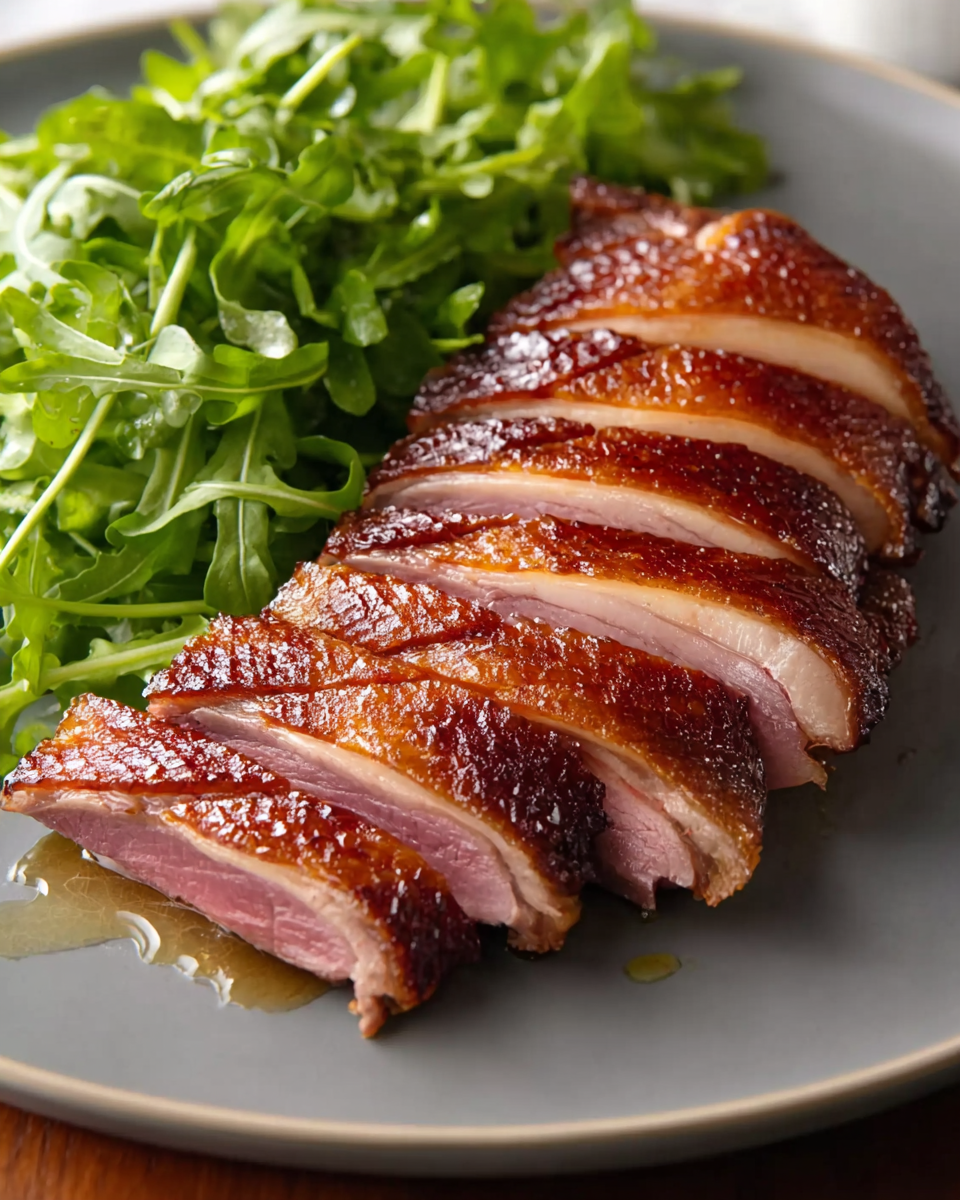
Garlic Roasted Duck Breast
Ingredients
- Boneless duck breast
- Sea salt
- Dried parsley flakes
- Filtered water
- Dried garlic or fresh minced garlic for stronger flavor
- Dried onion
- Turbinado sugar
- Hickory smoke essence such as Wright’s Liquid Smoke
- Dried red bell pepper
- Assorted spices
Instructions
- Pat the duck breast dry with paper towels. If it has been frozen, thaw it in the refrigerator overnight before cooking so it defrosts evenly.
- Set a sauté pan over medium heat and allow it to warm for about 3 minutes. At the same time, preheat the oven to 400°F (200°C).
- Using a sharp knife, score the skin of the duck breast at 1/4-inch intervals, taking care not to cut into the flesh. Turn it and score again in the opposite direction to form a crosshatch pattern, which helps the fat render and encourages crisp skin.
- Place the duck breast into the heated sauté pan with the skin side facing down. Cover the pan and cook for 10 minutes so the fat can render and the skin can become crisp.
- Turn the duck breast over and cook it on the meat side for 2 additional minutes.
- Transfer the duck breast to a metal baking sheet with the skin side facing upward. Move it to the preheated oven and roast for about 13 minutes, or until it reaches the preferred doneness.
- Remove the duck from the oven and let it rest for 2 minutes before slicing. Confirm that the internal temperature has reached 165°F (74°C) before serving warm.
Notes
Fresh minced garlic may be used in place of dried garlic for a fuller garlic flavor.
Filtered water is preferred if using water in the seasoning mixture.
The duck should reach an internal temperature of 165°F (74°C) for safe consumption.