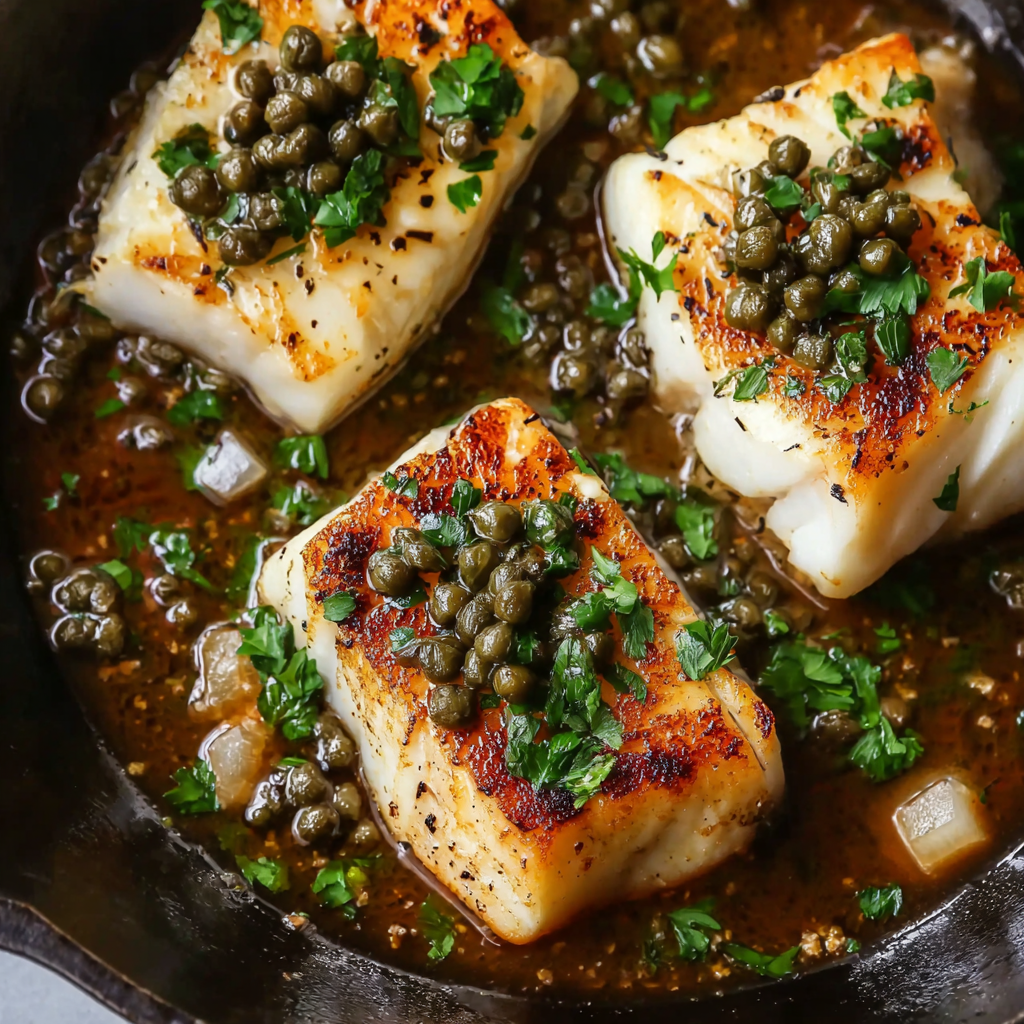
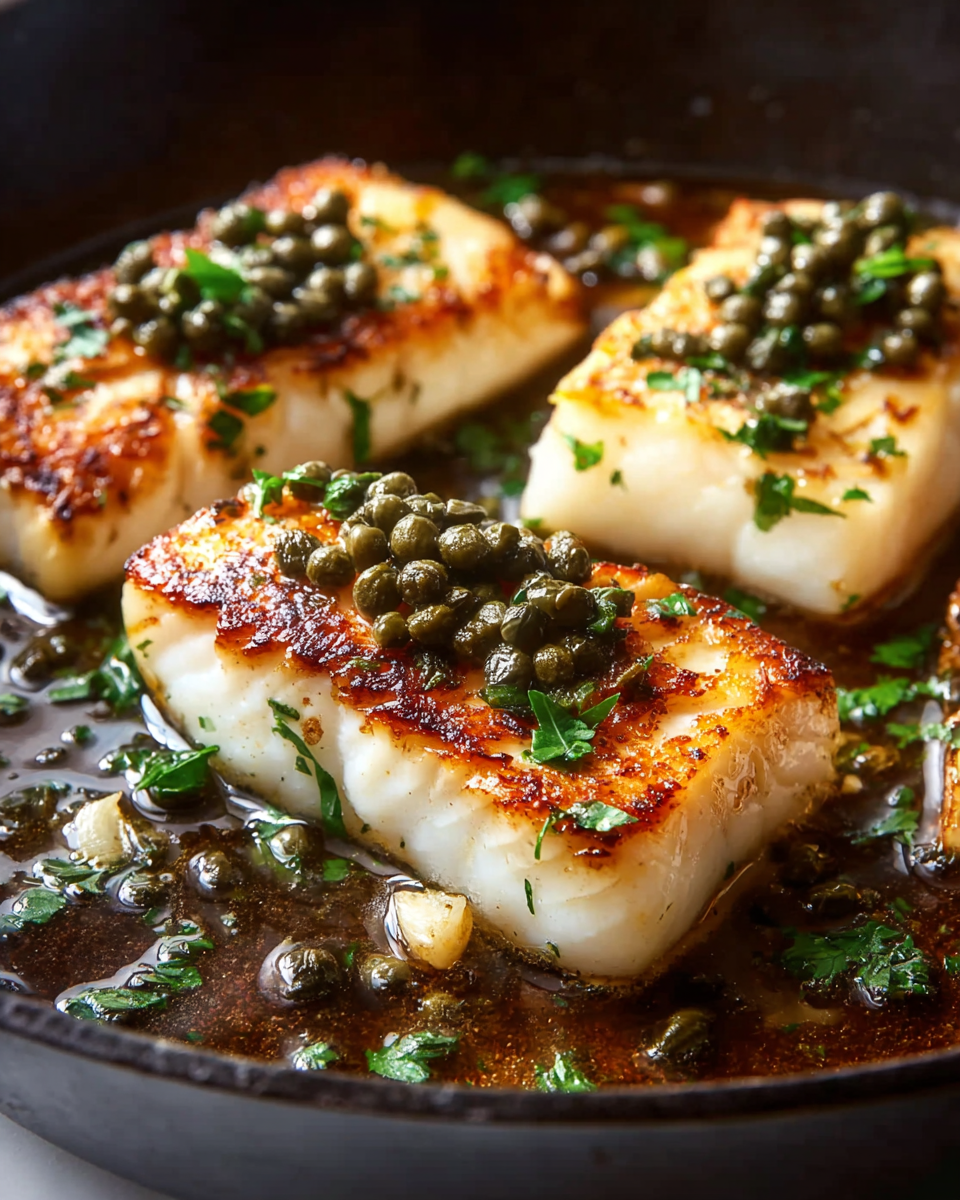
Quick, elegant, and full of fresh flavor, Grilled Halibut in Cast Iron Skillet gives you a golden seared crust, tender flaky fish, and a silky lemon butter finish that feels restaurant-worthy without making dinner complicated.
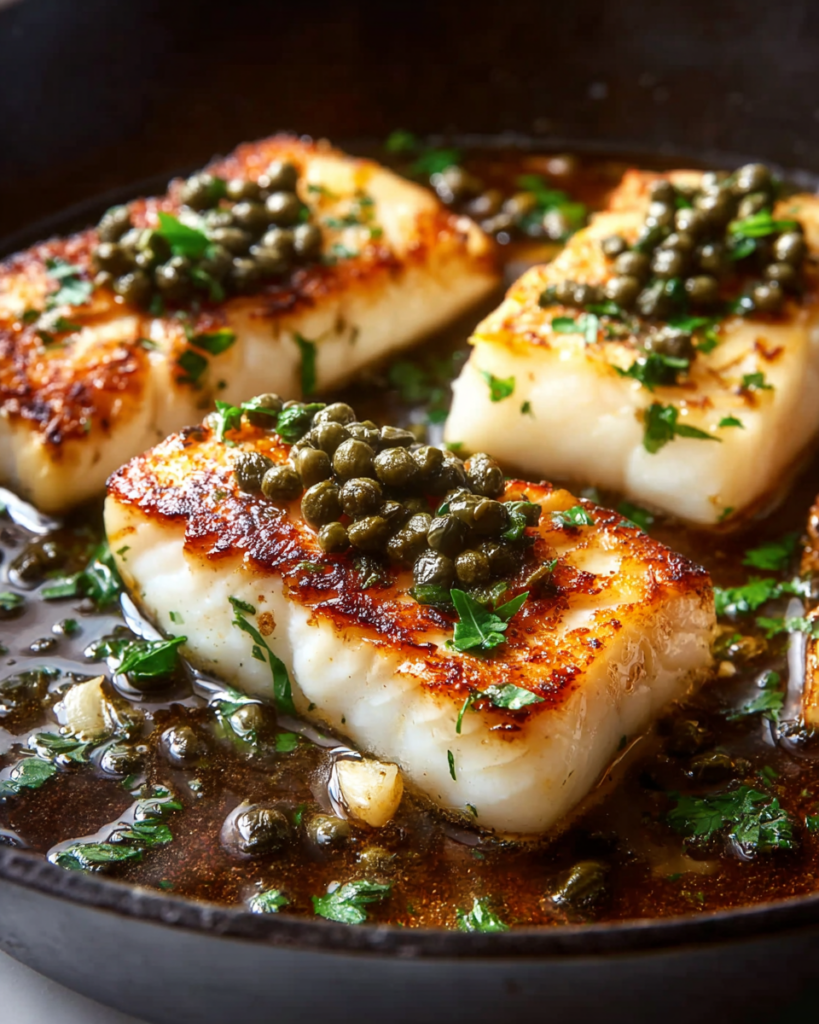
This is the kind of seafood dinner that works when you want something impressive but still practical for a weeknight. Halibut has a naturally mild, delicate flavor, so a hot cast iron skillet and a simple lemon-caper butter sauce are all it needs to shine.
What makes this dish especially reliable is the contrast in texture. You get that beautiful browned exterior from the skillet, then a soft, moist center that flakes apart easily with a fork. The sauce adds brightness, richness, and just enough briny pop from the capers to keep every bite lively.
It is also a smart choice when you want a meal that feels polished without a long ingredient list. A few basics from your kitchen, one good pan, and about twenty minutes are enough to put a refined main course on the table.
Grilled Halibut in Cast Iron Skillet Ingredients
Halibut fillets bring the star power here, with a firm yet delicate texture that holds up well to a hot sear.
Kosher salt seasons the fish simply and helps bring out its clean, mild flavor.
Black pepper adds a little warmth without overpowering the halibut.
Olive oil helps the fillets sear properly and encourages that deep golden crust in the cast iron skillet.
Butter creates the rich base of the sauce and softens the sharpness of the lemon and garlic.
Garlic gives the sauce a savory backbone and makes the butter taste fuller and more aromatic.
Capers add a briny, punchy note that balances the richness of the butter beautifully.
Fresh lemon gives you both zest and juice, which keep the sauce bright and fresh instead of heavy.
Fresh parsley finishes the dish with color and a clean herb flavor that lifts the whole pan sauce.
How to Make This Grilled Halibut in Cast Iron Skillet
STEP 1: Start by prepping the sauce ingredients before the fish hits the pan. Zest and juice the lemon, then stir it together with the minced garlic and capers so everything is ready when the halibut finishes cooking.
STEP 2: Cut the cold butter into a few small pieces and chop the parsley. Having these ready to go makes the sauce come together quickly and helps keep it smooth instead of greasy.
STEP 3: Pat the halibut very dry with paper towels, then season it evenly with salt and pepper. Dry fish sears better, browns more evenly, and is much less likely to steam in the skillet.
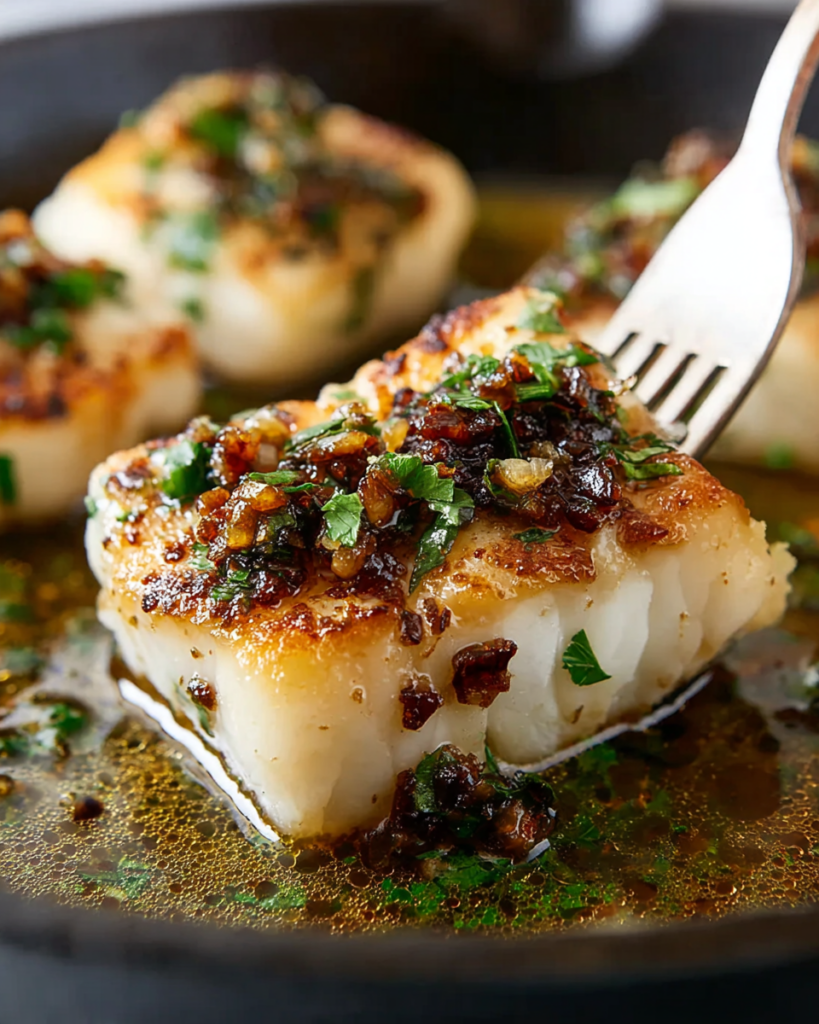
STEP 4: Heat the cast iron skillet over medium-high heat with the oil until the pan is hot and the oil is shimmering. Place the fillets in the skillet and leave them alone long enough to build a deeply golden crust on the first side.
STEP 5: Turn the fish carefully and cook until the center is just done and the fillets flake easily. Transfer them to a platter right away so they stay tender and do not overcook from residual heat.
STEP 6: Lower the heat and add the lemon, garlic, and caper mixture to the same skillet, scraping up the browned bits for extra flavor. Add the butter bit by bit until the sauce turns glossy, then stir in the parsley and spoon the warm sauce over the halibut before serving.
Can I use another white fish instead of halibut?
Yes, this method works well with other firm white fish such as cod, haddock, or sea bass. The cooking time may shift slightly depending on thickness, but the lemon butter sauce pairs well with all of them.
How do I know when halibut is done?
Halibut is ready when it turns opaque and flakes easily with a fork at the thickest part. You want it just cooked through, not dry. Pulling it from the skillet as soon as it flakes will keep it tender.
Why use cast iron for halibut?
Cast iron holds heat extremely well, which helps create a flavorful browned crust without needing a complicated technique. It also leaves behind those tasty bits in the pan that make the lemon butter sauce richer and more savory.
Can I make the lemon butter sauce less tangy?
You can. Use a little less lemon juice and let the butter do more of the work. Keeping the lemon zest in the sauce still gives you fresh citrus flavor without making the finish too sharp.
Helpful Tips
- Pat the fish dry really well before seasoning so it sears instead of steaming.
- Let the first side cook undisturbed until it releases more easily from the skillet.
- Add the butter to the sauce gradually over lower heat so it stays smooth and lightly emulsified.
What to Serve with Grilled Halibut in Cast Iron Skillet
A pile of roasted baby potatoes is a natural choice because they soak up the lemon butter sauce so well and make the plate feel hearty without overshadowing the fish.
Steamed or roasted asparagus also fits beautifully here. Its fresh, grassy flavor works with the lemon and parsley, and it keeps the meal feeling light and balanced.
For something a little softer and more comforting, serve the halibut over rice or creamy mashed potatoes. Both are excellent for catching every last spoonful of that buttery caper sauce.
How to Store & Reheat
Store leftover halibut in an airtight container in the refrigerator for up to 2 days. Keep the fish and extra sauce together if possible so the fillets stay moist.
For reheating, warm the halibut gently in a skillet over low heat or in the oven, covered, just until heated through. Avoid strong heat or the microwave if you can, since halibut can dry out quickly.
Freezing is possible, but this dish is best enjoyed fresh. The texture of the fish and the buttery sauce are at their best right after cooking, so this is one of those meals that really rewards serving immediately.
Grilled Halibut in Cast Iron Skillet
Ingredients
For the halibut:
- 4 skinless halibut fillets 4 to 6 ounces each
- 1 teaspoon kosher salt
- 2 tablespoons olive oil or another neutral oil with a high smoke point
- 1/4 teaspoon black pepper
For the lemon butter sauce:
- 4 tablespoons unsalted butter chilled and cut into 4 cubes
- 1 tablespoon drained capers
- 2 garlic cloves finely minced
- 2 sprigs fresh parsley finely chopped
- 1 small lemon zested and juiced
Instructions
- Prepare the sauce components first. Finely grate the small lemon to yield about 1 teaspoon of zest, then squeeze out 2 tablespoons of juice. Place the zest and juice in a small bowl with the minced garlic and capers. Stir to combine, then set the mixture aside.
- Cut the cold butter into 4 portions so it melts smoothly later. Finely chop the parsley leaves and tender stems from the 2 sprigs to make about 1 tablespoon, then reserve both the butter and parsley.
- Blot the halibut fillets thoroughly with paper towels to remove excess moisture. Season each piece evenly with the kosher salt and black pepper.
- Set a large cast iron skillet over medium-high heat and add the olive oil. Once the oil is hot and just beginning to smoke, arrange the fillets in the pan. Let them cook without moving until the underside is deeply golden and the fish is cooked slightly beyond halfway up the sides, about 4 to 5 minutes.
- Lower the heat to medium and carefully turn the fillets. Continue cooking for 3 to 5 minutes more, until the fish is just done and flakes easily when tested with a fork. Transfer the halibut to a serving platter or individual plates.
- Reduce the heat to medium-low. Pour the prepared lemon mixture into the skillet and use a wooden spoon to loosen any browned bits from the bottom of the pan. Add the butter gradually, one piece at a time, allowing each portion to melt almost completely before adding the next to create a smooth, lightly emulsified sauce.
- Remove the skillet from the heat and stir in the chopped parsley. Taste the sauce and adjust with additional salt and pepper only if needed.
- Spoon the warm lemon butter sauce over the halibut and serve immediately.