Halibut à la Nage is a light yet elegant seafood dinner with tender poached fish, a fragrant lemon-tarragon broth, and a vivid herb oil that makes the whole dish feel special without turning it into a complicated kitchen project.
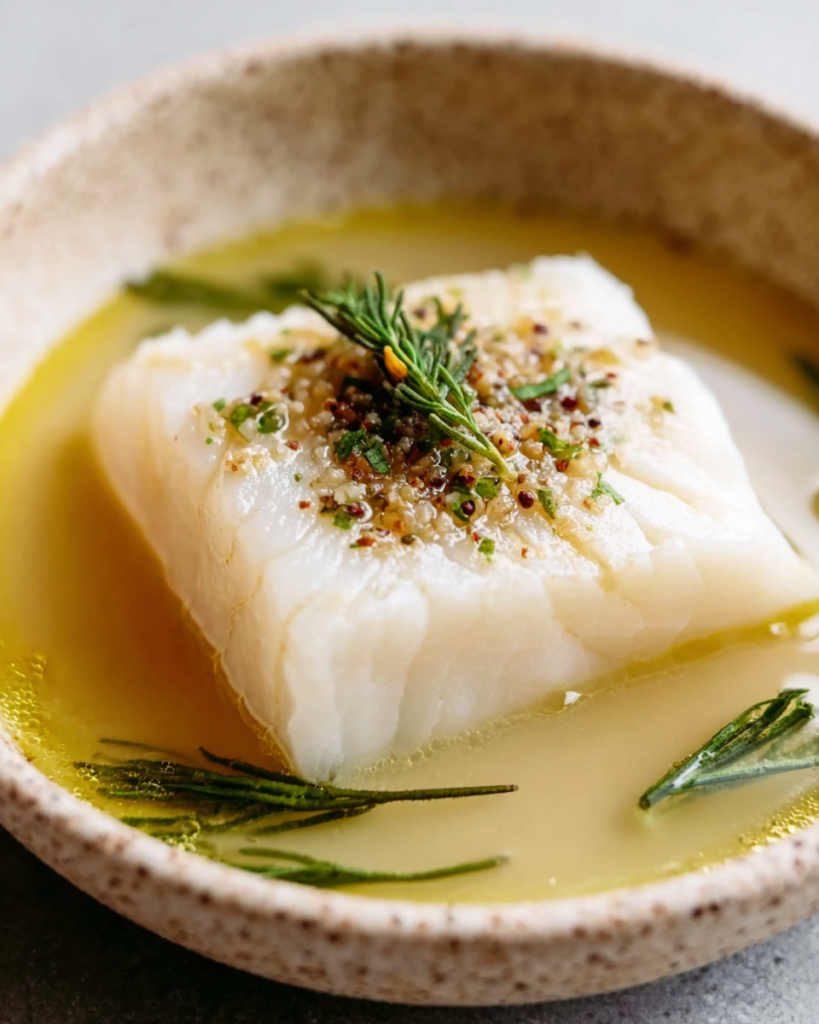
This is the kind of meal that works beautifully when you want something refined but still approachable. The broth does a lot of the heavy lifting, building flavor from parsnip, shallot, citrus, herbs, and Parmesan rind while the halibut stays delicate and moist.
What makes this dish so appealing is how balanced it feels. You get richness from the fish, brightness from the lemon, gentle sweetness from the parsnip, and a fresh lift from the tarragon oil, all in one bowl.
It is also a smart choice for a dinner where you want calm, controlled cooking instead of last-minute stress. The broth can be prepared first, the fish cooks gently, and the final bowl looks restaurant-worthy with very little fuss.
Halibut à la Nage Ingredients
Halibut fillets — the star of the dish, with a mild flavor and firm texture that holds up beautifully during gentle poaching.
Fresh parsley and tarragon — blended with oil, they create the bright green finish that gives the bowl freshness and color.
Neutral oil — lets the herb flavor stay clean and vibrant without overwhelming the delicate fish.
Parsnips — add subtle sweetness and body to the broth, making it taste layered without feeling heavy.
Shallot — brings soft aromatic depth that suits the gentle style of the dish.
Lemon zest and lemon juice — keep the broth lively and sharpen the overall flavor right at the end.
Whole black peppercorns — infuse the cooking liquid with gentle warmth rather than harsh spice.
Parmesan rind — quietly enriches the broth with savory depth and a slightly rounded finish.
Vanilla extract — used in a tiny amount, it softens the edges of the broth and adds a subtle aromatic note.
Whole-grain mustard — spooned onto the fish at the end for a punchy, slightly textured finish.
Fresh tarragon leaves — the final garnish that reinforces the herbaceous character of the dish.
Cooking Steps
STEP 1: Start with the herb oil by quickly blanching the parsley until just softened and bright, then add the tarragon, drain, cool, and squeeze the herbs dry. Blend them with the neutral oil until the mixture becomes smooth and vividly green, then chill it while you prepare the rest of the dish.
STEP 2: Lightly season the halibut fillets with salt and let them sit while the broth comes together. This short rest helps the fish taste seasoned all the way through without overpowering its delicate flavor.
STEP 3: Add the water, parsnips, shallot, Parmesan rind, lemon zest, lemon juice, peppercorns, vanilla, and salt to a wide skillet. Bring everything to a boil, then reduce to a gentle simmer, cover, and let it cook until the liquid smells fragrant and fully developed.
STEP 4: Once the broth is ready, bring it back to a stronger simmer and nestle in the halibut, moving the solids aside so the fillets can sit comfortably in the liquid. Spoon some hot broth over the top so the fish cooks evenly even if it is not fully submerged.
STEP 5: Lower the heat and cook the fish very gently, covered, until it is nearly done. The goal here is tenderness, not a hard boil, so keep the liquid calm and let the halibut poach slowly.
STEP 6: Remove the pan from the heat and leave the fish covered for a few more minutes. This finishing rest helps the halibut turn opaque and just-cooked while staying moist and silky instead of dry.
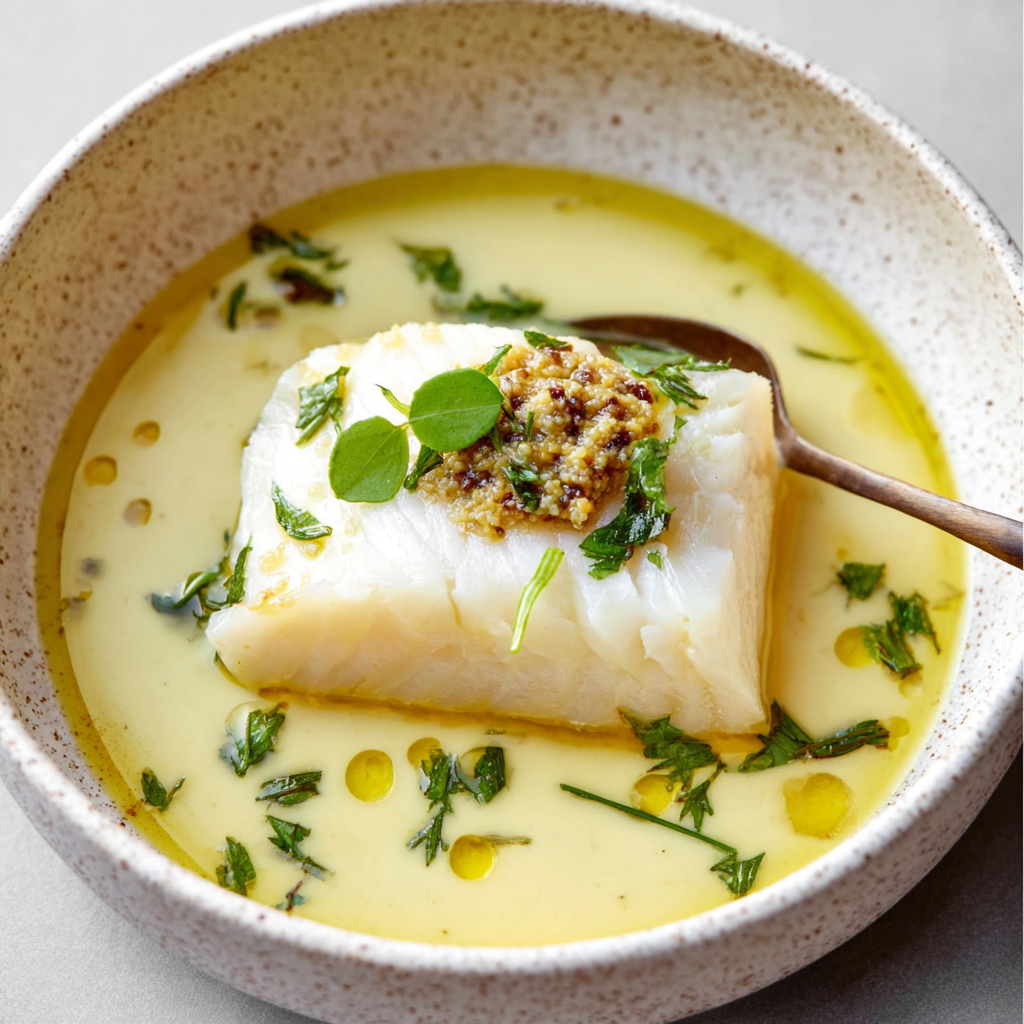
STEP 7: Lift the fillets into shallow bowls, then taste and strain the broth. Pour the clear broth around the fish and finish each serving with fresh tarragon, a small spoonful of whole-grain mustard, and a drizzle of the chilled herb oil for color, aroma, and brightness.
Can I make the herb oil ahead?
Yes, and this is one of the easiest ways to streamline the dish. It can be made earlier in the day and chilled, though it looks brightest and tastes freshest when used the same day.
Perfect Pairings
A small pile of buttered new potatoes is a natural match here because they soak up the broth without competing with it. Keep the seasoning simple so the fish remains the focus.
A slice of crusty baguette also works well, especially if you want something easy for a dinner party. It gives you a simple way to catch every bit of the lemony broth and herb oil.
For something green, serve this with lightly dressed haricots verts or tender asparagus. A crisp vegetable side keeps the plate feeling French-inspired and polished without making the meal feel too heavy.
How do I know the halibut is done?
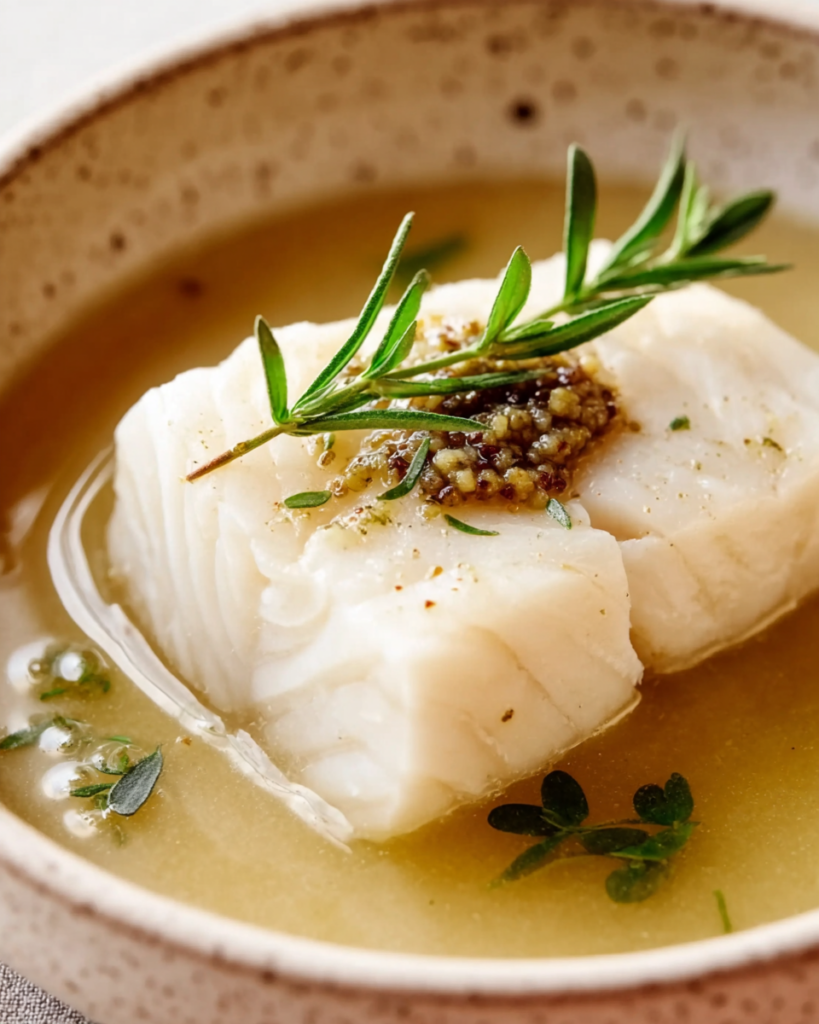
Look for fish that has turned opaque and flakes gently with light pressure, but still appears moist in the center. This dish is at its best when the halibut is just cooked through, not firm and dry.
Helpful Tips
- Keep the broth at a gentle simmer when the fish goes in. Fast boiling can make delicate halibut tighten up and lose its soft texture.
- Strain the broth only after tasting it. A final splash of lemon juice or pinch of salt can make the whole bowl feel much more alive.
- Spoon the mustard on in small amounts. It should wake up the dish, not dominate the clean flavor of the broth.
Can I strain the broth earlier?
You can, especially if you are cooking for guests. Strain it once the flavor is where you want it, then rewarm it gently before poaching or serving so the final assembly feels smooth and organized.
How to Store & Reheat
This dish is best the day it is made, because poached halibut has its finest texture right after cooking. If you do have leftovers, store the fish and broth in the refrigerator for up to 2 days in an airtight container. Keep the herb oil separate and try to use it within 1 day for the freshest color and flavor.
To reheat, place the broth in a small pan over low heat until warm, not boiling. Add the halibut and let it warm gently in the liquid just until heated through. Avoid microwaving if possible, since it can make the fish dry and unevenly heated.
Freezing is not the best option for the assembled dish because the fish can lose its delicate texture after thawing. The strained broth, however, can be frozen on its own for up to 1 month and used later as a flavorful base.
Is this dish better for guests or weeknights?
It can do both. It feels elegant enough for company, but the actual cooking is calm and straightforward, which also makes it a lovely option for a quieter night when you want something lighter than a typical creamy seafood dinner.
Halibut à la Nage
Ingredients
For the tarragon oil
- 1 tablespoon fresh tarragon leaves
- 1/3 cup neutral oil such as vegetable or grapeseed
- 1/3 cup fresh parsley leaves
For the broth
- 2 teaspoons kosher salt
- 6 ounces parsnips peeled and cut into rough pieces
- 2 strips lemon zest about 3 inches each, with the white pith removed
- 2 teaspoons lemon juice
- 1 shallot halved
- 2 cups water
- 1/2 teaspoon whole black peppercorns
- 3 sprigs fresh tarragon
- 1 piece Parmesan rind approximately 2 1/2 by 1 inch
- 1/4 teaspoon vanilla extract
- kosher salt as needed for final seasoning
For the halibut
- fresh tarragon for garnish
- lemon juice for serving
- 4 halibut fillets 5 to 6 ounces each
- 1 tablespoon whole-grain mustard
Instructions
- Bring 6 cups of water and 2 teaspoons of salt to a boil in a large saucepan. Add the parsley and blanch for about 30 seconds, until softened but still bright green. Stir in the tarragon, then drain through a fine-mesh strainer. Rinse the herbs under cold running water for about 10 seconds, then squeeze out as much moisture as possible. Transfer the herbs to a blender, add the oil, and blend for about 2 minutes, until the mixture is finely pureed and vividly green. Refrigerate for up to 24 hours if preparing in advance.
- Season the halibut fillets on all sides with 1 teaspoon of salt and set aside.
- Place the water, parsnips, shallot, Parmesan rind, lemon zest, lemon juice, peppercorns, vanilla extract, and the remaining 1 teaspoon kosher salt into a 12-inch skillet. Set over high heat and bring to a boil.
- Reduce the heat to maintain a gentle simmer, cover, and cook for 25 minutes so the broth develops fully.
- Raise the heat to medium-high and bring the liquid back to a boil. Arrange the halibut in the skillet, skin side down, shifting the solids aside as much as possible. The fish will not be fully submerged. Add some of the fresh tarragon and spoon a little of the hot liquid over the fillets.
- Lower the heat to maintain a very gentle simmer, cover, and cook for 4 to 7 minutes, or until the thickest part of the fish reaches 110°F.
- Remove the skillet from the heat and let the halibut stand, still covered, for another 3 to 7 minutes, until the fish is opaque and just cooked through, reaching at least 135°F.
- Transfer the poached halibut to 4 shallow bowls.
- Taste the broth and adjust with additional kosher salt and lemon juice as needed. Strain the liquid into a 4-cup measuring vessel, discarding the solids. You should have about 1 2/3 cups. Pour the broth evenly around the fish in each bowl.
- Finish each serving with fresh tarragon leaves. Spoon 3/4 teaspoon of whole-grain mustard over each fillet.
- At serving time, drizzle about 1 tablespoon of the prepared tarragon oil into each bowl. Serve immediately.


