Halibut chowder gives you a creamy, hearty seafood supper with tender potatoes, delicate fish, and simple stovetop prep. It is comforting without feeling too heavy, dependable for weeknights, and just polished enough to serve when you want something a little special.
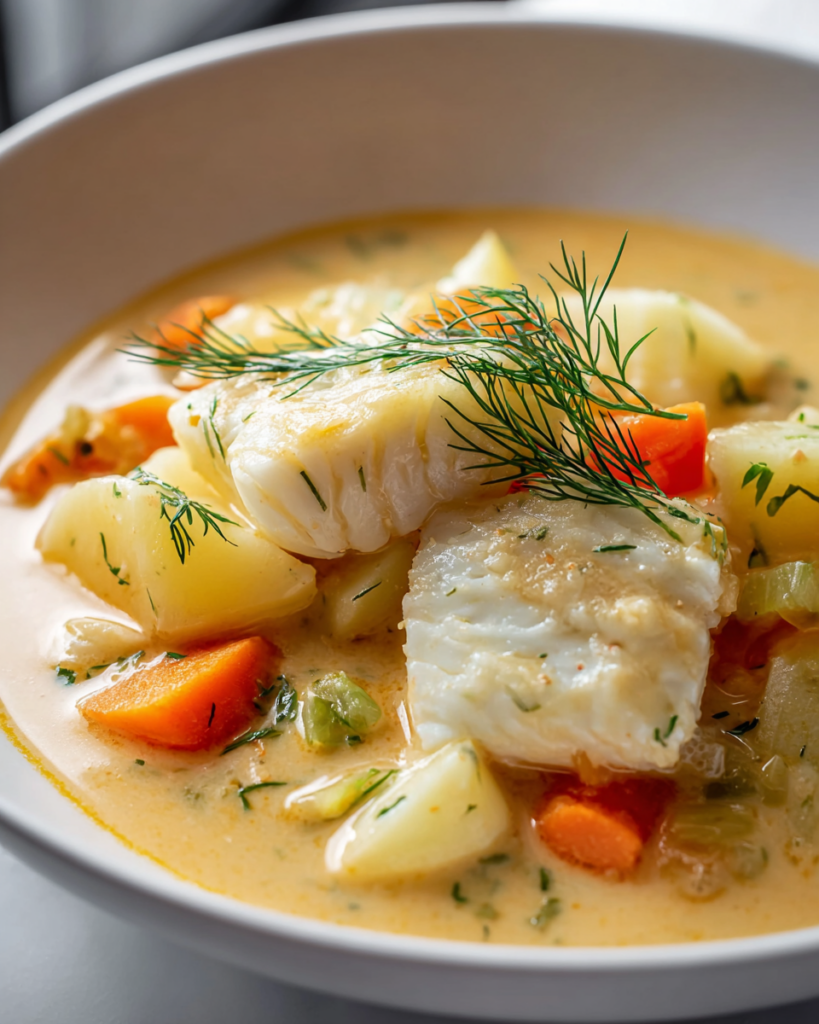
This is the kind of soup that feels generous as soon as it hits the table. You get soft vegetables, a silky broth, and chunks of halibut that cook quickly right in the pot, so the whole meal comes together without a complicated process.
What makes it work so well is the balance. The broth and cream create richness, but the onion, celery, carrots, and garlic keep everything grounded and savory. The potatoes also do double duty, making the chowder filling while naturally giving the base more body.
It is also a smart choice when you want seafood that still feels practical. You do not need a long ingredient list or fancy technique here. With a little attention to timing, your kitchen ends up with a cozy, creamy seafood soup that tastes like it took far more effort than it did.
Halibut Chowder Ingredients
Halibut is the star, bringing a mild, clean flavor and a tender bite that feels right at home in a creamy soup. Cut it into evenly sized chunks so it cooks gently and stays flaky instead of breaking apart.
Potatoes make the chowder hearty and satisfying. As they simmer, they soften just enough to give the broth a little natural thickness while still holding their shape in the bowl.
Onion, celery, and carrots build the classic chowder base. They add sweetness, savoriness, and texture, making the soup feel complete instead of one-note.
Garlic deepens the flavor in a small but important way. Freshly minced garlic works especially well here because it adds warmth without overwhelming the fish.
Vegetable broth forms the backbone of the soup. It keeps the base light enough to let the halibut shine while still giving the pot plenty of savory depth.
Heavy cream rounds everything out with a smooth, rich finish. It is what gives the chowder that comforting spoon-coating texture without needing flour or a separate thickener.
Butter helps soften the vegetables and adds a little extra richness right from the start, which makes the finished chowder taste fuller and more polished.
Salt and black pepper are simple, but they matter. Since the ingredient list is straightforward, proper seasoning is what makes the flavors feel focused and finished.
Fresh herbs like chives or parsley bring freshness at the end. That bright finish helps lift the creamy broth and gives each bowl a little color.
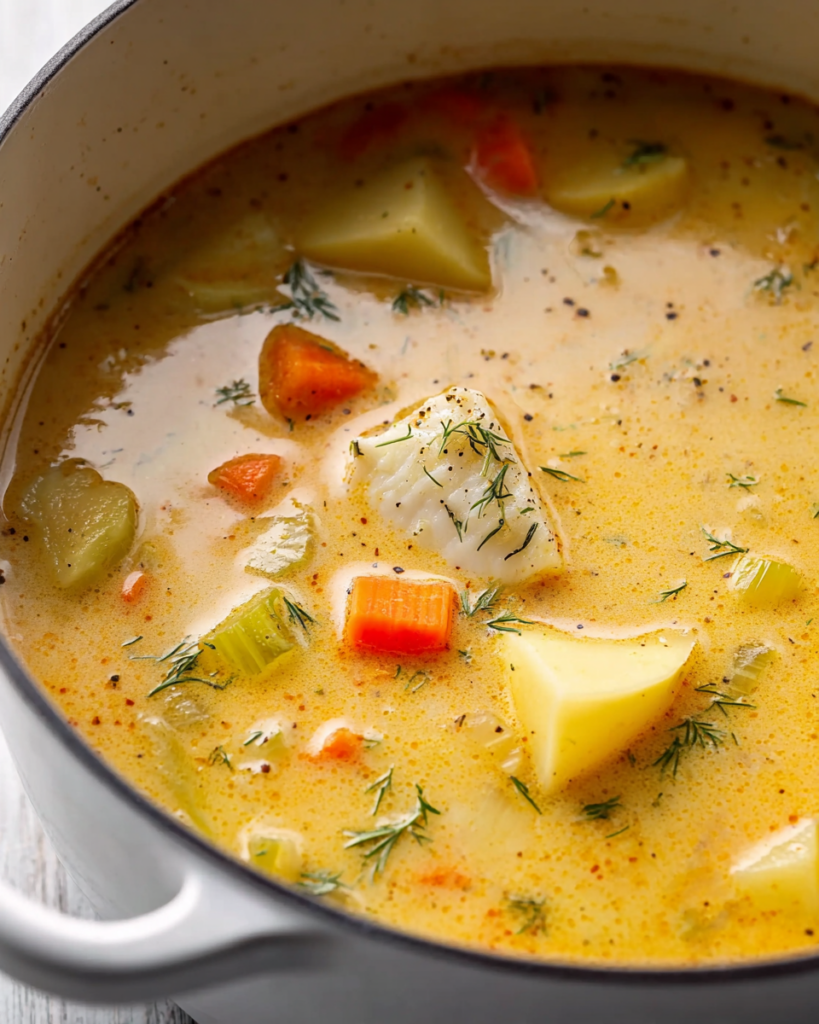
Step-by-Step Halibut Chowder
STEP 1: Start by prepping everything before the pot goes on the stove. Dice the potatoes into small, even cubes, chop the onion, celery, and carrots, mince the garlic, and cut the halibut into bite-sized pieces. Having it all ready makes the cooking feel calm and keeps the fish from overcooking later.
STEP 2: Melt the butter in a large pot over medium heat, then add the onion, celery, and carrots. Cook until the vegetables begin to soften and smell sweet and savory, then stir in the garlic for the last minute. This short sauté gives the chowder a much deeper flavor than simply boiling everything together.
STEP 3: Pour in the broth and bring the pot to a gentle simmer. Add the potatoes and let them cook until fork-tender. This is an important stage because the potatoes are not only a hearty part of the soup, they also help give the broth a naturally fuller texture as they soften.
STEP 4: Once the potatoes are ready, add the halibut pieces and stir gently. Keep the heat moderate and let the fish poach in the hot liquid until it turns opaque and flakes easily. The goal is tender chunks that hold together, not a hard boil that makes the seafood tough.
STEP 5: Lower the heat and stir in the heavy cream. Warm the chowder through rather than boiling it, then season with salt and black pepper. Taste carefully at this point because the broth, vegetables, and fish all absorb seasoning a little differently as they cook.
STEP 6: Ladle the chowder into bowls and finish with chopped herbs if you like. That final sprinkle makes the rich base feel brighter, and it gives the soup a fresh contrast that works especially well with the buttery halibut and potatoes.
Helpful Tips
- Cut the potatoes and halibut into similarly sized pieces so everything cooks evenly and each spoonful feels balanced.
- Keep the chowder at a gentle simmer once the fish goes in. Rapid boiling is the quickest way to turn tender halibut dry.
- Taste once before adding the cream and again after. Cream softens seasoning, so a final adjustment makes the whole pot taste more alive.
Can I make this ahead of time?
You can make the chowder a little ahead, but it is at its best when the halibut is freshly cooked. For the best texture, prepare the soup base in advance and add the fish and cream shortly before serving.
Can I use another fish in this chowder?
Yes, but choose a firm white fish that will hold together in the broth. Cod, haddock, or even salmon can work, though each one will change the final flavor and texture a bit.
How do I keep the halibut tender?
The key is timing and gentle heat. Add the fish only after the potatoes are soft, then cook it just until opaque. If the pot boils hard or the fish simmers too long, it can lose its delicate texture.

Can I make this chowder thicker?
Yes. You can lightly mash a few of the cooked potato pieces right in the pot to thicken the broth naturally. That keeps the chowder creamy and full without changing the ingredient list or adding extra starch.
Perfect Pairings
A warm slice of crusty bread is the most natural partner for this chowder. It is ideal for soaking up the creamy broth and makes the meal feel even more comforting.
A simple green salad with a bright vinaigrette also works well. The crisp, fresh contrast keeps the meal from feeling too rich and balances the creamy soup beautifully.
If you want something a little more substantial, serve it with buttered oyster crackers or a lightly toasted sandwich. Both give the bowl a cozy, classic chowder-shop feel.
Keeping Leftovers Fresh
Store leftover chowder in an airtight container in the refrigerator for up to 2 days. Because this is a cream-based seafood soup, it is best enjoyed fairly soon while the texture is still smooth and the fish remains tender.
You can freeze it for up to 1 month, but the cream and potatoes may change texture slightly once thawed. It will still be usable, just a little less silky than when fresh.
To reheat, warm it slowly on the stove over low heat, stirring gently now and then. Avoid a full boil, since that can make the halibut firmer and may cause the creamy broth to lose some of its smooth finish.
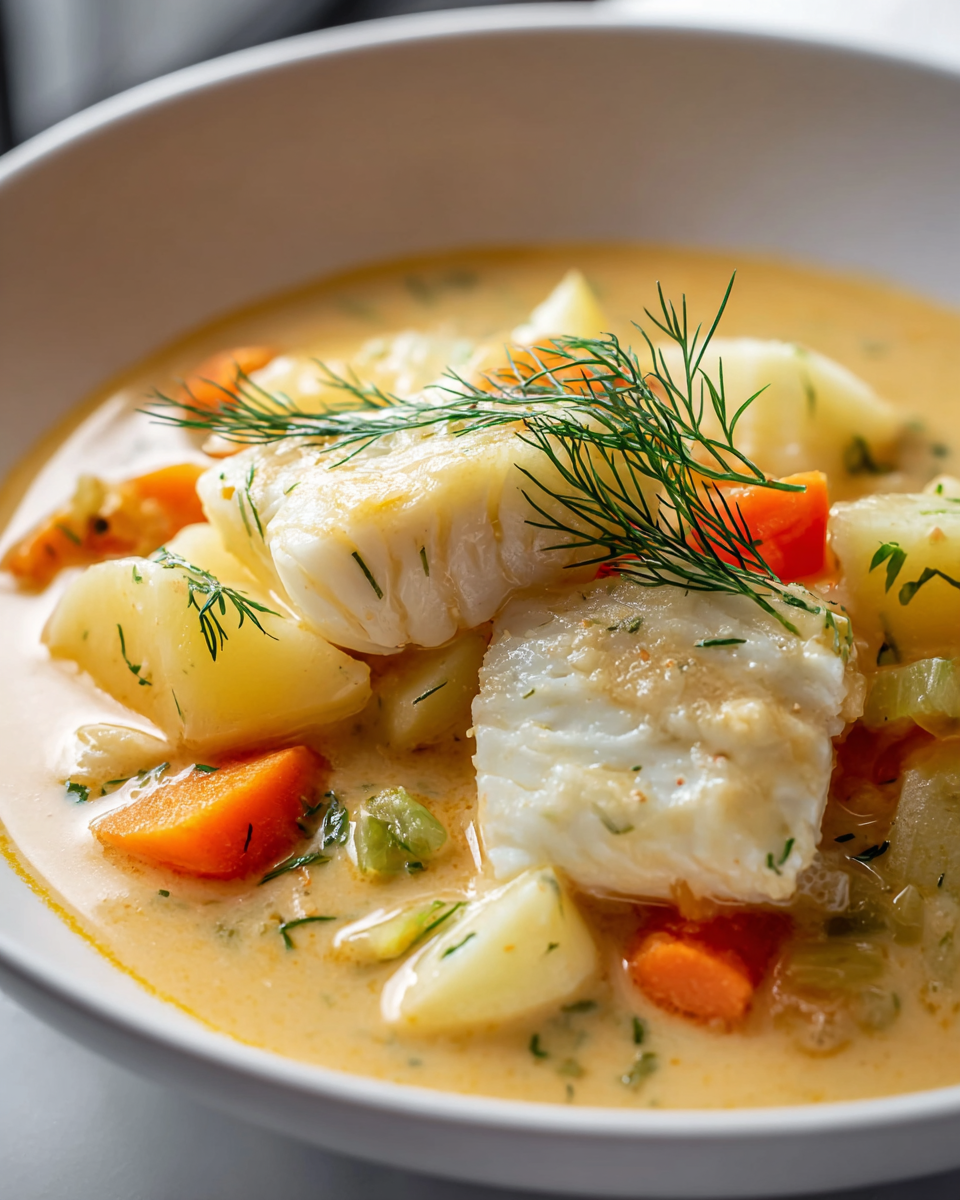
Halibut Chowder
Ingredients
- 1 cup heavy cream
- 2 tablespoons unsalted butter
- 1 pound halibut cut into 1-inch pieces
- 2 large potatoes peeled and diced into 1/2-inch cubes
- 4 cups vegetable broth
- 1 cup chopped onion
- 2 carrots chopped
- 2 celery ribs chopped
- 2 garlic cloves freshly minced
- 1 teaspoon salt
- 1/2 teaspoon freshly ground black pepper
- 2 tablespoons fresh herbs such as chives or parsley, for garnish if desired
Instructions
- Gather and prepare all components before starting. Peel and dice the potatoes into 1/2-inch pieces, chop the carrots, onion, and celery, mince the garlic, and cut the halibut into bite-sized chunks. Keeping everything ready in advance will make the cooking process more efficient.
- Place a large pot over medium heat and melt the butter. Add the chopped onion, celery, and carrots, then cook for 5 to 7 minutes, stirring occasionally, until the vegetables have softened. Add the minced garlic and cook for 1 minute more, just until aromatic.
- Pour the vegetable broth into the pot and bring the mixture to a gentle simmer. Add the diced potatoes and continue cooking until they are tender. This step helps create the chowder’s hearty base while allowing the flavors to come together.
- Once the potatoes are soft, add the halibut pieces to the pot. Stir gently and cook for about 4 to 5 minutes, or until the fish turns opaque and is fully cooked through.
- Add the heavy cream and stir until fully incorporated. Warm the chowder through without boiling, then season with the salt and black pepper. Taste and adjust the seasoning as needed.
- Ladle the chowder into serving bowls and finish with fresh herbs, if using. Serve hot.


