Quick, bright, and elegant, Halibut Salsa Verde brings together flaky baked fish, buttery citrus juices, and a fresh olive-herb topping for a dinner that feels special without being complicated. It is beginner-friendly, fast enough for weeknights, and polished enough for guests.
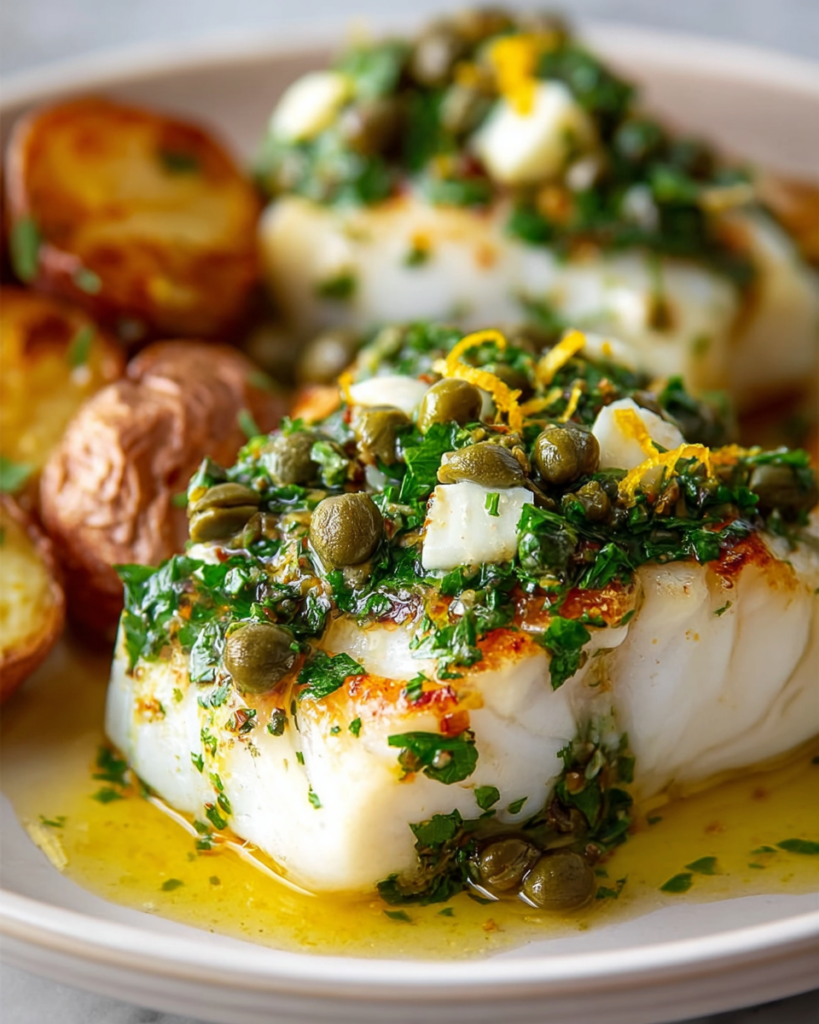
When you want a seafood dinner that feels a little elevated but still fits into a normal evening, this is the kind of dish to make. The halibut bakes gently with lemon, orange, garlic, white wine, and butter, so the fish stays moist and delicate instead of dry or heavy.
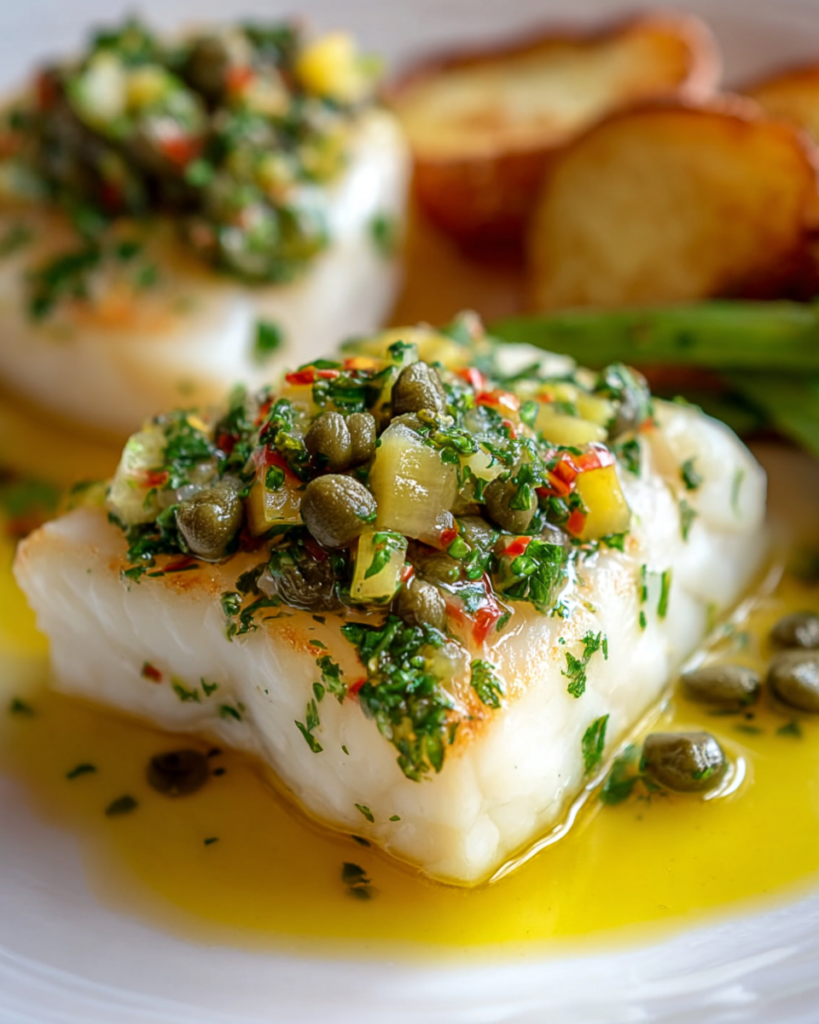
What really makes it shine is the salsa verde. The parsley, cilantro, green onions, and Castelvetrano olives give every bite a fresh, briny lift that balances the rich fish beautifully. It tastes vibrant, layered, and just zesty enough.
I also love how practical this recipe is in a home kitchen. You only need a short bake time, the prep is straightforward, and the final plate looks impressive with very little fuss. That makes it a strong choice for a simple dinner party, a date-night meal, or a lighter main course when you still want bold flavor.
What You Need to Make This Halibut Salsa Verde
Halibut brings the clean, mild flavor and firm texture that works so well with citrus and herbs. A thick fillet cooks evenly and stays tender when baked just until it flakes.
Olive oil helps the fish roast gently while adding a smooth, fruity base to both the baking dish and the salsa verde.
Unsalted butter melts into the wine and citrus juices, creating a light sauce that can be spooned back over the halibut before serving.
Dry white wine adds acidity and depth. It keeps the baking juices lively and gives the fish a subtle restaurant-style finish.
Garlic appears in two ways here: sliced in the baking dish for mellow flavor and finely grated in the salsa verde for a sharper, fresher edge.
Lemon and orange do a lot of work in this recipe. The slices perfume the fish as it bakes, while the zest adds concentrated brightness to both the halibut and the topping.
Red pepper flakes provide a gentle kick that wakes up the butter, wine, and herbs without overpowering the fish.
Parsley and cilantro form the fresh backbone of the salsa verde. Parsley keeps it classic and grassy, while cilantro adds extra lift.
Green onions give the topping a clean, mild bite that blends easily with the chopped herbs and olives.
Castelvetrano olives bring the signature savory element. They are buttery, mild, and slightly briny, which makes them ideal in a fresh sauce like this.
Red wine vinegar and olive brine sharpen the salsa verde just enough so it tastes bright and balanced rather than oily.
Salt and black pepper tie everything together. With a simple recipe like this, proper seasoning is what makes all the separate parts taste complete.
Helpful Tips
- Pat the halibut dry before seasoning so the oil, citrus zest, and butter cling better and the fish bakes more evenly.
- Chop the salsa verde finely enough that you get a little of everything in each spoonful, but not so fine that it turns pasty.
- Start checking the fish at the 10-minute mark, especially if your fillet is on the thinner side, because halibut can dry out quickly once overcooked.
Cooking Steps
STEP 1: Heat your oven to 400°F and get the citrus ready first. Zest the lemon and orange before slicing them, then keep the zest divided so some flavors the fish and the rest freshens the salsa verde later.
STEP 2: Build a flavorful base in your baking dish with the citrus slices. Set the halibut on top, season it well, then add olive oil, white wine, sliced garlic, butter, a pinch of red pepper flakes, and part of the zest so the fish bakes in a fragrant, buttery mixture.
STEP 3: Bake the halibut until the center turns opaque and flakes easily with gentle pressure. This usually takes about 10 to 15 minutes, depending on thickness, and it is better to pull it a touch early than leave it in too long.
STEP 4: While the fish cooks, stir together the salsa verde ingredients in a bowl. Combine the chopped herbs, green onions, olives, grated garlic, olive oil, vinegar, olive brine, remaining citrus zest, and a little seasoning until the mixture looks glossy and evenly mixed.
STEP 5: Let the salsa verde sit for a few minutes before serving. That short rest helps the garlic soften, the herbs absorb the oil, and the olive brine and vinegar spread their flavor through the whole mixture.
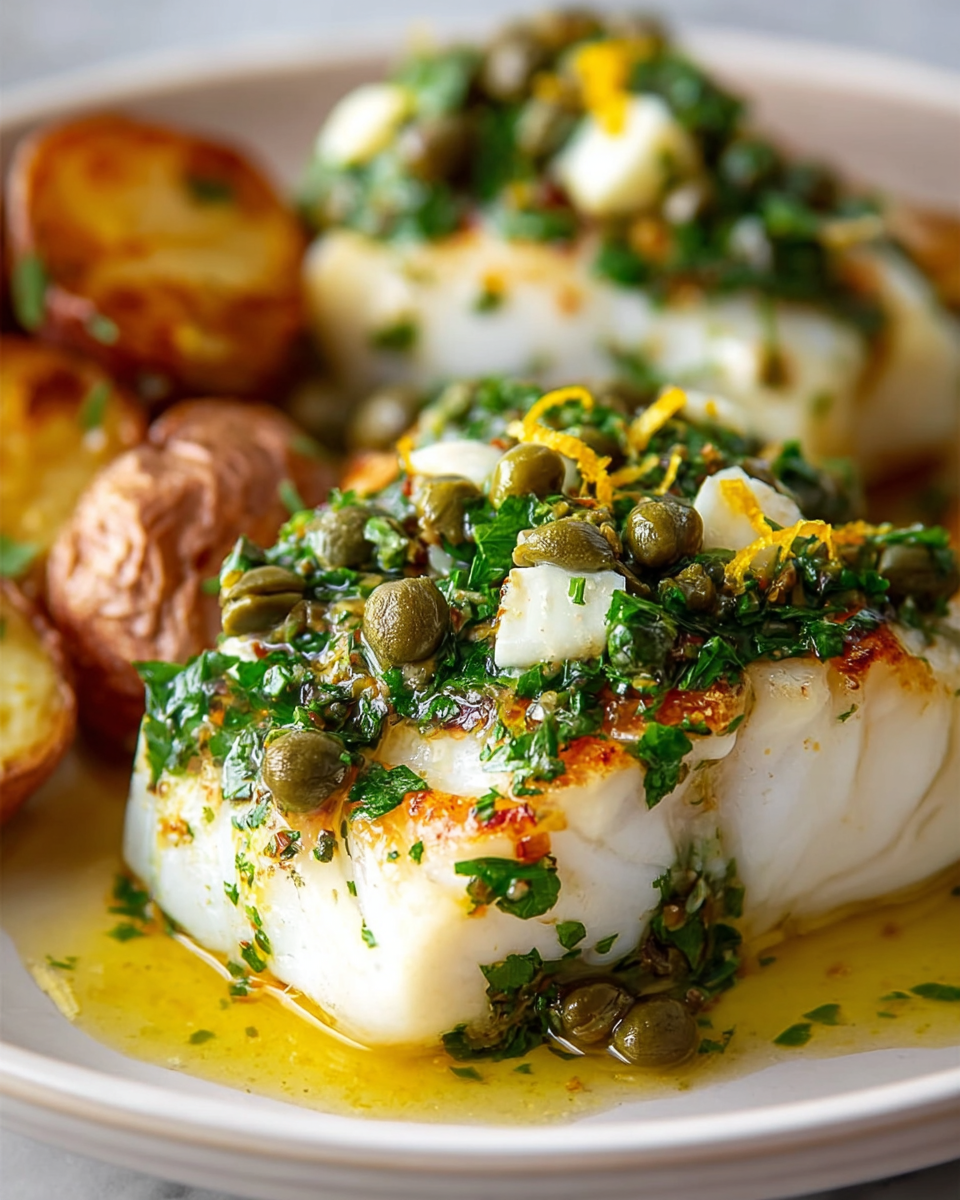
STEP 6: Once the halibut is done, spoon some of the warm wine-butter juices from the pan over the top. Finish with a generous layer of salsa verde and serve right away while the fish is still tender and the topping still tastes bright and fresh.
Can I use another fish if I do not have halibut?
Yes. Cod, sea bass, or even thick salmon portions can work well with the same flavor profile. Just keep an eye on cooking time, since thinner or fattier fish may finish sooner than halibut.
Should I bake it in parchment or in a dish?
Either method works. A baking dish gives you lightly concentrated pan juices, while parchment creates a softer, steamier result. If you want a slightly more delicate texture, parchment is a great choice.
Can I make the salsa verde ahead of time?
Yes, and it actually benefits from a short rest. You can make it a few hours ahead and keep it chilled. Give it a stir before serving so the oil, herbs, and chopped olives come back together.
How do I know when halibut is done?
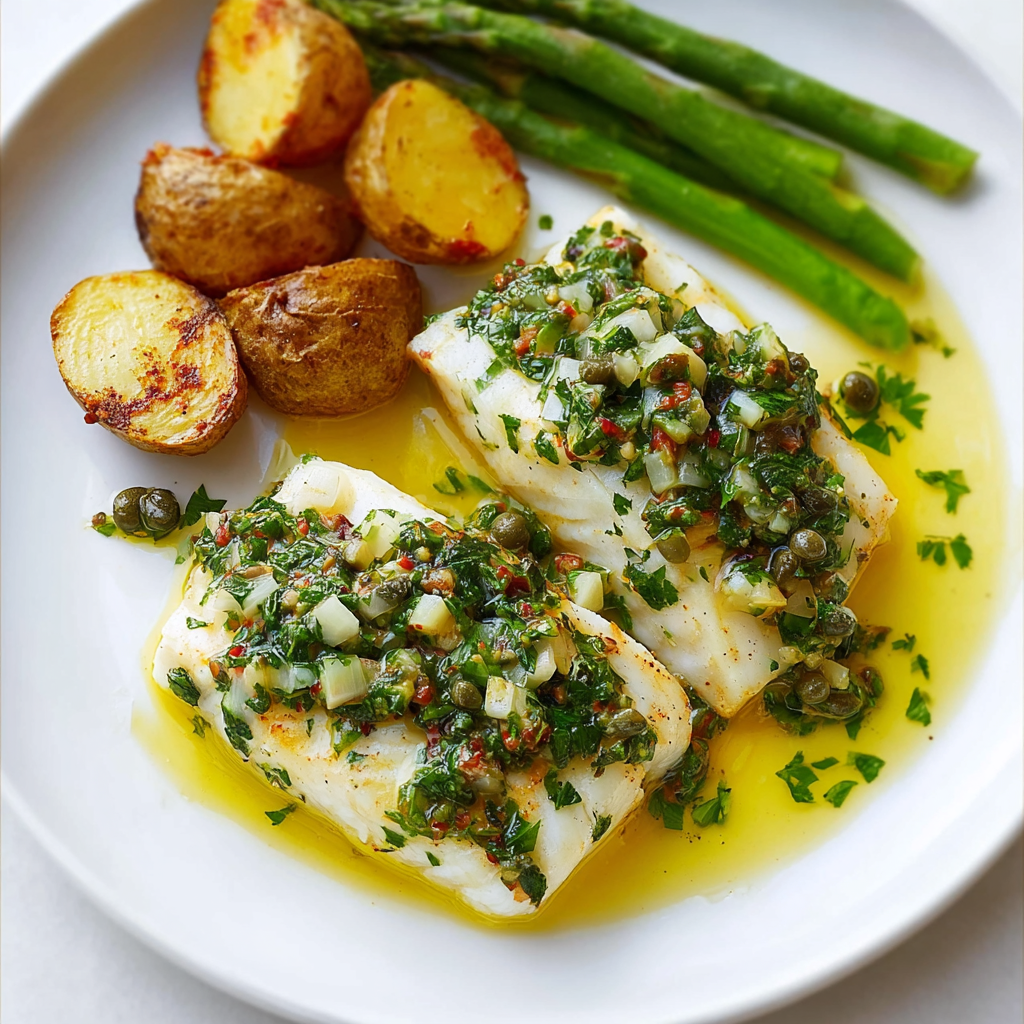
The flesh should look opaque and separate into flakes at the center when gently pressed with a fork. It should still look moist. As soon as it reaches that point, it is ready to come out of the oven.
What to Serve with Halibut Salsa Verde
A simple side works best here because the fish already has plenty of flavor. Roasted baby potatoes are a natural choice since they soak up the citrusy butter and give the plate a little extra substance.
Steamed rice or a soft herbed couscous also pairs well. Both catch the spooned-over juices and let the salsa verde stand out without competing with it.
For something greener, try roasted asparagus, sautéed zucchini, or a crisp salad with a light vinaigrette. Fresh vegetables keep the meal feeling balanced and make the bright Mediterranean-inspired flavors feel even more at home.
How to Store & Reheat
Store leftover halibut in an airtight container in the refrigerator for up to 2 days. Keep the salsa verde separate if possible so the fish does not become overly wet as it sits.
The salsa verde can be refrigerated for about 2 days as well, though the herbs will be brightest on the first day. Stir it before using again, since the oil may settle.
To reheat the fish, warm it gently in a low oven or covered skillet just until heated through. Avoid aggressive reheating, because halibut can turn dry quickly. Spoon fresh or chilled salsa verde over the top after warming rather than reheating the topping with the fish.
Freezing is not ideal for this one. The texture of cooked halibut can become less pleasant after thawing, and the fresh herb topping loses its lively character. This dish is definitely at its best the day it is made or the next day for lunch.
Halibut Salsa Verde
Ingredients
For the halibut:
- 1 pound halibut
- 2 tablespoons olive oil
- 1 tablespoon unsalted butter
- 1/4 cup dry white wine such as Sauvignon Blanc
- 4 garlic cloves thinly cut
- 1/2 lemon sliced with the zest
- 1/2 orange sliced with the zest
- Salt as needed
- Black pepper as needed
- 1 pinch red pepper flakes
For the salsa verde:
- 1/4 cup fresh parsley chopped
- 1/4 cup fresh cilantro chopped
- 1/4 cup green onions thinly sliced
- 1/2 cup Castelvetrano olives chopped
- 1 garlic clove finely grated
- 1/4 cup extra-virgin olive oil
- 2 teaspoons red wine vinegar
- 1 teaspoon Castelvetrano olive brine
- Zest of 1/2 lemon
- Zest of 1/2 orange
- 1 pinch red pepper flakes
- Salt as needed
- Black pepper as needed
Instructions
- Preheat the oven to 400°F (200°C). Zest 1 whole lemon and 1 whole orange, then divide the zest so half is reserved for the fish and half for the salsa verde. Slice the lemon and orange thinly and keep them aside.
- Arrange the lemon and orange slices in a baking dish or on a sheet of parchment paper to form a base for the fish. Set the halibut on top and season both sides with salt and black pepper. Drizzle with the olive oil, then add the white wine, sliced garlic, red pepper flakes, reserved citrus zest, and butter over the fish.
- Bake the halibut either uncovered in the baking dish or enclosed tightly in parchment paper for an en papillote preparation. Cook for 10 to 15 minutes, or until the fish is fully cooked, opaque throughout, and flakes easily at the center.
- While the halibut cooks, prepare the salsa verde. In a bowl, combine the parsley, cilantro, green onions, chopped olives, olive brine, grated garlic, red wine vinegar, olive oil, the remaining lemon and orange zest, red pepper flakes, salt, and black pepper. Stir until evenly blended, then refrigerate for 10 to 15 minutes, or longer, to allow the flavors to develop.
- When the fish is done, carefully open the parchment if using that method and spoon any remaining wine-butter juices over the top. Transfer the halibut to serving plates and finish generously with the salsa verde.
- Serve immediately.


