Halibut with Lemon Caper Sauce is a quick, elegant main dish with buttery pan-seared fish, a bright citrus finish, and a glossy white wine sauce. It feels polished enough for company but comes together fast in one skillet.
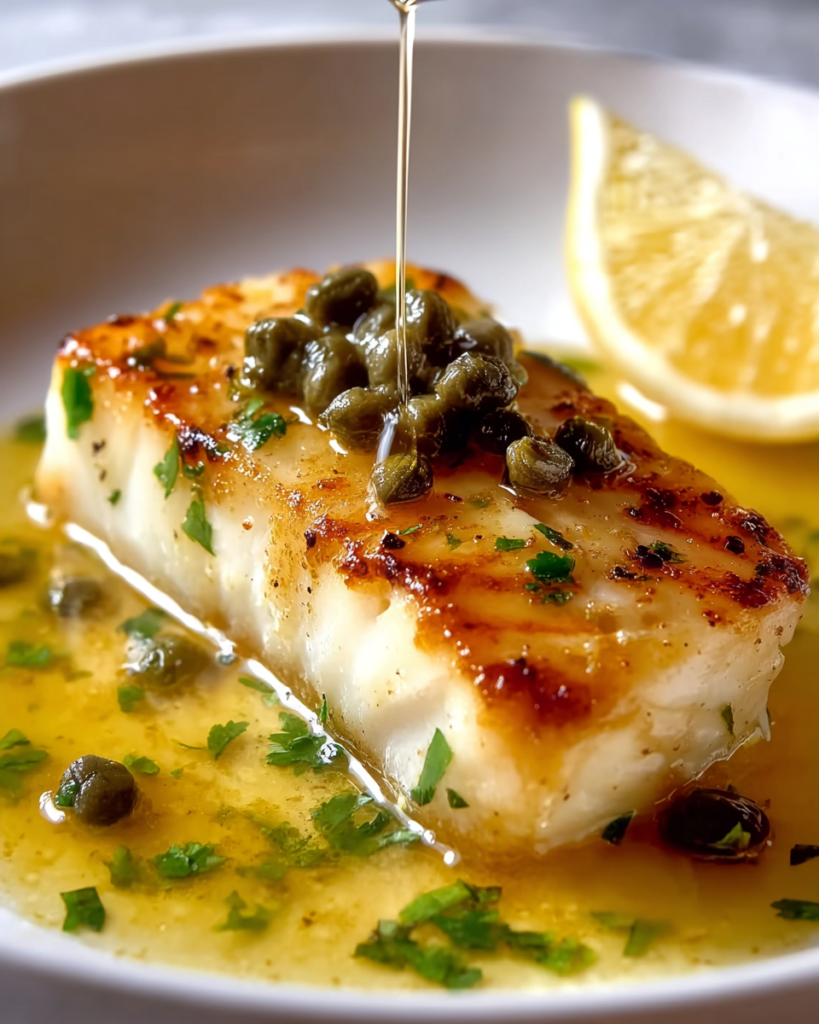
This is the kind of dinner you make when you want something lighter than a cream sauce but still full of flavor. The halibut stays delicate and tender, while the lemon, capers, and parsley bring in freshness that keeps every bite balanced.
It also works beautifully for real-life cooking. The ingredient list is short, the steps are straightforward, and the whole dish is ready in about 20 minutes, which makes it just as practical for a weeknight as it is for a relaxed weekend dinner.
What makes this one especially reliable is the cooking method. You sear the fish in butter and olive oil for a crisp, golden exterior, then use the same pan to build a quick sauce that picks up all those flavorful browned bits without feeling heavy.
Halibut with Lemon Caper Sauce Ingredients
You do not need a long shopping list to make this dish feel special. Each ingredient has a clear job, and together they build a sauce that tastes bright, savory, and just rich enough.
- Halibut fillets bring a mild, meaty texture that holds up well in the skillet and pairs beautifully with sharp, briny flavors.
- Butter and olive oil create the base for searing, giving the fish color while adding richness and helping the sauce feel smooth.
- Lemon slices and fresh lemon juice give the dish its fresh citrus edge, with the slices adding aroma in the pan and the juice sharpening the sauce at the end.
- Capers add the salty, briny punch that makes the sauce taste lively instead of flat.
- Garlic deepens the flavor of the pan sauce without overpowering the fish.
- Dry white wine helps lift the browned bits from the skillet and adds a refined, lightly tangy finish.
- Fresh parsley softens the sharper flavors and adds color right at the end.
- Coarse salt and black pepper season the fish simply so the clean flavor of the halibut still comes through.
Cooking Steps
STEP 1: Pat the halibut dry and season it lightly on both sides with coarse salt and black pepper. Dry fish sears better, so this small step helps you get that appealing golden surface instead of a pale, steamed finish.
STEP 2: Heat a skillet over medium heat, then add the olive oil and part of the butter. Once the butter melts and the fat looks lightly golden, place the fish in the pan with the presentation side down first so it develops the best color.
STEP 3: Let the halibut cook without moving it for several minutes. That steady contact with the pan is what creates the crust. When it releases more easily and the edges begin to turn opaque, it is ready to flip.
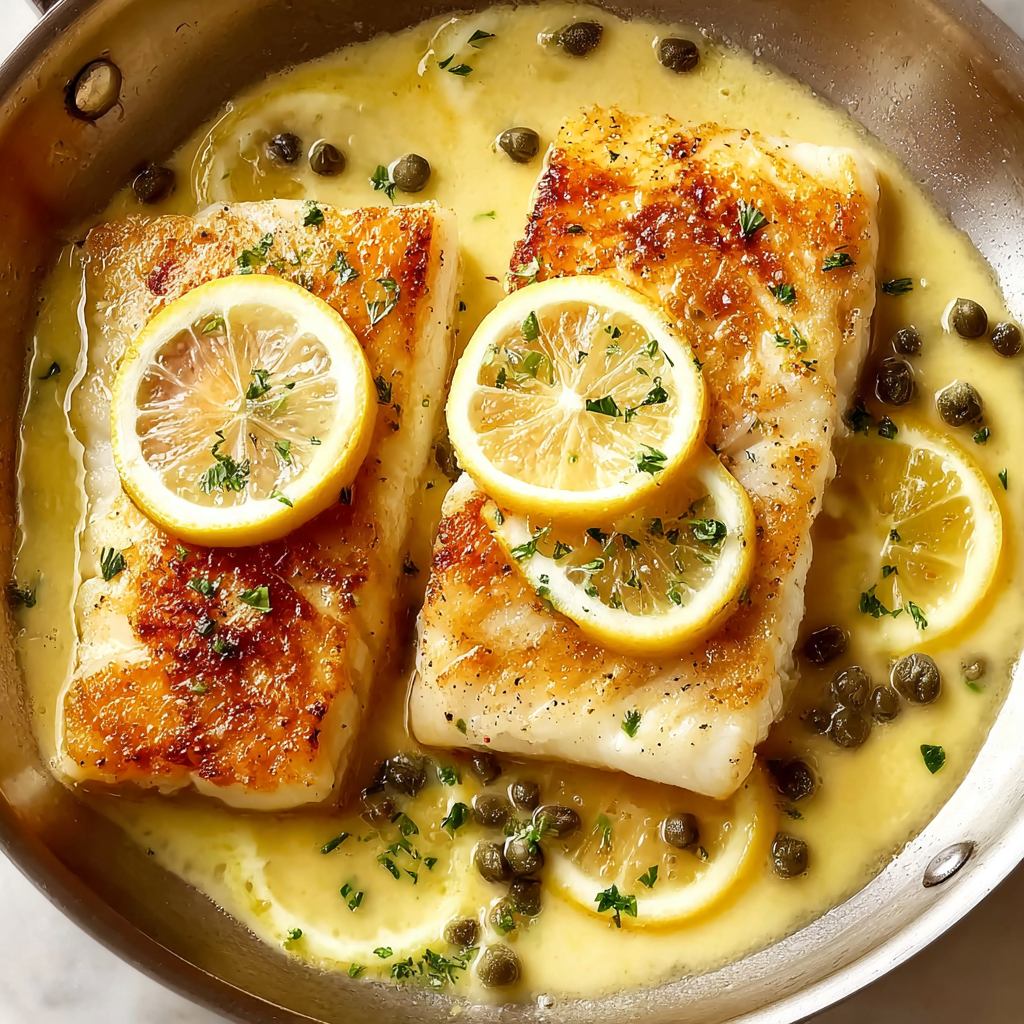
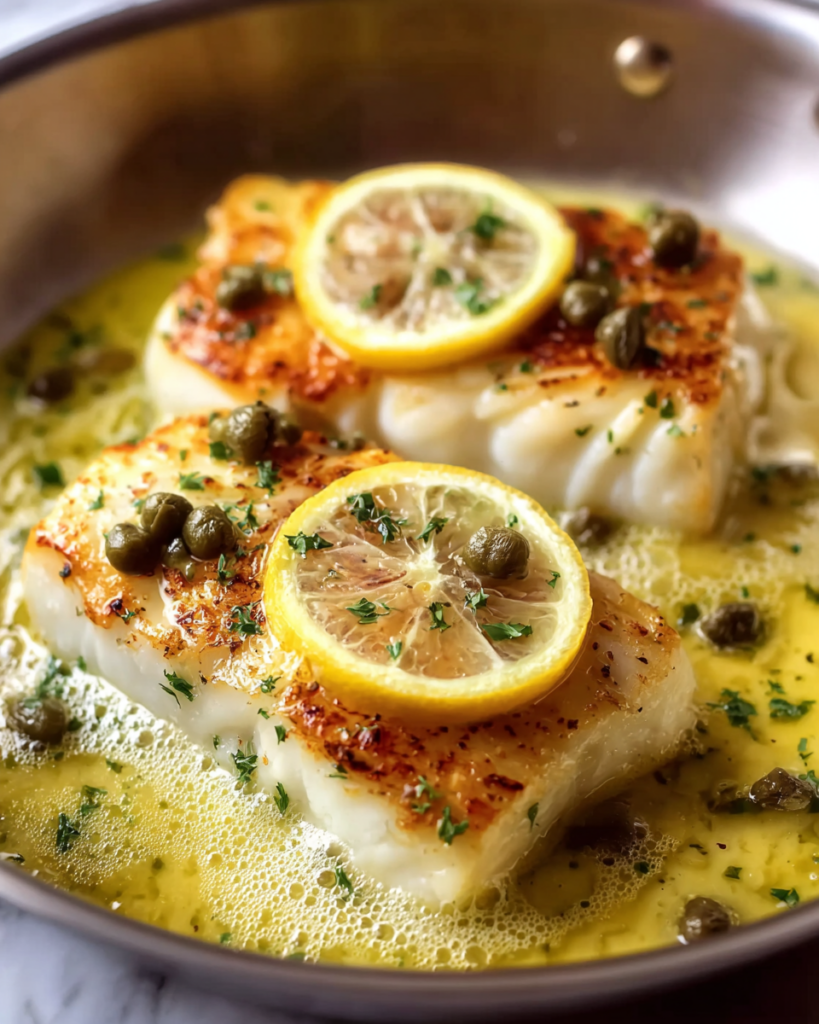
STEP 4: Turn the fish carefully, add the lemon slices to the skillet, and cook until the second side is just done. The fish should flake with gentle pressure, but the center can still look slightly translucent because it will continue cooking from residual heat.
STEP 5: Move the halibut and lemon slices to a plate to rest. Pour off most of the fat from the pan, leaving behind enough to keep the sauce flavorful. Add the garlic and cook briefly, just until fragrant, then pour in the white wine and let it reduce.
STEP 6: Stir in the lemon juice, capers, and parsley, then remove the pan from the heat and whisk in the remaining butter until the sauce turns glossy. Return the halibut to the skillet for a quick spooning of sauce over the top, then serve right away with the cooked lemon slices.
How do I know when halibut is done?
Halibut is done when it flakes easily with a fork or small knife and the flesh has mostly turned opaque. The center can still look slightly translucent when you pull it from the heat, because it keeps cooking for a minute or two as it rests.
Perfect Pairings
Roasted baby potatoes are an excellent choice if you want something that can catch the extra sauce. Their crisp edges and soft centers work especially well with the buttery lemon-caper finish.
Steamed green beans or asparagus keep the plate feeling fresh and balanced. Their clean flavor does not compete with the halibut, and they fit naturally with the lemon and parsley in the sauce.
Plain rice or fluffy couscous is ideal when you want a simple base. Both absorb the pan sauce well and turn the fish into a complete, satisfying dinner without adding extra heaviness.
Helpful Tips
- Use a fish spatula or two thin spatulas when flipping the halibut so the fillets stay intact.
- Do not rush the first side of the sear. If the fish sticks, it usually needs another moment before it is ready to turn.
- Add the final butter off the heat or over very low heat so the sauce stays smooth and glossy instead of separating.
Can I use another white fish instead?
Yes. Cod, haddock, sea bass, or even thick-cut grouper can work well here. The main thing to watch is thickness, since thinner fillets will cook faster than halibut and can dry out if left in the pan too long.
How to Store & Reheat
This dish is best the day it is made, especially because halibut has such a delicate texture. Still, leftovers can be kept in an airtight container in the refrigerator for up to 2 days.
For the best texture, store the fish and sauce together so the surface does not dry out. Reheat gently in a skillet over low heat, spooning the sauce over the top until warmed through. A microwave works in a pinch, but use short bursts at low power so the fish does not become tough.
Freezing is not ideal for this one. The fish can lose its tender texture, and the butter-based sauce may not hold together as nicely once thawed and reheated.
Do I have to cook with white wine?
No. The wine adds depth and helps create that classic pan-sauce flavor, but you can swap in a little extra lemon juice balanced with broth if needed. The result will still be bright and flavorful, just a bit less layered.
Can I make the lemon caper sauce ahead of time?
You can make it a little ahead, but it is at its best right after whisking in the butter. For the freshest flavor, cook the fish first, then make the sauce in the same skillet so it captures all the savory bits left behind in the pan.
Halibut with Lemon Caper Sauce
Ingredients
For the halibut
- 1 pound fresh halibut cut into 2 equal portions
- 1 tablespoon extra-virgin olive oil
- 2 tablespoons unsalted butter
- 3 thin rounds of lemon
- 1/2 teaspoon coarse salt
- Freshly ground black pepper to taste
For the sauce
- 1/4 cup Chardonnay or another dry white wine
- 2 tablespoons freshly squeezed lemon juice
- 2 tablespoons unsalted butter
- 2 teaspoons finely minced garlic
- 2 tablespoons capers
- 2 tablespoons chopped fresh parsley
Instructions
- Lightly season the top of the halibut with some of the coarse salt. Set a medium or large skillet over medium heat, then add the butter and olive oil. Swirl the pan as the butter melts and heats with the oil, allowing the mixture to turn lightly golden.
- Place the halibut into the hot skillet with the top side facing down. Season the exposed side with the remaining salt and a few grinds of black pepper. Cook for about 5 minutes.
- Carefully turn the fish using one or two long fish spatulas to prevent splashing. Add the lemon slices to the skillet and continue cooking for 3 to 5 minutes more. Check for doneness by pressing gently on the fish or inserting a small knife at the side; it should flake easily while remaining slightly translucent at the center, as it will continue to cook after being removed from the heat.
- Transfer the halibut and the cooked lemon slices to a platter. Let the fish rest while the sauce is prepared.
- Pour off the pan fat, leaving about 2 tablespoons behind. For a clearer sauce, transfer all of the fat to a bowl, allow the browned bits to settle, then spoon a few tablespoons of the clear fat from the top back into the skillet.
- With the pan over medium heat, add the minced garlic and cook for 1 minute. Pour in the white wine and allow it to reduce until nearly evaporated. Stir in the lemon juice, capers, and parsley, and cook for 1 minute more. Remove the skillet from the heat and whisk in the remaining 2 tablespoons of butter until the sauce is glossy.
- Return the halibut to the skillet along with any juices collected on the platter. Set the pan over medium heat and spoon the sauce over the fish for about 30 seconds, just until reheated.
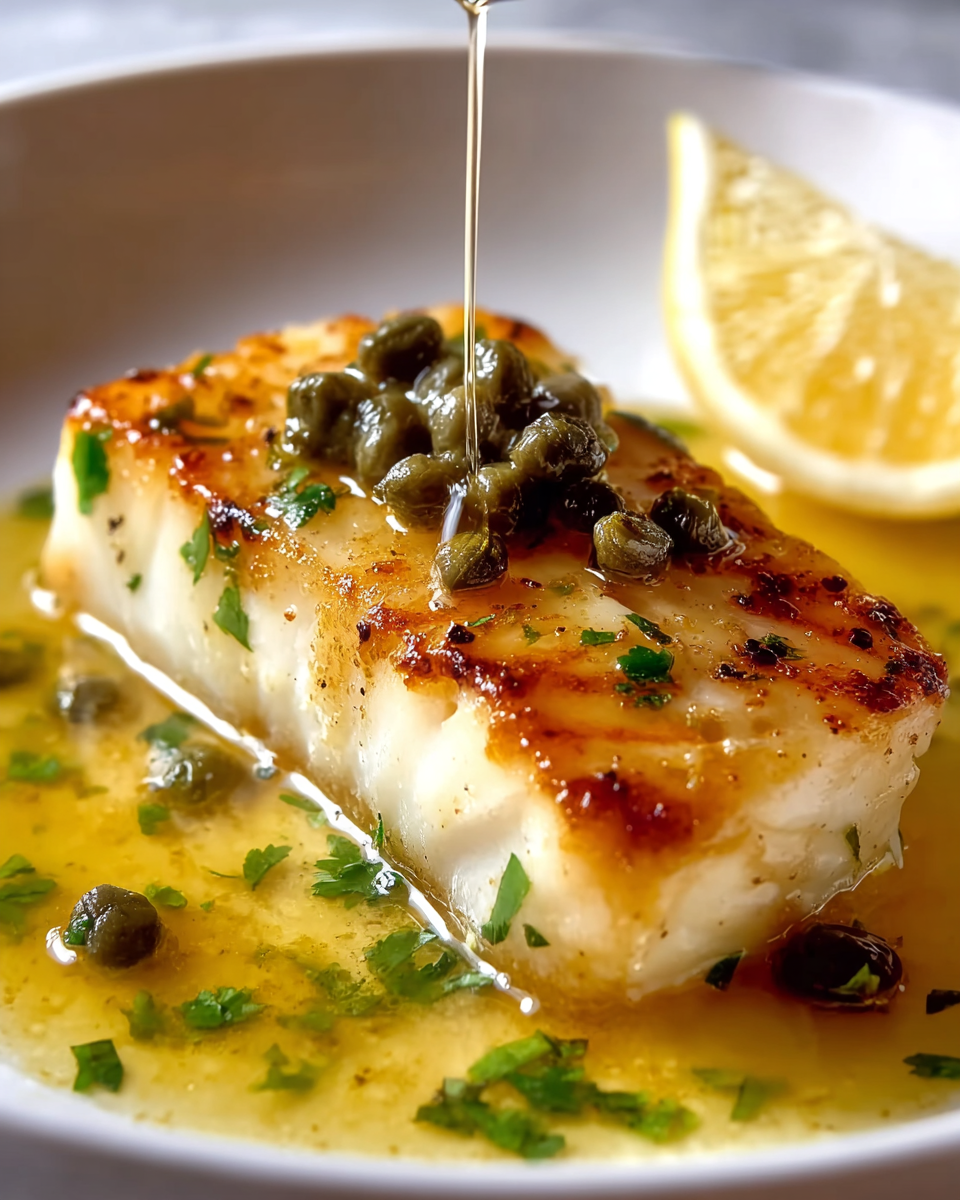
- Arrange the halibut on a serving platter. Top each portion with a cooked lemon slice and spoon the lemon-caper sauce generously over the fish before serving.


