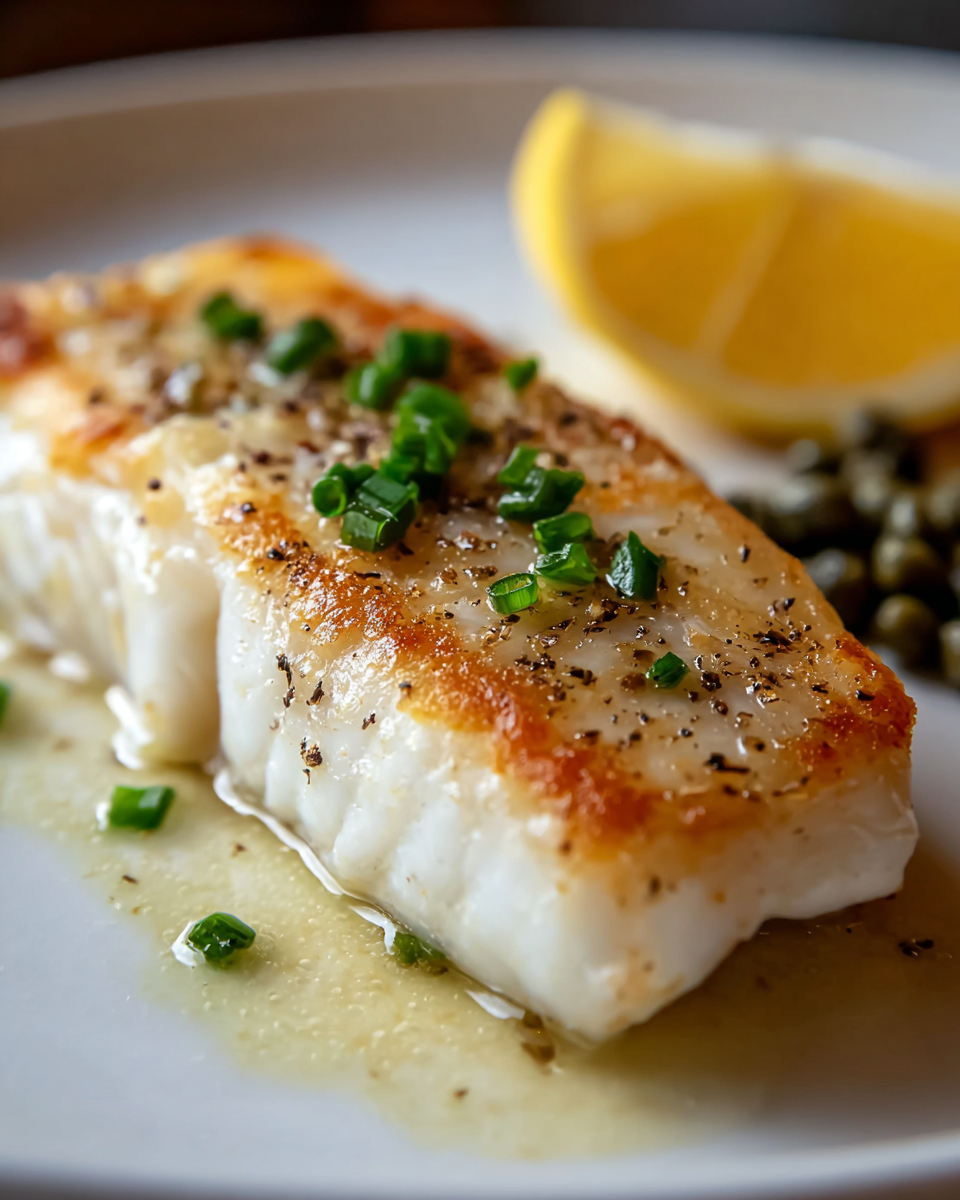
Halibut with Lemon Cream Sauce is a quick, elegant seafood dinner with a buttery pan finish, bright citrus flavor, and a gentle caper bite. It feels special enough for guests, yet it is simple, reliable, and weeknight-friendly in just 25 minutes.
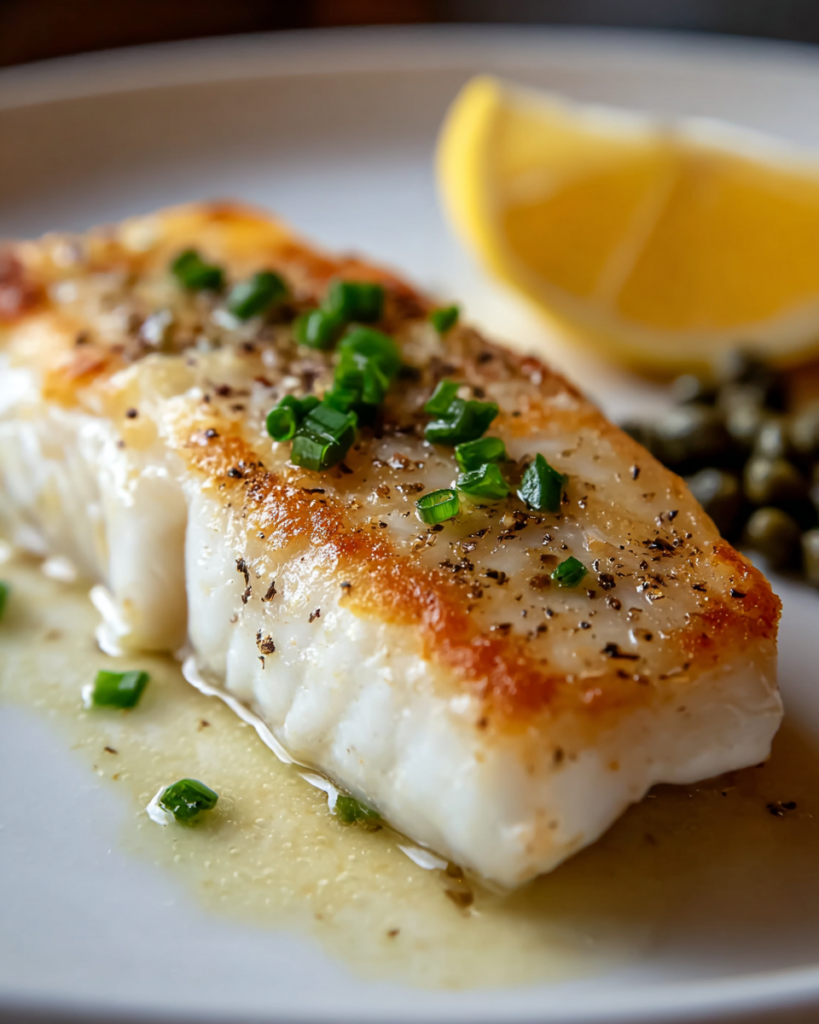
This is the kind of fish dinner that works when you want something refined without turning your kitchen upside down. The halibut cooks fast, the sauce comes together in the same pan, and the final result tastes far more involved than it really is.
The light flour coating gives the fish a delicate golden crust that helps it hold up beautifully in the skillet. That little bit of texture also gives the buttery lemon sauce something to cling to, so every bite tastes balanced rather than flat or watery.
What makes this dish especially useful is how flexible it is at the table. You can keep it simple with a green vegetable, pair it with rice or potatoes, or serve it for a more polished dinner when you want something fresh, light, and full of flavor.
Ingredients
- Halibut steaks bring a meaty yet delicate texture that stays tender when gently sautéed.
- Butter is used for both cooking the fish and building the sauce, giving the dish richness without making it heavy.
- Plain flour creates a very light coating that helps the halibut brown evenly and gives the outside a soft, golden finish.
- Salt and black pepper season the fish simply and let the lemony sauce stay front and center.
- Capers add a briny pop that cuts through the butter and makes the finished sauce taste lively.
- Fresh lemon juice and lemon zest provide brightness, aroma, and that clean citrus edge that makes halibut shine.
- Fresh chives bring a mild onion note and a fresh finish that keeps the sauce tasting light.
Cooking Steps
STEP 1: Start by mixing the flour with the salt and black pepper on a plate or shallow dish. You want the seasoning spread evenly so each piece of fish gets a light, consistent coating.
STEP 2: Pat the halibut dry, then turn each piece in the seasoned flour. Coat both sides well, but shake off the extra so the fish stays delicate rather than heavy or pasty in the pan.
STEP 3: Melt most of the butter in a large skillet over medium heat. Once the foaming settles, place the halibut in the pan and let it cook without fussing with it too early, so the outside has time to turn lightly golden.
STEP 4: Flip the fish once and continue cooking until the center is opaque and the halibut flakes easily with a fork. Move it to a warm serving platter as soon as it is done so it stays moist.
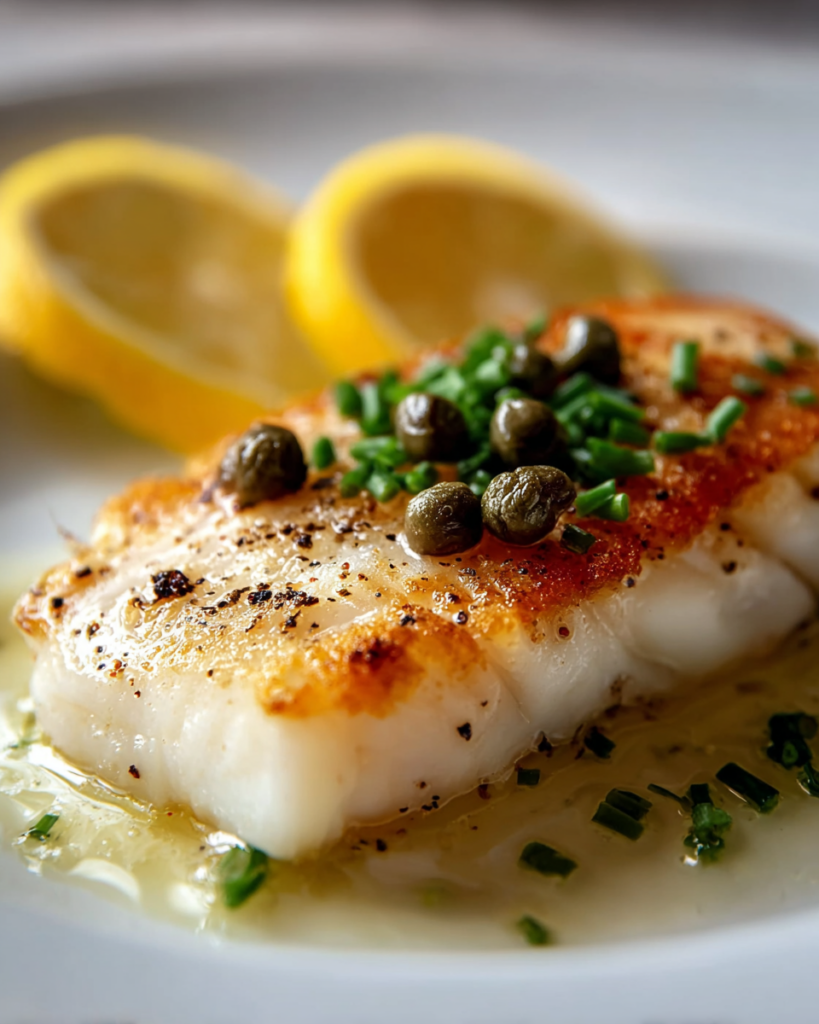
STEP 5: In the same skillet, melt the remaining butter and add the drained capers. Let them sizzle briefly to wake up their flavor, then pour in the lemon juice and stir to blend the browned bits from the pan into the sauce.
STEP 6: Spoon the warm lemon-caper butter over the halibut and finish with lemon zest and chives. Serve right away while the sauce is glossy and the fish is at its most tender.
Can I use halibut fillets instead of steaks?
Yes, fillets work well here as long as they are thick enough to hold together in the pan. Just watch the cooking time closely, since thinner pieces can go from tender to overdone very quickly.
How do I know when halibut is fully cooked?
Halibut is ready when it turns opaque and flakes easily at the thickest part with gentle pressure from a fork. The flesh should look moist and tender, not dry or stringy.
Do I have to use capers?
No, but they add a lot to the finished dish. If you skip them, the sauce will still be buttery and lemony, though it will lose that subtle briny contrast that makes it taste more complete.
Can I make the sauce ahead of time?
This sauce is best made right in the skillet after the fish cooks because it picks up all the savory flavor left in the pan. You can prep the lemon, chives, and capers ahead to make dinner faster.
Helpful Tips
- Dry the halibut before dredging it so the flour coating stays light and helps the fish brown instead of steam.
- Keep the heat at medium rather than high. Halibut is lean, and gentler cooking helps it stay tender and flaky.
- Drain the capers well before they hit the pan so the sauce stays glossy and bright instead of diluted.
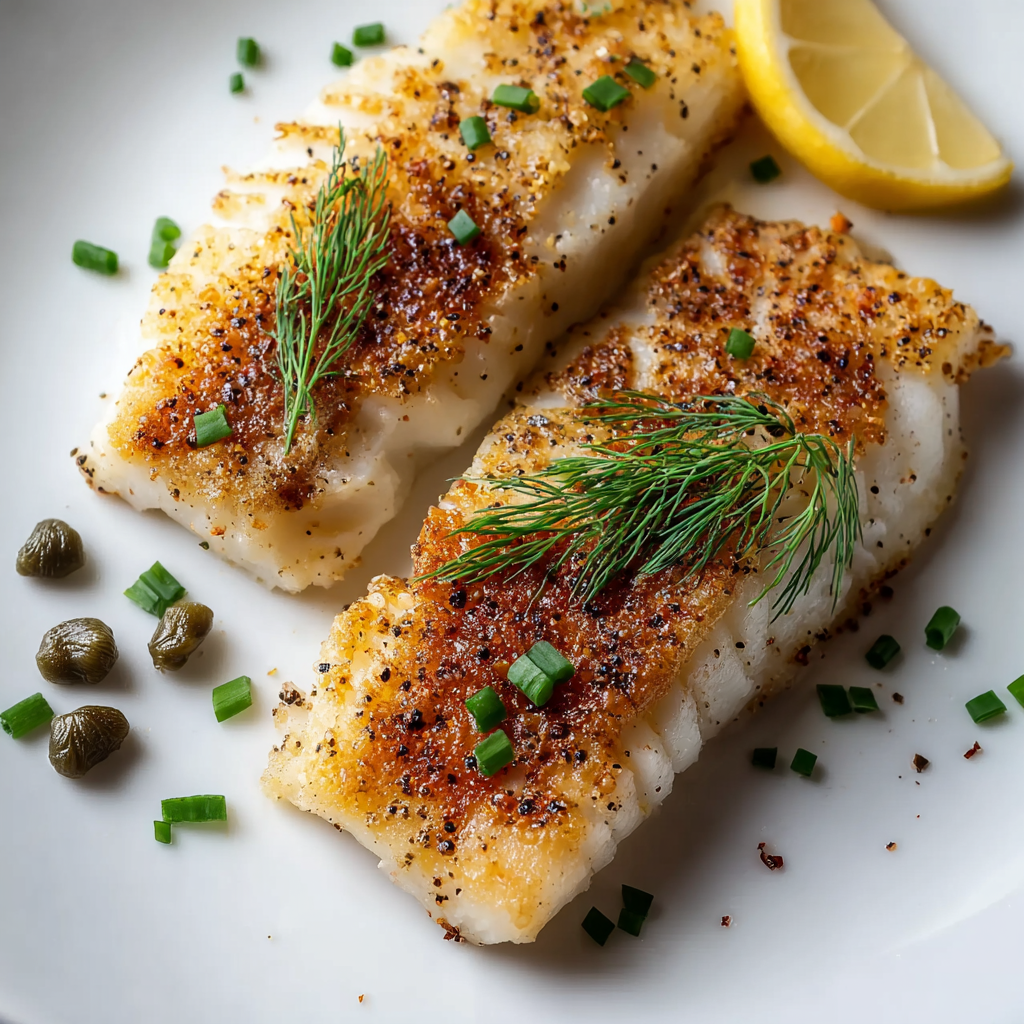
Serving Ideas for Halibut with Lemon Cream Sauce
This fish is especially good with sides that soak up the extra sauce without competing with it. A spoonful of the lemony butter over the plate makes everything around it taste better.
Rice is an easy choice if you want a simple dinner that feels complete. Plain white rice, buttered rice, or even a light herb rice gives the sauce a place to land and turns the plate into a satisfying main course.
Mashed potatoes are another great match, especially if you want something a little more comforting. Their creamy texture works beautifully with the bright sauce and the soft, flaky fish.
For a lighter plate, go with roasted asparagus, green beans, or sautéed spinach. A fresh green vegetable keeps the meal feeling clean and balanced while still letting the halibut stay the star.
Keeping Leftovers Fresh
Halibut is always best right after cooking, but leftovers can still be good if handled gently. Let the fish cool, then store it in an airtight container in the refrigerator for up to 2 days. Keep any extra sauce with it so the fish stays as moist as possible.
Freezing is not ideal for this dish because cooked halibut can dry out and lose its delicate texture once thawed. If you do freeze it, wrap it well and use it within about 1 month, knowing the texture may be softer and less refined after reheating.
To reheat, place the fish in a skillet over low heat with a spoonful of water or a little extra butter to loosen the sauce. Warm it gently just until heated through. Avoid high heat or long microwave reheating, which can make halibut tough and chalky.
Halibut with Lemon Cream Sauce
Ingredients
For the halibut
- 1 1/2 pounds halibut steaks
- 4 tablespoons unsalted butter
For the flour coating
- 1/2 cup plain flour
- 1 teaspoon fine salt
- 1 teaspoon black pepper ground
For the lemon-caper sauce
- 2 tablespoons butter
- 2 tablespoons fresh chives finely sliced
- 2 tablespoons capers thoroughly drained
- Juice from 1 lemon
- 1 teaspoon lemon zest finely grated
Instructions
- Combine the flour, salt, and black pepper on a large plate, stirring them together until the seasoning is evenly distributed throughout the mixture.
- Coat each halibut piece in the seasoned flour, turning to cover both sides well. Gently shake away any extra flour before cooking.
- Place a large sauté pan over medium heat and melt the 4 tablespoons of butter. Once the butter has stopped foaming, add the coated halibut carefully to the pan.
- Cook the fish, turning it once during the process, until it is fully done, flakes easily with a fork, and develops a golden color on all sides. Transfer the cooked halibut to a serving platter.
- In the same pan, melt the remaining 2 tablespoons of butter. Add the drained capers and cook for about 1 minute.
- Pour in the fresh lemon juice and whisk lightly so the ingredients blend into a simple, flavorful sauce.
- Spoon the lemon-caper sauce over the halibut. Finish with the grated lemon peel and chopped chives, then serve immediately.