Japchae with Pork Belly is a quick, glossy Korean noodle dinner with tender vegetables, savory meat, and a nutty sesame finish. It feels special enough for guests, yet practical enough for a flavorful weeknight meal.
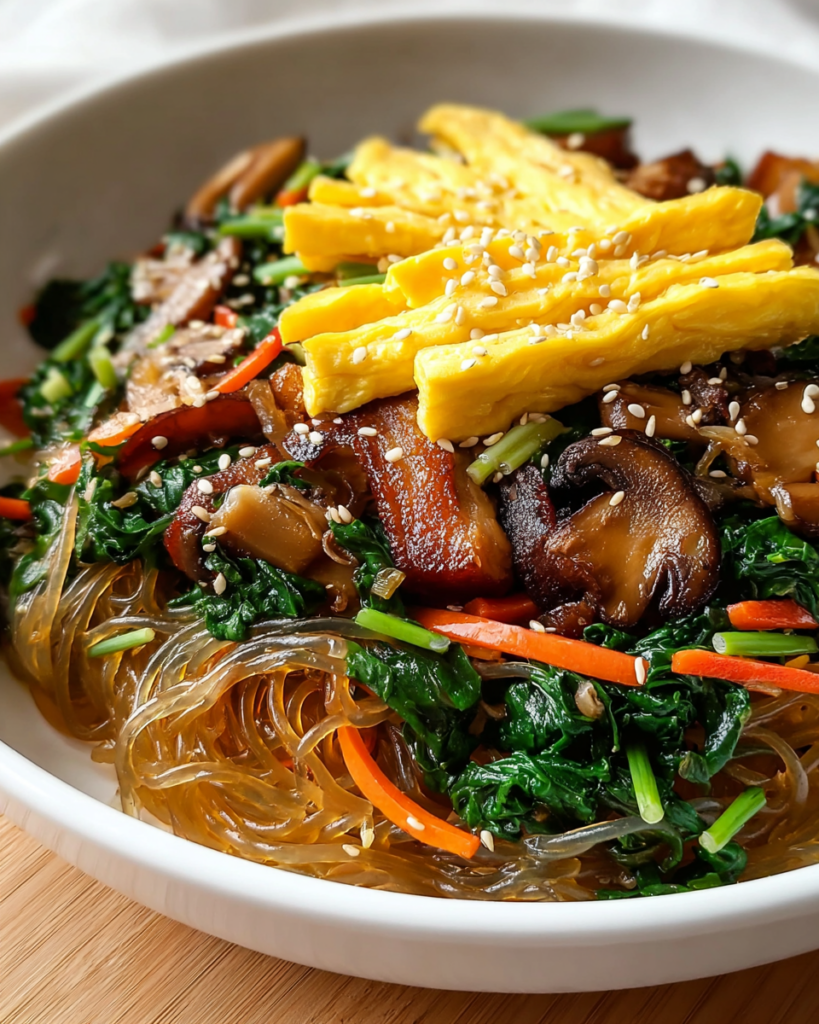
This is the kind of dish that works beautifully when you want something warm, satisfying, and a little different from your usual noodle routine. The sweet potato noodles bring that signature chewy bite, while the pork belly adds richness that makes every forkful feel complete.
What makes this version especially appealing is the balance. You get soft spinach, lightly sweet onion, earthy mushrooms, and carrot for freshness, all tied together with soy sauce, garlic, and sesame. Nothing feels heavy, even though the dish is deeply savory.
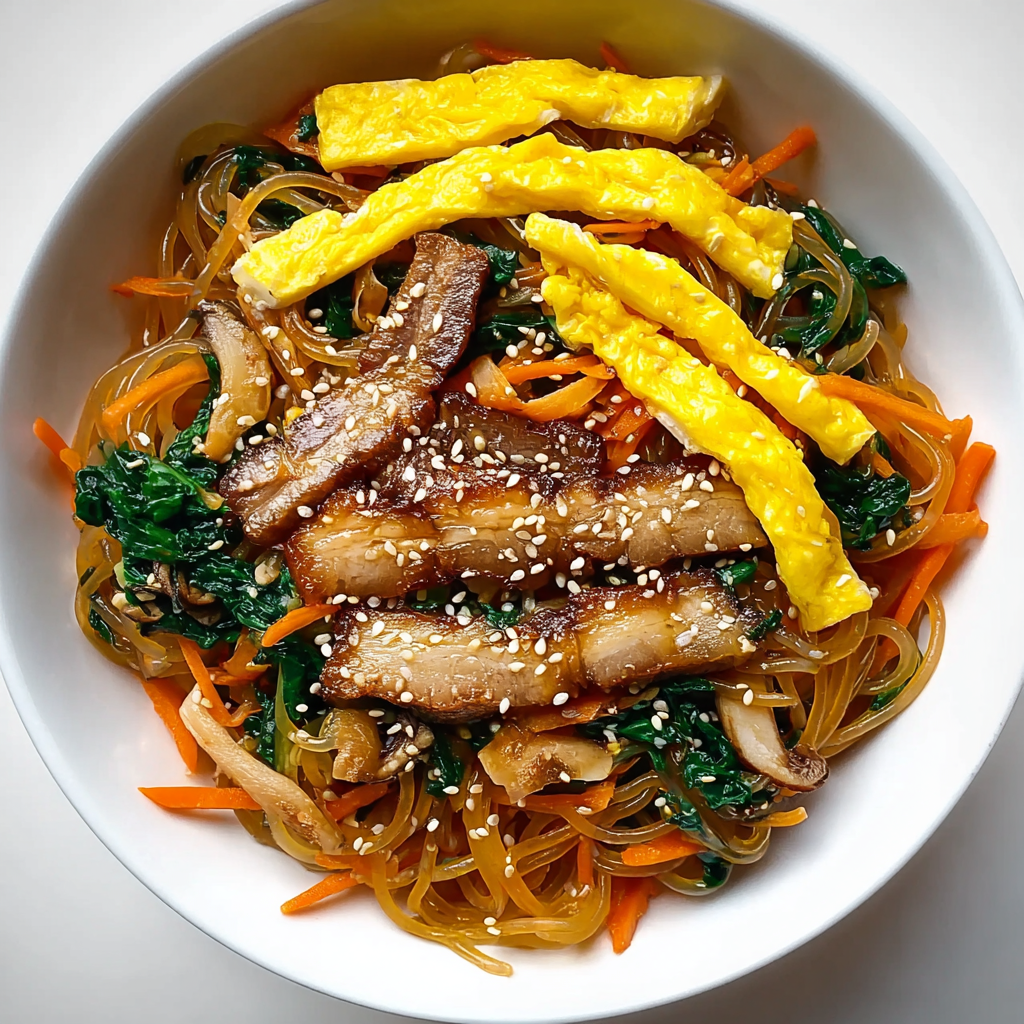
It also has that polished look people love on the table. The glossy noodles, the scattered sesame seeds, and the fine egg ribbons give it a restaurant-style finish without asking you to do anything overly complicated in your kitchen.
Ingredients
Sweet potato noodles bring the chewy, springy texture that defines the dish and soak up the savory seasoning beautifully.
Pork belly adds richness and depth, giving the noodles a hearty, satisfying edge. The source method includes it as the main protein, though it does not list a precise amount.
Spinach softens gently into the hot noodles and adds color, freshness, and a tender contrast to the chewy strands.
Onion gives the dish a mellow sweetness as it cooks down with the mushrooms and carrots.
Carrot adds a little crunch and color, which helps keep the final texture balanced instead of overly soft.
Wood ear mushrooms contribute a subtle earthy flavor and a pleasantly crisp bite once soaked and sliced.
King oyster mushrooms make the vegetable base feel fuller and more substantial, with a meaty texture that pairs especially well with pork.
Garlic is essential for the seasoning mixture, adding savory aroma and that familiar backbone you want in a noodle dish like this.
Soy sauce and sugar form the core of the sauce, creating that classic balance of salty, slightly sweet, and deeply savory flavor.
Eggs are cooked into a thin pancake and sliced into ribbons for a traditional-looking finish that makes the platter feel complete.
Toasted sesame oil and sesame seeds are the final touch, adding warmth, nuttiness, and the signature fragrance that pulls everything together.
Cooking Steps
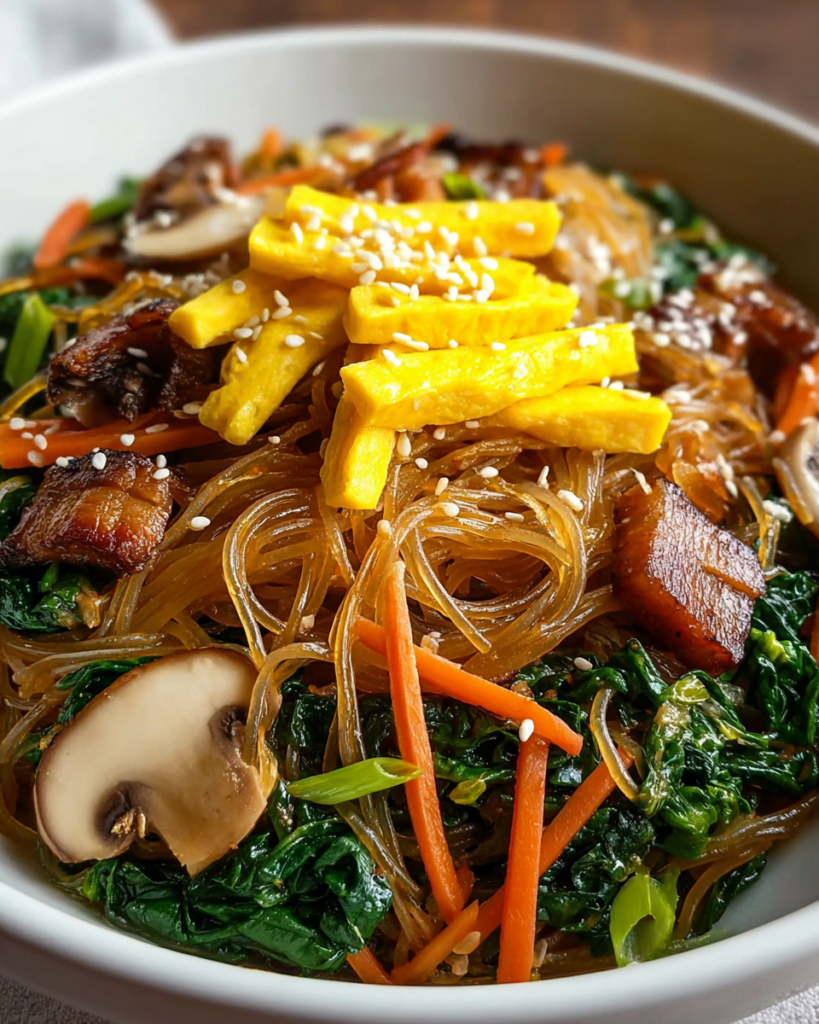
STEP 1: Start by marinating the pork belly with soy sauce, sugar, and a little toasted sesame oil. Give it a few minutes to absorb the seasoning while you prepare the rest of the ingredients, since even a short marinade helps the meat taste more integrated with the noodles later.
STEP 2: Cook the pork belly in a skillet over medium heat until it is fully done and lightly browned in spots. Set it aside rather than leaving it in the pan, so it stays flavorful without overcooking while the rest of the dish comes together.
STEP 3: Make the egg garnish next. Beat the eggs with a pinch of salt, cook them in a thin layer like a delicate pancake, then cool and slice into narrow ribbons. This step adds a gentle richness and gives the finished platter that classic japchae look.
STEP 4: Stir together the main seasoning with soy sauce, sugar, black pepper, and minced garlic. This mixture gets poured over the noodles before cooking, which helps season the entire pot rather than leaving the flavor only on the surface.
STEP 5: Prepare the vegetables by soaking and trimming the wood ear mushrooms, then combining them with the king oyster mushrooms, carrot, and onion in a pot. Add the oil and water, mix well, and spread the spinach on top so it can wilt gently as the covered pot heats.
STEP 6: Add the drained sweet potato noodles over the spinach, cut into shorter lengths for easier serving, then pour over the seasoning mixture. Cover and cook until the noodles soften, absorb the sauce, and the vegetables become tender.
STEP 7: Uncover the pot and toss everything gently until the liquid cooks off and the noodles turn glossy. Fold in the cooked pork belly, then finish with toasted sesame oil and most of the sesame seeds. Transfer to a serving platter and top with the egg ribbons and remaining seeds.
Helpful Tips
- Cut the noodles before or after cooking if they seem overly long. Shorter strands make japchae much easier to toss and serve neatly.
- Do not skip the final toss after uncovering the pot. That last minute or two helps evaporate excess moisture and gives the noodles their glossy finish.
- Keep the heat controlled when cooking the eggs. A thin, pale egg pancake looks cleaner and slices into prettier ribbons than one that browns too much.
Can I use another cut of pork?
Yes, but the result will change a little. Pork belly gives the dish its rich, savory character, while leaner cuts such as pork shoulder or sliced pork loin will taste lighter and less silky. If you swap, avoid overcooking so the meat stays tender.
Why are my noodles turning sticky or clumpy?
That usually happens when the noodles are not tossed enough after cooking or when too much liquid remains in the pot. A gentle final stir over the heat helps separate the strands, coat them evenly, and create that glossy finish instead of a gummy one.
Perfect Pairings
A simple cucumber salad works especially well here because it brings cool crunch against the warm, savory noodles. Something lightly pickled or dressed with rice vinegar keeps the plate feeling fresh.
Kimchi is another great side because its acidity and heat cut through the richness of the pork belly. Even a small serving on the side can make the whole meal feel more lively.
For a fuller spread, serve it with a light Korean-style soup or a few simple vegetable banchan. That keeps the noodle dish as the centerpiece while rounding out dinner in a natural way.
Can I make it ahead for a party?
Yes. This dish is very make-ahead friendly because the flavors settle nicely as it rests. Prepare it earlier in the day, then reheat gently just before serving with a small splash of water or oil so the noodles loosen without drying out.
Do I have to include the egg ribbons?
No, but they do add a traditional finishing touch and a softer contrast to the chewy noodles. If you leave them out, the dish will still be flavorful and complete, especially since the sesame oil, mushrooms, and pork belly already bring plenty of character.
How to Store & Reheat
Leftovers keep well in the refrigerator for up to 3 days, which makes this a smart dish for meal prep or next-day lunches. Store it in a covered container so the noodles do not dry out.
For reheating, a skillet is the best option. Add the noodles with a few tablespoons of water or a small splash of vegetable oil, then stir-fry gently until warmed through. That helps restore the glossy texture better than high heat in the microwave.
If you do use the microwave, cover the dish loosely and heat in short intervals, stirring between each one. This keeps the noodles from overheating around the edges while the center stays cool.
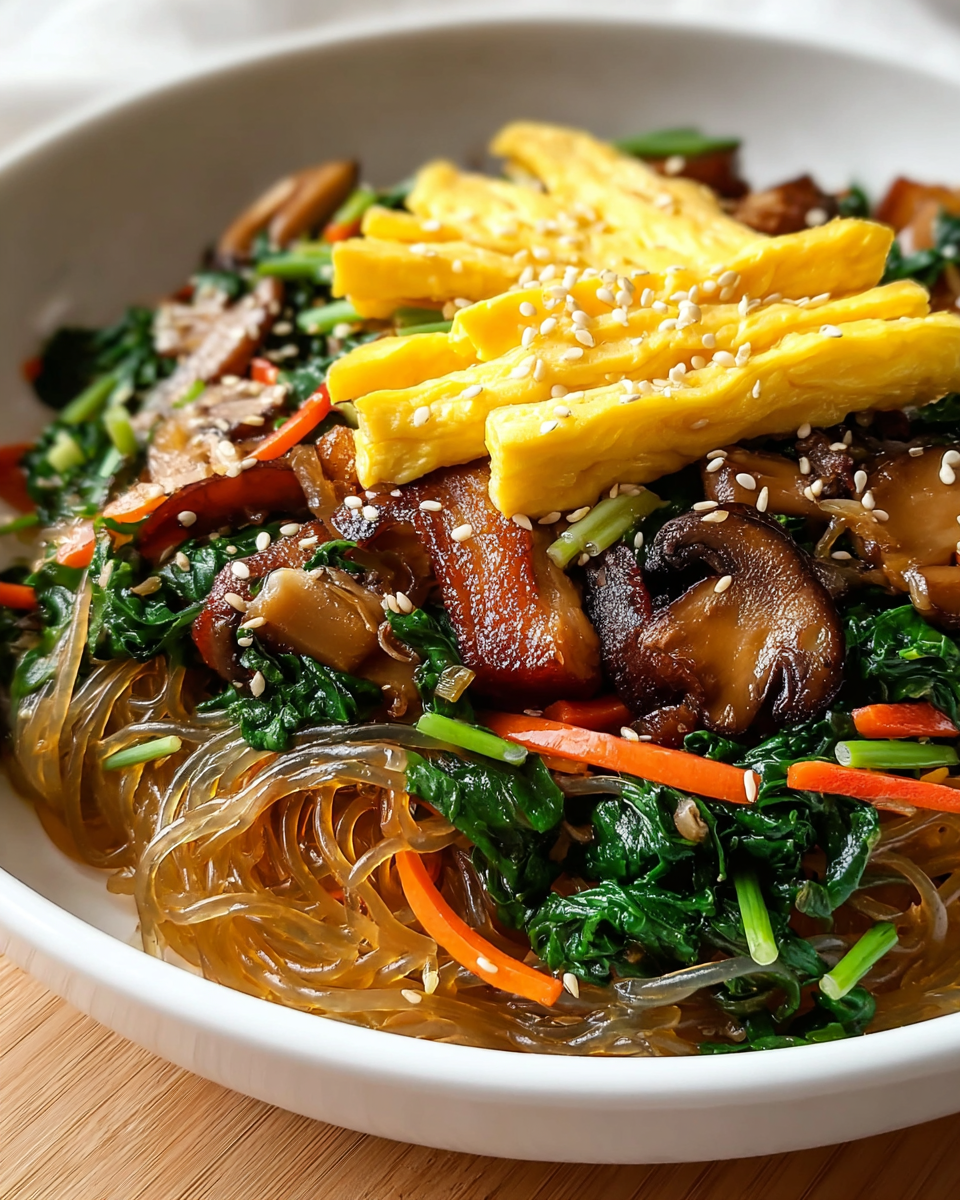
Japchae with Pork Belly
Ingredients
For the noodles and vegetables
- 1 large onion thinly sliced
- 8 ounces sweet potato noodles
- 7 dried wood ear mushrooms
- 8 ounces spinach
- 5 garlic cloves freshly minced
- 1 large carrot cut into fine matchsticks
- 8 ounces king oyster mushrooms julienned
- 1/4 cup vegetable oil
- 1/4 cup water
For finishing
- 1 tablespoon toasted sesame oil
- 1 tablespoon plus 1 teaspoon toasted sesame seeds
Additional ingredients referenced in the method
- The original recipe text uses the following items but does not provide full quantities for all of them.
- Pork belly
- Soy sauce
- Brown sugar or white sugar
- Eggs
- Salt
- Ground black pepper
Instructions
- Place the pork belly in a bowl and season it with soy sauce, sugar, and toasted sesame oil. Mix thoroughly by hand until the sugar has fully dissolved, then cover and let it marinate for 5 minutes.
- Warm a skillet over medium heat. Add the marinated pork belly and cook, stirring with a wooden spoon for 4 to 5 minutes, until fully cooked through. Remove it from the heat and set it aside.
- Beat the eggs with a small pinch of salt, then strain the mixture into a second bowl to ensure a smooth texture, leaving behind any stringy bits. Heat a little vegetable oil in a large nonstick skillet over medium-high heat, swirling to coat the surface, and wipe away any excess with a paper towel. Reduce the heat to low, pour in the eggs, and tilt the skillet so the mixture forms a broad, even round. Cook for about 1 minute, until the underside is lightly set. Turn the egg pancake over, remove the pan from the heat, and allow it to finish cooking in the residual warmth. Transfer it to a cutting board, cool slightly, and slice into narrow strips.
- In a separate bowl, combine soy sauce, sugar, black pepper, and the minced garlic, stirring until the sugar dissolves. Set this seasoning mixture aside.
- Soak and drain the wood ear mushrooms as needed, remove any tough stems, and cut the caps into bite-size pieces. Place them in a cooking pot with the king oyster mushrooms, carrot, and sliced onion. Add 1/4 cup vegetable oil and 1/4 cup water, then mix well so the vegetables are evenly coated. Spread the spinach evenly over the top.
- Drain the sweet potato noodles and cut them into lengths of about 5 to 6 inches. Arrange them over the spinach, then pour the reserved seasoning mixture over the noodles. Cover the pot and cook over medium-high heat for 10 minutes.
- Remove the lid and stir the contents. Toss gently with a wooden spoon and tongs for 1 to 2 minutes, until the liquid has evaporated and the noodles look glossy and properly cooked.
- Add the cooked pork belly to the noodle mixture, followed by 1 tablespoon toasted sesame oil and 1 tablespoon toasted sesame seeds. Toss carefully until everything is evenly combined, then transfer the japchae to a large serving platter.
- Finish the dish with the sliced egg strips and the remaining sesame seeds. Serve at once.