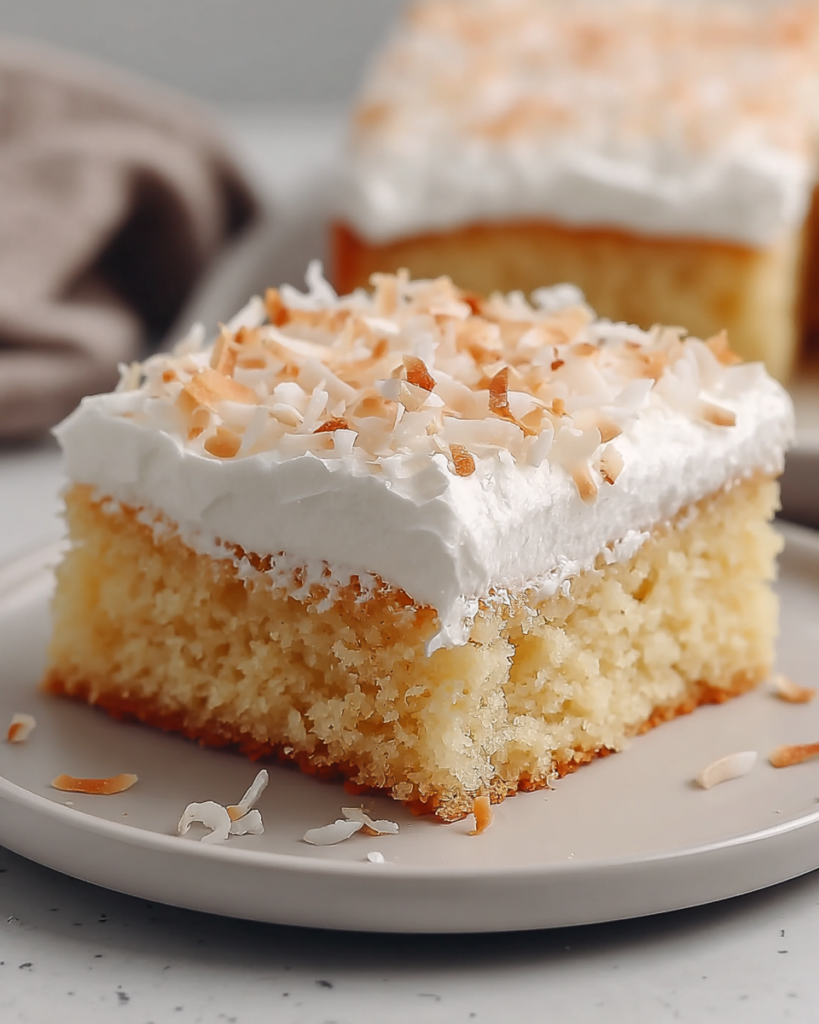
Keto Coconut Cake is a creamy, low-carb dessert that feels special without being complicated. You get a tender coconut flour crumb, a light whipped topping, a simple sugar-free syrup, and toasted coconut on top for a finish that tastes rich, balanced, and make-ahead friendly.
This is the kind of cake that works beautifully when you want something sweet from the fridge that already feels finished and ready to slice. It is especially handy for gatherings, weekend baking, or those moments when you want a dessert that tastes a little more polished than your average low-carb treat.
The flavor combination is simple but really satisfying. Coconut flour gives the cake its signature character, the syrup adds moisture without making it heavy, and the whipped cream topping keeps everything light enough to stay refreshing.
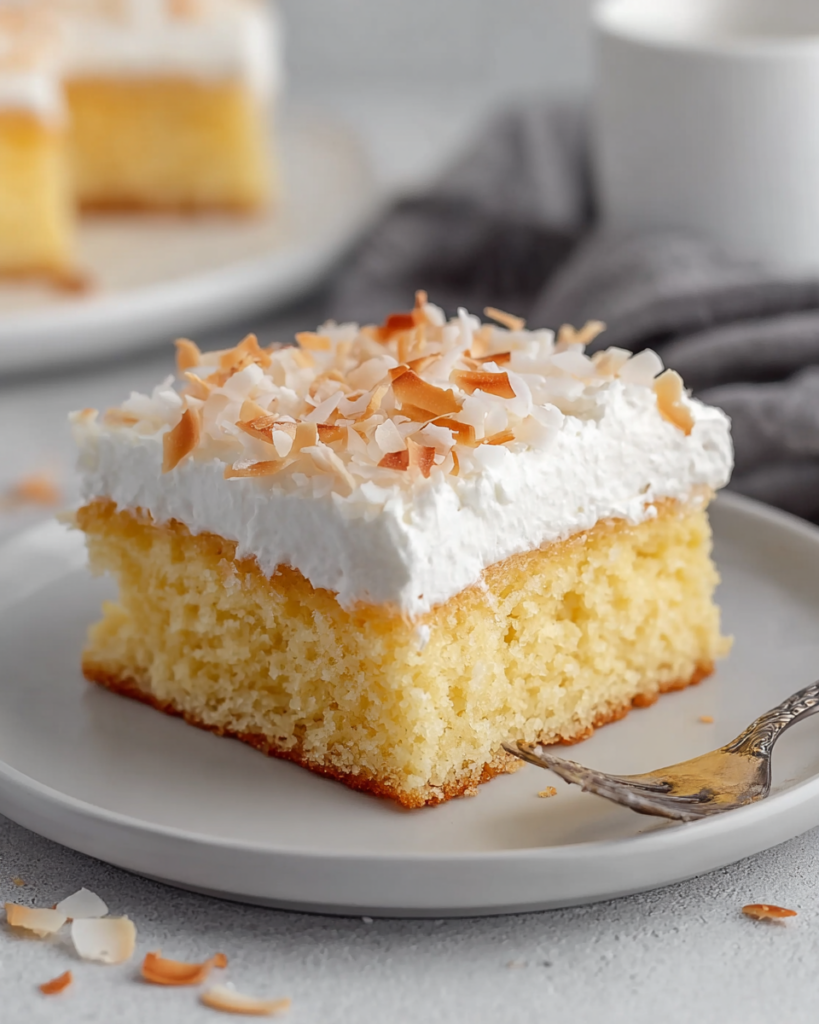
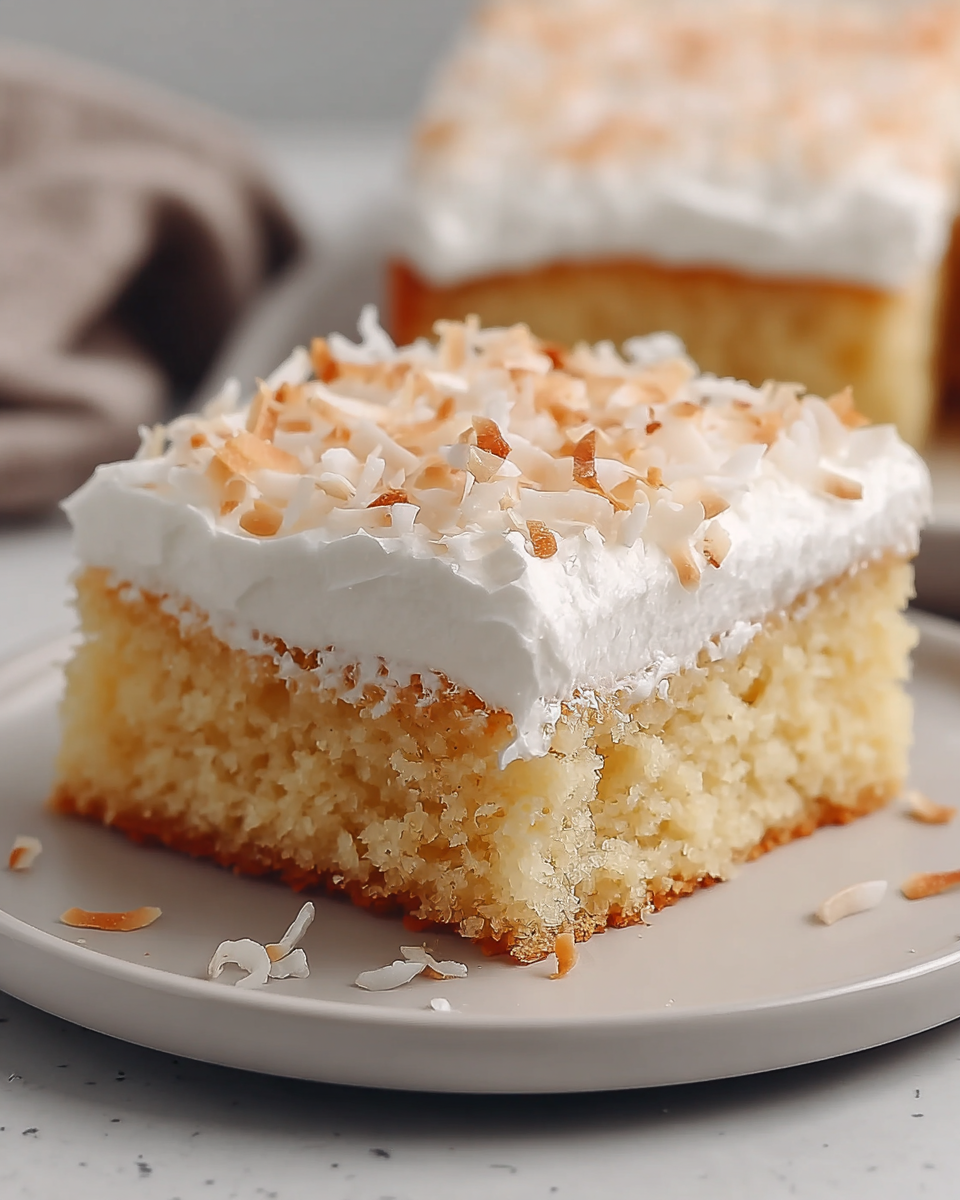
What makes this one work so well is the layering of textures. You have a soft cake base, a cool fluffy topping, and a crisp sprinkle of toasted coconut over the top. That contrast keeps every bite interesting, even after the cake has chilled overnight.
What You Need to Make This Keto Coconut Cake
Coconut flour gives the cake its structure and brings concentrated coconut flavor, so a little goes a long way.
Eggs create lift, richness, and the soft texture that helps this low-carb cake stay tender instead of dense.
Powdered monk fruit sweetener keeps the cake, syrup, and topping sweet without adding traditional sugar.
Heavy cream appears in both the batter and topping, adding richness to the cake and a light, fluffy finish on top.
Unsalted butter adds moisture and a buttery depth that helps balance the absorbent coconut flour.
Cream cheese smooths out the batter and adds a subtle richness that supports the cake’s texture.
Vanilla extract rounds out the flavor and softens the sharper edges of the sweetener.
Baking powder helps the cake rise and keeps the crumb from feeling too compact.
Salt sharpens the coconut flavor and makes the sweetness taste more balanced.
Water and sweetener for the syrup create a simple soak that helps the cake stay moist after chilling.
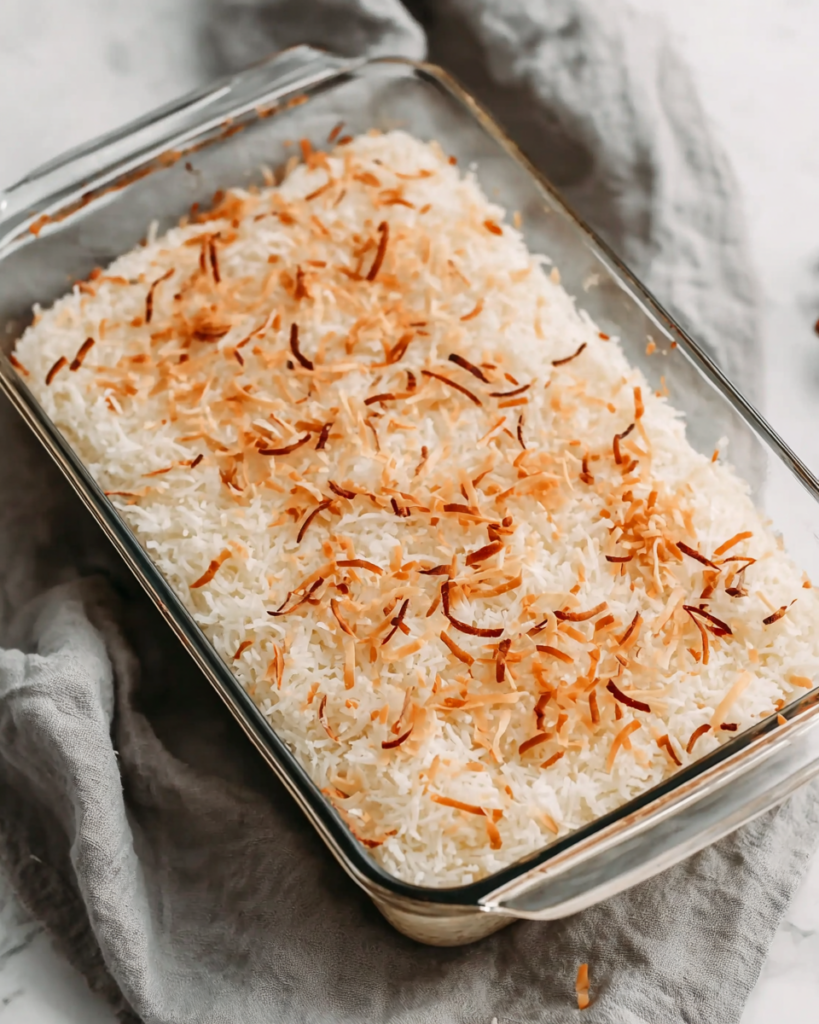
Unsweetened coconut flakes toasted until golden add the final layer of texture and a deeper coconut aroma.
Cooking Steps
STEP 1: Preheat your oven and lightly grease a square baking pan. Melt the butter first so it has time to cool before it goes into the batter, which helps everything blend smoothly.
STEP 2: Beat the eggs with the powdered sweetener, cream cheese, heavy cream, vanilla, salt, and baking powder until the mixture looks smooth and slightly airy. This gives the cake a lighter start and helps distribute the ingredients evenly.
STEP 3: Mix in the cooled butter, then add the sifted coconut flour. Stir just until the batter is fully combined and uniform. Coconut flour absorbs liquid quickly, so accurate measuring matters here more than with many other cake recipes.
STEP 4: Spread the batter into the prepared pan and bake until the center is set and a toothpick comes out clean. The top should look lightly golden, and the cake should feel springy rather than wet in the middle.
STEP 5: While the cake bakes, simmer the water and powdered sweetener together until the mixture reduces slightly. You are not looking for a thick syrup here, just a light soak that adds moisture and helps the finished cake hold up beautifully after chilling.
STEP 6: Once the cake is out of the oven and has cooled a bit, make small slits across the top and slowly pour over the warm syrup. Let the cake cool completely so the topping stays fluffy when you add it.
STEP 7: Whip the chilled cream with the sweetener and vanilla until stiff peaks form. Spread it over the cooled cake, then finish with toasted coconut flakes for a crisp, fragrant topping.
STEP 8: Refrigerate the cake overnight before slicing. That rest time helps the syrup settle in, firms up the whipped topping, and gives the whole dessert a much better texture the next day.
Helpful Tips
- Sift the coconut flour before measuring and mixing so the batter stays smooth and the crumb turns out finer.
- Use room-temperature eggs for a more even batter and better volume.
- Toast the coconut flakes until lightly golden, not deeply brown, so they stay flavorful without tasting bitter.
What to Serve with Keto Coconut Cake
This cake is lovely on its own, but a few simple pairings can make it feel even more complete. A cup of hot coffee works especially well because the slight bitterness balances the creamy topping and the sweet coconut flavor.
For a lighter pairing, serve it with unsweetened iced tea or a simple cold brew. That keeps dessert feeling refreshing, especially after a heavier dinner.
If you are putting together a dessert spread, this cake fits nicely alongside fresh berries. A small spoonful of raspberries or strawberries on the side adds brightness without taking attention away from the coconut.
How to Store & Reheat
Because of the whipped cream topping, this cake should stay refrigerated. Cover the pan well or transfer slices to an airtight container, and it should keep nicely in the fridge for about 3 to 4 days.
Freezing is possible, though the whipped topping may lose some of its texture after thawing. For the best result, freeze the cake base without the cream topping, then thaw it in the refrigerator and finish with fresh whipped cream and toasted coconut before serving.
This is not a dessert you need to reheat. It is meant to be served chilled, straight from the refrigerator, when the layers are settled and the topping is cool and fluffy. If the cake has been refrigerated for a long time, letting a slice sit at room temperature for 10 minutes can soften the texture slightly.
Can I make this ahead of time?
Yes, and it is actually better that way. Overnight chilling gives the syrup time to settle into the cake and helps the whipped topping firm up, so the slices hold their shape better and the flavor tastes more rounded.
Why is coconut flour measured so carefully?
Coconut flour is much more absorbent than standard flour, so even a little extra can dry out the batter. Measuring level tablespoons and sifting first helps keep the cake soft, moist, and evenly textured.
Can I use a different keto sweetener?
Usually yes, as long as it is a powdered sweetener designed for baking. Powdered versions dissolve more smoothly into the batter, syrup, and whipped topping, which helps you avoid graininess in the finished cake.
Does the syrup really make a difference?
It does. The syrup adds moisture and helps the cake stay tender after chilling, which is especially useful in coconut flour cakes. It also gives the dessert a more finished texture without making it heavy or overly sweet.
This keto coconut cake is a great example of how a low-carb dessert can still feel classic, comforting, and worth making again. It has enough richness to feel like a proper cake, but the whipped topping keeps it from becoming too dense. That balance is a big part of why it works so well.
It is also a smart dessert for planning ahead. You can bake it, chill it, and serve it the next day when the texture is at its best. That makes it ideal for holidays, casual dinners, or anytime you want a dessert already waiting in your fridge.
The final toasted coconut layer really brings everything together. It adds a little crunch, a deeper coconut note, and a finish that makes the cake look just as inviting as it tastes. Once chilled and sliced, it feels simple, elegant, and very easy to come back to for one more piece.
Keto Coconut Cake
Ingredients
For the cake:
- 9 tablespoons coconut flour sifted to create a smoother batter
- 2 tablespoons heavy cream
- 6 large eggs at room temperature for improved blending
- 1 teaspoon vanilla extract
- 1/2 teaspoon salt
- 9 tablespoons unsalted butter melted and cooled
- 1/2 cup powdered monk fruit sweetener
- 2 teaspoons softened cream cheese
- 1 1/2 teaspoons baking powder
For the syrup:
- 4 tablespoons powdered monk fruit sweetener
- 3/4 cup water
For the topping:
- 1/2 teaspoon vanilla extract
- 3/4 cup heavy cream well chilled
- 4 tablespoons powdered monk fruit sweetener
- 1 cup unsweetened coconut flakes toasted for deeper flavor
Instructions
- Preheat the oven to 350°F (175°C). Lightly grease a 9 x 9-inch baking pan. Melt the butter and set it aside until it reaches room temperature.
- In a mixing bowl, beat the eggs with the powdered monk fruit sweetener, cream cheese, heavy cream, vanilla extract, salt, and baking powder until the mixture is smooth and thoroughly combined.
- Add the cooled melted butter and the sifted coconut flour to the bowl. Beat again until the batter is fully incorporated. Measure the coconut flour in level tablespoons, as using too much can make the cake excessively dry.
- Transfer the batter to the prepared pan and spread it evenly. Bake for 20 to 24 minutes, or until a toothpick inserted into the center emerges clean. Let the cake cool slightly.
- To prepare the syrup, place the water and powdered monk fruit sweetener in a small saucepan. Bring the mixture to a boil over medium-high heat and cook until it reduces slightly and thickens, about 6 minutes.
- When the cake has cooled a little, make small slits across the top with a knife. Pour the warm syrup evenly over the surface, then leave the cake to cool completely.
- In a separate bowl, combine the chilled heavy cream, powdered monk fruit sweetener, and vanilla extract. Beat until stiff peaks form and the volume nearly doubles.
- Spread the whipped cream evenly over the cooled cake. Scatter the toasted unsweetened coconut across the top.
- Refrigerate the cake overnight before serving so the texture settles and the flavors develop fully.