Leek stuffing is a make-ahead-friendly side dish that brings together buttery sourdough, tender leeks, fresh herbs, and just enough vegetable stock for a moist center and lightly crisped top. It is comforting, reliable, and especially handy when you want a flavorful oven-baked stuffing that fits both holiday tables and cozy family dinners.

This is the kind of dish that feels classic without being heavy. The leeks give it a softer, sweeter onion flavor, while celery and garlic build that familiar savory base you want in every good stuffing.
The sourdough does a lot of work here too. It soaks up the butter, eggs, and broth beautifully, so you get a baked stuffing that stays tender inside instead of turning dry or crumbly.
I also love how practical this one is for a busy kitchen. You can assemble it ahead, keep it chilled, and bake it when the rest of the meal is coming together, which makes it especially useful for holiday cooking or any meal where timing matters.
What You Need to Make This Leek Stuffing
Day-old sourdough brings structure and chew, giving the stuffing enough body to hold the savory mixture without turning mushy.
Leeks add a mild, delicate onion flavor that feels slightly sweeter and more refined than standard onions.
Celery gives the stuffing a classic aromatic backbone and a little texture in every bite.
Garlic deepens the savory flavor and ties the herbs and butter together.
Fresh parsley keeps the overall flavor bright and fresh instead of overly rich.
Fresh sage gives the dish that unmistakable stuffing character and warm, earthy depth.
Rosemary adds a woodsy note that makes the whole bake smell incredible as it cooks.
Thyme leaves bring gentle herbal warmth and round out the rest of the seasoning.
Sea salt and black pepper season the vegetables and help balance the richness of the bread and butter.
Salted butter coats the vegetables, adds richness, and helps create that inviting golden finish on top.
Eggs bind the mixture so the stuffing bakes up cohesive and spoonable rather than loose.
Vegetable stock moistens the bread and carries flavor through every corner of the dish.
Cooking Steps
STEP 1: Heat your oven to 350°F and grease a medium baking dish. Add the sourdough cubes or torn pieces to a very large bowl so you have enough room to toss everything thoroughly later without crushing the bread.
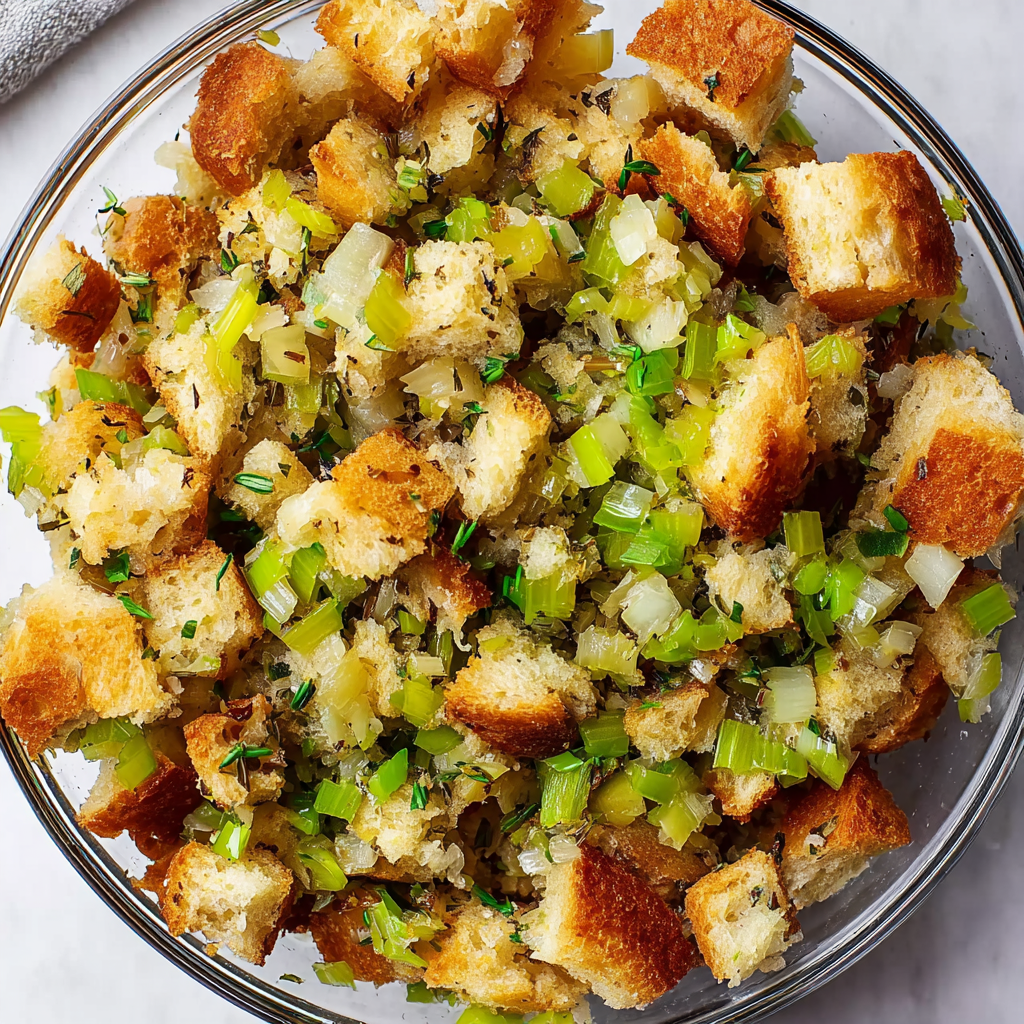
STEP 2: Melt most of the butter in a large skillet over medium heat, then cook the leeks, celery, garlic, salt, and pepper until the vegetables soften and smell fragrant. Lower the heat as needed so they become tender without taking on much color.
STEP 3: Spoon the warm leek mixture over the bread, then add the parsley, sage, rosemary, and thyme. Toss gently but well, making sure the herbs and vegetables are distributed throughout instead of clumping in one part of the bowl.
STEP 4: Pour in about 1 1/2 cups of vegetable stock and toss again so the bread starts absorbing the liquid. Add the beaten eggs and mix until everything feels evenly moistened. If the bread still seems dry in spots, drizzle in the remaining stock a little at a time.
STEP 5: Transfer the mixture to the prepared dish and spread it out lightly without packing it down too firmly. This is also the point where you can cover the dish and refrigerate it if you want to prep ahead for later baking.
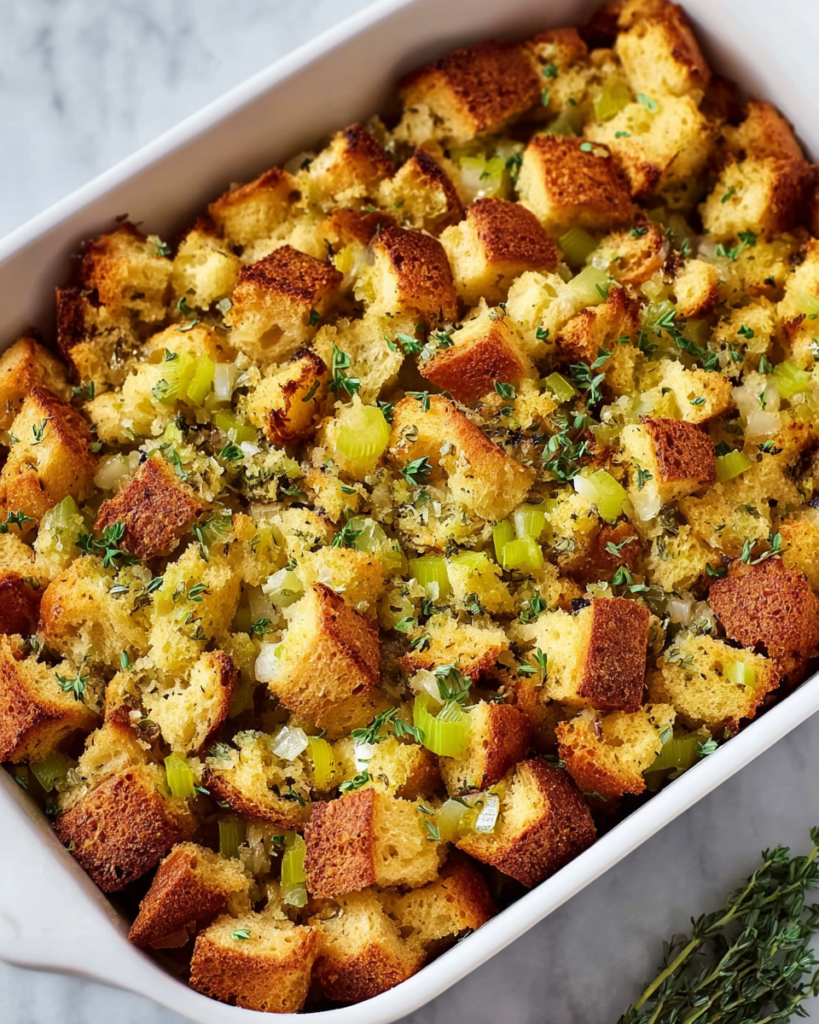
STEP 6: Drizzle the remaining melted butter over the top, cover with foil, and bake for about 30 minutes. If the center still looks a little too wet, uncover and bake a few more minutes until the top looks lightly crisped and the stuffing feels set but still moist. Let it rest briefly before serving.
Can I make this ahead of time?
Yes, and it is a great make-ahead side. Assemble the stuffing in the baking dish, cover it well, and refrigerate until you are ready to bake. That takes pressure off the kitchen and helps you get ahead on a busy cooking day.
How do I know if the bread mixture is moist enough?
It should feel well hydrated and slightly heavy, not dusty or brittle. The bread should absorb the stock and eggs without sitting in puddles. Because sourdough can vary in dryness, add the last splash of broth only if the mixture still seems dry.
Can I use another bread if I do not have sourdough?
You can, but sourdough gives this stuffing great texture and flavor. A sturdy country loaf works better than very soft sandwich bread because it holds up to the butter and stock without collapsing too much as it bakes.
Should the stuffing stay covered the whole time?
Not always. Covering it first helps the center heat through and stay moist. If it still looks a little wet after the initial bake, removing the foil for the last few minutes helps the top dry out slightly and develop that gentle crisp finish.
Perfect Pairings
This stuffing fits beautifully alongside roast chicken or turkey, where its buttery herb flavor complements the main dish without competing for attention.
It is also excellent with simple roasted vegetables such as carrots, green beans, or Brussels sprouts. Their slight sweetness and firm texture balance the soft, savory character of the stuffing.
For a fuller holiday-style plate, serve it with a spoonful of gravy or alongside mashed potatoes and a tart cranberry side. The contrast of rich, savory, and bright flavors makes the whole meal feel complete.
Helpful Tips
- Slice the leeks thinly and wash them well so you do not end up with grit hiding between the layers.
- Toss the bread mixture gently instead of aggressively so the cubes keep their shape and the final texture stays pleasantly rustic.
- Do not wait for a deeply golden top before pulling it out; this stuffing is meant to stay moist, with just a light crisp finish rather than a dry crust.
Keeping Leftovers Fresh
Once baked, let the stuffing cool before covering and refrigerating it. It keeps well in the fridge for up to 4 days, making it a very good leftover side for next-day lunches or simple reheated dinners.
To reheat, place portions in the oven covered loosely with foil until warmed through. That helps keep the center from drying out. You can also reheat smaller portions in the microwave, though the oven does a better job preserving the texture.
For longer storage, freeze cooled portions in a tightly wrapped container for up to 1 month. Thaw in the refrigerator before reheating so the bread warms more evenly and the stuffing keeps as much of its original texture as possible.
What makes this dish so dependable is the balance. The leeks soften into the bread without overpowering it, the herbs bring depth without tasting too sharp, and the stock and eggs create that classic stuffing texture that is moist, savory, and satisfying. It feels familiar, but the leeks give it a slightly more special character than a standard bread stuffing.
It is also a very forgiving side dish. You are not chasing a narrow window of doneness, and the visual cues are easy to read. As long as the mixture is properly moistened before baking and the top is allowed to firm up lightly at the end, you get a stuffing that tastes homemade and comforting every time.
For holidays, this is the sort of side that earns repeat requests because it pairs with almost everything on the table. For everyday dinners, it turns a simple roast or vegetable plate into something that feels much more thoughtful. That blend of comfort, practicality, and flavor is exactly why this leek stuffing deserves a spot in your regular rotation.

Leek Stuffing
Ingredients
For the stuffing base:
- 1 pound day-old sourdough loaf cut or torn into bite-size cubes
- 2 leeks white and pale green portions only, thinly sliced
- 4 celery stalks finely chopped
- 3 garlic cloves minced
- 1/4 cup chopped fresh flat-leaf parsley
- 1/4 cup chopped fresh sage
- 1 teaspoon chopped fresh rosemary
- 1 teaspoon fresh thyme leaves
- 3/4 teaspoon sea salt
- 1/2 teaspoon ground black pepper
For the liquid and seasoning:
- 1/2 cup salted butter divided
- 2 large eggs beaten
- 1 1/2 to 2 cups low-sodium vegetable stock
Instructions
- Preheat the oven to 350°F (175°C). Grease an 8×11-inch or 9×13-inch baking dish and set it aside.
- Place the torn or cubed sourdough in a very large mixing bowl.
- In a large skillet set over medium heat, melt the butter. Add the sliced leeks, diced celery, minced garlic, sea salt, and black pepper, then cook for about 5 minutes, lowering the heat to low partway through so the vegetables do not brown too quickly.
- Spoon the cooked leek mixture over the bread. Add the chopped sage, parsley, rosemary, and thyme, then toss everything together with your hands until the bread is evenly mixed with the herbs and vegetables.
- Pour 1 1/2 cups of vegetable stock over the bread mixture and toss well. Add the beaten eggs and mix again until fully incorporated. The mixture should feel quite moist; if it still seems dry, add the remaining 1/2 cup of stock as needed.
- Transfer the stuffing mixture to the prepared baking dish. For make-ahead preparation, cover the dish with foil and refrigerate until ready to bake.
- When ready to bake, drizzle 1 tablespoon of melted butter over the top. Cover the dish and bake for 30 minutes.
- If the stuffing still looks too wet after 30 minutes, remove the foil and continue baking for 5 to 10 minutes more, until the top is lightly crisped.
- Remove the stuffing from the oven and let it rest for a few minutes before serving.
Notes
The stuffing can be assembled in advance, covered, and refrigerated until baking time.