Leek Vinaigrette is a make-ahead French appetizer that feels elegant but stays wonderfully simple. Tender poached leeks soak up a sharp Dijon dressing for a dish that is light, savory, reliable, and perfect for entertaining or a quiet lunch at home.
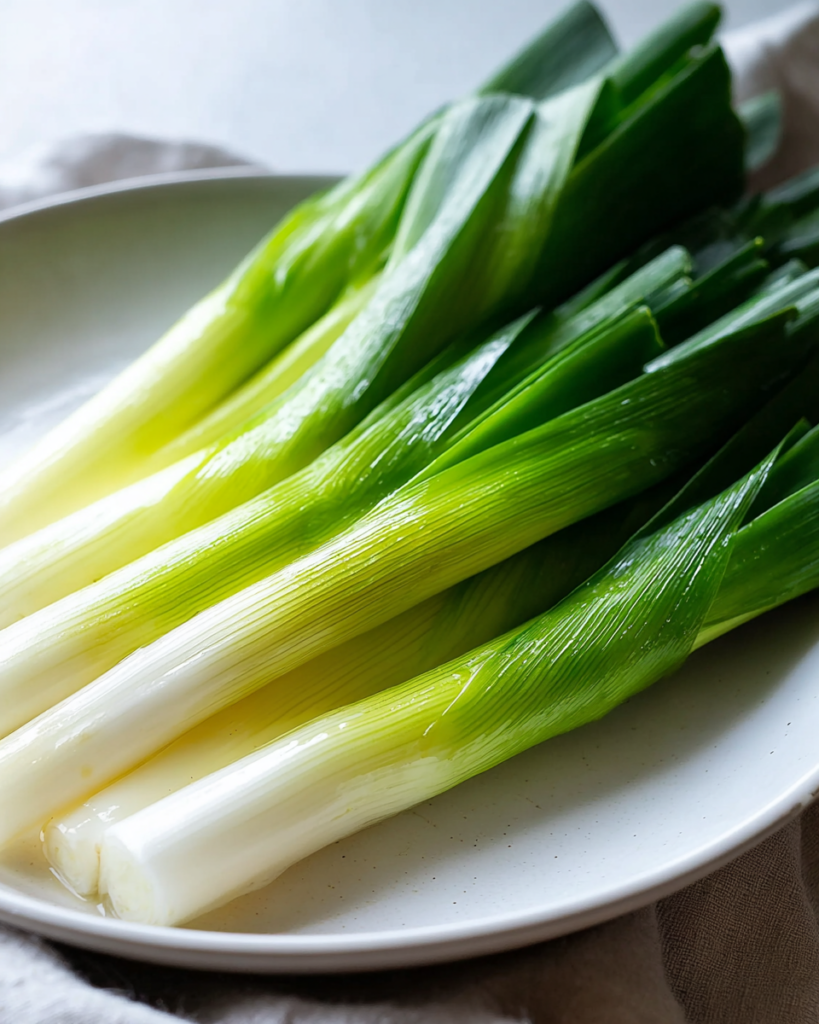
This is the kind of dish that works when you want something a little more refined without adding stress to your kitchen. The leeks do most of the work for you once they are gently cooked and dressed.
What makes it so appealing is the contrast. You get silky, mellow leeks paired with a bright vinaigrette that brings just enough acidity and mustard bite to wake everything up.
It is also a smart dish for planning ahead. You can prepare it hours before serving, let the flavor deepen in the fridge, and bring it out when you are ready for a simple first course or a polished side.
Leek Vinaigrette Ingredients
- Large leeks bring the whole character of the dish, turning soft and delicate after poaching while still holding their shape when kept mostly intact.
- Red wine vinegar gives the dressing its clean, tangy edge and keeps the finished leeks from tasting flat.
- Dijon mustard adds classic French flavor and helps the vinaigrette emulsify so it coats the leeks evenly.
- Extra-virgin olive oil rounds out the sharpness and gives the dressing a smooth, glossy finish.
- Kosher salt seasons both the cooking water and the vinaigrette, helping the mild leeks taste fuller and more balanced.
- Freshly ground black pepper adds a gentle heat that fits beautifully with the mustard and vinegar.
Cooking Steps
STEP 1: Fill a wide pot with salted water and bring it to a boil while you prep the leeks. A broad pot makes it easier to lower them in gently and cook them evenly without crowding.
STEP 2: Clean the leeks very thoroughly by cutting a slit through the leafy section while keeping the base intact. Open the layers under running water and wash out every bit of grit, then trim away the darkest tops and neaten the root ends.
STEP 3: Slip the cleaned leeks into the boiling water, then reduce the heat to a gentle simmer. Cook until the thickest part is knife-tender, usually around 8 to 10 minutes depending on their size.
STEP 4: Transfer the leeks straight into ice water to stop the cooking. This keeps them from going too soft and helps preserve their delicate shape and color.
STEP 5: Remove the chilled leeks and let them drain really well. Setting them on an angled tray or pan helps excess water run off, which matters because too much moisture will dilute the vinaigrette.
STEP 6: Whisk together the olive oil, red wine vinegar, Dijon, salt, and black pepper until the dressing looks smooth and lightly thickened. You want it fully blended so every spoonful tastes balanced.
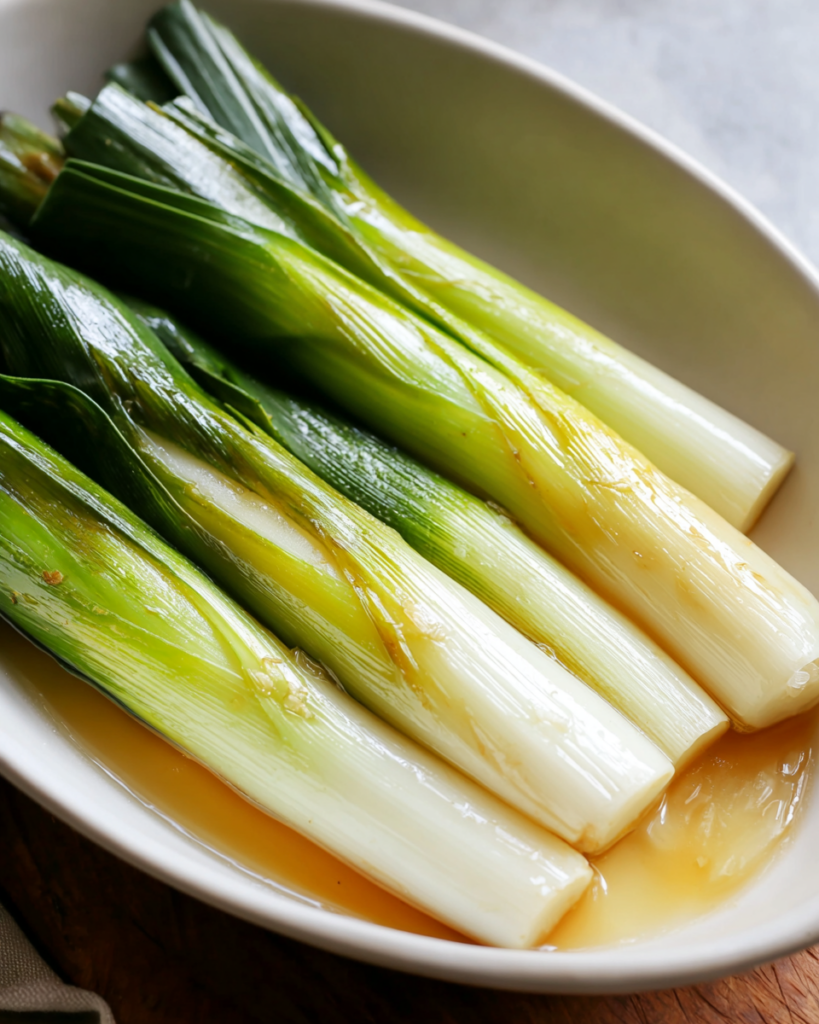
STEP 7: Arrange the leeks in a shallow dish or platter, spoon over some of the dressing, and gently turn them so they are coated on all sides. Cover and let them marinate for at least 2 hours so the flavor can settle into the vegetables.
STEP 8: Bring the dish back to room temperature before serving. That final step makes a big difference, because the olive oil loosens, the mustard aroma opens up, and the leeks taste much more expressive.
Can I make this ahead of time?
Yes, and it is actually better that way. Leek vinaigrette benefits from resting, because the poached leeks slowly absorb the dressing and become more flavorful. Making it earlier in the day or even the day before is a great choice.
Pro Tips for Leek Vinaigrette
- Drain the poached leeks extremely well before dressing them, or the vinaigrette will slide off and taste watered down.
- Keep the leek shafts as intact as possible while trimming and washing so they look elegant on the platter and do not fall apart after poaching.
- Serve at room temperature rather than straight from the fridge for the best texture and the fullest mustard-vinegar flavor.
How do I know when the leeks are done?
The easiest test is a small knife. It should slide into the thickest part with very little resistance, but the leeks should still look whole and not mushy. Overcooked leeks can become stringy and harder to plate neatly.
Perfect Pairings
Leek vinaigrette is lovely with a simple roast chicken, especially when the rest of the meal is straightforward and you want one cool, bright component on the table.
It also pairs beautifully with crusty bread, soft-boiled or jammy eggs, and a few greens for a French-style lunch that feels special without being heavy.
For a slightly dressier spread, serve it alongside smoked fish, poached salmon, or a chilled seafood platter. The mustardy dressing plays especially well with delicate proteins.
Can I serve it cold?
You can, but room temperature is where this dish really shines. Cold leeks will still taste good, yet the dressing becomes less aromatic and the olive oil can feel muted. Letting the platter sit out briefly makes the texture softer and the flavor more rounded.
Keeping Leftovers Fresh
Store leftover leek vinaigrette covered in the refrigerator for up to 3 days. That timing fits the dish well, since the leeks continue to absorb flavor without losing their overall structure too quickly.
This is not a dish I would freeze. The texture of cooked leeks becomes too soft after thawing, and the vinaigrette loses its clean, fresh quality.
For serving again, skip reheating in the microwave. Just take the leeks out of the fridge and let them come closer to room temperature. You can spoon over a little extra vinaigrette before serving if the dish looks like it has absorbed most of the dressing.
Why use an ice bath after poaching?
The ice bath stops the cooking right away, which helps the leeks stay tender instead of slipping into softness. It also helps preserve a fresher color and makes the vegetables easier to handle, drain, and arrange before marinating.
Leek Vinaigrette
Ingredients
For the leeks:
- 6 large leeks using only the white and pale green sections, washed very well
For the vinaigrette:
- 1 tablespoon red wine vinegar
- 1 teaspoon Dijon mustard
- 1/4 cup extra-virgin olive oil
- 1/4 teaspoon kosher salt
- 1/4 teaspoon freshly ground black pepper
Instructions
- Bring a large, broad pot, approximately 12 inches wide, half-filled with salted water to a boil. Use 2 teaspoons of salt for every 2 quarts of water.
- As the water heats, prepare the leeks. Rinse away any visible soil, then, with a sharp knife, cut a slit beginning just below the point where the stalk opens into leaves and continue the cut through to the leaf tips, keeping the main shaft intact.
- Separate the leaves under running water and wash out any trapped grit or sand. Trim away the dark green tops, leaving 1 to 2 inches attached to the shaft, and cut the roots close so the leeks remain whole during cooking.
- Lower the cleaned leeks carefully into the boiling water. Return the water to a simmer, then reduce the heat so it stays at a gentle simmer.
- Cook for 8 to 10 minutes, or until the thickest part can be pierced easily with a knife. Leeks about 1 inch thick will usually shift from bright green to a slightly olive tone at around the 8-minute mark; thicker leeks may require a little more time.
- Lift the cooked leeks from the pot with tongs and transfer them immediately to an ice-water bath to halt the cooking. This helps preserve both their texture and color.
- Remove the leeks from the cold water and let them drain well. Arrange them on a rimmed roasting pan set at an angle so excess moisture can run off, and leave them for about 10 minutes.
- To prepare the vinaigrette, combine the olive oil, red wine vinegar, Dijon mustard, kosher salt, and black pepper in a bowl or jar. Whisk until the mixture is fully blended and emulsified.
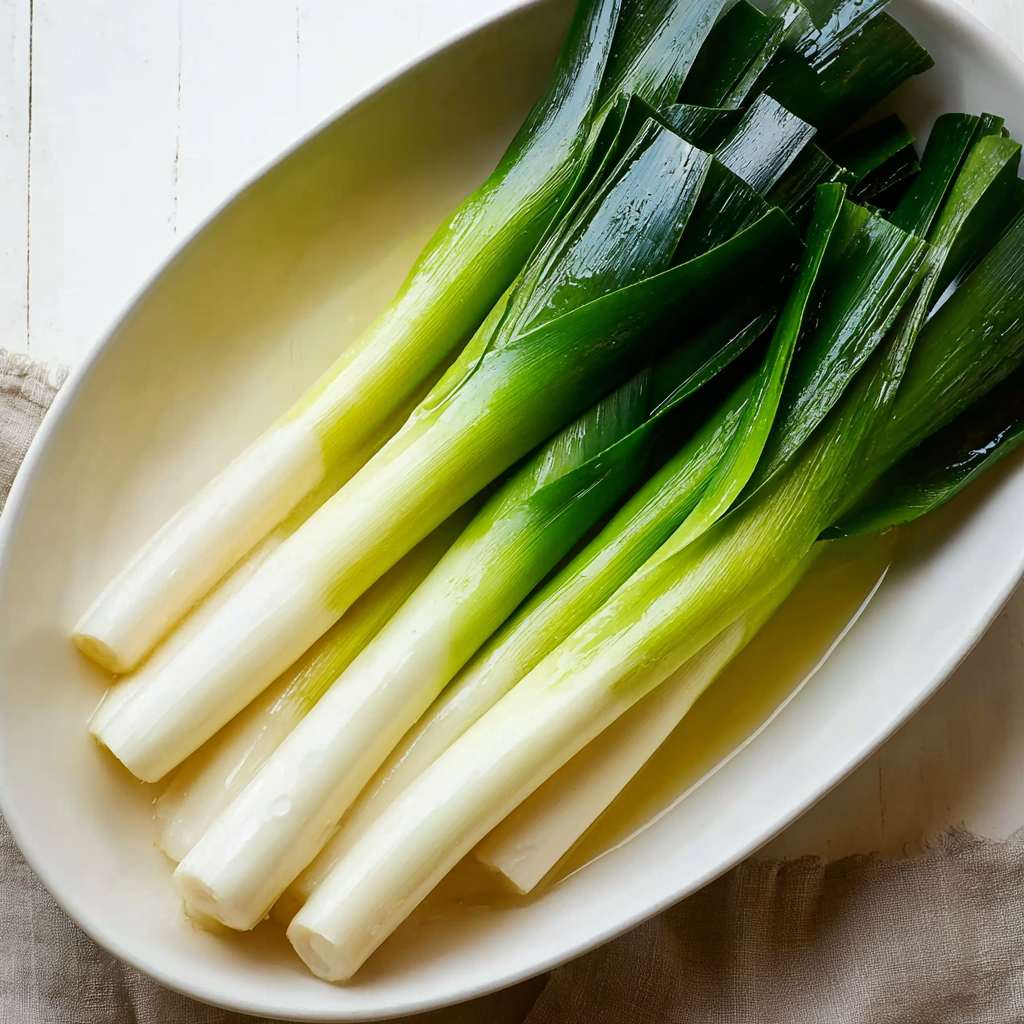
- Place the drained leeks in a long rimmed serving platter or a Pyrex casserole dish. Spoon some of the vinaigrette over them and gently turn the leeks so both sides are coated.
- Cover the dish with plastic wrap and let the leeks marinate for at least 2 hours, or for as long as 3 days for a deeper flavor. Refrigerate if they will sit longer than 2 hours.
- Bring the leeks to room temperature before serving.


