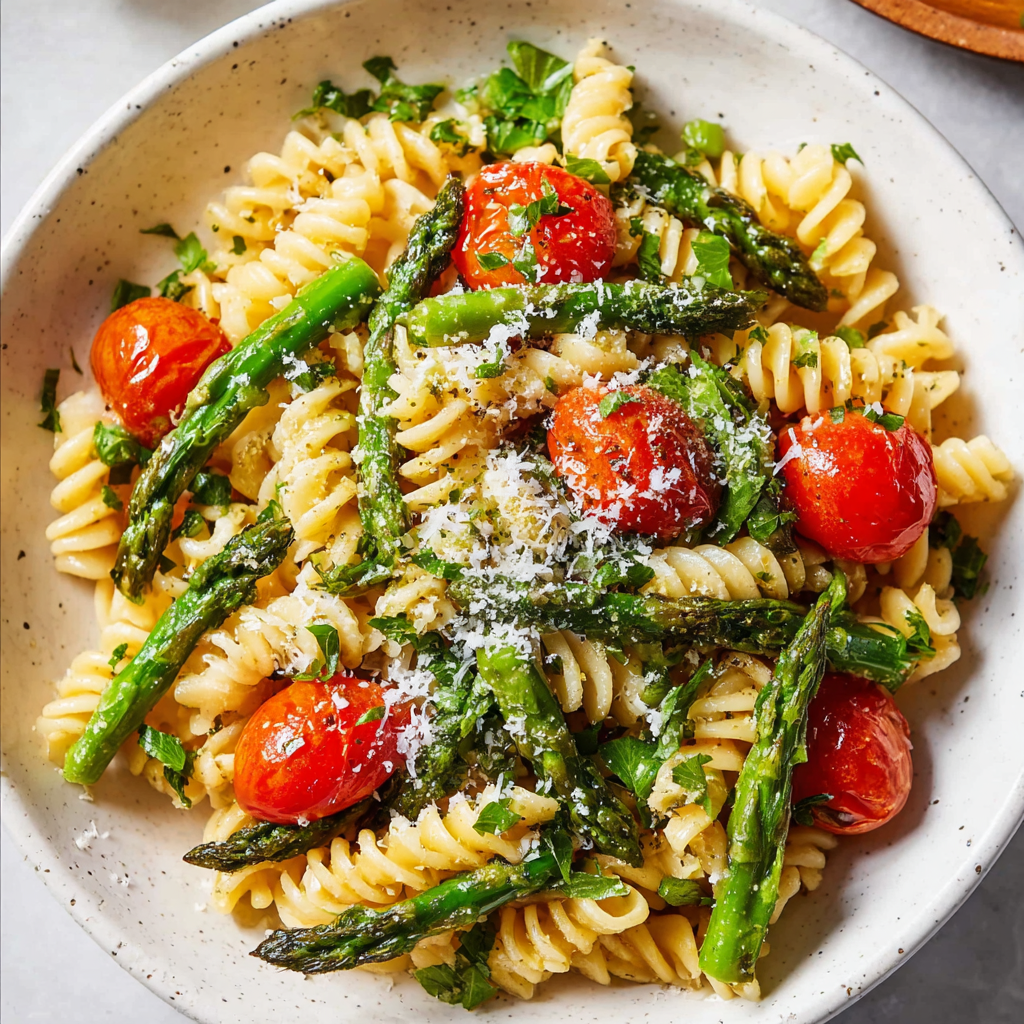
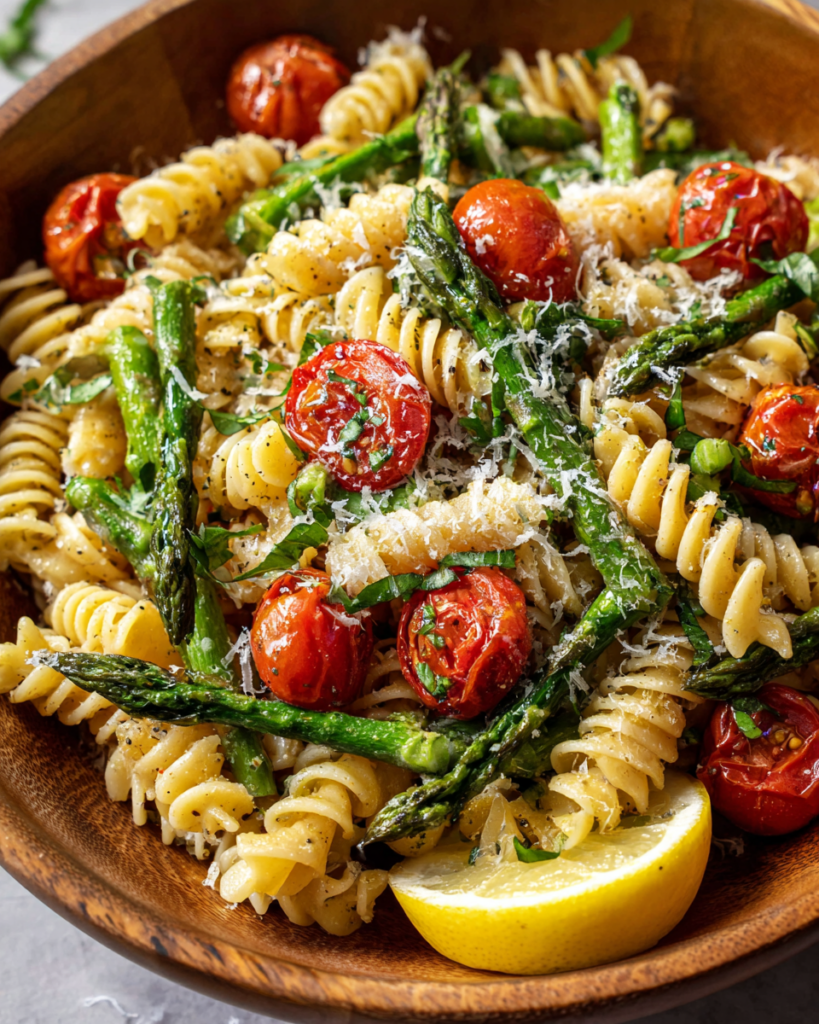
Lemon Asparagus Pasta Salad is a quick, bright, and flexible pasta salad with tender short pasta, crisp-tender asparagus, juicy cherry tomatoes, fresh herbs, salty Pecorino, and a lemon-Dijon dressing finished with balsamic reduction.
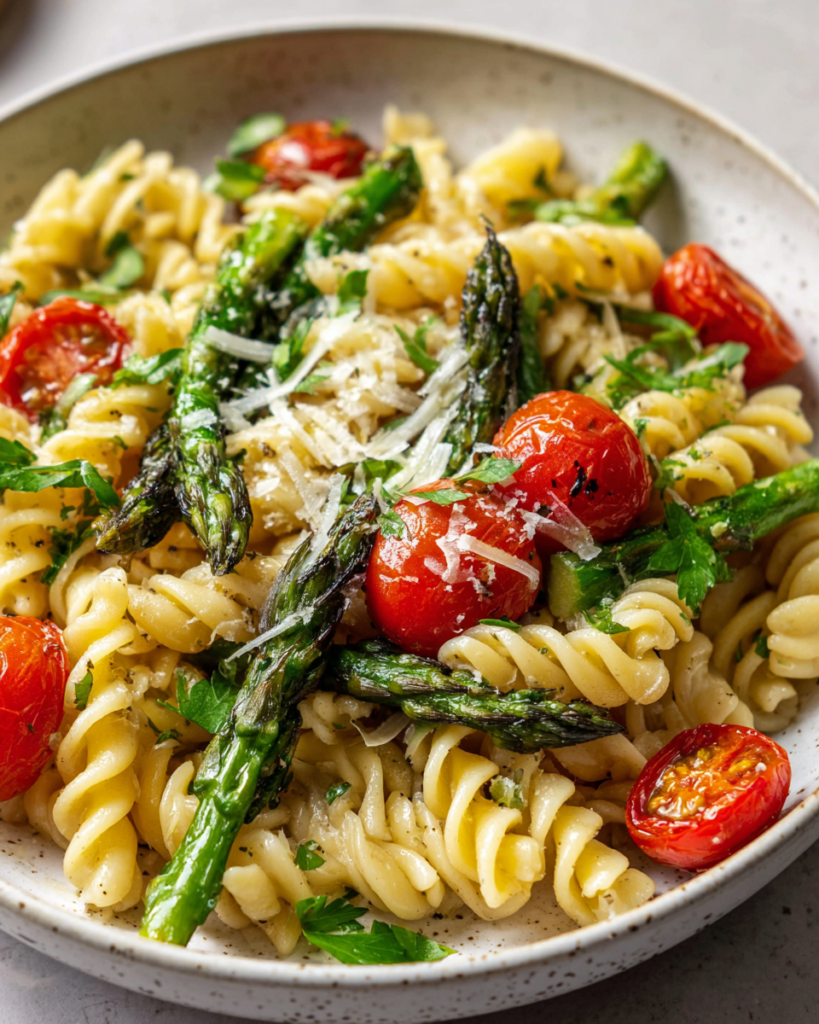
This is the kind of pasta salad that works beautifully for a light lunch, a simple dinner side, or a make-ahead dish you can pull from the fridge when you need something fresh and satisfying. It feels sunny and colorful without requiring complicated prep.
The flavor balance is what makes it so reliable. Lemon and white wine vinegar keep the dressing lively, Dijon helps it cling to the pasta, honey softens the sharpness, and Pecorino adds a savory finish that makes every bite feel complete.
You can serve it warm right after tossing, when the asparagus is still freshly sautéed, or chill it for a cooler, more refreshing pasta salad. Either way, it is simple, practical, and easy to fit into real meals.
Lemon Asparagus Pasta Salad Ingredients
Short pasta gives the salad structure and catches the lemon-Dijon dressing in every small curve or hollow.
Asparagus brings a fresh, spring-like flavor and a crisp-tender bite that keeps the pasta salad from feeling heavy.
Cherry tomatoes add juicy sweetness, color, and a soft pop of acidity that pairs well with the lemon dressing.
Fresh dill gives the salad a lightly grassy, fragrant flavor that makes the dish taste especially fresh.
Fresh parsley adds clean herbal brightness and helps balance the richness of the cheese and olive oil.
Pecorino cheese adds a salty, savory edge that makes the pasta salad more flavorful without needing a creamy dressing.
Extra-virgin olive oil is used for sautéing the asparagus and creating the base of the dressing.
Fresh lemon juice gives the dressing its bright citrus note and keeps the salad tasting lively.
White wine vinegar adds extra tang and helps sharpen the dressing so it coats the pasta without tasting flat.
Dijon mustard helps the dressing emulsify and adds a subtle, savory bite.
Honey softens the acidity with a small touch of sweetness.
Garlic powder adds gentle garlic flavor without overpowering the fresh herbs.
Salt and black pepper bring the whole salad into balance.
Balsamic reduction finishes the salad with a sweet-tangy drizzle that ties together the tomatoes, asparagus, and cheese.
Step-by-Step Lemon Asparagus Pasta Salad
STEP 1: Bring a large pot of salted water to a boil, then cook the short pasta until tender but still firm enough to hold its shape. Drain it well so excess water does not dilute the dressing later.
STEP 2: While the pasta cooks, trim the tough ends from the asparagus and cut the spears into small pieces. Halve the cherry tomatoes, chop the parsley and dill, and grate the Pecorino so everything is ready before assembly.
STEP 3: Warm a small amount of olive oil in a skillet over medium heat. Add the asparagus and sauté just until it turns tender with a slight crispness left in the center, usually about 5 to 7 minutes depending on thickness.
STEP 4: Make the dressing in a small bowl or jar by combining olive oil, lemon juice, white wine vinegar, Dijon mustard, honey, garlic powder, salt, and black pepper. Whisk or shake until the dressing looks lightly blended and smooth.
STEP 5: Add the drained pasta, warm asparagus, cherry tomatoes, fresh herbs, and Pecorino to a large mixing bowl. Toss gently so the vegetables and herbs are evenly scattered through the pasta.
STEP 6: Pour the lemon-Dijon dressing over the salad and toss again until the pasta is coated. Taste and adjust with a little more salt or pepper if the flavors need more lift.
STEP 7: Drizzle balsamic reduction over the pasta salad, then toss lightly once more or leave some of the glaze visible on top. Serve it warm right away, or chill it for about 30 minutes for a cooler pasta salad.
Serving Ideas for Lemon Asparagus Pasta Salad
This salad pairs especially well with simple proteins because the lemon, herbs, and balsamic finish already bring plenty of flavor. Serve it with grilled chicken, baked salmon, or shrimp for a fresh Mediterranean-inspired meal that still feels filling.
For a casual lunch spread, pair it with crusty bread, a small green salad, or a bowl of tomato soup. The pasta salad can also work as part of a picnic-style table with roasted vegetables, olives, and a light cheese board.
If you are serving it as a side dish for dinner, keep the main simple. Garlic chicken, lemony fish, or grilled vegetables all fit naturally without competing with the fresh dill, parsley, and Pecorino.
Can I make this pasta salad ahead of time?
Yes, this pasta salad can be made ahead and chilled before serving. For the freshest texture, toss it once before refrigerating, then taste again before serving. The pasta may absorb some dressing, so a small splash of olive oil or lemon juice can refresh it.
Is this better warm or chilled?
It works both ways. Warm serving gives you softer tomatoes, freshly cooked asparagus, and a more savory pasta dish feel. Chilled serving makes it brighter and more refreshing, especially for lunches, potlucks, or warm-weather meals.
Can I use a different pasta shape?
Yes, but choose a small shape that holds dressing well. Ditalini, orecchiette, small shells, elbows, or mini farfalle all work nicely. Avoid very long pasta here because short shapes mix more evenly with the asparagus, tomatoes, herbs, and cheese.
How do I keep the asparagus crisp-tender?
Cook it only until it turns bright and tender enough to bite, then remove it from the heat. Thin asparagus may need less time, while thicker stalks may need closer to 7 minutes. Avoid overcooking, or it can become soft in the salad.
Helpful Tips
- Salt the pasta water well so the pasta itself has flavor before it meets the dressing.
- Let the pasta drain thoroughly, because trapped water can weaken the lemon-Dijon dressing and make the salad taste less vibrant.
- Add the balsamic reduction at the end so its sweet-tangy flavor stays noticeable instead of disappearing into the dressing.
Keeping Leftovers Fresh
Store leftover lemon asparagus pasta salad in an airtight container in the refrigerator for up to 3 days. Because the salad contains fresh herbs, tomatoes, cheese, and a vinaigrette-style dressing, it tastes best within the first day or two.
Freezing is not recommended for this pasta salad. The tomatoes can turn watery, the herbs lose their fresh flavor, and the pasta may soften too much after thawing. This is a better fridge-friendly dish than a freezer meal.
To serve leftovers chilled, give the salad a gentle toss and taste before serving. Add a little olive oil, lemon juice, or a pinch of salt if the flavors have mellowed in the refrigerator. To serve it warm, use gentle heat in a skillet for a few minutes, just until the pasta is lightly warmed through. Avoid overheating so the tomatoes and herbs stay fresh-tasting.
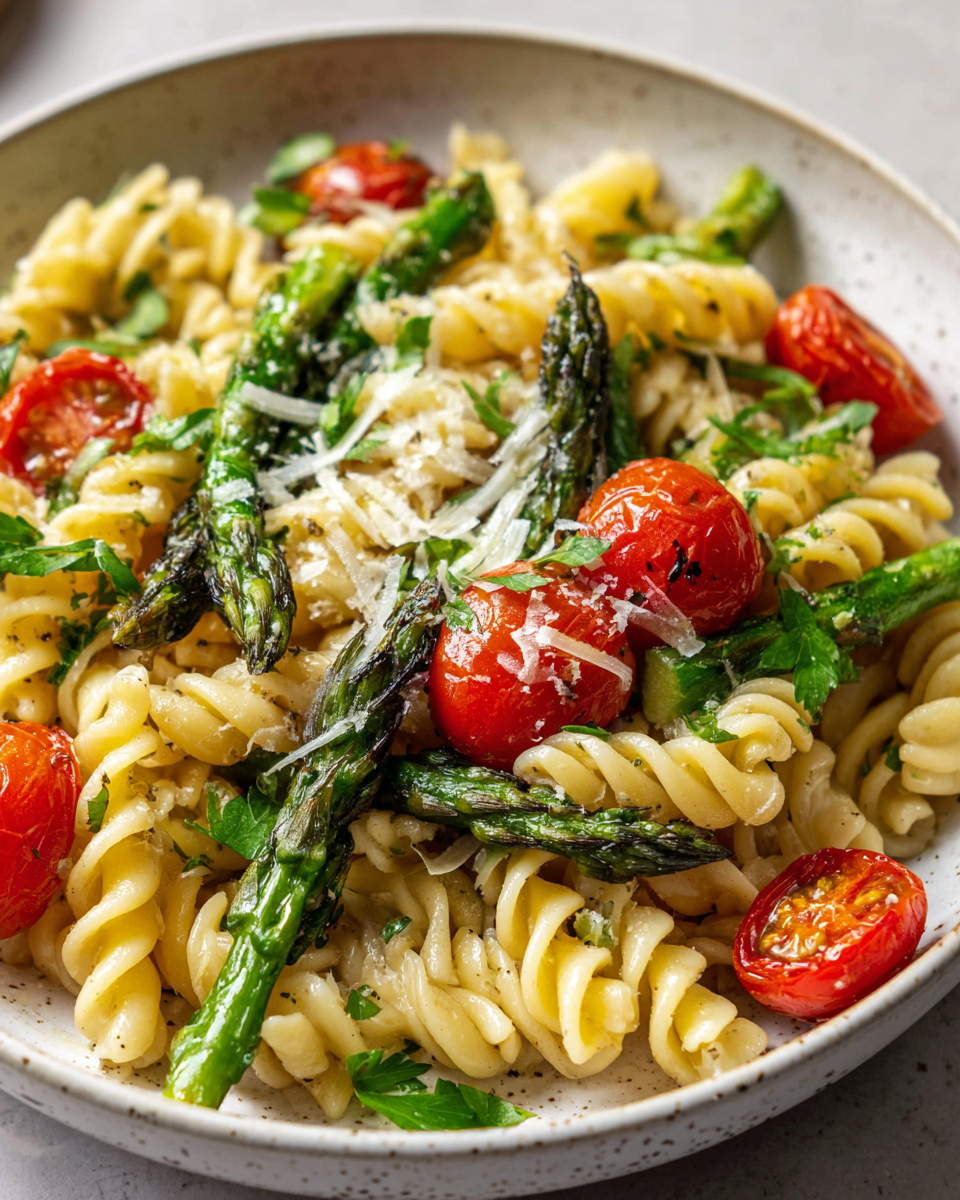
Lemon Asparagus Pasta Salad
Ingredients
For the salad:
- 12 oz cherry tomatoes sliced in half
- 1 bunch asparagus ends removed and stalks cut into 1-inch lengths
- 1/4 cup finely chopped fresh dill
- 2 cups small-shaped pasta such as ditalini or orecchiette
- Balsamic reduction for finishing
- 1/4 cup fresh parsley chopped
- 1/2 cup Pecorino cheese freshly grated
For the asparagus:
- 1.5 teaspoons extra-virgin olive oil
For the dressing:
- Juice of 1/2 fresh lemon
- 1/4 teaspoon honey
- Salt to taste
- 1 tablespoon white wine vinegar
- 1/2 teaspoon Dijon mustard
- Black pepper to taste
- 1/4 cup olive oil
- 1/2 teaspoon garlic powder
Instructions
- Bring a large pot of well-salted water to a boil. Add the short pasta and cook according to the package directions until it reaches the preferred level of tenderness.
- Drain the pasta thoroughly once cooked, then set it aside to serve as the foundation of the salad.
- While the pasta cooks, prepare the remaining components. Remove the firm, woody ends from the asparagus, then cut the spears into 1-inch pieces.
- Slice the cherry tomatoes in half, chop the parsley and dill, and grate the Pecorino cheese so all salad ingredients are ready for assembly.
- Warm 1.5 teaspoons of olive oil in a large skillet over medium heat. Add the asparagus pieces and sauté for 5 to 7 minutes, adjusting slightly based on the thickness of the stalks.
- Cook the asparagus until it becomes tender while still holding a light crispness. Remove the pan from the heat once the asparagus is done.
- In a small bowl or lidded jar, combine the olive oil, garlic powder, lemon juice, salt, Dijon mustard, honey, white wine vinegar, and black pepper.
- Whisk the dressing briskly, or seal the jar and shake it well, until the mixture is fully blended and lightly emulsified.
- Place the cooked pasta, sautéed asparagus, halved cherry tomatoes, chopped herbs, and grated Pecorino cheese in a large salad bowl.
- Pour the prepared dressing over the salad ingredients, then toss gently until the pasta, vegetables, herbs, cheese, and dressing are evenly combined.
- Taste the salad and adjust with additional salt and black pepper as needed.
- Finish with a drizzle of balsamic reduction, then toss once more to lightly distribute the glaze throughout the salad.
- Serve immediately while warm, or refrigerate for at least 30 minutes before serving chilled.