Lemon Coconut Naked Cake is a bright, elegant dessert with moist coconut-rich layers, fresh citrus flavor, and a light honey buttercream that feels special without being fussy. It is a lovely make-ahead cake for spring gatherings, birthdays, brunch tables, or any time you want a soft, fragrant layer cake with a polished finish.
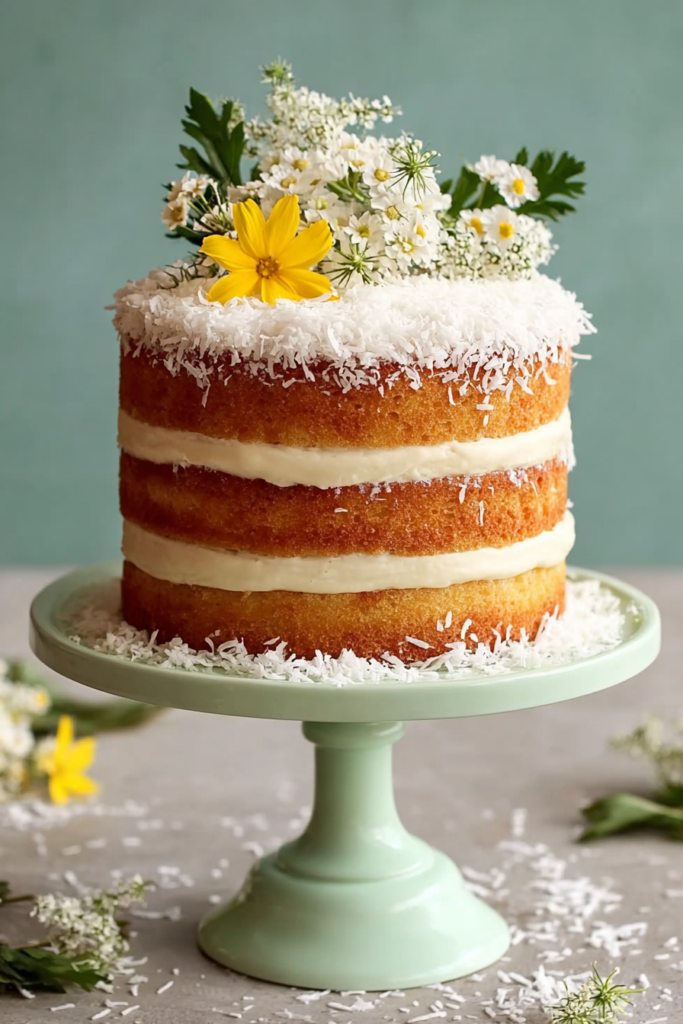
This is the kind of cake that looks impressive on a stand but still feels very doable in a home kitchen. The naked finish keeps the decorating simple, while the syrup and buttercream bring just enough detail to make every slice feel complete.
You get a really nice balance here. The coconut keeps the crumb soft and tender, the lemon zest adds freshness without overwhelming the cake, and the honey in both the syrup and frosting rounds everything out with a gentle sweetness.
It also works beautifully for real-life baking. You can make the layers ahead, assemble it without complicated piping, and serve a dessert that feels refined, light, and full of flavor without needing an overly elaborate method.
What You Need to Make This Lemon Coconut Naked Cake
- All-purpose flour gives the cake its structure while still keeping the layers soft enough for a tender bite.
- Fresh lemon zest is the main source of citrus aroma, adding brightness that lifts the richer coconut and honey notes.
- Sweetened shredded coconut brings texture, sweetness, and that signature coconut flavor woven through the layers and over the top.
- Granulated sugar sweetens the batter and helps the cake bake up with a delicate, even crumb.
- Coconut oil adds moisture and supports the coconut flavor without making the layers heavy.
- Full-fat coconut milk gives the batter richness and helps create that soft, plush texture you want in a layer cake.
- Greek yogurt adds a little tang and extra tenderness, which is especially helpful in a cake with multiple layers.
- Eggs bind the batter and help the layers bake up sturdy enough for stacking.
- Vanilla extract softens the sharper citrus notes and ties the cake, syrup, and frosting together.
- Baking soda and baking powder work together for lift, giving the layers a nice rise and keeping the crumb from feeling dense.
- Salt sharpens the sweet flavors and keeps the finished cake balanced.
- Fresh lemon juice is used in the syrup for a clean, lively citrus finish.
- Honey sweetens the syrup and frosting with a mellow floral note that pairs especially well with lemon and coconut.
- Salted butter forms the base of the buttercream and gives it that rich, smooth body needed for filling and finishing.
- Cream cheese adds a slight tang to the frosting and helps keep the sweetness from feeling flat.
- Icing sugar makes the buttercream silky and spreadable while giving it structure.
Step-by-Step Lemon Coconut Naked Cake
STEP 1: Start by heating your oven and preparing your pans well. Because this is a layer cake, good pan prep matters. Grease the pans, line the bottoms, and lightly coat again so the layers release neatly and keep their shape for stacking.
STEP 2: Mix the wet ingredients until smooth and fully blended before adding the dry ingredients. This helps the batter stay even and prevents pockets of flour later on. Once the flour, leavening, and salt go in, mix only until combined so the cake stays tender instead of turning tough.
STEP 3: Fold in the lemon zest and coconut at the end. That keeps the zest fragrant and helps the coconut stay evenly distributed through the batter. Divide the batter as evenly as you can so the layers bake at the same rate and stack cleanly later.
STEP 4: Bake until the tops are set and the centers no longer look loose. Let the layers rest briefly in the pans, then turn them out onto a rack to cool completely. When they are cool enough to handle, poke a few small holes across the tops so the lemon-honey syrup can soak in gently.
STEP 5: Simmer the lemon juice and honey just long enough to slightly thicken the mixture. You do not want a heavy syrup here. It should be light and brushable, adding moisture and citrus flavor without making the cake soggy.
STEP 6: Beat the butter and cream cheese until very light and fluffy before adding the icing sugar and honey. This step makes a big difference in the final texture. The frosting should feel airy, smooth, and easy to spread rather than dense or overly sweet.
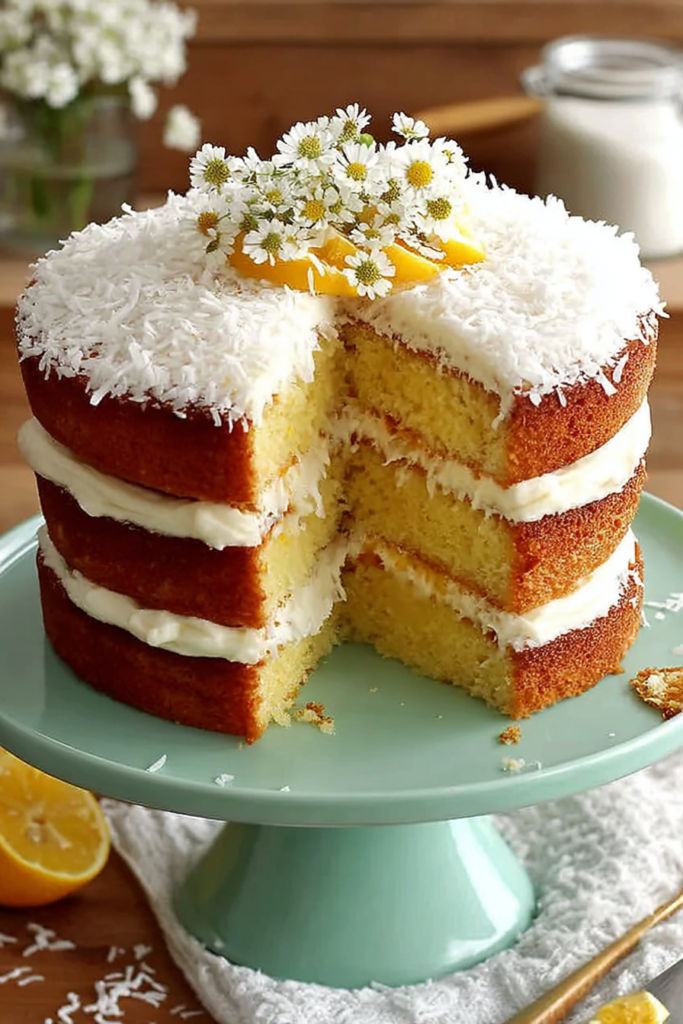
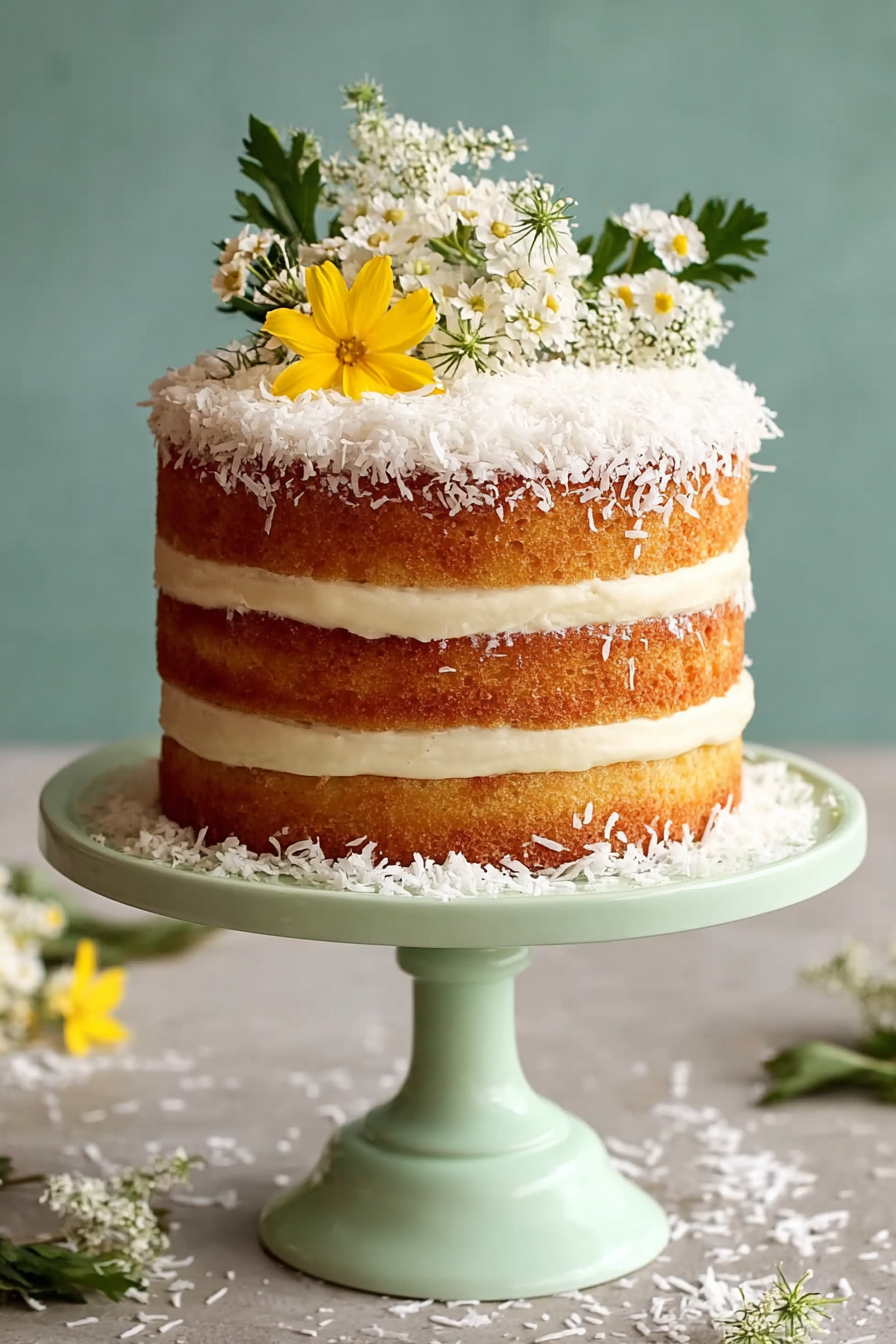
STEP 7: Assemble the cake by layering syrup, buttercream, and a small scattering of coconut between each layer. Keep the filling moderate so the cake stays stable. Because it is a naked cake, you only need a light finish around the outside, letting the layers show through for that simple, elegant look.
Helpful Tips
- Use room-temperature eggs, yogurt, and butter so the batter and frosting blend smoothly without curdling or separating.
- Cool the cake layers fully before adding syrup and frosting, or the buttercream may soften too much and slide.
- Do not overfill the layers. A restrained amount of frosting suits the naked style and makes slicing much cleaner.
Can I make this cake a day ahead?
Yes, and it actually works very well that way. You can bake the layers ahead, cool them completely, and assemble the cake later the same day or the next day. A short rest in the fridge also helps the layers settle for neater slices.
What makes a naked cake different?
A naked cake has very little frosting on the outside, so you can still see the edges of the cake layers underneath. It gives you a more relaxed, modern look and saves time on decorating while still feeling polished and celebration-worthy.
Can I use unsweetened coconut instead?
You can, but the overall flavor will be a little less sweet and slightly more subtle. Since the original balance here leans on sweetened coconut, unsweetened coconut may give you a less dessert-like finish unless the rest of the cake is adjusted.
How do I keep the layers from drying out?
The syrup is the key. Brushing each layer with the warm lemon-honey mixture adds moisture and keeps the crumb soft after assembly. Be generous enough to flavor the cake, but not so heavy that the layers become wet or unstable.
Perfect Pairings
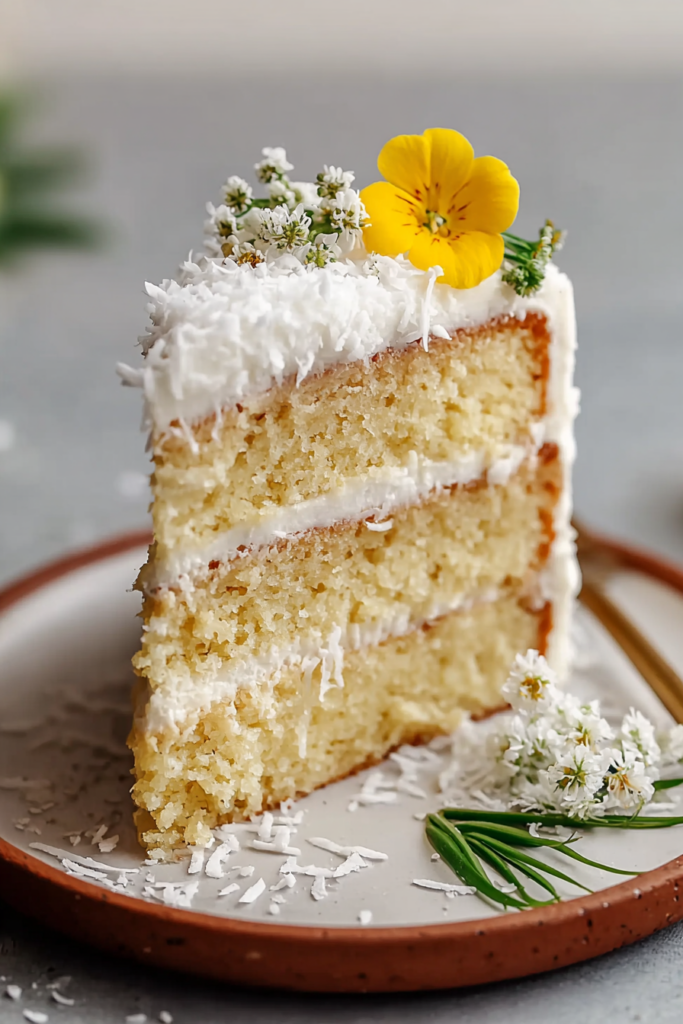
This cake is especially nice with fresh berries on the side. Their natural tartness fits beautifully with the honey and coconut, and they make the finished dessert feel even more fresh and springlike.
It also pairs well with hot tea or coffee, especially when you want the cake to feel a little more refined and less rich than a heavy frosted layer cake.
For a simple dessert table, serve it alongside lightly sweetened whipped cream and a few curls of lemon zest. That keeps the presentation clean and lets the cake remain the main focus.
Storage & Reheating
Store the assembled cake in the refrigerator because of the buttercream and cream cheese. Cover it well so the layers stay soft and do not pick up fridge odors. It is best enjoyed within 1 day for the freshest texture, though it should still taste good into the next day.
If you want to get ahead, the cake layers can be baked first, cooled, and wrapped before assembly. Once chilled, let slices sit at room temperature briefly before serving so the frosting softens and the lemon, honey, and coconut flavors come through more clearly.
For leftovers, keep slices covered and cold rather than reheating them. This cake is meant to be served cool to lightly room temperature, not warmed, so the frosting stays smooth and the delicate naked finish holds its shape.
Lemon Coconut Naked Cake
Ingredients
For the Cake:
- 3 cups all-purpose flour
- 1 tablespoon finely grated fresh lemon zest
- 1 cup sweetened shredded coconut
- 1 1/2 cups granulated sugar
- 3/4 cup coconut oil cooled
- 1 cup full-fat coconut milk
- 1/2 cup plain Greek yogurt
- 3 large eggs brought to room temperature
- 1 tablespoon vanilla extract
- 1 1/2 teaspoons baking soda
- 1 1/2 teaspoons baking powder
- 1 teaspoon salt
For the Syrup:
- 1/4 cup freshly squeezed lemon juice
- 1/3 cup honey
For the Buttercream Frosting:
- 1 1/2 cups salted butter softened
- 2 ounces cream cheese softened
- 1 1/2 cups icing sugar
- 1/3 cup honey
- 1 teaspoon vanilla extract
For the Topping:
- Extra sweetened shredded coconut
Instructions
- Preheat the oven to 350°F. Prepare either three 6-inch round cake pans or two 8-inch round cake pans by greasing them thoroughly. Line the bases with parchment paper, then lightly butter or coat with cooking spray to help the cakes release cleanly after baking.
- In the bowl of a stand mixer, or in a large mixing bowl using a hand mixer, combine the coconut oil, Greek yogurt, eggs, granulated sugar, vanilla extract, and coconut milk. Beat until the mixture is smooth and fully blended.
- Add the flour, baking soda, baking powder, and salt to the wet mixture. Mix on low speed just until the batter comes together without overworking it.
- Gently fold in the lemon zest and shredded coconut until evenly distributed throughout the batter.
- Divide the batter evenly among the prepared pans. Transfer to the oven and bake for 30 to 35 minutes, or until the tops are set and the centers no longer appear unsteady.
- Remove the cakes from the oven and allow them to rest in the pans for 5 minutes. Loosen the edges with a knife, then carefully turn the layers out onto a wire rack to cool. Using a skewer or similar tool, make 3 to 5 small holes across the top of each cake layer.
- To prepare the syrup, place the lemon juice and honey in a small saucepan over high heat. Bring the mixture to a boil and cook for 1 to 2 minutes, or until it thickens slightly. Remove from the heat and let it cool until just warm, about 10 minutes.
- For the frosting, beat the softened butter and cream cheese together in the bowl of a stand mixer until very pale and fluffy, about 3 to 4 minutes.
- Add the icing sugar and honey gradually, then continue beating for about 2 more minutes until the frosting is smooth, airy, and well whipped. Mix in the vanilla extract until fully incorporated. If a firmer consistency is needed, add a little more icing sugar.
- Place one cake layer onto a serving plate or cake stand. Spoon a light amount of the honey-lemon syrup over the surface. Spread one-third of the buttercream over the top, then scatter over a small handful of shredded coconut.
- Repeat the layering process with the remaining cake layers, applying syrup, frosting, and coconut to each. Avoid overfilling between layers so the finished cake remains stable and easy to slice.
- Serve the cake immediately, or refrigerate it for up to 1 day before serving.