Lemon Garlic Scape Pesto is a quick, bright, beginner-friendly sauce with fresh lemon, Parmesan, and toasted pine nuts. It blends in minutes, keeps well in the fridge, and adds bold flavor to pasta, sandwiches, roasted vegetables, and more.
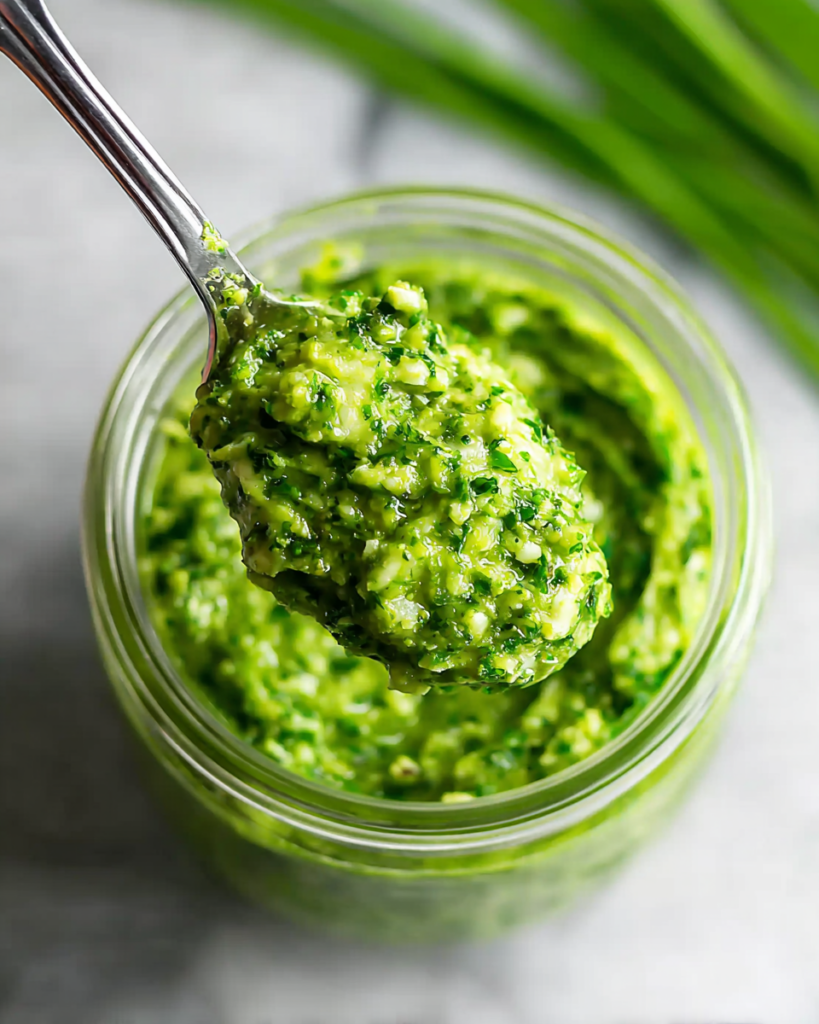
This is the kind of spread you make once, then find yourself reaching for all week. It has that punchy, savory depth you want from pesto, but the garlic scapes give it a slightly greener, fresher character than a basil-heavy version.
The lemon matters here, too. It lifts the richness of the cheese, rounds out the nuttiness of the pine nuts, and keeps the whole sauce tasting lively instead of heavy. The result is smooth, aromatic, and just sharp enough to wake up simple meals.
It also works beautifully for real life. You can stir it into hot pasta, swipe it onto sandwiches, spoon it over roasted vegetables, or keep a jar in the fridge for quick lunches and fast flavor. Since it comes together in about 10 minutes, it feels practical as well as special.
What You Need to Make This Lemon Garlic Scape Pesto
- Garlic scapes bring the signature flavor here, with a mellow garlic taste and a fresh, green bite that blends into a silky sauce.
- Fine sea salt sharpens the flavor and helps the scapes taste more vibrant without overpowering the other ingredients.
- Parmesan cheese adds salty richness and body. Freshly grated cheese melts into the pesto more smoothly than pre-shredded options.
- Black pepper gives the sauce a gentle warmth and keeps the finished flavor from tasting flat.
- Toasted pine nuts add buttery depth and a soft, creamy texture that makes the pesto feel full and balanced.
- Extra virgin olive oil pulls everything together into a cohesive sauce and gives the pesto its glossy finish.
- Fresh lemon juice brightens the whole mixture and keeps the flavors tasting clean, lively, and well defined.
How to Make This Lemon Garlic Scape Pesto
STEP 1: Start by trimming the garlic scapes well. Cut away the bulb ends and any tough or woody stem portions, then keep the tender curled sections. That small bit of prep makes a big difference in the final texture.
STEP 2: Add the trimmed scapes to your food processor along with the toasted pine nuts, grated cheese, lemon juice, salt, and a few grinds of black pepper. Try to distribute everything evenly in the bowl so it blends more smoothly.
STEP 3: Pulse the mixture a few times until the scapes are chopped down and the nuts are broken up. Stop and scrape the sides as needed so you do not end up with larger bits stuck around the edges.
STEP 4: With the processor running, drizzle in the olive oil slowly instead of pouring it all at once. This helps the pesto turn creamy, cohesive, and evenly emulsified rather than loose in some spots and chunky in others.
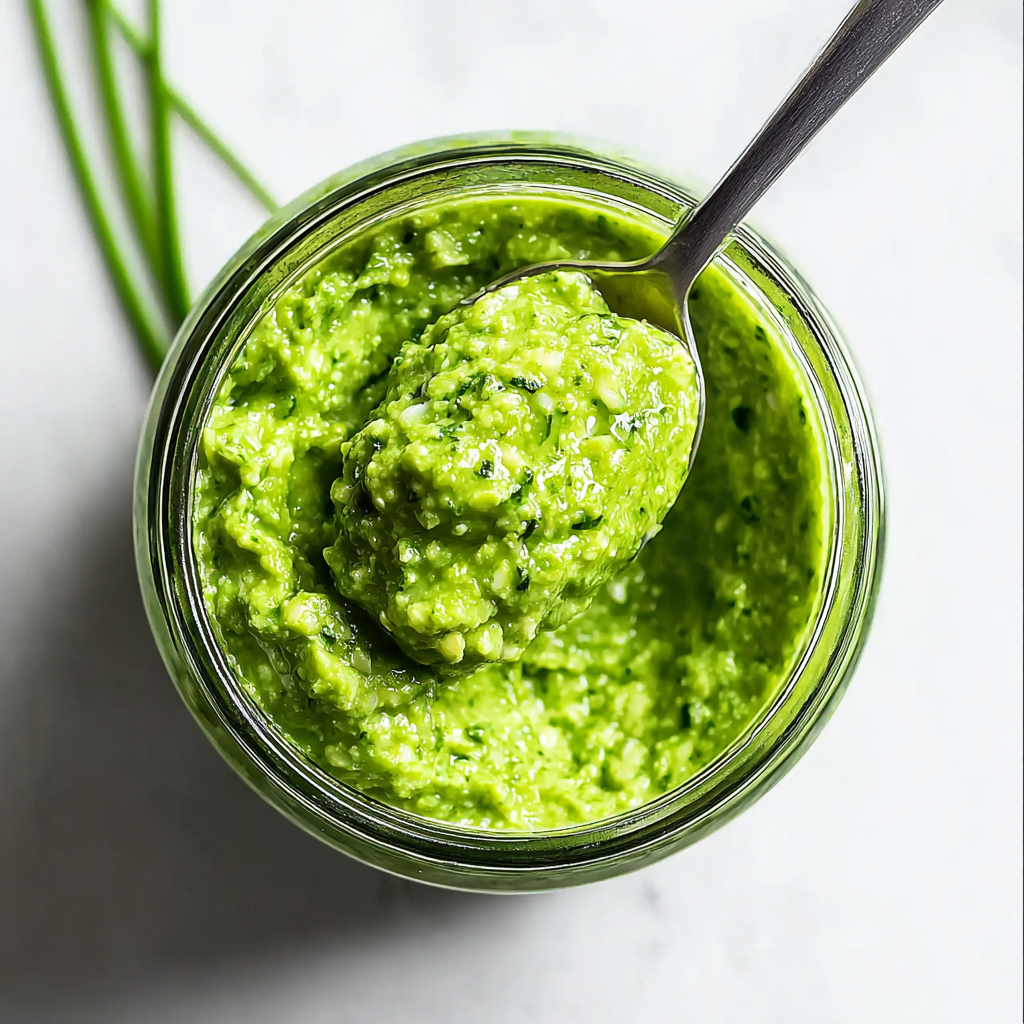
STEP 5: Continue blending until the mixture looks smooth and spreadable, usually about a minute. You want it thick enough to cling to pasta or bread, but loose enough to spoon easily from the jar.
STEP 6: Taste before storing. A little more lemon can make it brighter, while a pinch more salt can make the cheese and garlic flavors pop. Transfer it to a jar or covered container and refrigerate until you are ready to use it.
Helpful Tips
- Toast the pine nuts lightly, not deeply. You want warm nuttiness, not a dark roasted flavor that competes with the garlic scapes.
- Add the olive oil in a slow stream for the smoothest texture and the most balanced finish.
- Taste after blending, not before. Once the cheese, lemon, and oil fully combine, the flavor becomes much clearer.
What can I use garlic scape pesto on?
This sauce is wonderfully flexible. Toss it with hot pasta, spread it on sandwiches, spoon it over grilled chicken, fold it into warm potatoes, or use it as a finishing touch for roasted vegetables. Even a small amount can make a simple meal feel complete.
Can I use Asiago instead of Parmesan?
Yes, and it works very well here. Asiago gives the pesto a slightly sharper, more assertive finish, while Parmesan keeps it more classic and rounded. Both pair nicely with lemon and pine nuts, so the choice depends on how bold you want the cheese flavor to be.
Do garlic scapes taste as strong as raw garlic?
Not quite. Garlic scapes have a gentler, greener flavor than raw garlic cloves, so the pesto tastes punchy without becoming harsh. That is one reason this sauce is so good as a spread or finishing condiment where raw garlic might feel too intense.
Can I use another nut instead of pine nuts?
Yes. If pine nuts are not available, walnuts or almonds can work nicely. The flavor will shift a bit, but the pesto will still be rich and useful. Just toast the nuts lightly so they bring depth without taking over the fresh garlic scape flavor.
Perfect Pairings
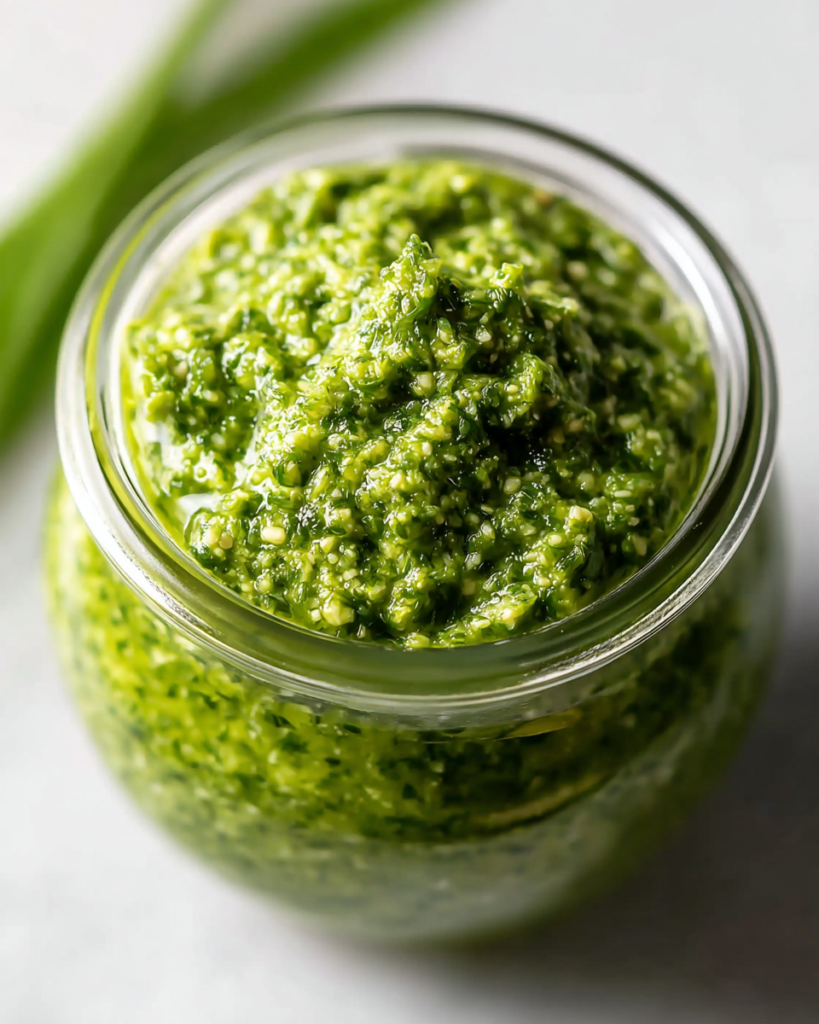
A bowl of warm pasta is one of the easiest and most satisfying ways to use this pesto. The sauce loosens beautifully with a splash of pasta water and clings well to long noodles, short pasta shapes, or even filled pasta.
Roasted vegetables are another natural match. Spoon it over potatoes, carrots, cauliflower, or zucchini while they are still warm so the pesto softens and coats the edges a little.
It is also excellent on sandwiches and toast. A thin layer adds instant flavor to grilled vegetables, turkey, chicken, or simple mozzarella and tomato combinations without needing much else.
Keeping Leftovers Fresh
Store the pesto in a tightly covered jar or container in the refrigerator and use it within 1 week for the freshest flavor. Pressing it into the container so there is less air around it can help it stay vibrant.
For longer storage, freeze it in a small jar or portion it into an ice cube tray. Once frozen, move the cubes to a sealed freezer bag so you can grab just what you need. Small portions are especially handy for pasta, soups, or quick lunches.
To use frozen pesto, thaw it in the refrigerator or stir a cube directly into warm food and let the heat loosen it. If the oil separates a little after chilling or thawing, just give it a good stir and it should come right back together.
This is one of those small-batch sauces that feels surprisingly rewarding. You get a bright, savory pesto with very little effort, and it brings a fresh seasonal character that stands out from standard jarred sauces. Between the mellow garlic scapes, lemony lift, toasted pine nuts, and salty cheese, every spoonful tastes layered without feeling complicated.
It is also the kind of condiment that earns its place in your kitchen quickly. Once you have a jar ready to go, quick meals become easier, leftovers become more interesting, and plain ingredients start tasting like something you planned on purpose.
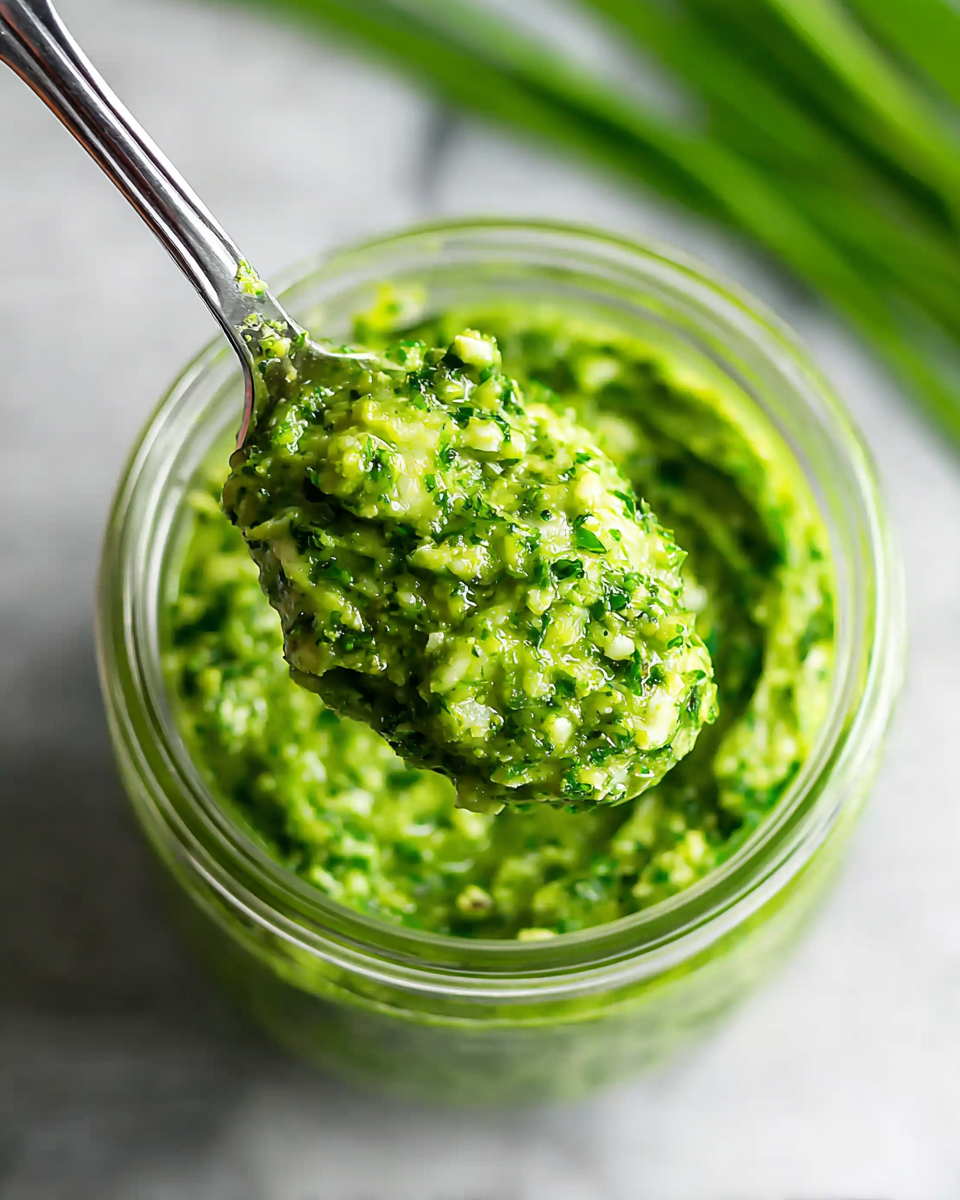
Lemon Garlic Scape Pesto
Ingredients
- 5.4 ounces garlic scapes trimmed and cut into 1-inch pieces (154 g, about 10 scapes)
- 1/8 teaspoon fine sea salt
- 1/3 cup freshly grated Parmesan cheese or Asiago if preferred
- A few grinds of black pepper
- 1/3 cup lightly toasted pine nuts
- 1/3 cup extra virgin olive oil
- Juice of 1/2 lemon about 1 1/2 tablespoons fresh juice
Instructions
- Trim the garlic scapes by cutting away the bulb end and removing any tough, woody portions of the stems, similar to trimming asparagus. Discard those pieces and reserve the tender, curled sections for the pesto.
- Place the prepared garlic scapes into the bowl of a food processor, arranging them so they distribute evenly for blending. Add the toasted pine nuts, grated Parmesan or Asiago, lemon juice, sea salt, and several turns of freshly ground black pepper.
- Pulse the mixture until the ingredients are broken down. Stop as needed to scrape the sides of the bowl with a spatula so the mixture processes evenly.
- With the machine running, pour in the olive oil gradually in a slow stream. Continue processing until the pesto becomes smooth, cohesive, and fully blended, about 1 minute.
- Taste and adjust the seasoning as needed, adding a little more salt or lemon juice for extra brightness if desired.
- Transfer the pesto to a jar or another covered container and refrigerate. Use within 1 week.
- For longer storage, freeze the pesto in a jar or in an ice cube tray. Once frozen, move the portions to a zip-top bag for easier use.