Mahi Mahi Ceviche is a bright, beginner-friendly appetizer with clean citrus flavor, juicy mango, cool cucumber, and a short chill time that makes it perfect for warm-weather meals, casual entertaining, or a light seafood starter.
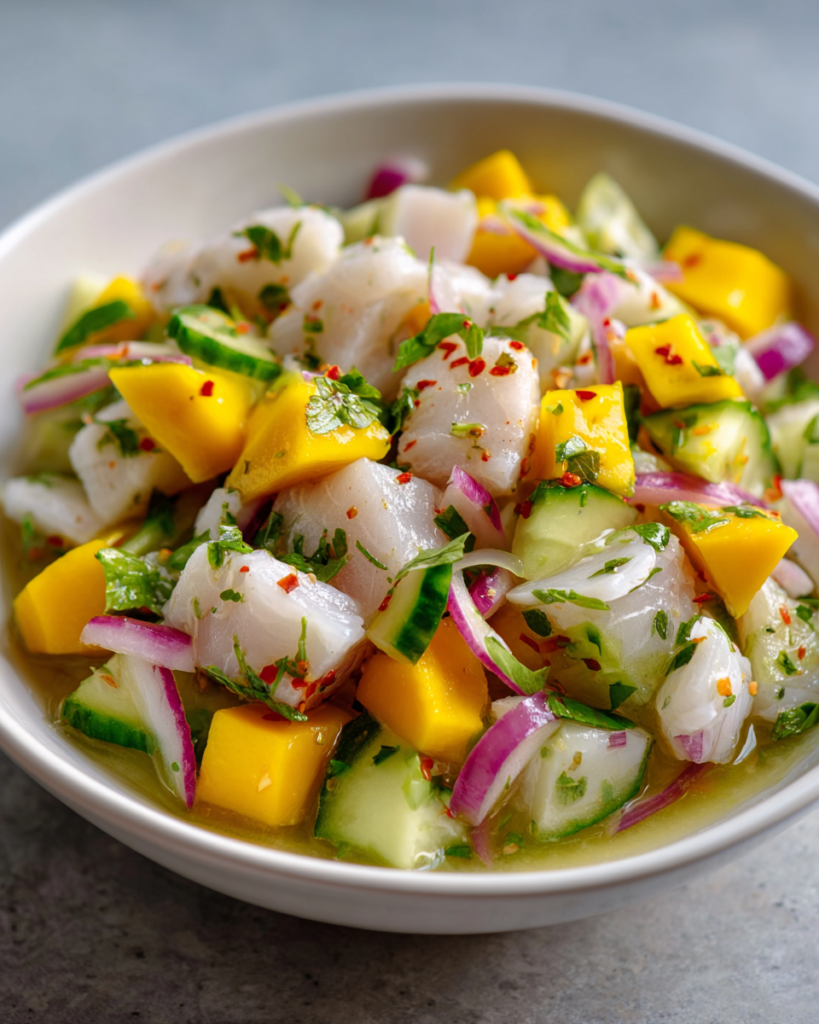
This is the kind of dish that feels impressive the moment it hits the table, yet it stays refreshingly simple in your kitchen. The fish is gently cured in lime juice, then finished with crisp, juicy ingredients that keep every bite lively.
What makes this version work so well is the balance. You get the sharpness of citrus, the sweetness of mango, the cooling crunch of cucumber, and a fresh herbal finish that keeps the whole bowl tasting clean instead of heavy.
It is also a smart make-for-now dish when you want something that looks polished without turning on the stove. A quick prep, a short chill, and a final toss are really all it takes to bring it together.
What You Need to Make This Mahi Mahi Ceviche
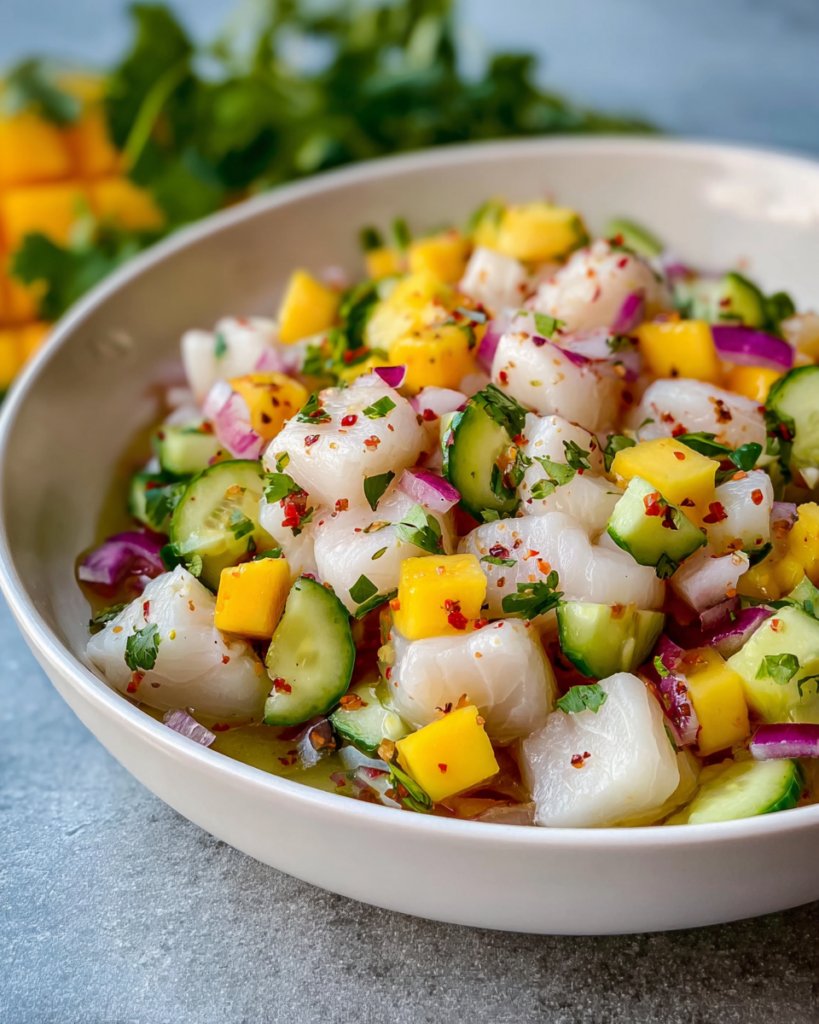
Mahi mahi brings a firm, meaty texture that holds its shape well after chilling in the lime marinade.
Fresh lime juice is the heart of the dish, giving the fish its bright flavor and gently curing the surface.
Red onion adds bite and sharp contrast, so even a small amount helps wake up the whole mixture.
Garlic gives the marinade a savory edge that keeps the citrus from tasting too simple.
Oregano adds a subtle earthy note that rounds out the sharpness of the lime.
Salt seasons both the fish and the marinade, helping the flavors taste clearer and more complete.
Chiltepin chiles are optional, but they bring a quick, clean heat if you want a little spark in the background.
Cucumber keeps the ceviche cool and crisp, which is especially nice against the tender fish.
Mango adds juicy sweetness that softens the tang of the lime and makes the bowl feel extra fresh.
Fresh herbs such as cilantro or mint bring the final bright note that ties everything together.
Olive oil is used lightly at the end to soften the acidity and give the mixture a smoother finish.
Step-by-Step Mahi Mahi Ceviche
STEP 1: Start with the marinade. Stir the lime juice with a little diced red onion, garlic, oregano, salt, and optional crushed chiltepin chiles in a chilled bowl so the flavor base is ready before the fish goes in.
STEP 2: Cut the mahi mahi into small, even pieces. Try to keep the cubes close in size so they cure at the same pace, and slice any firmer tail pieces thinly across the grain for the best texture.
STEP 3: Add the fish to the lime mixture and stir gently until every piece is coated. The goal is not to mash or press the fish, just to make sure the citrus reaches all sides.
STEP 4: Cover and refrigerate for about 30 minutes. During that time, the fish will turn more opaque on the outside while staying tender and fresh-tasting in the center.
STEP 5: Right before serving, fold in the cucumber, mango, and chopped herbs. Adding these at the end keeps them crisp, bright, and distinct instead of watery.
STEP 6: Finish with a light drizzle of olive oil and one last gentle stir. Serve it cold with tortilla chips, spoon it over tostadas, or plate it in small bowls for a simple appetizer course.
Is lime juice enough to make raw fish safe?
No. Lime juice changes the texture and appearance of fish, but it does not reliably destroy parasites or all harmful pathogens. FDA seafood guidance specifically notes ceviche among foods linked to parasite risk, and seafood safety guidance recommends using commercially frozen fish for raw or lightly preserved dishes like ceviche.
Can I use frozen mahi mahi for ceviche?
Yes, and for a raw-style preparation it is often the better choice. Guidance for raw or lightly preserved fish dishes recommends commercially frozen fish, and Seafood Health Facts notes that freezing to -4°F for at least 7 days can kill parasites, though many home freezers may not get cold enough for that standard.
How long should ceviche chill before serving?
For this version, about 30 minutes is a good target because it gives the mahi mahi time to firm up in the lime juice without losing its tender bite. Since mango and cucumber are added later, the finished bowl still tastes fresh and crisp rather than overly marinated.
Can I make this ahead of time?
You can prep the components ahead, but the ceviche is at its peak shortly after chilling and mixing. For the best texture, cube the fish, chop the produce, and mix the marinade in advance, then combine and chill the fish closer to serving time.
Helpful Tips
- Keep everything cold, including the bowl if possible, so the ceviche stays clean-tasting and refreshing.
- Dice the mango and cucumber close to the fish size so each spoonful feels balanced.
- Go easy on the olive oil at the end because just a small drizzle is enough to round out the acidity.
Serving Ideas for Mahi Mahi Ceviche
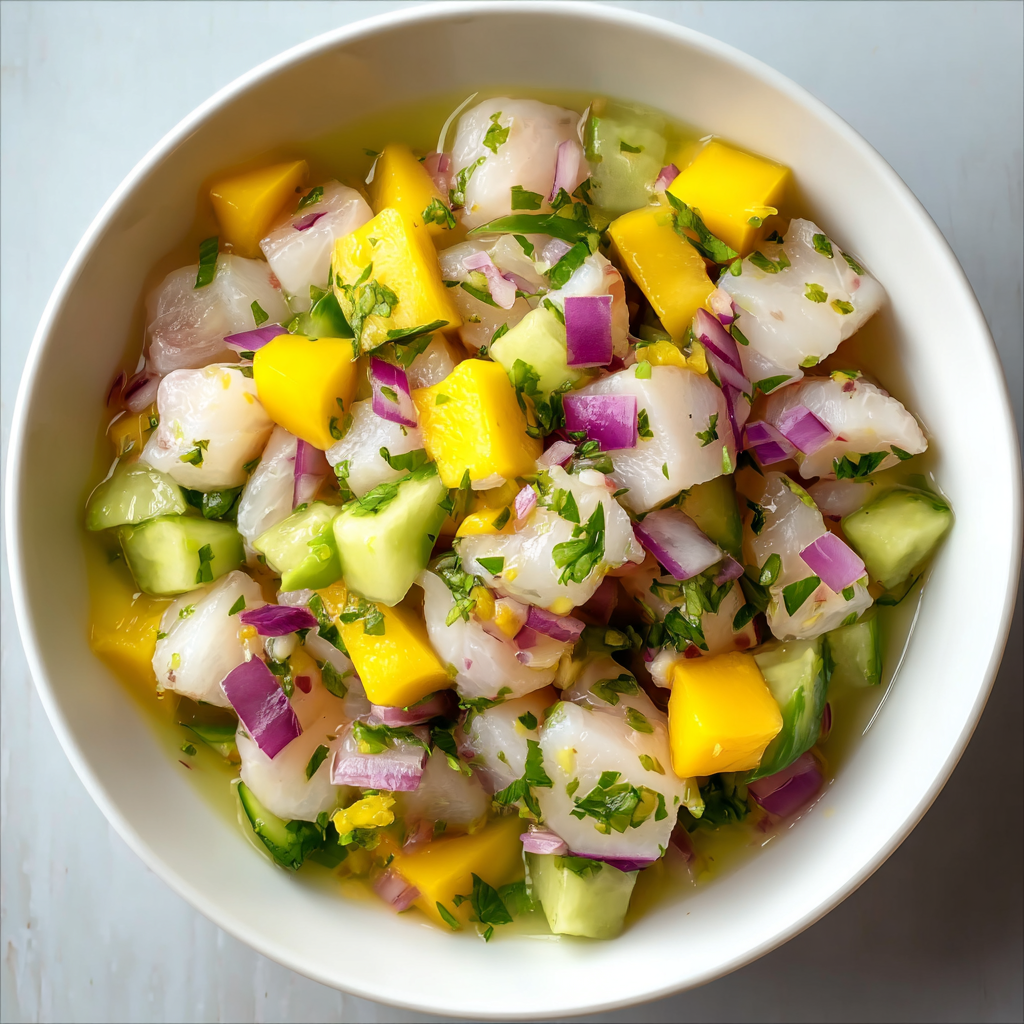
A pile of crisp tortilla chips is the most effortless partner and lets the ceviche double as a shareable appetizer.
Tostadas make it feel a little more substantial and give you a crunchy base that holds the juices well.
A simple plate of sliced avocado on the side works beautifully too, especially if you want a softer, creamier contrast to all that citrus brightness.
What does mahi mahi ceviche taste like?
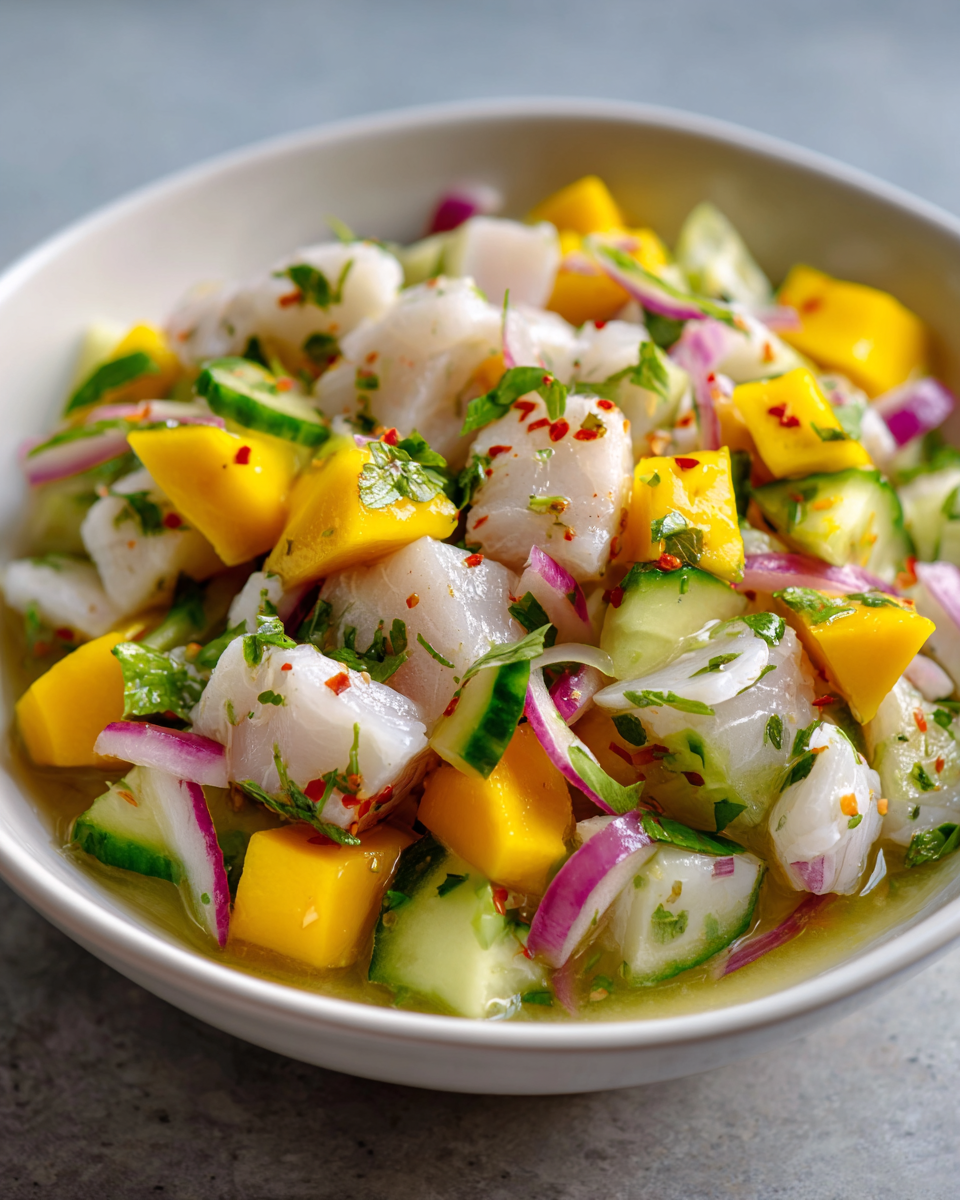
It tastes bright, chilled, and very fresh. Mahi mahi has a firmer bite than some other fish, so it holds up nicely against the sharp lime, while the mango adds sweetness and the cucumber keeps everything cool and crisp.
How long does leftover ceviche keep?
This dish is best the day you make it. You can refrigerate leftovers briefly, but the fish continues to change in texture and the fruit and cucumber can release extra liquid, so it is much better treated as a same-day or next-day dish.
How to Store & Reheat
Store the ceviche covered in the refrigerator and keep it very cold, ideally at 40°F or below. Seafood should be refrigerated promptly, and FDA guidance says seafood you plan to use fresh should be kept at 40°F or below and used within 2 days of purchase; otherwise, freeze it. Also, do not leave prepared seafood dishes out for more than 2 hours, or 1 hour if the temperature is above 90°F.
For this finished ceviche, refrigeration is your best option. Plan to enjoy it within 1 day for the freshest texture and cleanest flavor. Freezing the mixed ceviche is not recommended because the cucumber and mango will lose their texture, but freezing the fish before making the dish is a much better approach if you need extra flexibility.
There is no reheating here. This appetizer should be served cold, straight from the refrigerator, with a quick gentle stir before bringing it to the table.
Mahi Mahi Ceviche
Ingredients
For the marinade:
- 3/4 cup freshly squeezed lime juice from about 6 to 8 limes
- Diced red onion amount not specified in the source recipe
- Oregano amount not specified in the source recipe
- Minced garlic amount not specified in the source recipe
- Salt to taste
- Crushed chiltepin chiles optional, amount not specified in the source recipe
For the ceviche:
- 1 pound skinless mahi mahi fillet cut into 1/2-inch pieces
- 1/2 cucumber peeled and cut into cubes
- 1 ripe yet firm mango diced
- 1/4 cup freshly chopped herbs such as cilantro or mint
- A light drizzle of high-quality extra virgin olive oil
Instructions
- Add the fresh lime juice to a mixing bowl. If using chiltepin chiles, crush them and stir them into the juice. Add the diced red onion, oregano, and minced garlic, then season lightly with salt. Mix thoroughly so the flavors begin to combine.
- Cut the mahi mahi into small, even cubes. Where the flesh is firmer or more sinewy, especially near the tail, slice thinly across the grain to promote a more pleasing texture and better absorption of the marinade.
- Transfer the diced fish to the citrus mixture and stir carefully until each piece is coated. Cover the bowl and refrigerate for 30 minutes so the acidity can cure the fish and develop its flavor.
- Just before serving, fold in the mango, cucumber, and chopped herbs. Add a small drizzle of olive oil and stir gently until the ingredients are evenly distributed.
- Serve well chilled with tortilla chips or spooned onto tostadas for a crisp accompaniment.


