Quick, saucy, and full of bold coastal flavor, Mahi Mahi Veracruz brings tender fish, roasted salsa, olives, capers, and white wine together in one skillet for a reliable dinner that feels bright, savory, and a little special.
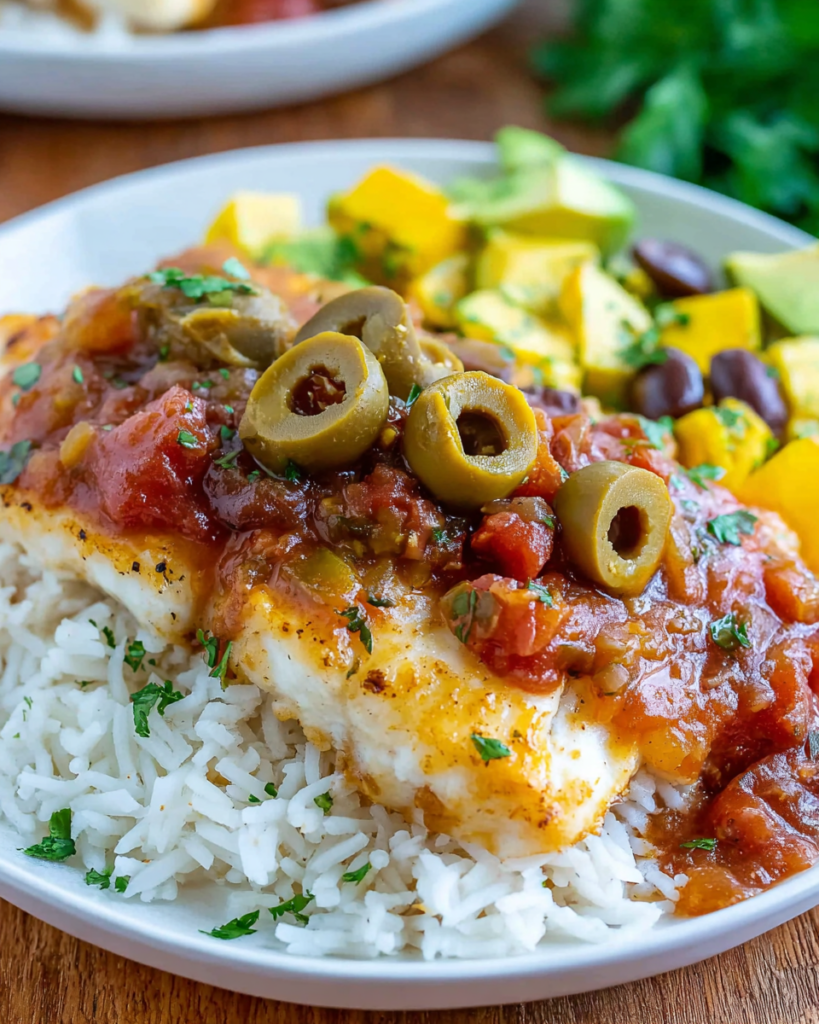
This is the kind of fish dinner that works beautifully when you want something comforting but not heavy. The sauce does most of the work for you, so the final dish tastes layered and lively without asking for a long ingredient list or complicated prep.
What makes this one so appealing is the balance. You get mellow sweetness from onion, a briny pop from olives and capers, and a tomato-rich base that keeps the fish moist while it cooks. The white wine adds just enough lift to make the whole skillet taste fresh instead of flat.
It is also a practical weeknight option for your kitchen. The mahi mahi cooks right in the sauce, which means fewer dishes, less fuss, and a main course that is easy to serve with rice, potatoes, or warm bread.
What You Need to Make This Mahi Mahi Veracruz
Mahi mahi fillets — A firm, mild fish that holds together well while poaching and absorbs the flavor of the sauce without getting lost.
Roasted salsa — The shortcut ingredient that creates the tomato base, bringing body, light smokiness, and built-in seasoning to the skillet.
Yellow onion — Adds sweetness and soft savory depth once cooked down in olive oil.
Garlic — Gives the sauce that unmistakable aromatic backbone and helps the tomato mixture taste fuller and richer.
Dry white wine — Brightens the sauce and adds a subtle acidity that works especially well with fish and briny ingredients.
Kalamata olives — Bring a deep, salty bite that gives the Veracruz-style sauce its signature character.
Capers — Small but important, they sharpen the sauce and add a punchy, tangy finish.
Extra-virgin olive oil — Used to soften the onion and carry the flavor of the aromatics through the whole dish.
Dried oregano — Adds a warm herbal note that rounds out the tomato base.
Black pepper — A simple seasoning for the fish that keeps the flavor focused and lets the sauce shine.
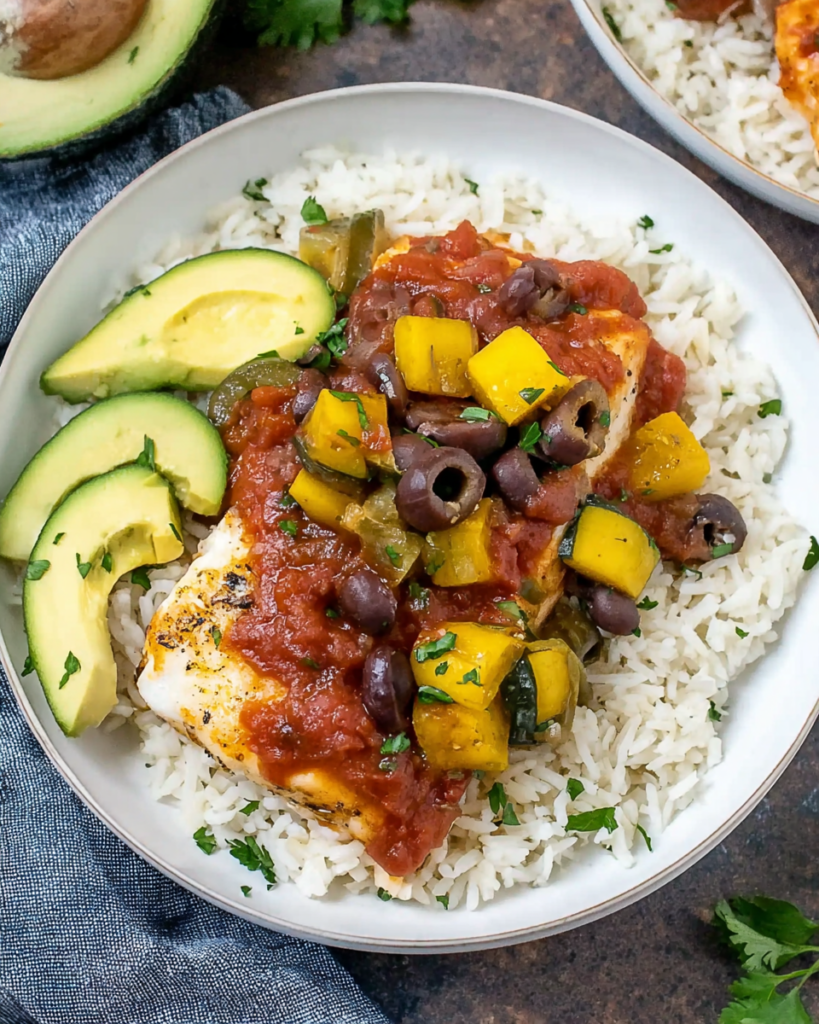
How to Make This Mahi Mahi Veracruz
STEP 1: Cut the fish into evenly sized portions so everything cooks at about the same pace. Season the pieces with black pepper, then set them aside while you start the sauce base. If your fillets vary in thickness, try to group similar pieces together in the pan.
STEP 2: Heat olive oil in a medium skillet over medium heat and cook the diced onion until it softens and turns lightly translucent. This step is worth a few extra minutes because a properly softened onion gives the finished sauce a smoother, sweeter flavor.
STEP 3: Add the minced garlic, then stir in the olives and capers. Let them cook briefly with the onion so the oil picks up their savory, briny flavor. This quick layer-building step makes the sauce taste more developed by the time the salsa goes in.
STEP 4: Pour in the white wine and bring it up to a simmer. Let it reduce until it loses some of its sharpness and concentrates slightly. You do not need a thick reduction here, just enough time for the wine to mellow and blend with the aromatics.
STEP 5: Stir in the roasted salsa and oregano, then bring the mixture to a gentle bubble. Nestle the mahi mahi into the sauce, cover the skillet, and let the fish poach gently. This gentle cooking method helps the fish stay tender while taking on the flavor of the sauce.
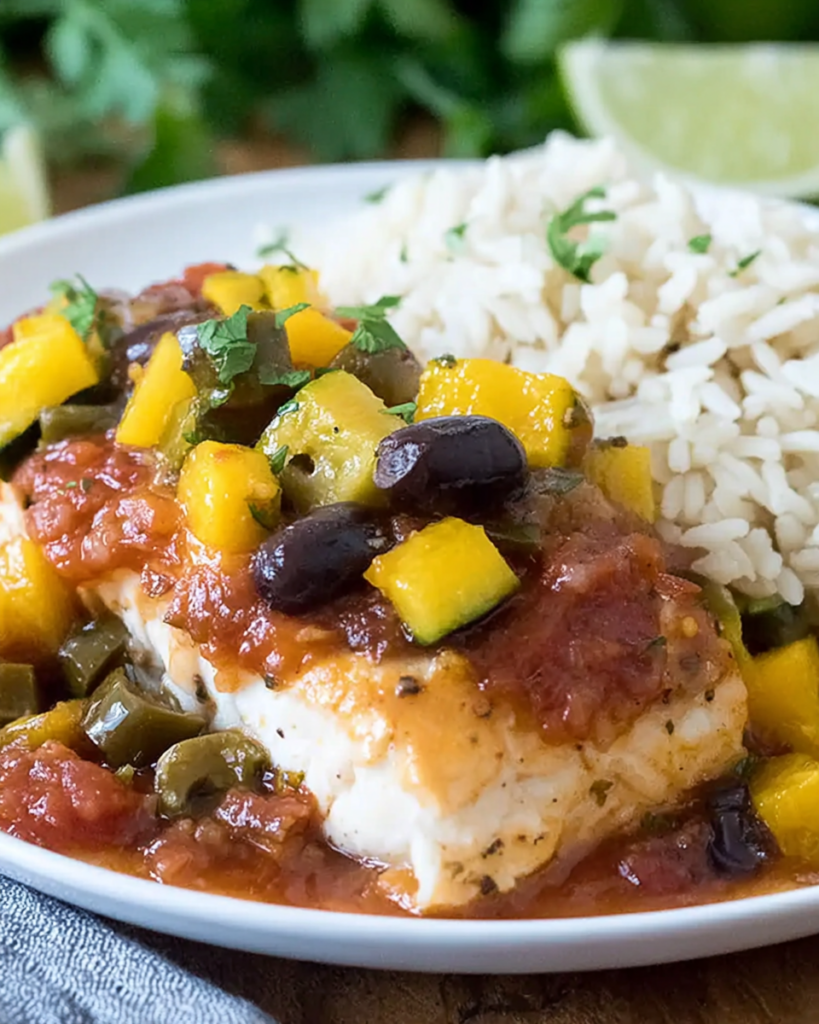
STEP 6: Uncover, carefully turn the fish, and continue cooking until the sauce thickens a bit and the fish is cooked through. Once the fillets are opaque and flake easily, plate them and spoon plenty of sauce over the top so every serving gets those olives, capers, and softened onion.
Perfect Pairings
A scoop of white rice is one of the easiest ways to serve this dish. It soaks up the sauce beautifully and keeps the meal simple, balanced, and filling.
If you want something a little heartier, try it with roasted potatoes. Their crisp edges and soft centers work really well against the juicy tomato sauce and delicate fish.
For a lighter plate, go with warm tortillas or crusty bread plus a simple green salad. That combination keeps the meal fresh and gives you an easy way to catch every bit of sauce left on the plate.
Can I use another white fish instead of mahi mahi?
Yes, as long as it is a firm fillet that can handle poaching in sauce. Halibut, cod, or snapper can work nicely. Just keep an eye on cooking time, because thinner or more delicate fish may finish a little faster.
Is this dish spicy?
That depends mostly on the roasted salsa you use. If your salsa is mild, the finished dish will be more savory and briny than hot. If you want extra heat, choose a medium salsa or add a pinch of crushed red pepper to the sauce.
How do I know when the mahi mahi is done?
The fish should turn opaque and flake easily with gentle pressure from a fork. It should still look moist, not dry or stringy. Because it finishes in the sauce, checking a thick piece near the center of the skillet is the safest way to judge doneness.
Can I make the sauce ahead of time?
Yes, and that can make dinner even faster. You can prepare the onion, garlic, olive, caper, wine, and salsa mixture ahead, then reheat it gently before adding the fish. It is a smart option if you want a quicker finish at mealtime.
Helpful Tips
- Keep the sauce at a gentle simmer, not a hard boil, so the fish cooks evenly and stays tender.
- If your salsa is already quite salty, wait until the end before adjusting seasoning because the olives and capers add plenty on their own.
- Use a wide skillet if possible so the fish sits in one layer and cooks more evenly in the sauce.
Keeping Leftovers Fresh
Store leftovers in an airtight container in the refrigerator for up to 2 days. Because the fish is already cooked, it is best enjoyed sooner rather than later for the best texture.
If you want to freeze it, place the fish and sauce in a freezer-safe container for up to 2 months. The flavor will hold up well, though the fish may be a little softer once thawed.
To reheat, warm it gently in a covered skillet over low heat with a spoonful of water if the sauce has tightened up. You can also microwave it in short bursts, but gentle stovetop reheating is the better choice if you want to keep the fish from drying out.
This skillet dinner is one of those recipes that feels more impressive than the effort it takes. The sauce is vivid and full of personality, the fish stays tender, and the whole meal comes together in a way that feels both weeknight-friendly and dinner-party worthy. If you love savory tomato sauces with briny depth and a fresh finish, this is a dish you will want to keep in regular rotation.
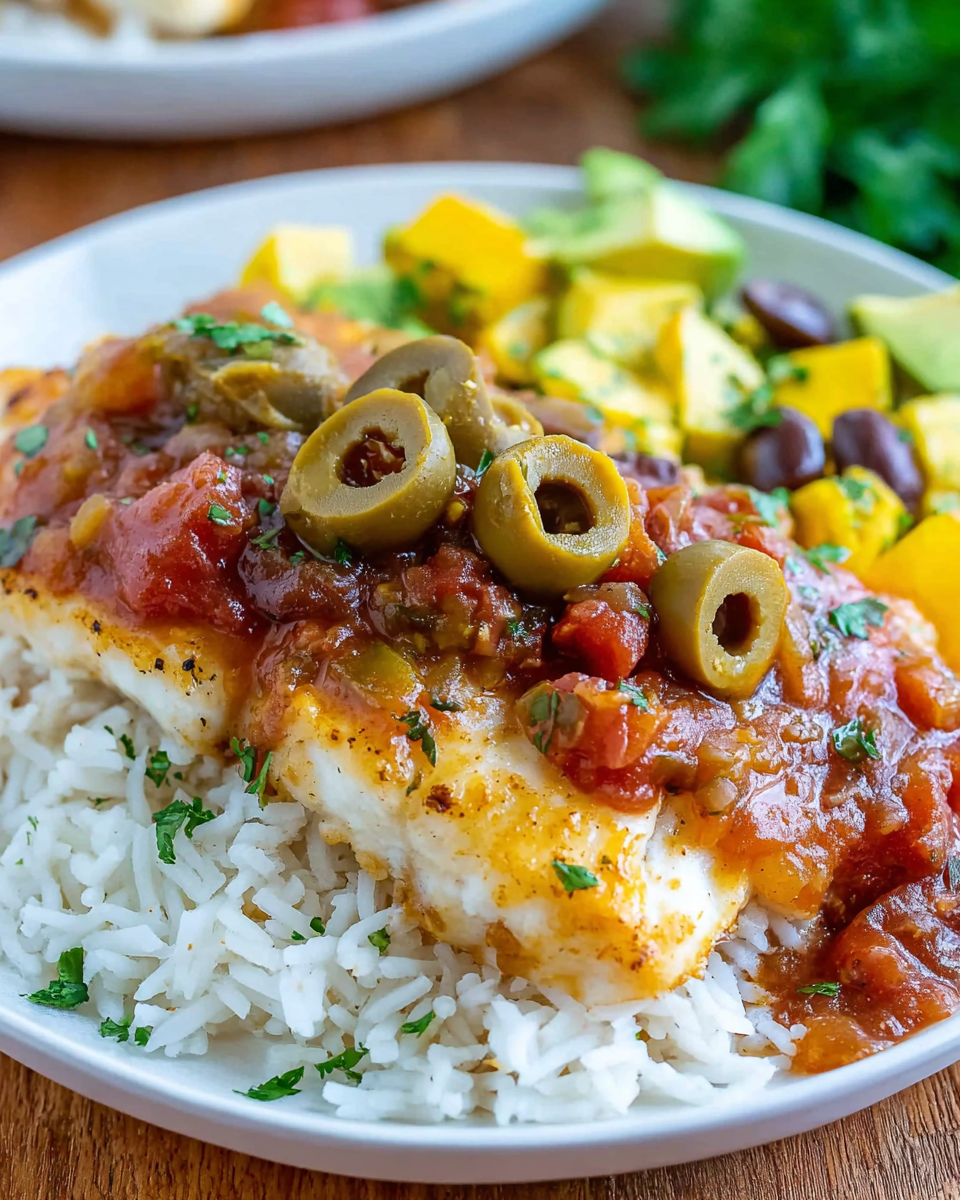
Mahi Mahi Veracruz
Ingredients
- 1 jar 16 oz roasted salsa
- 1.5 lb mahi mahi fillets skin removed
- 1 medium yellow onion finely diced
- 4 garlic cloves minced
- 1/4 cup dry white wine
- 1/3 cup Kalamata olives sliced
- 1.5 tbsp capers drained
- 1 tbsp extra-virgin olive oil
- 1/4 tsp dried oregano
- Freshly cracked black pepper or pre-ground, as preferred
Instructions
- Cut the mahi mahi into individual portions of roughly 6 ounces each to promote consistent cooking from edge to center. Season the pieces with black pepper as desired.
- Warm a medium skillet over medium heat and pour in the olive oil. Add the diced onion and cook, stirring often, until softened, about 4 minutes.
- Stir in the minced garlic and continue cooking for about 30 seconds, mixing frequently until fragrant.
- Add the drained capers and sliced Kalamata olives, stirring for around 30 seconds to distribute their flavor through the aromatics.
- Pour in the dry white wine and stir well, allowing it to come to a boil so the alcohol can cook off. Continue simmering for about 3 minutes, or until the wine reduces by approximately half.
- Stir the roasted salsa into the skillet and bring the mixture to a gentle boil. Carefully place the mahi mahi portions into the sauce. Cover the skillet and poach for about 4 minutes.
- Remove the lid and gently turn the fish over. Settle the pieces back into the sauce and cook uncovered for about 5 minutes more, letting the sauce reduce by roughly one-third while ensuring the fish cooks through without drying out.
- Transfer the mahi mahi to serving plates and spoon the sauce generously over the top.


