Oven Baked Greek Inspired Halibut is a quick, bright, beginner-friendly dinner with tender flaky fish, lemony pan juices, and a savory olive-tomato topping. It feels fresh enough for guests but simple enough for a busy weeknight meal.
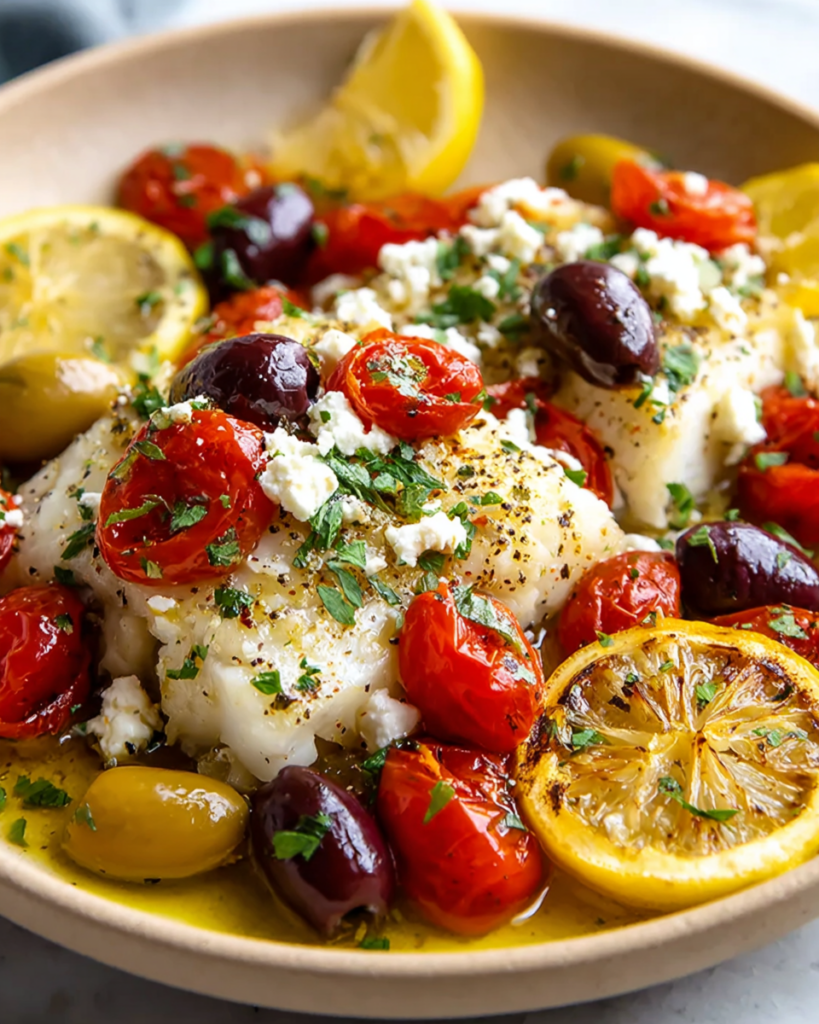
This is the kind of dish that works when you want something lighter without giving up real flavor. The combination of lemon, oregano, olives, and sweet roasted tomatoes gives the halibut a clean, vibrant finish that tastes special with very little effort.
It also comes together in a way that feels practical in your kitchen. You arrange the fish, spoon over the seasoned oil, and let the oven do the work while the vegetables soften and the juices mingle around the fillets.
What makes it especially reliable is how naturally the ingredients support the fish instead of covering it up. The shallot turns mellow, the garlic perfumes the pan, and the optional feta adds a salty finish that makes the whole dish taste even more complete.
What You Need to Make This Greek-Inspired Halibut
Halibut fillets are the centerpiece here, with a firm texture that bakes beautifully and stays satisfying on the plate. Choose pieces that are similar in size so they cook at the same pace.
Extra-virgin olive oil creates the base of the topping and carries all the Mediterranean-style flavor across the fish and vegetables. It also helps keep the fillets moist in the oven.
Cherry or grape tomatoes add sweetness and a little juiciness as they roast. Their natural acidity balances the richness of the olive oil and gives the finished dish a fresher feel.
Shallot brings a gentler onion flavor than a standard onion would. When it bakes, it softens and becomes lightly sweet, which works especially well with the lemon and olives.
Fresh oregano gives the dish its signature herbal note. It adds that classic Greek-inspired flavor without overwhelming the mild character of the halibut.
Kalamata olives bring a briny, savory bite that makes the whole pan taste livelier. A coarse chop is ideal because you want small pieces scattered throughout, not a paste.
Garlic adds warmth and depth to the olive oil mixture. Once baked, it mellows out and blends into the pan juices instead of standing out too sharply.
Lemon slices and lemon juice do two jobs at once: they perfume the fish while it bakes and add the bright finish that keeps every bite from feeling heavy.
Dijon mustard may be a small addition, but it helps the topping come together and adds a subtle savory tang that rounds out the oil and herbs.
Feta cheese is optional, but it is a smart finishing touch if you enjoy a saltier, creamier contrast on top of hot fish.
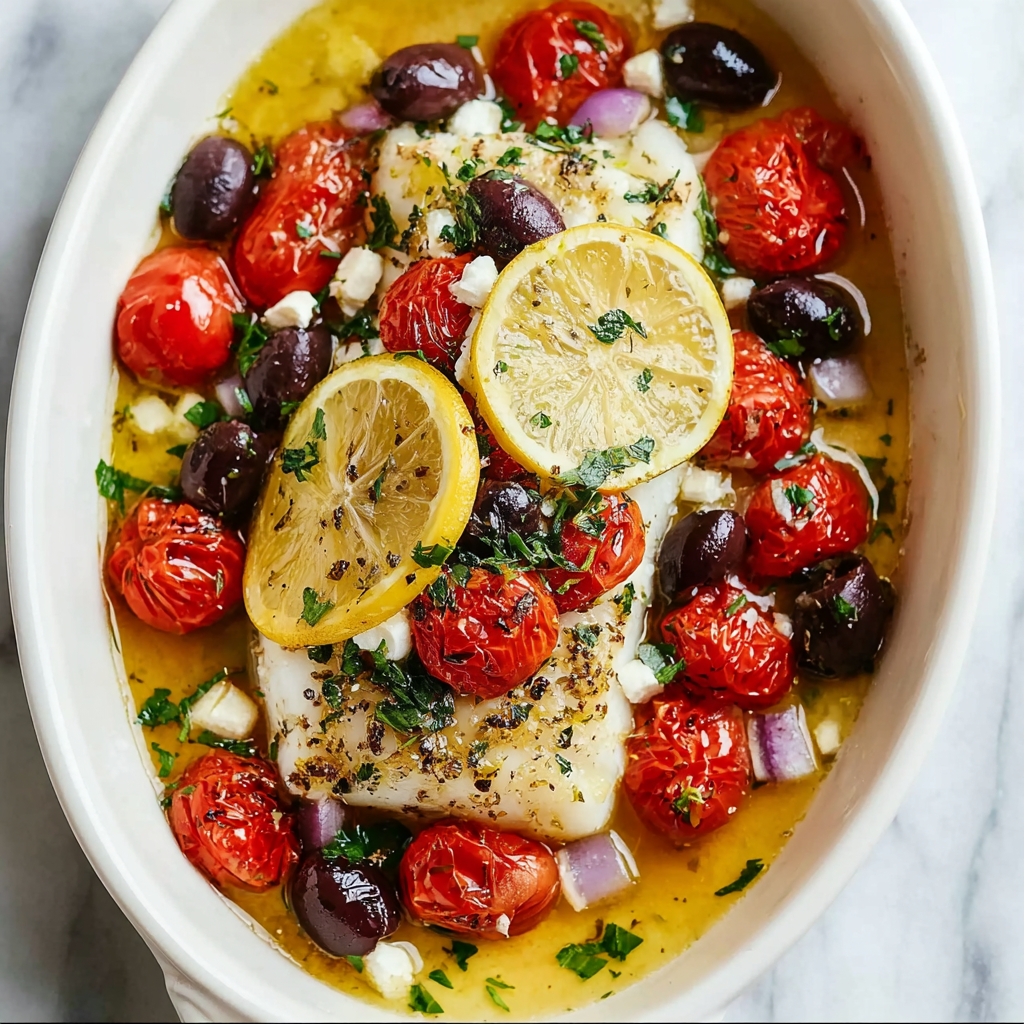
Cooking Steps
STEP 1: Preheat your oven to 400°F and choose a baking dish large enough to hold the fillets in a single layer. Giving the fish a bit of space helps it roast evenly instead of steaming too much.
STEP 2: Arrange the halibut in the dish, then scatter the halved tomatoes, thin shallot slices, and lemon rounds over and around it. This setup lets the vegetables soften in the same pan while flavoring the fish.
STEP 3: In a small bowl, stir the olive oil with the oregano, chopped olives, garlic, Dijon mustard, salt, and black pepper until everything is well mixed. You want the herbs and seasonings distributed evenly so each fillet gets the same flavor.
STEP 4: Spoon or drizzle that mixture over the halibut and vegetables, making sure the surface of the fish is nicely coated. Finish by squeezing fresh lemon juice over the top for a brighter, more aromatic bake.
STEP 5: Bake for about 20 to 25 minutes, checking near the earlier end if your fillets are on the thinner side. The fish should look opaque and separate easily into flakes when gently tested with a fork.
STEP 6: Remove the dish from the oven and add the crumbled feta just before serving, if using. Serve right away while the fish is hot and the tomatoes, olives, and pan juices are at their most flavorful.
Perfect Pairings
A simple bed of rice is one of the easiest ways to serve this dish. It catches the lemony olive oil and the tomato juices, which means you do not lose any of the flavor left in the baking dish.
Roasted potatoes are another great fit, especially if you want a more hearty plate. Their crisp edges and soft centers work well with the tender fish and briny topping.
For something lighter, serve it with warm couscous or a crisp cucumber salad. Either option keeps the meal feeling fresh and makes this Mediterranean baked halibut especially nice for warmer evenings.
Can I use another white fish?
Yes, you can use another firm white fish if halibut is not available. Cod, haddock, or sea bass can work well, but the baking time may need a small adjustment depending on thickness and moisture level.
How do I know when halibut is fully cooked?
The easiest sign is appearance and texture. The flesh should turn opaque and flake apart with gentle pressure from a fork. If it still looks glossy and resists separating, it likely needs another minute or two.
Can I prepare this dish ahead of time?
You can prep the vegetables and mix the seasoned olive oil ahead of time, which makes dinner faster later. For the best texture, keep the fish separate and assemble everything just before baking.
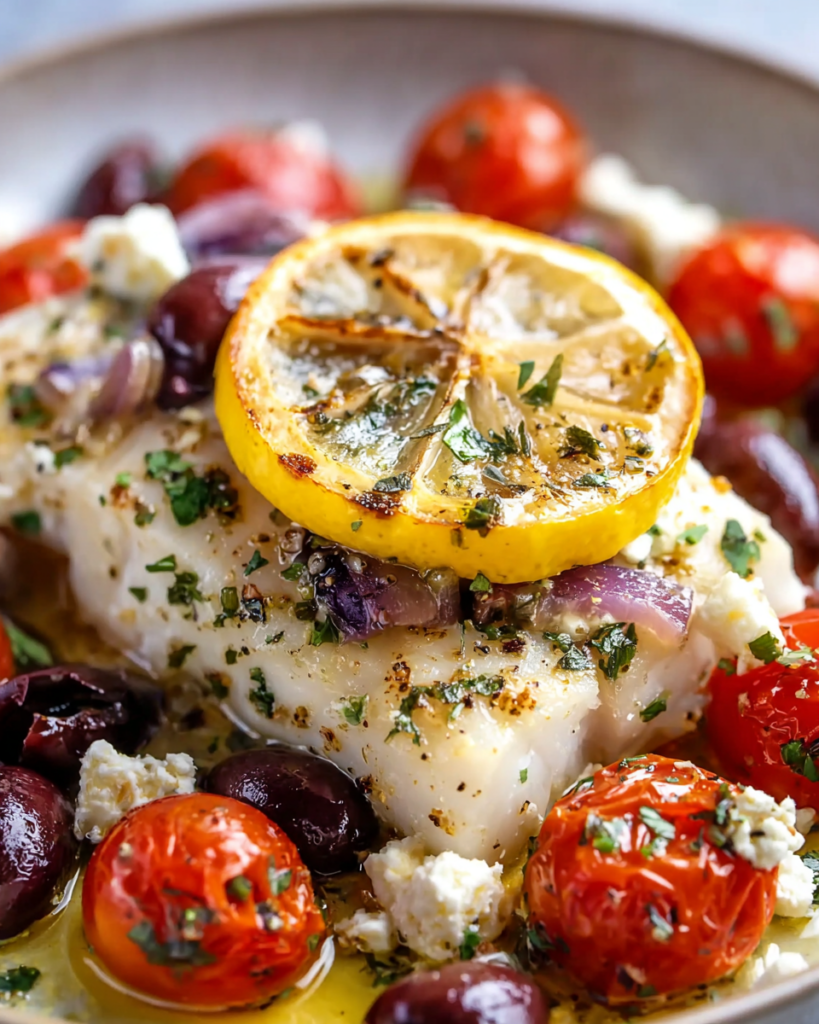
Should the feta go on before or after baking?
It is better to add feta after baking for this dish. That keeps its tangy, crumbly texture intact and gives you a cleaner salty finish instead of letting it fully melt into the pan.
Recipe Tips
- Slice the shallot thinly so it softens in the same time the fish bakes.
- Check the fillets early if they are closer to 6 ounces, since halibut can dry out when left too long in the oven.
- Spoon some of the hot pan juices over the fish right before serving for the brightest, most flavorful finish.
Keeping Leftovers Fresh
Store leftover halibut in an airtight container in the refrigerator for up to 2 days. Keep some of the tomatoes, olives, and juices with the fish so it stays more moist when reheated.
For reheating, warm it gently in a low oven or in a covered skillet over low heat just until heated through. The microwave works in a pinch, but short bursts are best so the fish does not toughen. Freezing is possible, though the texture is usually best when this dish is enjoyed fresh or within a day or two.
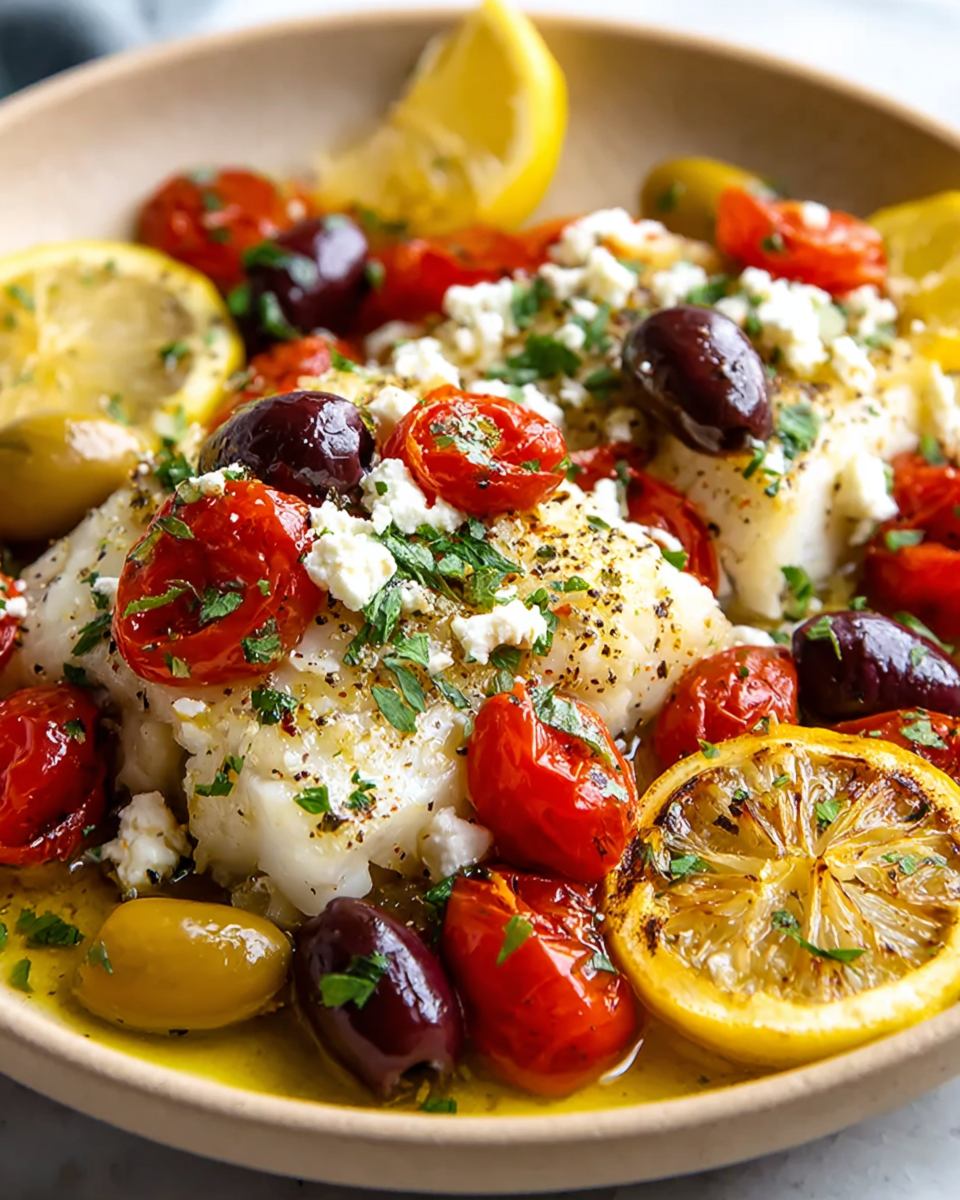
Oven Baked Greek Inspired Halibut
Ingredients
- 1/4 cup extra-virgin olive oil
- 4 halibut fillets 6 to 8 ounces each
- 3/4 cup cherry or grape tomatoes cut in half
- 1 large shallot sliced very thin
- 1 tablespoon fresh oregano finely chopped
- 1/4 cup pitted Kalamata olives coarsely chopped
- 2 garlic cloves minced
- 1 teaspoon salt
- 1/2 teaspoon black pepper
- 1/2 teaspoon Dijon mustard
- 1/2 lemon cut into slices
- Juice of 1/2 lemon
- 1/4 cup crumbled feta cheese optional for serving
Instructions
- Preheat the oven to 400°F (200°C).
- Arrange the halibut fillets in a single layer in a baking dish. Distribute the halved tomatoes, sliced shallot, and lemon rounds over and around the fish.
- In a small bowl, stir together the chopped oregano, Kalamata olives, Dijon mustard, olive oil, minced garlic, salt, and black pepper until thoroughly combined.
- Spoon or drizzle the olive oil mixture evenly over the halibut and vegetables, making sure the fillets are well coated. Squeeze the juice from the remaining half lemon across the top.
- Transfer the dish to the oven and bake for 20 to 25 minutes, or until the halibut is fully cooked and flakes easily when tested with a fork. Watch carefully so the fish does not overcook.
- Finish with crumbled feta, if using, just before serving. Serve immediately while hot.
Notes
The halibut is done once it turns opaque and separates easily into flakes.


