Quick, fragrant, and bakery-style, this Pesto Bread turns a simple yeast dough into a golden braided loaf with rich basil flavor and savory Parmesan in every slice. It is a great choice for dinner sides, weekend baking, or a homemade bread centerpiece that feels special without being complicated.
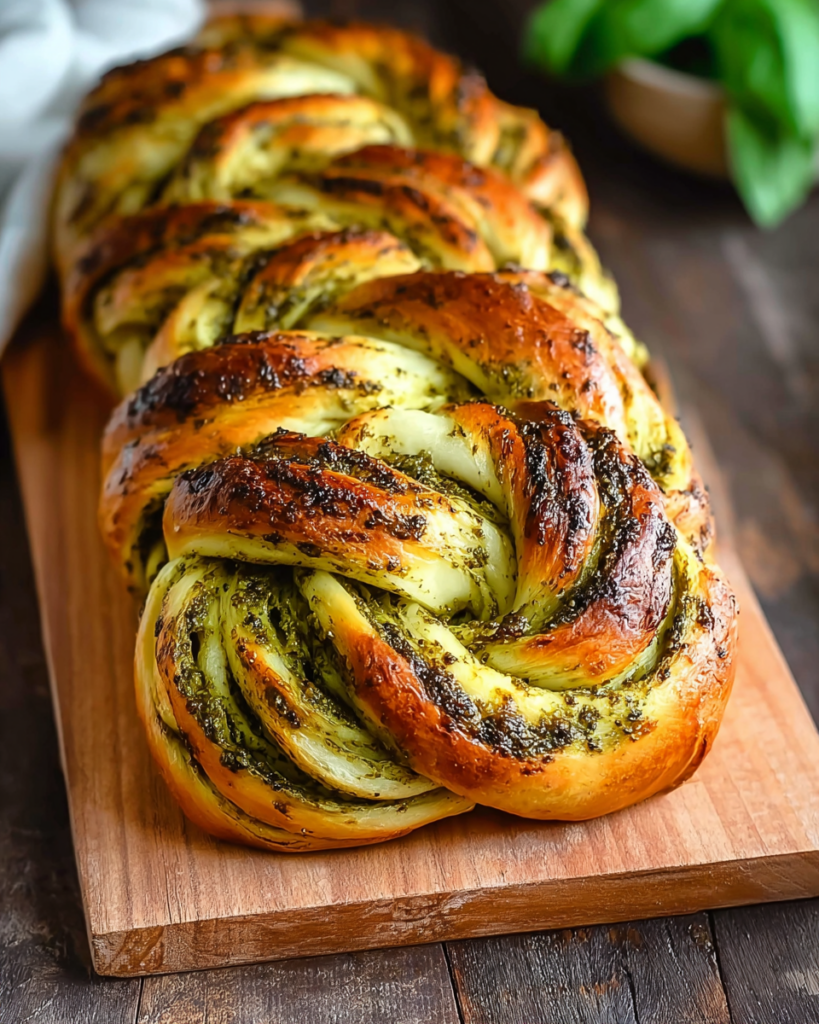
This is the kind of loaf that makes an ordinary meal feel a little more complete. You get a soft interior, a lightly crisp golden crust, and swirls of pesto and cheese layered through the bread in a way that looks impressive on the table.
It also works beautifully for real life. You can serve it with soup, pasta, salad, or a simple plate of roasted vegetables, and it still feels like the star. The braided shape gives it that polished homemade look, but the process is very manageable once the dough is rolled, filled, and twisted.
What makes this loaf especially reliable is the balance. The dough stays tender and mild, which lets the pesto stand out, while the Parmesan adds a salty, nutty finish that keeps every bite flavorful. It is the sort of bread you can make for guests and still enjoy just as much toasted the next day in your own kitchen.
Pesto Bread Ingredients
Bread flour adds the structure that gives this loaf a chewy yet soft texture and helps it hold the braided shape well.
Warm water wakes up the yeast and brings the dough together into a smooth, workable base. Keeping it in the right temperature range helps the dough rise properly.
Active dry yeast gives the bread its lift and airy texture. Once foamy, it shows that your dough is ready to build.
Sugar gives the yeast a little help getting started and supports a steady rise.
Olive oil adds softness to the dough and helps create a tender crumb.
Salt rounds out the flavor so the loaf tastes balanced rather than flat.
Basil pesto is the heart of the filling, bringing herbaceous, garlicky richness to every twist of the bread.
Parmesan cheese adds a savory, slightly nutty layer that melts into the pesto and deepens the overall flavor.
Cooking Steps
STEP 1: Start by activating the yeast with the sugar and part of the warm water. Once the surface looks foamy, mix in the flour, remaining water, olive oil, and salt until a dough begins to form.
STEP 2: Knead until the dough turns smooth, elastic, and soft. You want it supple rather than stiff, with only enough extra flour added to keep it manageable. Cover it and let it rise until doubled in size.
STEP 3: Turn the risen dough onto a lightly floured surface and gently press it out before rolling it into a large rectangle. This is what gives you plenty of room for a generous layer of filling without making the loaf too thick.
STEP 4: Spread the pesto evenly across the dough, leaving a narrow border on one long side so the roll can seal more neatly. Sprinkle the Parmesan over the top so the filling has both creamy herb flavor and a deeper savory finish.
STEP 5: Roll the dough up from the filled long side toward the plain edge to create a log. Then slice it lengthwise down the center so the layers inside are exposed.
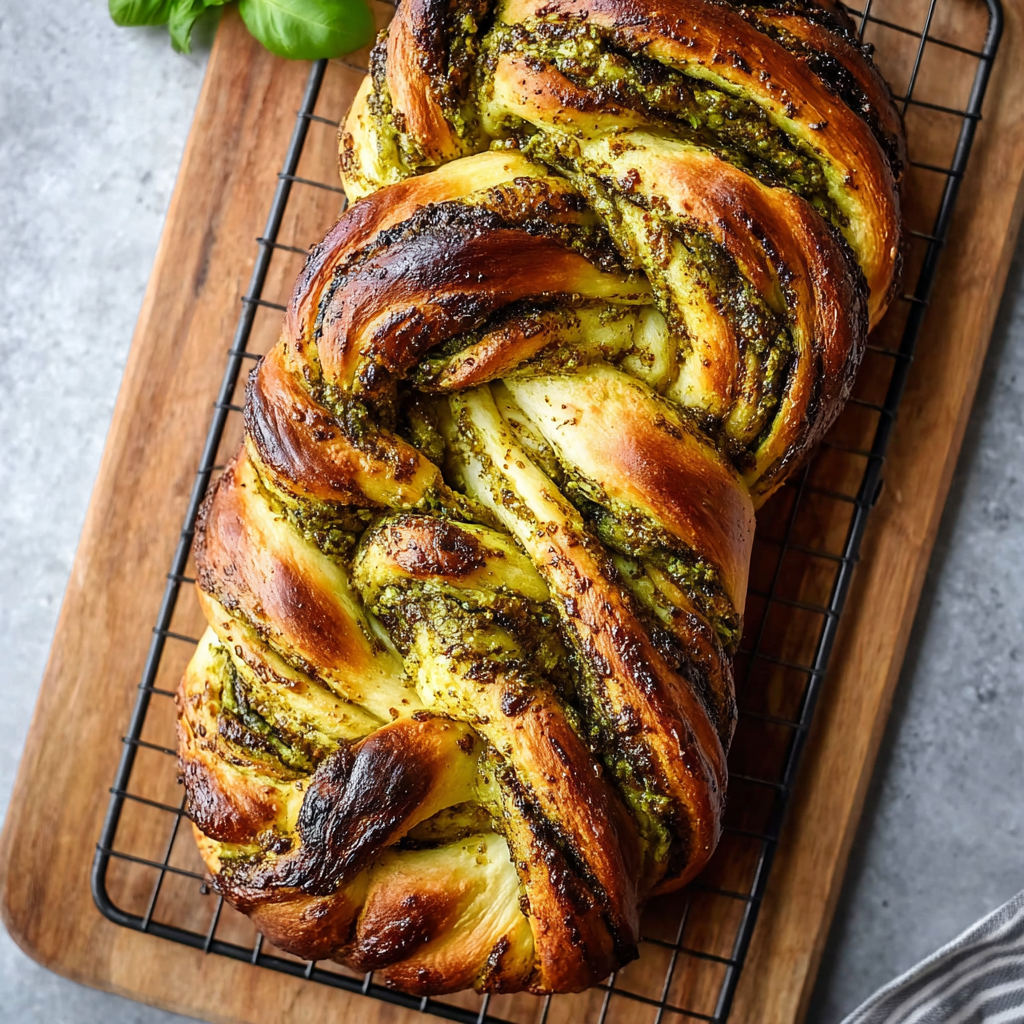
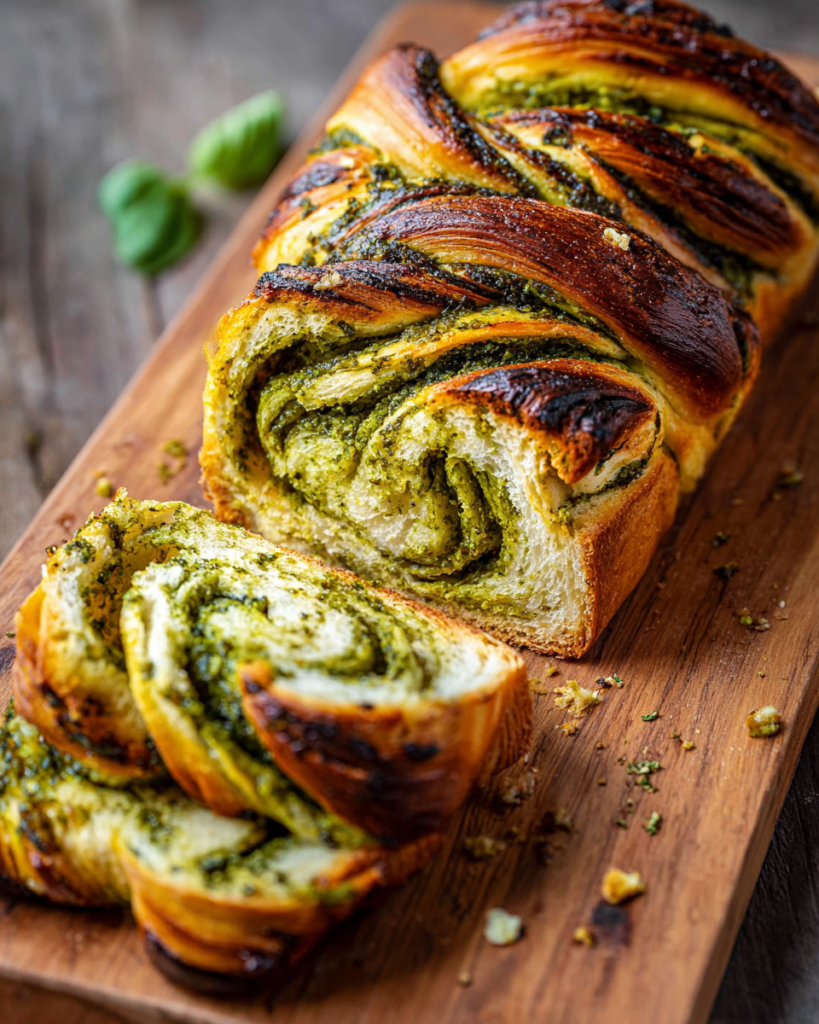
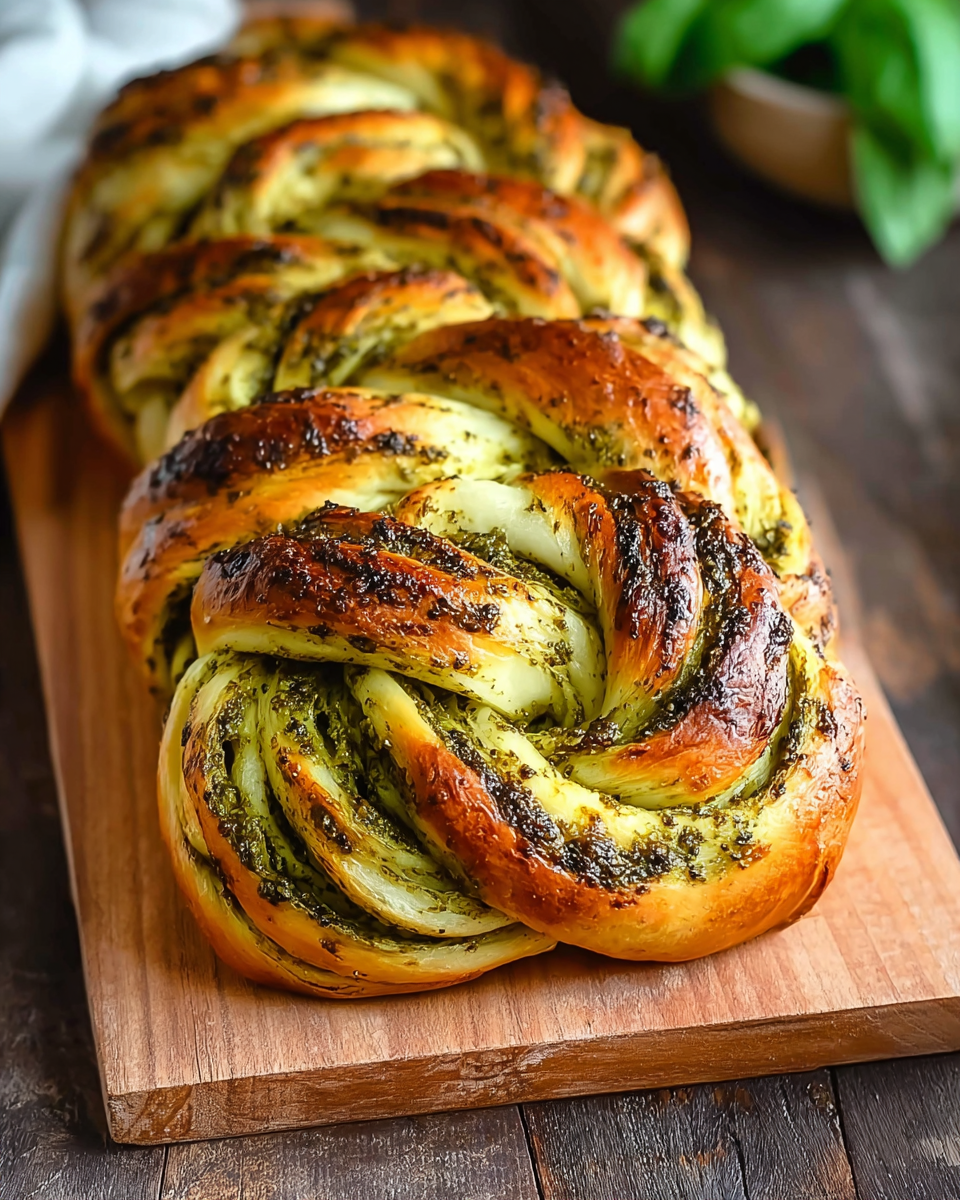
STEP 6: Twist the two cut pieces together with the layered sides facing upward. This is where the loaf gets its beautiful braided look and where the pesto ribbons become visible across the top.
STEP 7: Shape the braid as directed and place it on a parchment-lined baking sheet. Let it rise again until slightly puffy while the oven heats, which helps the finished loaf bake up lighter and fuller.
STEP 8: Bake until deeply golden and cooked through. Once cooled slightly, the loaf slices best and shows off those swirls of green pesto and melted Parmesan beautifully.
Perfect Pairings
This bread is especially good alongside tomato-based pasta, where the soft, savory loaf can soak up extra sauce without overpowering the meal. A simple marinara pasta or baked pasta dish makes a very natural match.
It also pairs well with soups that have a smooth or brothy base. Tomato soup, vegetable soup, or a creamy roasted red pepper soup all work nicely because the bread adds texture and richness.
For a lighter meal, serve it with a crisp green salad. Something with lemon dressing or a vinaigrette balances the richer pesto filling and keeps the plate feeling fresh.
Can I make pesto bread ahead of time?
Yes. You can prepare and shape the loaf, then refrigerate it before the second rise. When you are ready to bake, let it sit at room temperature until it looks slightly puffed, then bake as directed. This makes it very convenient for entertaining or meal prep.
What kind of pesto works best in this loaf?
A basil pesto with a balanced texture works best. It should be spreadable but not watery, so it stays in place as you roll and braid the dough. Homemade pesto gives the freshest flavor, but a good store-bought option also works well here.
Why do I cut the dough before braiding it?
Cutting the rolled dough exposes the layers of pesto and cheese, which creates the loaf’s signature twisted look. It also helps distribute the filling more evenly across the finished bread, so you get flavor in every slice rather than a dense center.
Can I serve this bread warm?
Yes, and it is especially good slightly warm. The crumb stays soft, the Parmesan tastes richer, and the pesto feels more aromatic. Let it cool just enough to set the structure before slicing so the bread holds its shape better.
Does pesto bread freeze well?
It does. Once fully cooled, wrap the loaf or individual slices tightly and freeze them. That way you can thaw only what you need and still enjoy the bread with soups, pasta nights, or quick lunches later on.
Recipe Tips
- Roll the dough evenly so the loaf bakes at the same rate from end to end and keeps a neat braid.
- Avoid overfilling with extra pesto, which can leak during shaping and make the strands harder to twist cleanly.
- Let the bread cool for a short time before slicing so the filling settles and the slices stay more defined.
How to Store & Reheat
Store leftover pesto bread in an airtight container or well wrapped at room temperature for up to 2 days, or in the refrigerator for up to 4 days if your kitchen is warm. The texture is best the day it is baked, but it still reheats very well.
For longer storage, freeze the loaf whole or in slices for up to 2 months. Wrapping slices individually is especially useful because you can pull out just enough for a meal or snack.
To reheat, warm slices in a low oven until heated through. This helps bring back the crust and keeps the bread from turning too soft. You can also toast individual slices for a slightly crisp edge, which works especially well if you are serving the bread with soup or salad.
Pesto Bread
Ingredients
For the dough:
- 3 1/2 cups bread flour
- 1 tablespoon olive oil
- 1 1/2 cups warm water about 105 to 115°F
- 2 1/4 teaspoons active dry yeast
- 1 teaspoon sugar
- 1 teaspoon salt
For the filling:
- 1/2 cup Parmesan cheese freshly grated
- 3/4 cup basil pesto homemade or high-quality store-bought
Instructions
- In the bowl of a stand mixer, combine the active dry yeast, sugar, and 1/2 cup of the warm water. Leave the mixture undisturbed for 5 to 10 minutes, until it looks foamy and activated.
- Add the bread flour, the remaining warm water, olive oil, and salt to the bowl. Mix on low speed and knead for 5 to 7 minutes, until the dough is smooth and elastic. If it feels overly sticky, incorporate a spoonful of flour. Cover the bowl with plastic wrap and set it in a warm place for 1 hour, or until doubled in size.
- To prepare the dough without a stand mixer, place the active dry yeast, sugar, and 1/2 cup of water in a large bowl. Let it stand for 5 to 10 minutes, until frothy.
- Add the bread flour, remaining water, olive oil, and salt. Stir with a wooden spoon until the liquid has been absorbed, then turn the dough out onto a work surface.
- Knead the dough by hand for about 10 minutes, until it becomes smooth and stretchy. Add a spoonful of flour only if needed to reduce stickiness. Wash the bowl, lightly coat it with olive oil, and return the dough to it, turning once so all sides are lightly oiled. Cover with plastic wrap and allow it to rise in a warm spot for 1 hour, or until doubled.
- Line a large baking sheet with non-stick parchment paper. Lightly flour the work surface and transfer the risen dough onto it. Press it gently into an oblong shape, then roll it out to about 17 x 12 inches, adding a dusting of flour as needed to prevent sticking. Spread the pesto evenly over the surface, leaving a 1-inch border along one long side. Scatter the grated Parmesan over the pesto. Beginning from the long side covered with pesto, roll the dough toward the plain edge.
- Slice the rolled dough lengthwise down the center. Open the two sections so the cut sides face upward. Twist and braid the strands together, keeping the cut surfaces exposed. Bring the ends together to form a U-shape, then braid the two lengths together once more. Transfer the shaped loaf carefully to the prepared baking sheet.
- Let the braided dough rise in a warm place for 30 minutes. Meanwhile, preheat the oven to 350°F (180°C).
- Bake for 30 minutes, or until the bread is deeply golden and fully baked through.