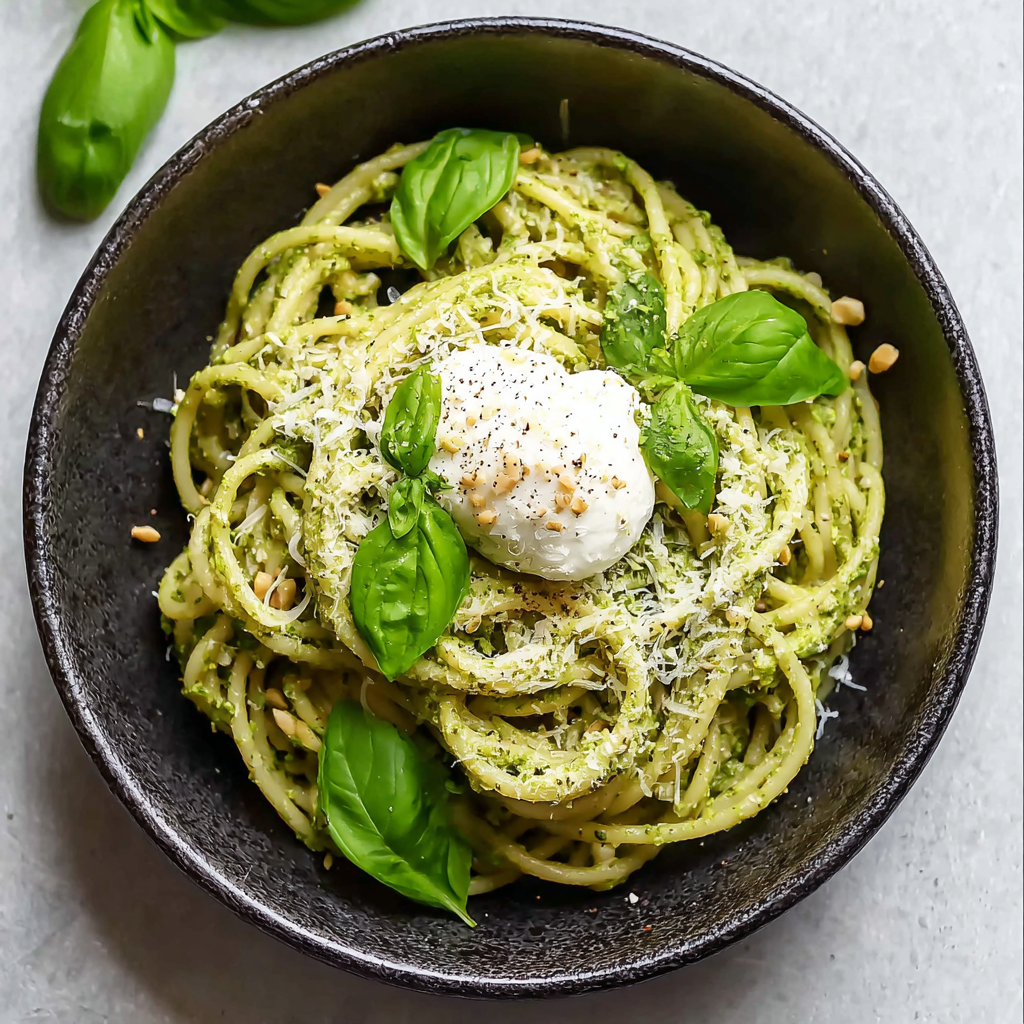
Creamy, fresh, and weeknight-friendly, Pesto Pasta with Burrata brings together hot bucatini, homemade basil pesto, and soft burrata for a fast Italian-inspired dinner that feels special without turning into a long kitchen project.
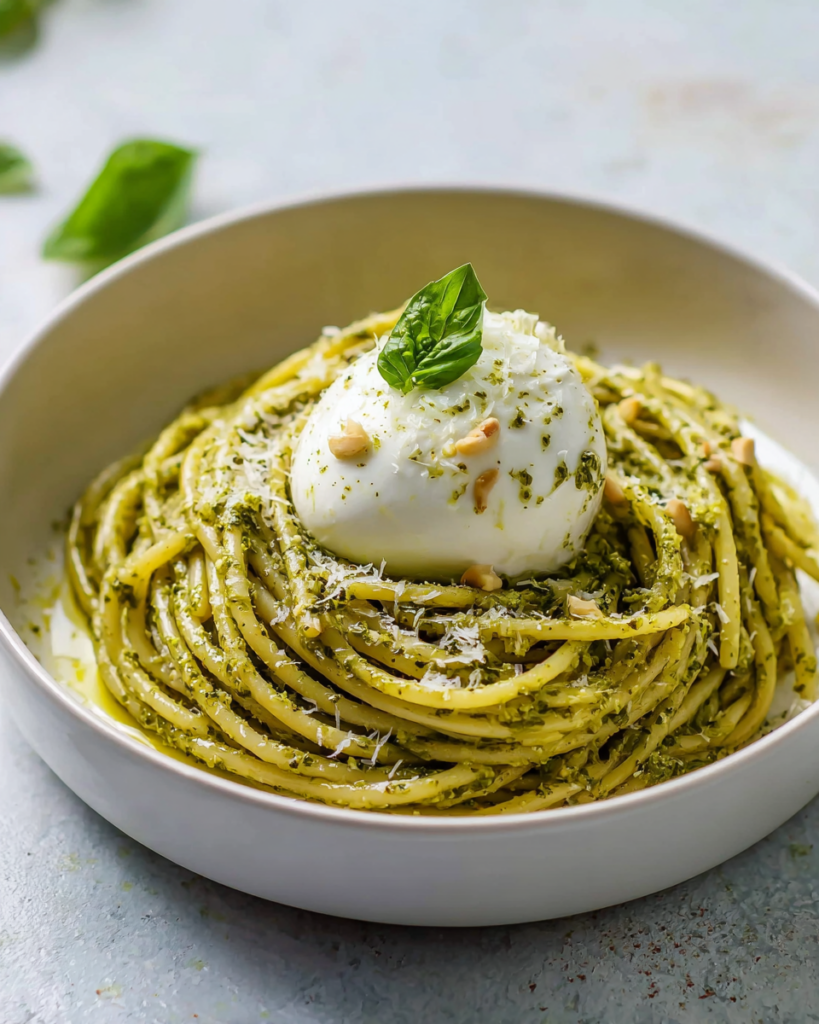
This is the kind of pasta you make when you want something that feels a little elevated but still fits into a normal evening. The pesto is bold and herby, the burrata melts right into the warm noodles, and the finish is rich without feeling too heavy.
It works so well because every part of the dish does something important. The basil keeps it bright, the Asiago and Parmesan add savory depth, the pine nuts bring a subtle nuttiness, and the burrata gives the whole bowl that creamy finish people love in a comforting pasta dinner.
You also get plenty of flexibility here. You can keep the pesto thick and rustic or blend it smoother, add a little more for a lighter coating, or toss in extra for a more luscious bowl. It is a simple homemade pasta that looks impressive and tastes like something you would happily order at a cozy Italian spot.
Pesto Pasta with Burrata Ingredients
Fresh basil leaves bring the signature bright, aromatic flavor and give the pesto its vibrant green color.
Garlic cloves add a punchy savory base that balances the richness of the cheese and olive oil.
Asiago cheese gives the pesto a salty, nutty depth that makes the sauce feel fuller and more complex.
Pine nuts add a mellow buttery flavor and a soft texture that helps the pesto blend smoothly.
Olive oil brings the pesto together and controls the final texture, from slightly coarse to silky and spoonable.
Salt sharpens the flavors and helps the basil, cheese, and nuts taste more balanced.
Black pepper adds gentle warmth without overpowering the fresh basil.
Red pepper flakes give the pesto a light background heat that keeps the sauce lively.
Bucatini is a great choice here because the thick strands hold the pesto beautifully and make the dish feel hearty.
Burrata is the creamy centerpiece, turning the hot pasta into something soft, rich, and extra satisfying.
Parmesan cheese finishes the bowl with another layer of salty, savory flavor.
Fresh basil for garnish adds a fresh final touch that makes the dish look and taste brighter.
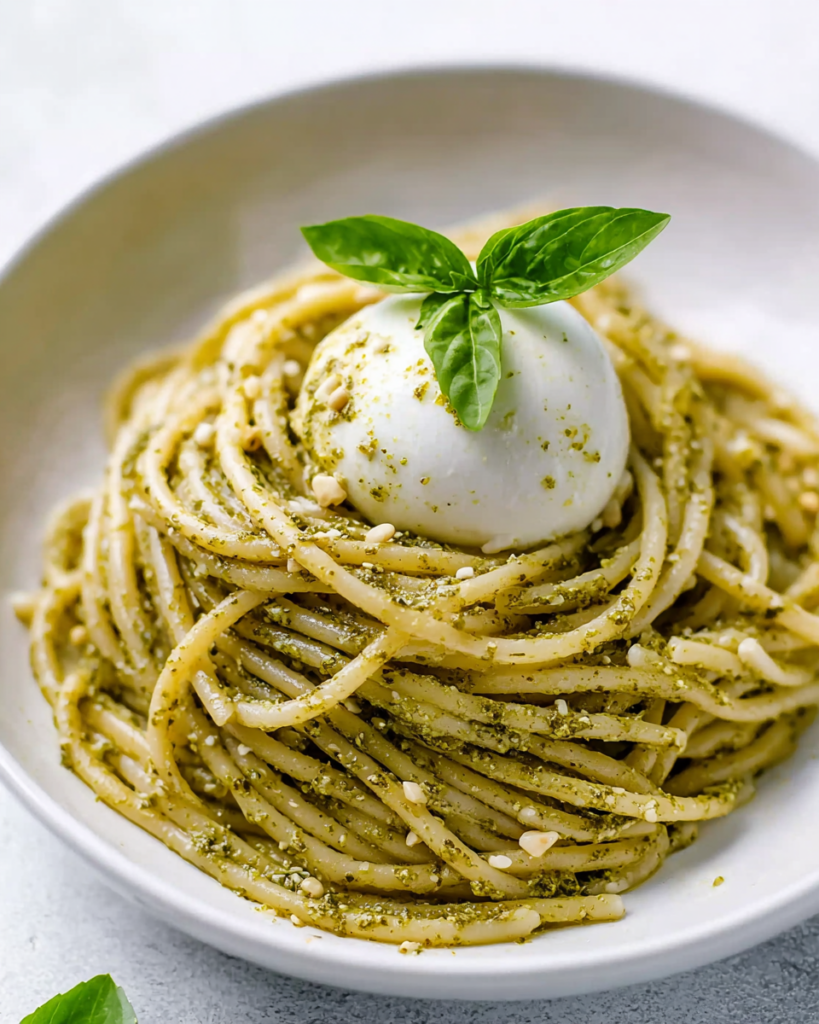
How to Make This Pesto Pasta with Burrata
STEP 1: Start by making the pesto. Add the basil, garlic, Asiago, and pine nuts to a food processor and pulse until the mixture is finely chopped and crumbly. This gives you a good base before the oil goes in.
STEP 2: With the machine running, drizzle in the olive oil gradually. Stop and check the texture as you go so you can control how thick or loose the pesto becomes. Season with salt, black pepper, and red pepper flakes, then blend again and taste for balance.
STEP 3: If your pine nuts are not already toasted, warm them gently in a skillet over low heat until fragrant and lightly golden. Stir often and keep a close eye on them because they can go from perfect to too dark very quickly.
STEP 4: Cook the bucatini in salted water until al dente. You want the pasta tender but still with a little bite, since that texture works especially well with a rich sauce like pesto.
STEP 5: Drain the pasta well and transfer it while still hot to a large bowl. Add some of the pesto and toss thoroughly so the strands are evenly coated. Add more as needed until the pasta looks glossy and well dressed.
STEP 6: Place the burrata over the warm pasta and gently tear it open. Let the creamy center spill into the noodles, then toss lightly so some of that richness melts into the pesto without fully disappearing.
STEP 7: Finish with grated Parmesan and fresh basil leaves right before serving. The final dish should look glossy, green, and creamy, with pockets of burrata throughout.
Helpful Tips
- Dry the basil well before blending so the pesto stays rich and cohesive instead of turning watery.
- Toss the hot pasta with the pesto right away so the sauce clings better and coats the noodles more evenly.
- Open the burrata just before serving for the creamiest texture and the prettiest presentation.
Can I make the pesto ahead of time?
Yes, the pesto can be made in advance and kept chilled in an airtight container. A thin layer of olive oil on top helps protect the color and keeps the surface from drying out. When you are ready to use it, just stir it well.
What does burrata do in pasta?
Burrata adds a soft, creamy finish that makes the pasta feel more luxurious. Unlike a fully melted cheese sauce, it creates rich pockets throughout the dish, so you get both fresh pesto flavor and creamy bites in the same bowl.
Can I use another pasta shape?
Absolutely. Bucatini gives this dish a hearty feel, but spaghetti, linguine, or even shorter cuts like fusilli can work well too. Choose a shape that can catch and hold the pesto so every bite stays flavorful.
How do I keep pesto from getting too oily?
Add the olive oil slowly and stop as soon as the pesto reaches the consistency you like. If it looks too loose, do not keep pouring. A balanced pesto should look glossy and spoonable, not separated or heavy with oil.
Is this good for entertaining?
Yes, this is a great choice when you want a simple dinner that still feels special. The pesto can be prepped ahead, the pasta cooks quickly, and the burrata on top gives the finished dish a restaurant-style touch without much extra effort.
Perfect Pairings
A crisp green salad with lemony dressing works beautifully here because it cuts through the richness of the cheese and olive oil.
Garlic bread or warm toasted bread is perfect for scooping up any extra pesto and creamy burrata left on the plate.
Roasted vegetables like asparagus, zucchini, or cherry tomatoes make a simple side that fits the fresh Italian-inspired feel of the meal.
How to Store & Reheat
This pasta is at its peak right after serving, especially once the burrata is added, but leftovers can still be saved. Store the pasta in an airtight container in the refrigerator for up to 2 days. For the best texture, keep extra burrata separate if possible and add it fresh when serving again.
Freezing is not ideal for the finished dish because the basil pesto can lose some of its brightness and the burrata does not thaw especially well. If you want to freeze part of the recipe, freeze only the pesto in a sealed container for up to 2 months, then thaw it in the refrigerator before using.
To reheat, warm the pasta gently on the stove over low heat or in short bursts in the microwave. A small splash of water or olive oil can help loosen the sauce. Add fresh basil and a little Parmesan at the end to freshen everything up before serving.
This is one of those pasta dishes that feels both relaxed and a little indulgent, which is part of why it is so appealing. You get the freshness of basil, the savory depth of aged cheese, the soft richness of burrata, and the comfort of warm pasta all in one bowl. It is fast enough for a weeknight but pretty enough for guests, and that balance makes it worth keeping in your dinner rotation.
The homemade pesto is really what makes it stand out. It tastes brighter and more vibrant than most store-bought options, and because you control the texture, you can make it exactly how you like it. Paired with hot bucatini and finished with torn burrata, it becomes a simple but memorable meal that does not need much else on the table.
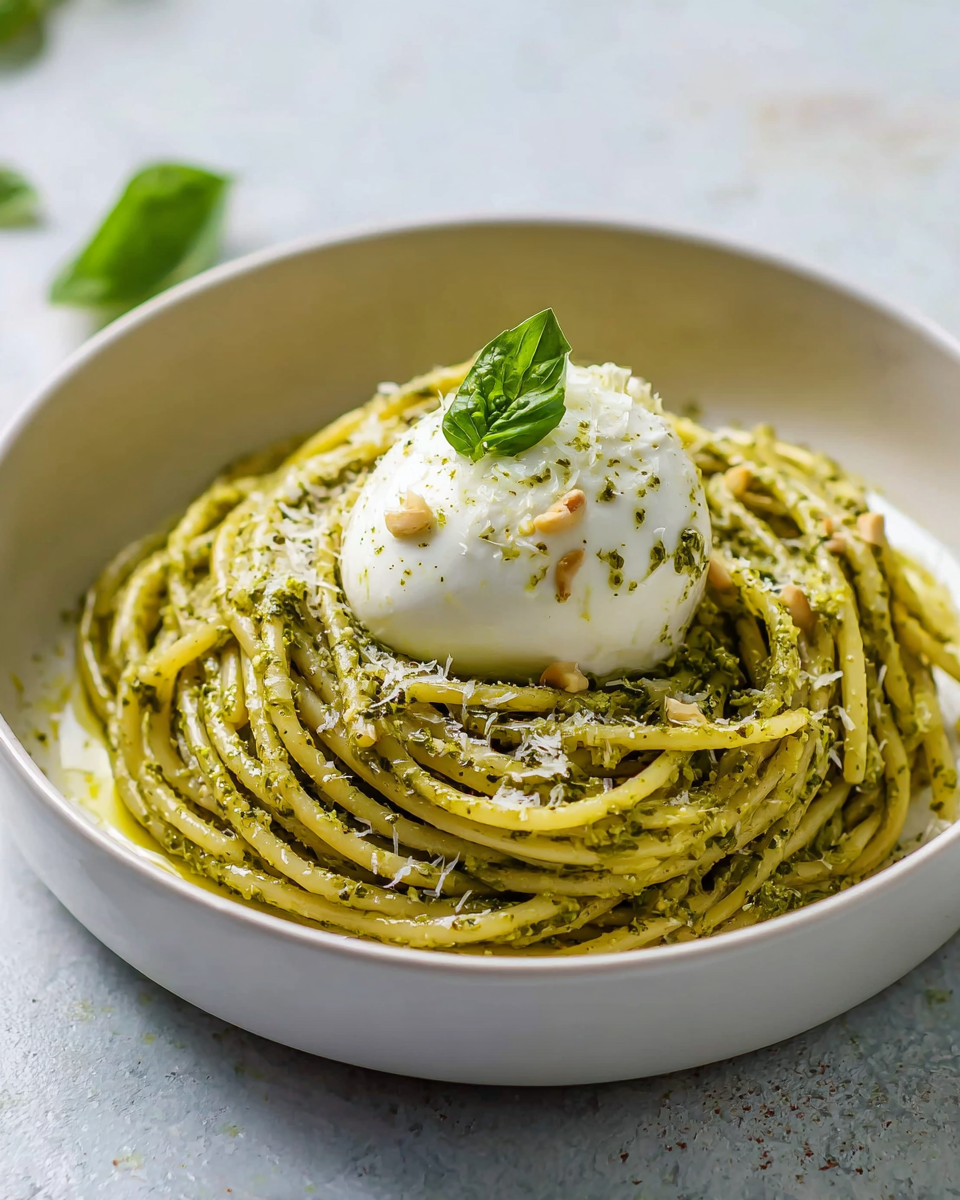
Pesto Pasta with Burrata
Ingredients
For the pesto:
- 4 cups fresh basil leaves washed and thoroughly dried
- 3 garlic cloves
- 1/2 cup freshly grated Asiago cheese
- 1/4 cup pine nuts toasted
- 1/2 to 3/4 cup olive oil adjusting as needed
- 1/4 teaspoon salt
- 1/4 teaspoon black pepper
- 1/4 teaspoon red pepper flakes
For the pasta:
- 1 pound bucatini
- 2 to 4 large burrata balls for a creamier finish
- 1/4 cup Parmesan cheese grated
- A generous handful of fresh basil leaves for garnish
Instructions
- Begin with the pesto. Add the basil, Asiago, pine nuts, and garlic to a food processor. Pulse until the mixture becomes finely broken down into small crumbs.
- Keep the processor running and gradually pour in 1/2 cup of olive oil. Examine the texture, and if the pesto remains too coarse, add more olive oil a little at a time until it reaches the consistency you prefer. Season with salt, black pepper, and red pepper flakes, then blend once more. Taste and adjust the seasoning as needed.
- If the pine nuts have not yet been toasted, place them in a skillet over low heat. Stir and shake the pan frequently until the nuts are lightly golden and fragrant, about 5 minutes. Watch them closely so they do not burn.
- Cook the bucatini according to the package directions until al dente. Drain thoroughly once cooked, keeping the pasta hot for mixing.
- Transfer the hot bucatini to a large bowl and add the prepared pesto. Start with at least 1/4 cup, then increase the amount to suit your taste. Toss for several minutes so the pasta is evenly coated and the sauce is fully worked through.
- Set the burrata in the center of the pasta and gently tear it open so the soft interior spreads into the warm noodles. Lightly toss again to incorporate some of the creamy cheese.
- Finish the dish with the fresh basil garnish and a generous scattering of grated Parmesan. Serve immediately while warm.