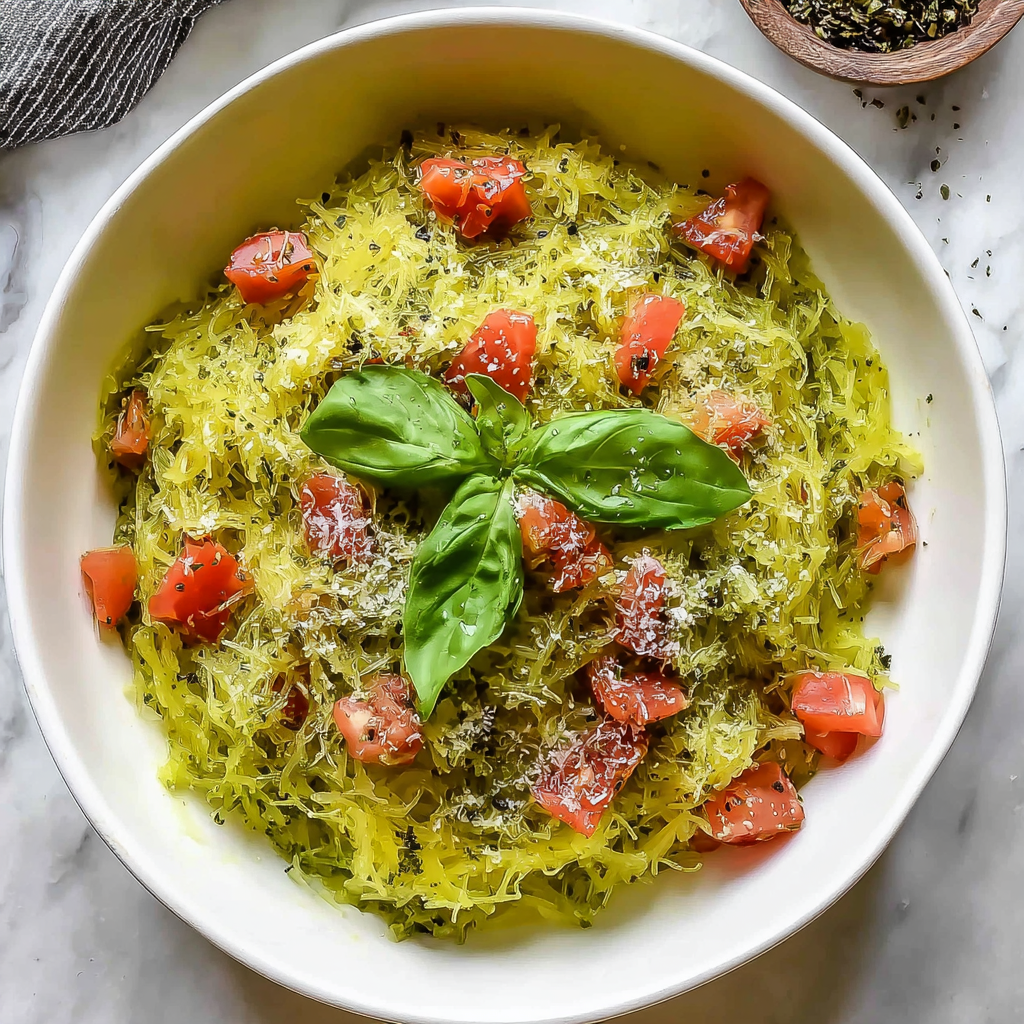
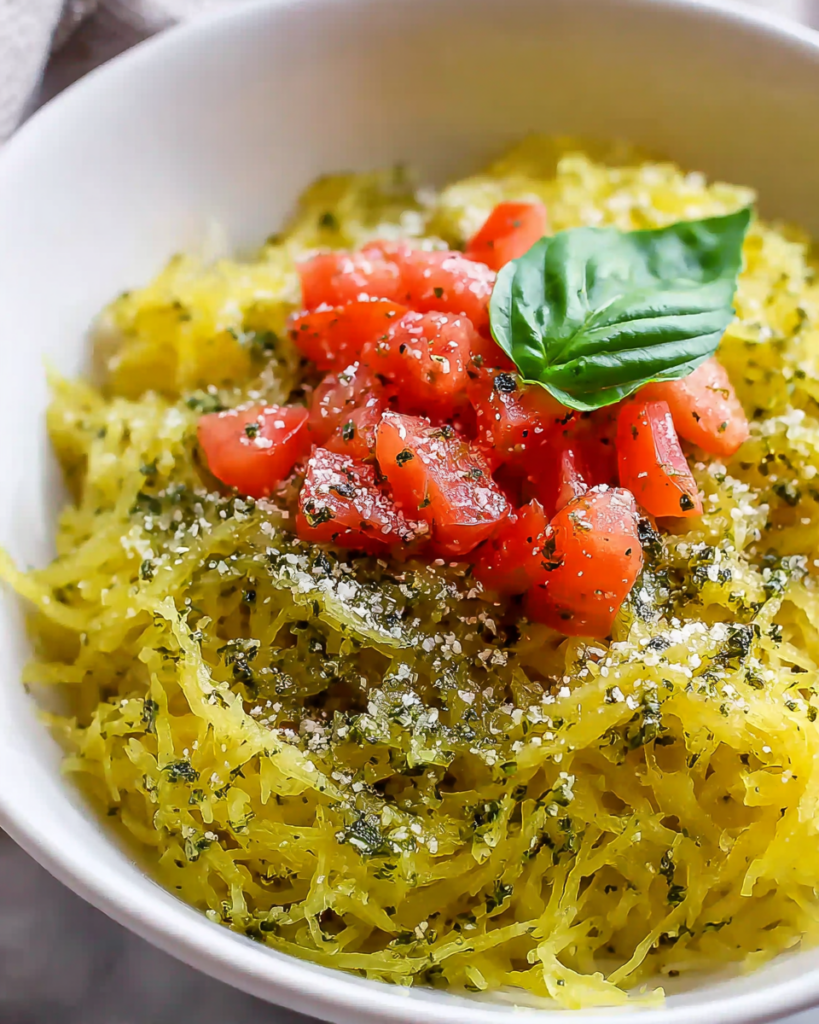
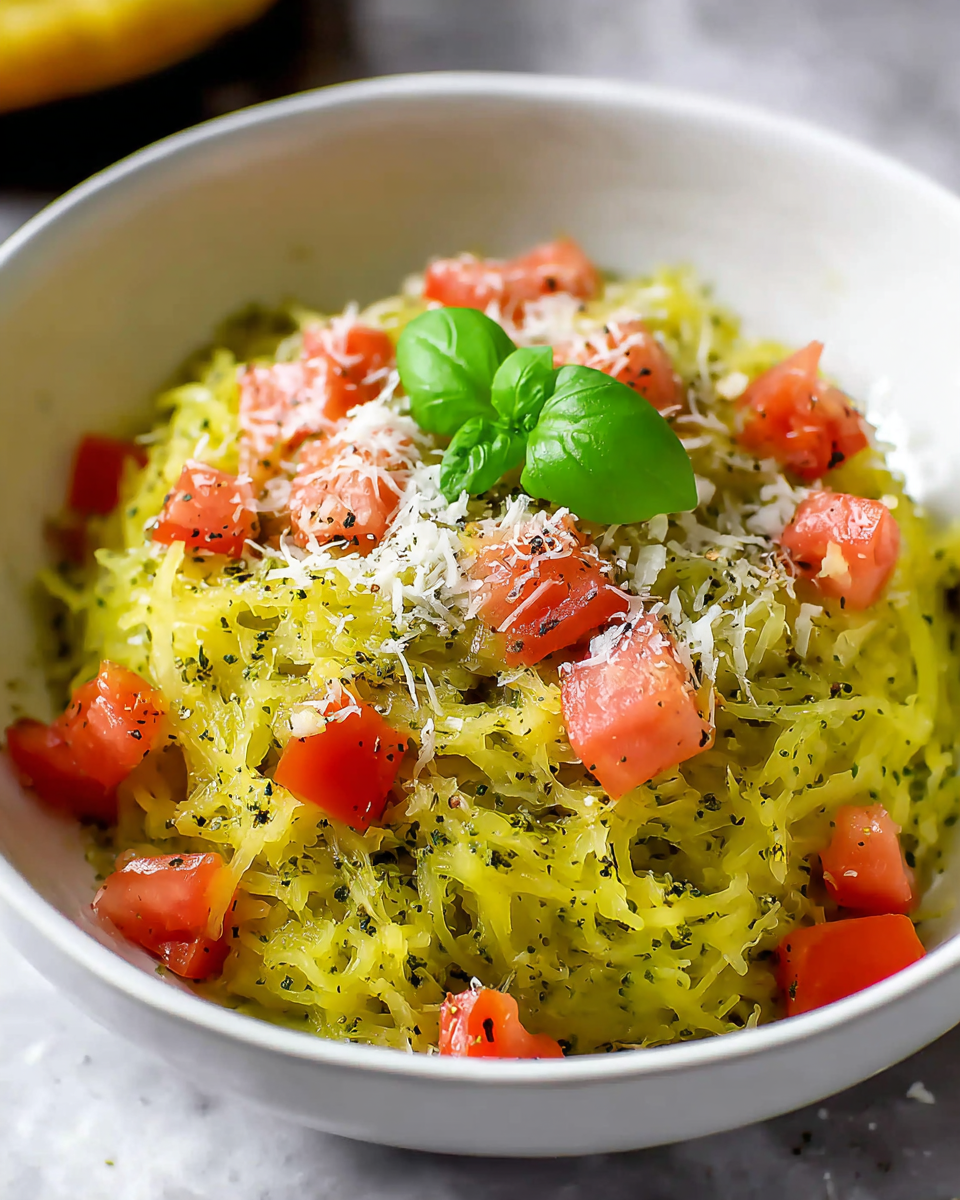
Pesto Spaghetti Squash is a quick, light, beginner-friendly dish with fresh basil flavor, tender squash strands, and juicy tomato folded through at the end. It is a smart choice for a simple lunch or a no-fuss dinner that still feels fresh and satisfying.
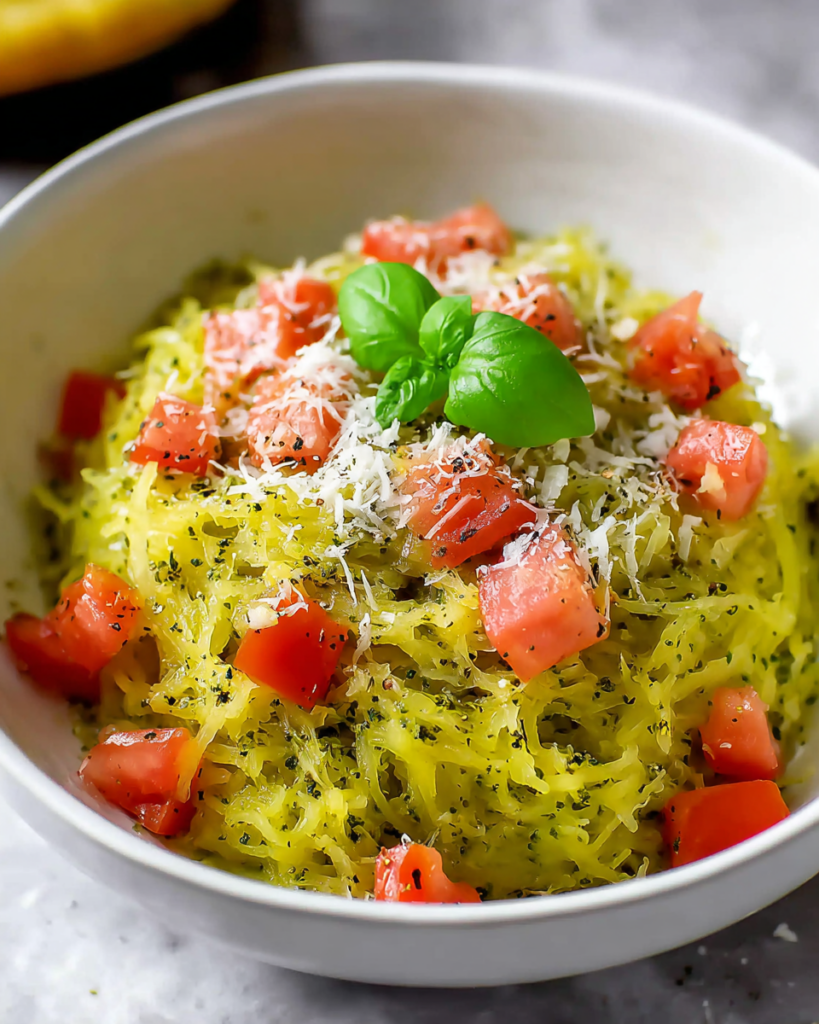
This is the kind of meal that fits beautifully into busy days when you want something warm, flavorful, and a little lighter than a bowl of pasta. The microwave keeps the squash easy to manage, and the pesto brings everything together with very little effort.
What makes this dish work so well is the contrast. You get soft, delicate squash, a rich and savory basil sauce, and fresh tomato for a bright finish. It tastes wholesome, but it never feels boring.
It is also a practical recipe to keep in your back pocket. You can serve it on its own, pair it with chicken or fish, or use the extra cooked squash for another meal later in the week.
What You Need to Make This Pesto Spaghetti Squash
Spaghetti squash gives you those tender, noodle-like strands that make the whole dish feel comforting while still staying light. Choose one that feels firm and heavy for its size.
Fresh basil leaves are the heart of the sauce, bringing that classic herby flavor that makes the dish taste vibrant and fresh rather than plain.
Garlic adds a little sharpness and depth to the pesto. Since the ingredient list is short, even one small clove makes a noticeable difference.
Parmigiano-Reggiano gives the pesto its salty, savory backbone and helps the sauce cling to the squash instead of feeling watery.
Extra-virgin olive oil smooths out the pesto and gives it a rich texture. It is what turns the basil and cheese into a silky sauce instead of a rough blend.
Tomato is folded in at the end for freshness, color, and a juicy bite that keeps the dish from tasting too heavy or one-note.
Kosher salt and black pepper do the final balancing work. With a simple recipe like this, proper seasoning is what makes all the flavors pop.
Cooking Steps
STEP 1: Cut the spaghetti squash in half lengthwise and scoop out the seeds and stringy center. Place the halves cut-side down in a microwave-safe dish, cover, and cook until the flesh is tender enough to scrape into strands.
STEP 2: While the squash cooks, make the pesto. Blend the basil, garlic, olive oil, grated cheese, a pinch of salt, and black pepper until the mixture is smooth and spoonable. Taste it before setting it aside so you can adjust the seasoning early.
STEP 3: Let the squash cool just enough to handle comfortably. Use a fork to pull the flesh into long strands, working from edge to center so you get that spaghetti-like texture without mashing it.
STEP 4: Measure out the amount of cooked squash you plan to use for this dish and transfer it to a large bowl. Keeping the portion controlled helps the pesto coat the strands evenly instead of disappearing into a giant pile of squash.
STEP 5: Add the pesto and toss gently until the strands are well coated. You want every bite to have that basil-Parmesan flavor, but you do not want to overmix and break the squash down too much.
STEP 6: Fold in the diced tomato right at the end, then taste and finish with more salt and pepper if needed. Serve immediately while the squash is still warm and the tomato stays fresh and bright.
Helpful Tips
- Do not overcook the squash. When it goes too long, the strands become watery and soft instead of lightly tender.
- Toss the squash with pesto while it is warm, not piping hot. That helps the sauce coat the strands nicely without becoming oily.
- Add the tomato at the very end so it keeps its shape and fresh flavor instead of turning soft and wet.
Can I use jarred pesto instead of homemade?
Yes, you can. Homemade pesto gives the dish a fresher and brighter flavor, but a good store-bought pesto works well when you want to save time. If you use jarred pesto, taste it first since some versions are saltier or more garlicky than others.
Why does spaghetti squash sometimes turn watery?
Spaghetti squash naturally holds a lot of moisture, and overcooking makes that even more noticeable. Once it is tender, scrape it into strands and avoid letting it sit too long in the hot dish. Gentle tossing also helps keep the texture lighter instead of soggy.
Perfect Pairings
A simple grilled chicken breast works especially well here because it adds protein without competing with the basil and tomato. The flavors stay clean and balanced.
This dish is also very good alongside salmon or another mild fish. The fresh pesto and tomato make the plate feel bright, and the squash keeps the meal from becoming too rich.
For a vegetarian plate, serve it with roasted mushrooms or white beans. Both options add a little more substance while still fitting the soft, savory, herb-forward feel of the dish.
Can I make this ahead of time?
You can prep parts of it ahead. The pesto can be blended in advance, and the squash can be cooked earlier in the day. For the best texture, combine everything just before serving and add the tomato last so the finished dish still tastes fresh.
Is this better warm or cold?
It is best slightly warm or at room temperature. Warm squash helps the pesto spread evenly and gives the dish a more comforting feel, while the tomato still stays fresh. Cold leftovers are still tasty, but the texture is softer and the flavors are more muted.
Keeping Leftovers Fresh
Leftover mixed squash can be stored in an airtight container in the refrigerator for about 2 to 3 days. The tomato will soften as it sits, but the flavor will still be pleasant for a quick lunch or side dish.
For reheating, use short bursts in the microwave or warm it gently in a skillet over low heat. Avoid high heat, which can make the squash watery and cause the pesto to separate.
Freezing the fully finished dish is not the best option because the tomato and pesto lose some of their fresh character after thawing. A better approach is to freeze plain cooked spaghetti squash on its own for up to 2 months, then thaw and toss it with freshly made pesto when you are ready to serve.
One of the nicest details about this recipe is that it naturally gives you flexibility. If you only use part of the cooked squash, the extra can become another quick meal later. That makes this a very practical choice for smaller households, meal prep, or anyone trying to stretch simple ingredients into more than one dinner.
This is also a great recipe to keep around when you want something that feels clean and flavorful without requiring a long ingredient list. The basil, cheese, olive oil, and garlic do most of the heavy lifting, while the squash gives the dish body and the tomato adds that final fresh note that wakes everything up. It is simple in the best way, and that is exactly why it earns a spot in a regular rotation.
Pesto Spaghetti Squash
Ingredients
- 1 medium tomato cut into approximately 1/2-inch pieces
- 1 small garlic clove minced very finely
- Freshly ground black pepper to taste
- 1 medium spaghetti squash
- 3 tablespoons grated Parmigiano-Reggiano
- Kosher salt to taste
- 15 large fresh basil leaves about 1 packed cup
- 1/4 cup extra-virgin olive oil
Instructions
- Slice the spaghetti squash in half lengthwise. With a spoon, remove and discard the seeds and stringy center.
- Set the squash halves cut-side down in a microwave-safe dish. Cover and cook on high for 8 to 9 minutes, or until the flesh is tender.
- While the squash cooks, prepare the pesto. Place the basil, minced garlic, olive oil, grated Parmigiano-Reggiano, a pinch of kosher salt, and black pepper in a small blender. Blend until the mixture becomes a smooth purée, then adjust the seasoning as needed.
- When the squash is done, carefully remove it from the microwave and allow it to cool briefly until it can be handled safely. Using a fork, scrape the flesh into long, spaghetti-like strands and transfer them to a large bowl.
- Measure 2 cups of the cooked spaghetti squash and keep the remainder for another use.
- Add the prepared pesto to the 2 cups of squash and toss until the strands are evenly coated. Fold in the diced tomato, then season with additional salt and pepper to taste.
- Serve once fully combined. This dish may be enjoyed on its own or alongside a preferred protein.