Pineapple Upside-Down Bundt Cake is a quick, crowd-pleasing dessert with buttery caramel notes, juicy fruit, a tender shortcut crumb, and a glossy finish that makes it perfect for potlucks, holidays, and simple weekend baking.
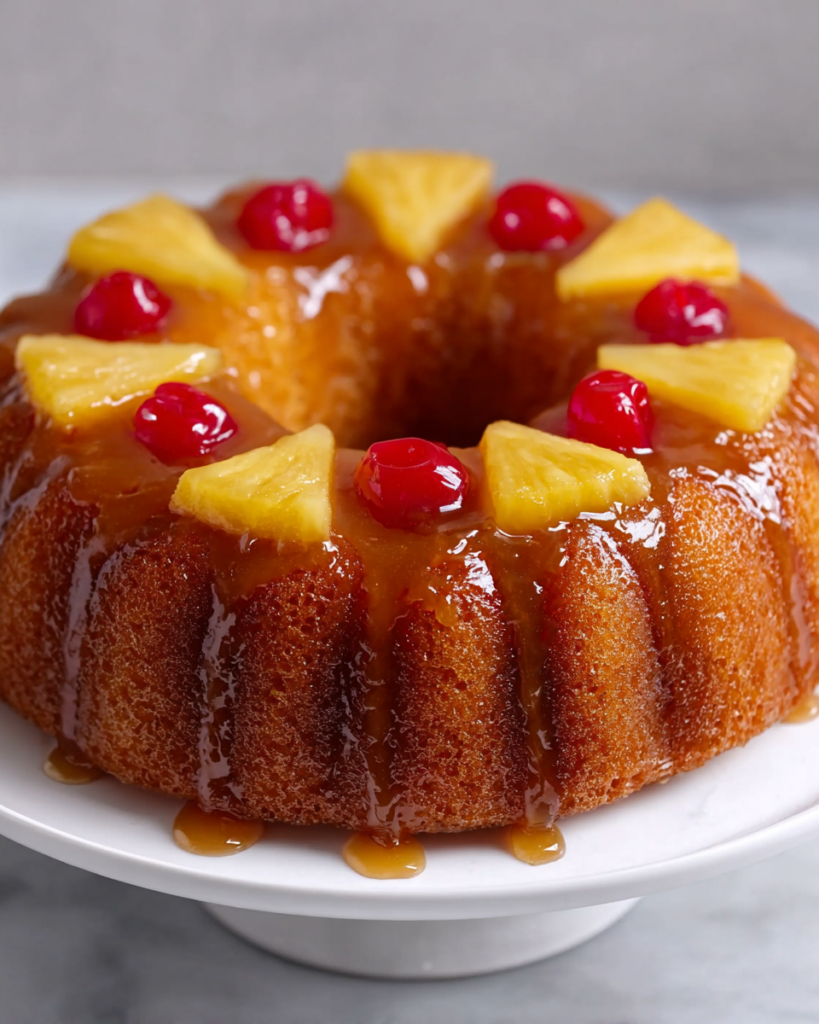
This is the kind of cake that looks far more impressive than the effort it takes. You get that classic pineapple-and-brown-sugar topping everyone recognizes, but the Bundt shape gives it a more polished, party-ready feel.
It also works beautifully when you want a dependable dessert without a long prep list. The cake mix base keeps things easy, while the melted butter, pineapple juice, and fruit topping give it that old-fashioned flavor people come back for.
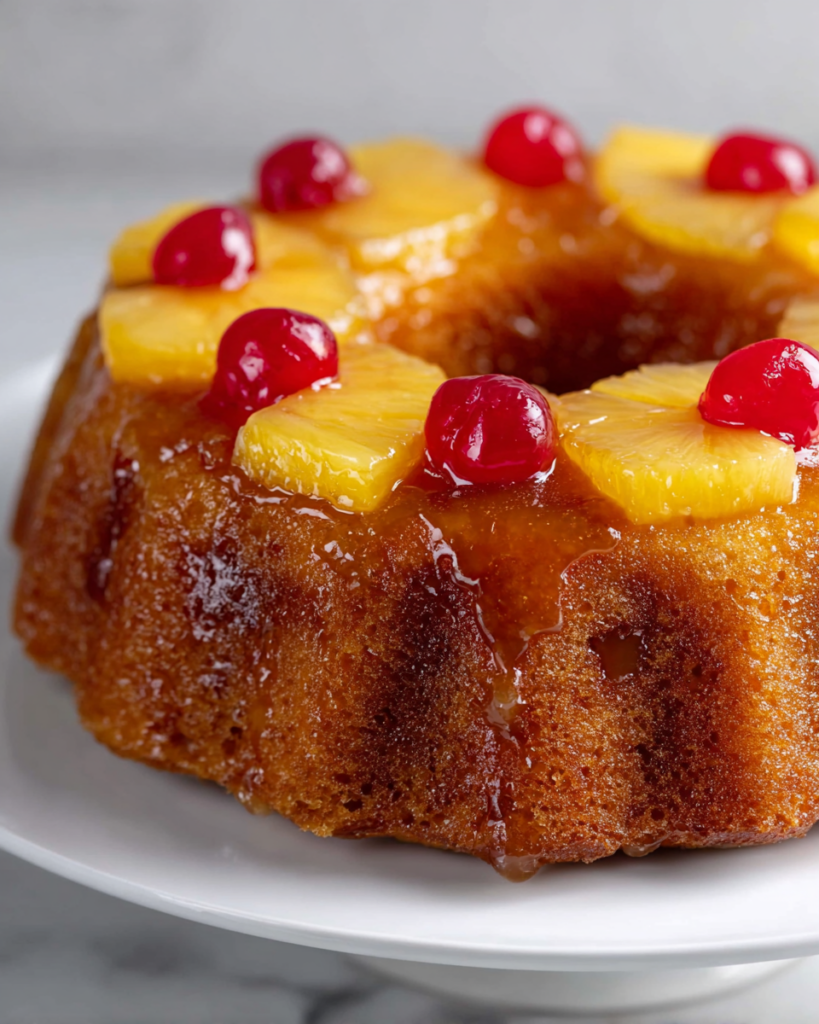
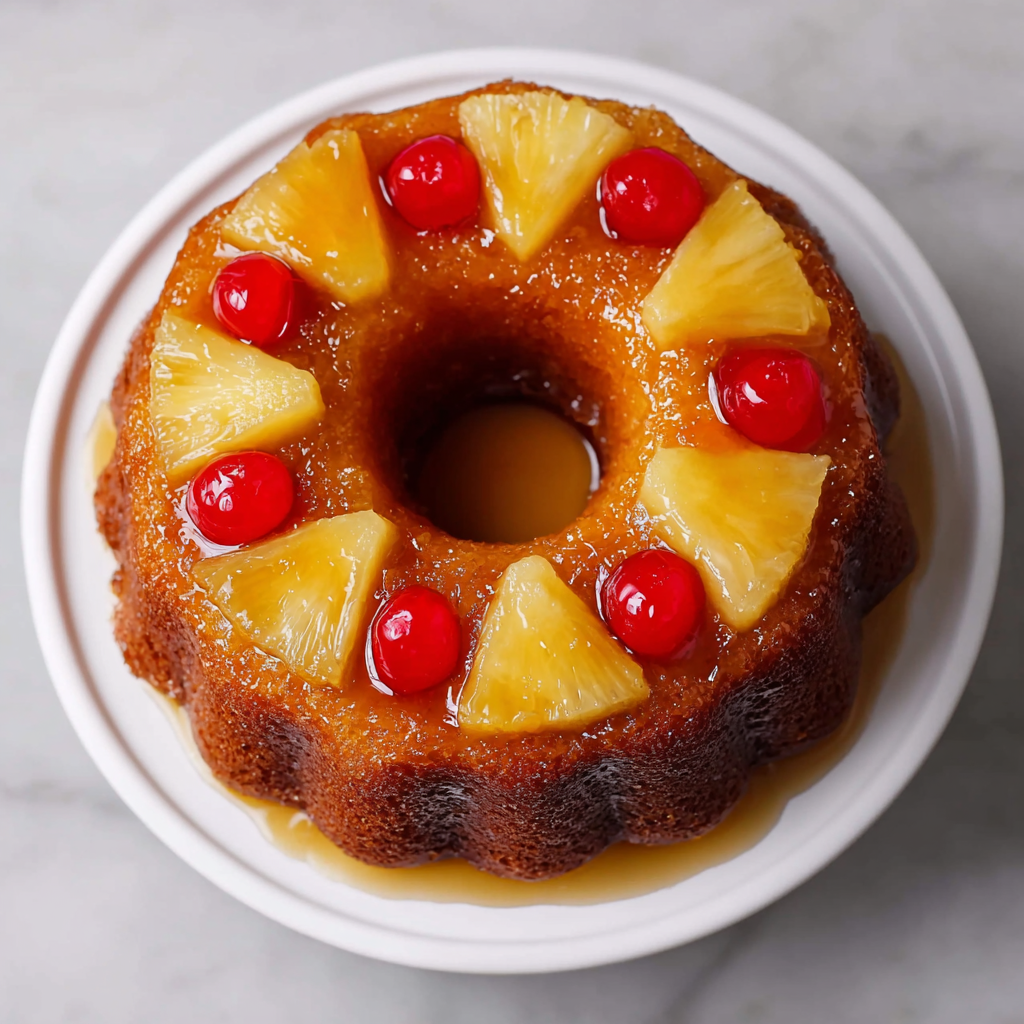
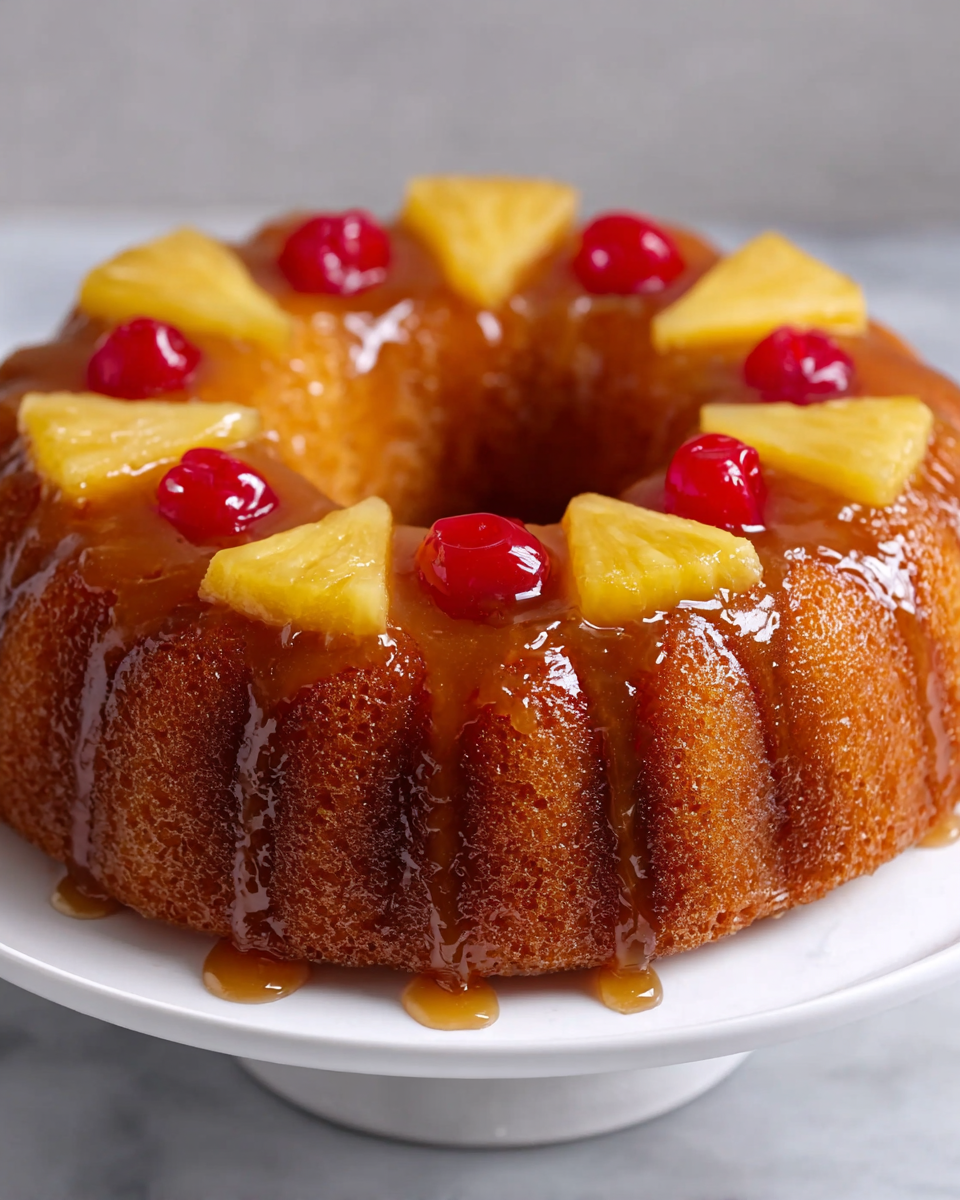
What makes this one especially appealing is the contrast. The top turns sticky and rich after baking, the pineapple stays soft and bright, and the cherries add that familiar pop of sweetness that makes every slice feel a little festive.
What You Need to Make This Pineapple Upside-Down Bundt Cake
Sliced pineapple rings bring the signature look and fruity sweetness, and they soften into the brown sugar layer as the cake bakes.
Maraschino cherries add that classic retro touch and a bright burst of color that makes the finished cake stand out on the table.
Unsalted butter is used in both the topping and the batter, giving the cake a richer flavor and helping create a glossy caramel-like finish once inverted.
Light brown sugar melts with the butter to form the sticky base that coats the fruit and gives the cake its signature upside-down glaze.
Ground cinnamon adds a light warmth that rounds out the sweetness without taking over the pineapple flavor.
Yellow cake mix keeps the crumb soft, fluffy, and reliable, making this a great choice when you want an easy dessert that still feels homemade.
Eggs help the batter bake up with structure and tenderness so the cake slices cleanly after cooling.
Reserved pineapple juice carries extra fruit flavor into the cake itself, so the inside tastes just as good as the top looks.
Step-by-Step Pineapple Upside-Down Bundt Cake
STEP 1: Heat your oven and thoroughly prepare the Bundt pan. Grease every curve well, then dust lightly with flour so the fruit topping releases cleanly when it is time to invert the cake.
STEP 2: Build the topping in the bottom of the pan by adding part of the melted butter first, then sprinkling over the brown sugar and cinnamon mixture. This creates the sweet layer that turns glossy in the oven.
STEP 3: Arrange the drained pineapple rings over the sugar base and tuck the cherries in between. You can keep the rings whole for a traditional look or cut them to better fit the shape of the pan.
STEP 4: Mix the cake batter with the yellow cake mix, eggs, melted butter, and enough reserved pineapple juice to reach the right amount. Stir just until smooth so the batter stays light and easy to pour.
STEP 5: Gently spread the batter over the fruit layer, taking care not to disturb the arrangement underneath. Smooth the top so the cake bakes evenly all the way around.
STEP 6: Bake until the cake is golden and a tester inserted into the center comes out clean. The kitchen should smell buttery and sweet, and the edges will begin to pull away slightly from the pan.
STEP 7: Let the cake rest before turning it out. This short cooling time helps the topping settle so it clings to the cake instead of staying behind in the pan.
STEP 8: Place a serving plate over the Bundt pan and carefully invert. Lift the pan slowly and let any syrupy topping run down over the sides before serving warm or at room temperature.
Can I make this ahead of time?
Yes, and it holds up very well for a make-ahead dessert. Bake it earlier in the day or even the night before, then let it cool completely and keep it covered. The flavor stays rich, and the topping remains beautifully sticky.
How do I keep the topping from sticking to the pan?
The biggest help is generous pan prep. Grease every detail of the Bundt pan well, add a light dusting of flour, and do not rush the unmolding. Letting the cake rest briefly after baking gives the topping time to settle.
Can I use fresh pineapple instead of canned?
You can, but canned rings are usually the easier choice here because they are uniform and come with juice for the batter. Fresh pineapple works best when sliced evenly and patted dry so the topping does not become watery.
What can I use if I do not have enough pineapple juice?
Top it off with water or milk, just enough to reach the amount needed for the batter. Water keeps the pineapple flavor cleaner, while milk gives the crumb a slightly softer, richer feel.
Helpful Tips
- Do not flood the pan with extra liquid from the fruit. Drained pineapple helps the topping caramelize instead of turning loose and runny.
- Set the Bundt pan on the center rack for the most even bake. This helps the cake cook through without over-browning the edges.
- Invert with confidence but go slowly. A steady flip onto a large plate is much more successful than a hesitant one.
Perfect Pairings
A spoonful of lightly whipped cream is a simple match for this cake. It softens the sweetness and lets the buttery pineapple topping stay the star.
Vanilla ice cream is another easy favorite, especially if you serve the cake slightly warm. The contrast between cold creaminess and warm fruit glaze makes the dessert feel extra special.
For a lighter finish, serve slices with hot coffee or unsweetened tea. That little bit of bitterness balances the brown sugar topping beautifully and keeps the whole dessert from feeling too heavy.
Keeping Leftovers Fresh
Once the cake has cooled, cover it well or transfer slices to an airtight container. It will keep in the refrigerator for about 4 days. Because of the fruit topping, chilled storage is the safest choice if you are holding leftovers beyond the day it is baked.
For longer storage, freeze individual slices wrapped well and placed in a freezer-safe container for up to 2 months. Thaw them in the refrigerator overnight so the topping stays intact and the cake does not turn soggy.
To reheat, warm a slice gently in the microwave for a few seconds at a time until just heated through. You want the topping to soften and become glossy again without overheating the cake. For serving at room temperature, simply let a slice sit out for a short while before eating.
Pineapple Upside-Down Bundt Cake
Ingredients
For the topping:
- 1 can sliced pineapple rings 20 ounces, juice drained and reserved for the batter
- 8 to 24 maraschino cherries stems removed
- 3/4 cup unsalted butter melted and allowed to cool slightly, divided
- 1/2 teaspoon ground cinnamon
- 3/4 cup packed light brown sugar
For the cake batter:
- 3 large eggs at room temperature
- 1 package yellow cake mix 15 ounces
- 3/4 cup reserved pineapple juice or enough pineapple juice topped off with water or milk to equal 3/4 cup
- 1/2 cup melted butter
Instructions
- Prepare the oven by heating it to 350°F. Thoroughly grease a 12-cup Bundt pan, making sure every curve and crevice is coated well. Add a light dusting of flour over the greased surface, tap the pan to distribute it evenly, and discard any excess.
- Pour 1/4 cup of the melted butter into the bottom of the prepared Bundt pan. In a small bowl, stir together the brown sugar and cinnamon, then scatter the mixture evenly over the butter to form the base layer.
- Drain the pineapple slices, reserving the juice for the batter. Arrange the pineapple rings over the brown sugar mixture, placing the maraschino cherries decoratively among the fruit. The pineapple may be left whole or cut in half, according to preference.
- In a mixing bowl, combine the yellow cake mix, 1/2 cup melted butter, 3/4 cup reserved pineapple juice, and the eggs. Mix until the batter is smooth and evenly blended. If the pineapple juice does not quite reach 3/4 cup, add water or milk to make up the difference.
- Carefully pour the batter over the arranged fruit in the Bundt pan, spreading it evenly. Place the pan on the center oven rack and bake for 30 to 35 minutes, or until a toothpick inserted into the center comes out clean.
- Remove the cake from the oven and let it rest in the pan on the counter for 15 to 20 minutes. Set a serving plate or cake stand over the pan, then carefully invert the cake. Lift the pan away slowly and allow any remaining glaze to run down over the cake before serving.