Pork Belly And Kimchi is a bold, weeknight-friendly skillet dinner with rich pork, spicy fermented kimchi, and a glossy sauce that tastes deeply layered without a long simmer. Serve it over rice or tuck it into crisp lettuce wraps.
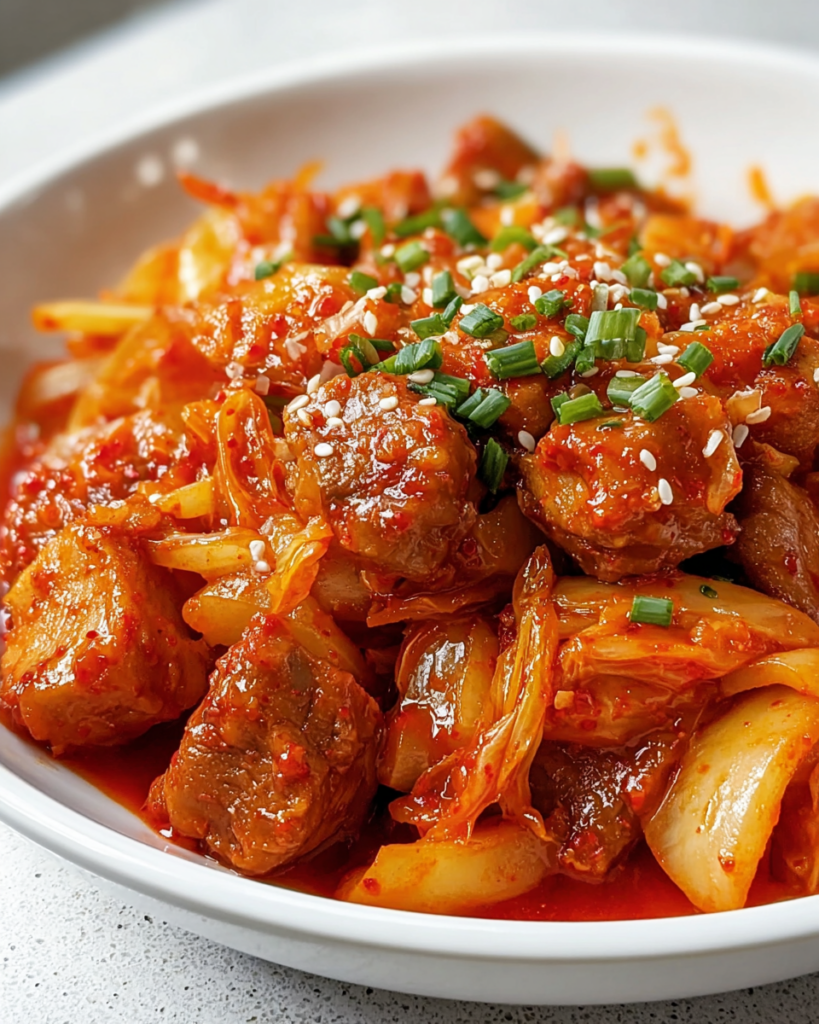
This is the kind of dish that makes a simple dinner feel exciting without asking you to do anything complicated. You get heat, savoriness, tang, and a little sweetness all in one pan, which makes it especially good for nights when plain meals just will not cut it.
The seasoning paste does a lot of the heavy lifting here. Gochujang brings depth, the garlic adds punch, and the rice syrup rounds everything out so the finished sauce tastes balanced instead of sharp or one-note.
What makes this one work so well is the way the ingredients cook in stages. The pork gets a head start, the kimchi softens and mingles with the pan juices, then the vegetables and enoki finish in the sauce so every bite feels full and well-seasoned.
What You Need to Make This Pork Belly And Kimchi
- Pork belly – the rich, savory base of the dish that turns tender as it cooks and gives the sauce body.
- Kimchi – the tangy, spicy ingredient that defines the whole skillet and brings fermented depth.
- Gochujang – the core of the seasoning paste, adding gentle heat, color, and a deeper chili flavor than flakes alone.
- Red pepper flakes – used alongside the paste for extra kick and a more layered spicy finish.
- Garlic – freshly minced garlic keeps the sauce bold and fragrant.
- Rice syrup – softens the sharper edges of the spice and kimchi with a subtle sweetness.
- Soy sauce – adds salty, savory backbone and helps season the braising liquid.
- Onion and green onion – onion sweetens as it cooks, while green onion keeps the final flavor fresher and brighter.
- Carrot – adds a little sweetness and a soft bite that contrasts nicely with the pork and kimchi.
- Enoki mushrooms – delicate and quick-cooking, these soak up the sauce beautifully at the end.
- Sesame oil – used in two stages for nutty depth and a classic finish.
- Water – loosens the sauce and gives the pork time to simmer until everything tastes cohesive.
- Cooked rice or lettuce leaves – rice makes it hearty, while lettuce wraps give it a lighter, crisp contrast.
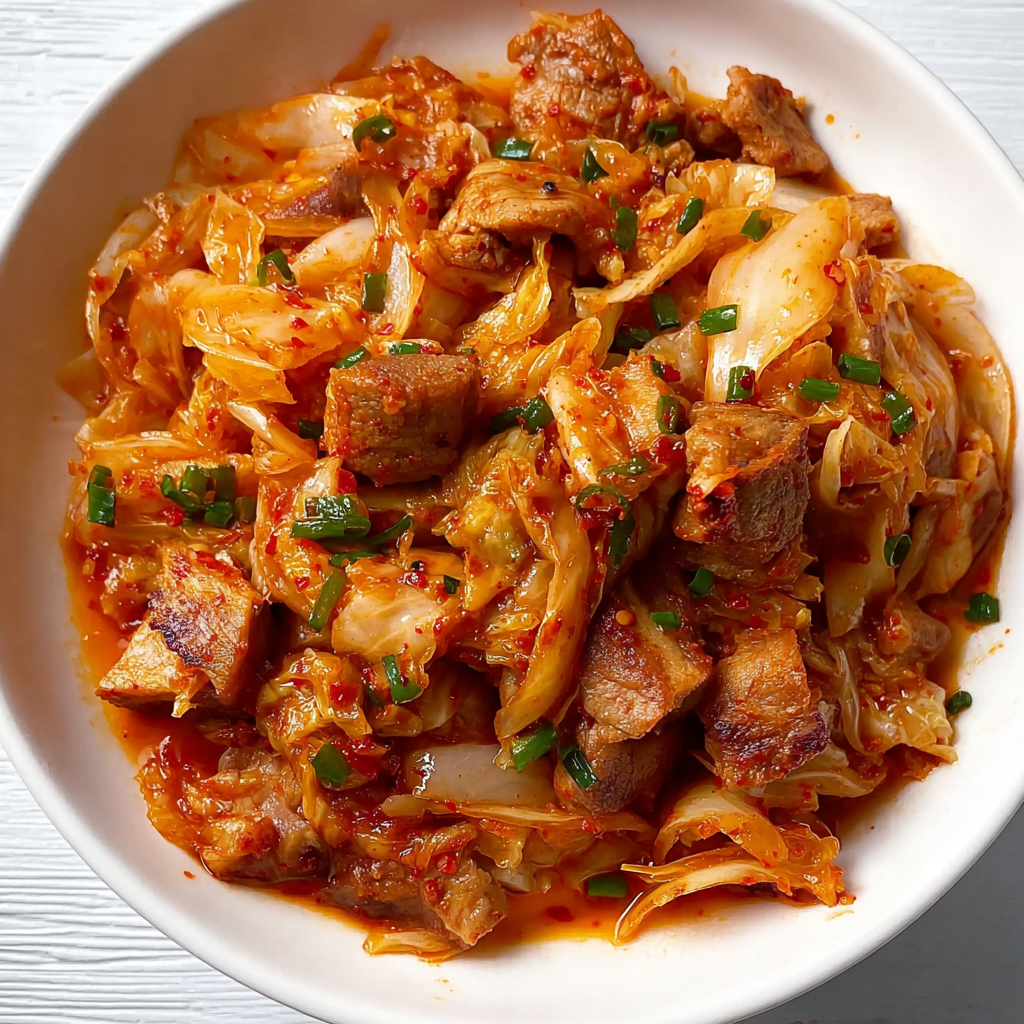
Cooking Steps
STEP 1: Stir together the gochujang, garlic, red pepper flakes, rice syrup, soy sauce, water, and black pepper until you have a smooth red paste. Mixing this first keeps the cooking process fast once the pan is hot.
STEP 2: Warm a large skillet over medium heat and cook the pork in a little sesame oil with a pinch of salt until it loses its raw color and starts to render. You are not trying to fully finish it yet, just build flavor.
STEP 3: Add the kimchi and let it cook with the pork for several minutes. This step matters because it softens the kimchi slightly and helps its juices blend with the rendered fat and seasoning already in the pan.
STEP 4: Add the chopped onion, carrot, green onion, and prepared paste, then pour in the water. Cover the pan and let everything simmer gently until the pork is tender and the sauce tastes settled and deeply seasoned.
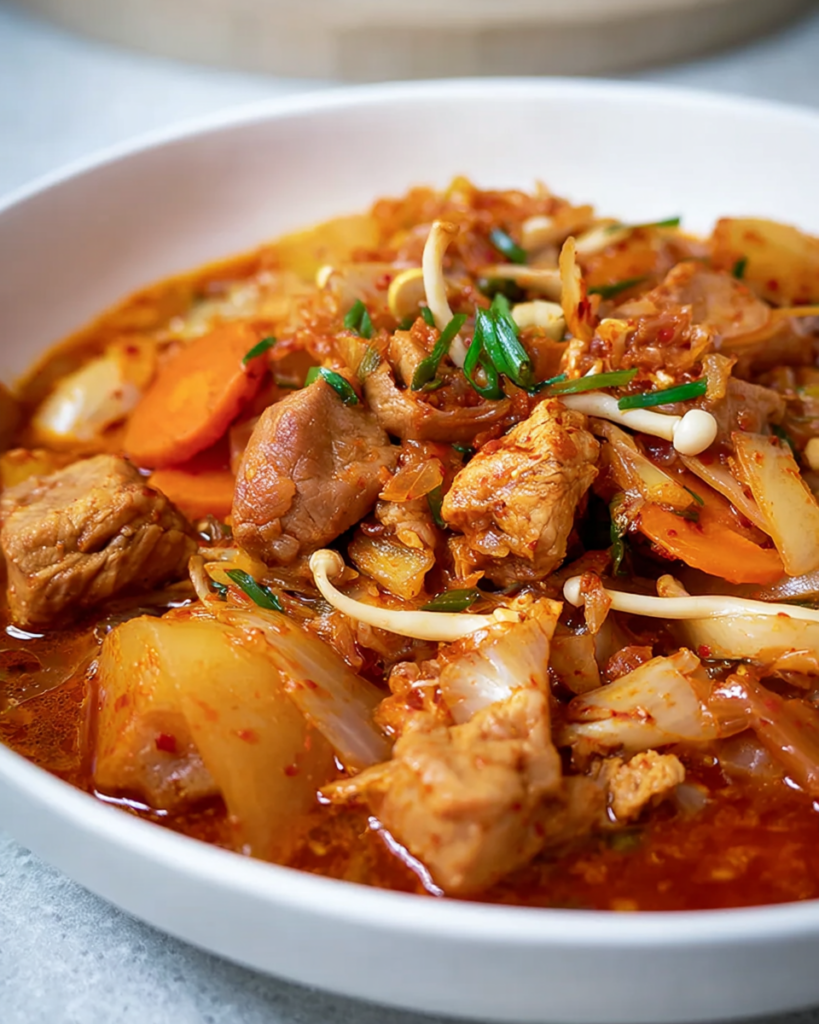
STEP 5: Uncover the skillet and place the enoki mushrooms on top. Drizzle in the remaining sesame oil and cook briefly over a slightly higher heat until the mushrooms soften and the sauce looks glossy and concentrated.
STEP 6: Serve the dish hot while the sauce is still lively. Spoon it over rice for a comforting bowl, or let everyone build lettuce wraps at the table for a more hands-on meal.
Perfect Pairings
Steamed white rice is the most natural match here because it catches every bit of the savory, spicy sauce and balances the richness of the pork. If you want the dish to feel especially satisfying, this is the way to go.
Lettuce leaves are great when you want contrast. The cool crunch against the hot pork and kimchi keeps the meal from feeling too heavy, and they make the sauce taste even punchier.
A simple cucumber side works well too. Something chilled, crisp, and barely seasoned gives your table a refreshing break from the heat and richness without competing with the main skillet.
Can I use another cut of pork?
Yes, but the result will change a little. Pork belly gives you the richest texture and the most flavorful pan juices. A leaner cut will still work, though the final dish may taste lighter and slightly less silky.
Is this dish very spicy?
It has a noticeable kick from the gochujang, kimchi, and red pepper flakes, but it should not feel harsh if you serve it with rice. For a milder version, reduce the flakes first rather than removing the paste.
Can I make it ahead of time?
Yes, and it reheats very well. In fact, the flavor often tastes even deeper after the sauce has had time to settle. The mushrooms will soften more after storage, but the overall dish still holds up beautifully.
Do I have to serve it with lettuce wraps?
Not at all. Lettuce is optional and works more as a fresh contrast than a required part of the dish. Rice is the heartier, more classic choice when you want the skillet to feel like a complete meal.
Helpful Tips
- Let the kimchi cook with the pork before adding the liquid. That short pan time helps it mellow slightly and keeps the finished dish from tasting too raw or sharp.
- Do not overcook the enoki mushrooms. They only need a brief finish to soften and absorb flavor without disappearing into the sauce.
- Keep the heat at a steady medium during the covered cooking stage. A gentle simmer gives the pork time to tenderize and keeps the sauce from reducing too quickly.
Keeping Leftovers Fresh
Store leftovers in an airtight container in the refrigerator for up to 4 days. The flavors stay strong, and the sauce continues to develop, which makes this a very good make-ahead lunch or dinner option.
For longer storage, freeze it for up to 2 months. Let it cool fully before packing it away, and try to store it in portions so you can reheat only what you need. The texture of the mushrooms may soften a bit more after freezing, but the dish will still be very enjoyable.
To reheat, warm it in a skillet over medium heat with a small splash of water if the sauce has thickened in the fridge. You can also microwave it in short intervals, stirring between each one, until it is heated through. Serve with freshly made rice or a few new lettuce leaves so the meal still feels bright and fresh.
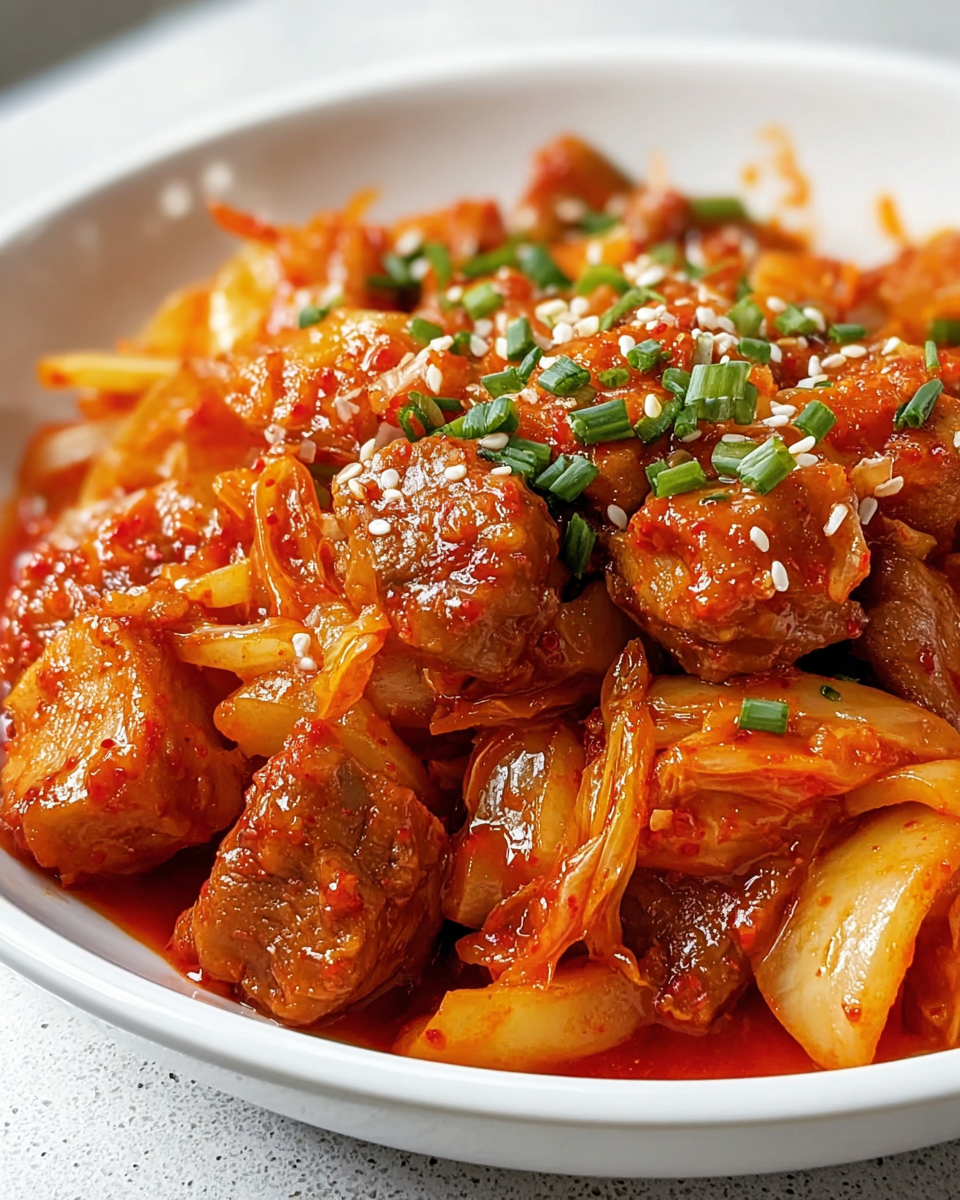
Pork Belly And Kimchi
Ingredients
For the main dish
- 1 cup cleaned and trimmed enoki mushrooms
- Lettuce leaves for wrapping if desired
- 1 small carrot thinly sliced into rounds
For the seasoning paste
- 2 tablespoons gochujang
- 4 garlic cloves freshly minced
- 2 tablespoons rice syrup
- 1 tablespoon soy sauce such as low-sodium Kikkoman
- 2 tablespoons red pepper flakes
- 2 tablespoons water
- 1/2 teaspoon black pepper
Additional items used in the method
- Pork
- Sesame oil
- Salt
- Kimchi
- Chopped onion
- Green onion
- 1 1/2 cups water
- Cooked rice for serving
Instructions
- In a small bowl, stir together the gochujang, red pepper flakes, rice syrup, soy sauce, water, minced garlic, and black pepper until the mixture is smooth and thoroughly blended. Set the seasoning paste aside.
- Place a large pan over medium heat. Add the pork along with 2 teaspoons sesame oil and 1/4 teaspoon salt, then cook for 5 to 6 minutes, stirring constantly, until the meat is no longer pink and is lightly cooked through.
- Add the kimchi to the pan and continue cooking for another 6 to 7 minutes so the flavors combine and the kimchi softens slightly.
- Mix in the chopped onion, sliced carrot, green onion, and the prepared seasoning paste. Pour in 1 1/2 cups of water, cover the pan, and cook over medium heat for 12 to 13 minutes until the pork becomes fully cooked and tender. Stir occasionally with a wooden spoon to keep the mixture from sticking and to promote even cooking.
- Remove the lid and arrange the enoki mushrooms over the top. Drizzle with the remaining 1 tablespoon sesame oil, raise the heat to medium-high, and cook uncovered for 2 to 3 minutes until the mushrooms soften and absorb the sauce.
- Take the pan off the heat and serve immediately. Spoon the pork and kimchi mixture into individual bowls to enjoy with cooked rice, or wrap portions in lettuce leaves for a crisp contrast.


