Pork Belly Bao Buns are a make-ahead-friendly main course with soft steamed buns, richly braised pork, and a glossy sweet-savory finish. They feel special enough for guests but still fit a relaxed weekend cooking project.
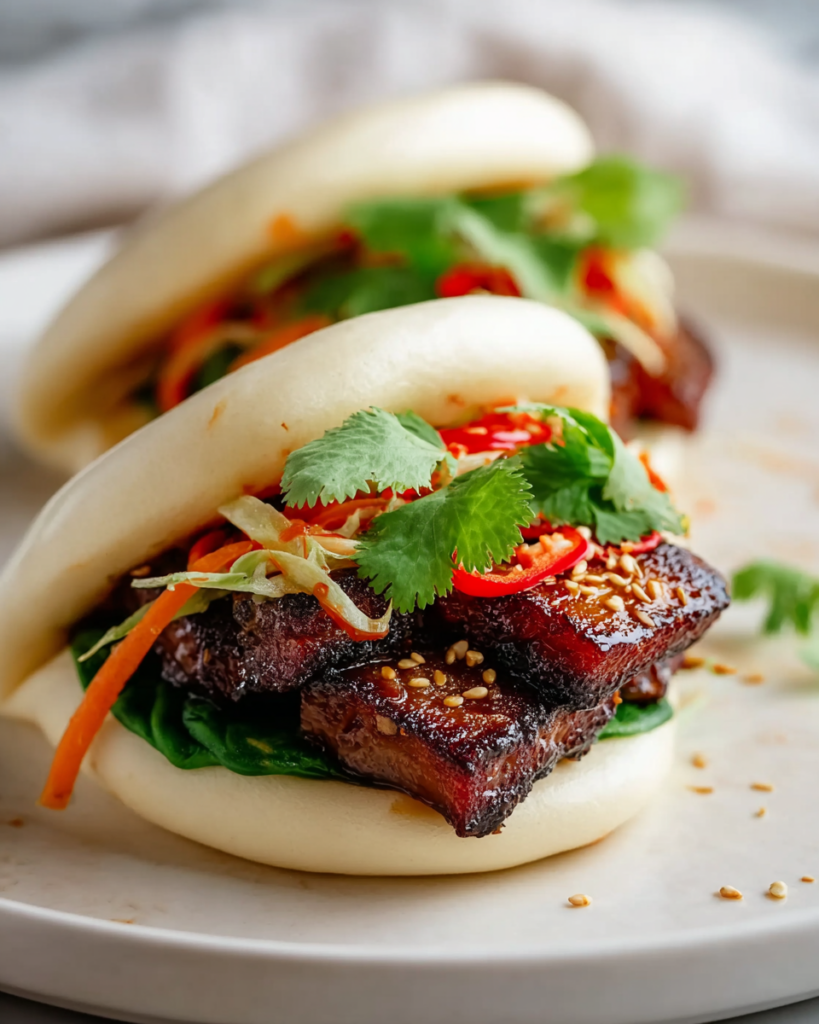
This is the kind of dish that turns a slower afternoon in your kitchen into something genuinely worth the time. You get tender braised pork, cloud-soft buns, and fresh toppings that wake everything up right before serving.
What makes these bao buns so satisfying is the contrast. The pork cooks low and slow until it is succulent, the buns steam up light and fluffy, and the final sauce clings to the meat in a sticky, shiny layer with just enough sweetness and depth.
Even better, the steps build on each other in a practical way. While the dough rises, the pork gently cooks, so the longer timeline feels organized rather than complicated, and the final assembly is where everything comes together beautifully.
What You Need to Make This Pork Belly Bao Buns
- All-purpose flour forms the base of the buns and gives them that soft but structured chew once steamed.
- Instant yeast helps the dough rise reliably, creating the airy texture that makes bao so appealing.
- Warm water, milk, and butter bring the dough together with a little richness, keeping the buns tender instead of dry.
- Superfine sugar lightly sweetens both the dough and the braising liquid, rounding out the savory notes.
- Olive oil keeps the folded buns from sealing shut, so they open easily after steaming.
- Pork belly is the heart of the filling, becoming meltingly tender after its long, gentle simmer.
- Ginger and garlic build warmth and fragrance into the pork from the start.
- Broth and rice wine give the braising liquid depth, helping the meat stay moist and flavorful as it cooks.
- Dark soy sauce, honey, and brown sugar create the glossy finish, balancing savory richness with caramel-like sweetness.
- Lemongrass paste and fresh chili sharpen the sauce with brightness and a little heat.
- Spring onions, cilantro, sesame seeds, and red chili strips add freshness, crunch, and color right at the end.
Cooking Steps
STEP 1: Make the dough by mixing the flour, yeast, sugar, and salt first, then adding the warm water, milk, and melted butter gradually until a shaggy dough forms. Knead until smooth and elastic, then leave it in a lightly oiled bowl until doubled.
STEP 2: While the dough rises, braise the pork belly in broth with ginger, garlic, rice wine, sugar, oil, and a little seasoning. Bring it up to a boil, lower the heat, cover, and let it simmer gently until the meat is very tender.
STEP 3: Once the first rise is done, turn the dough out, knead it briefly, and divide it into equal portions. Shape each piece into a ball, roll into small ovals, brush lightly with oil, and fold them over so each bun keeps its classic pocket shape.
STEP 4: Set the shaped buns on parchment, cover them, and let them rise again until puffed. This second proof matters because it gives the buns a lighter texture and helps them steam up evenly instead of turning tight or heavy.
STEP 5: Steam the buns in batches on their parchment until they are cooked through and pillowy. They should look softly set and feel springy when done.
STEP 6: Cut the cooked pork into bite-size pieces and fry it briefly in a hot pan to develop color on the edges. Stir together the sauce ingredients, pour them in, and cook until the liquid reduces into a dark, sticky glaze that coats the pork well.
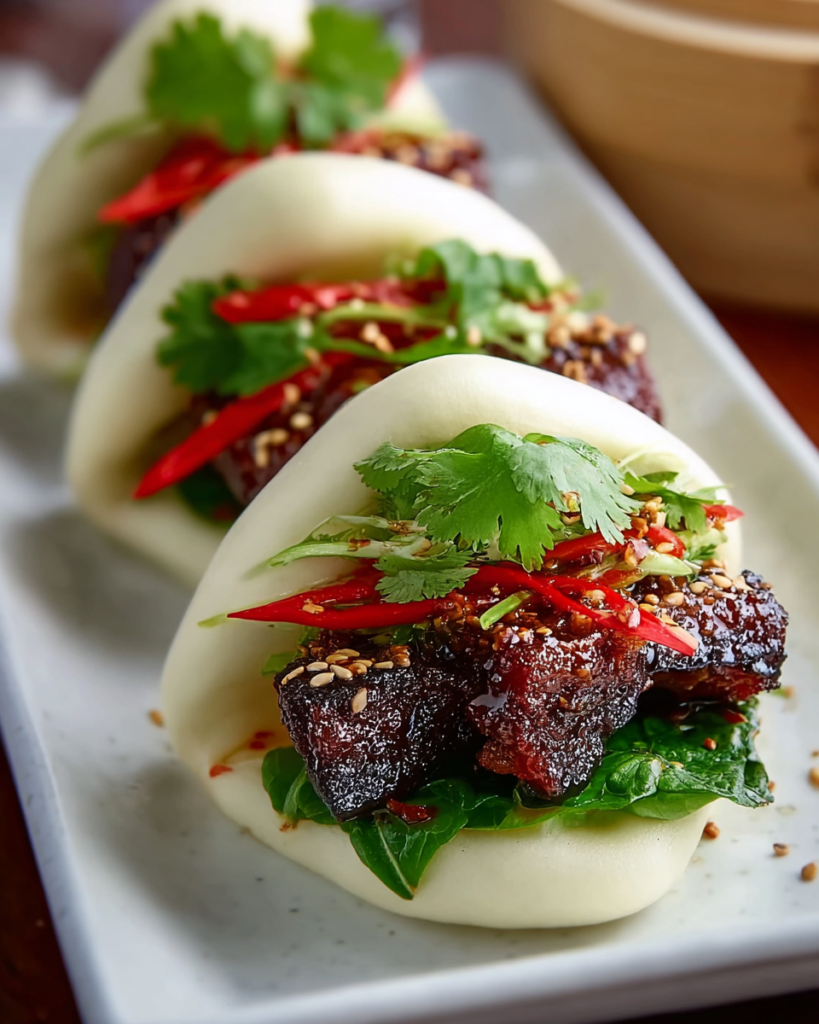
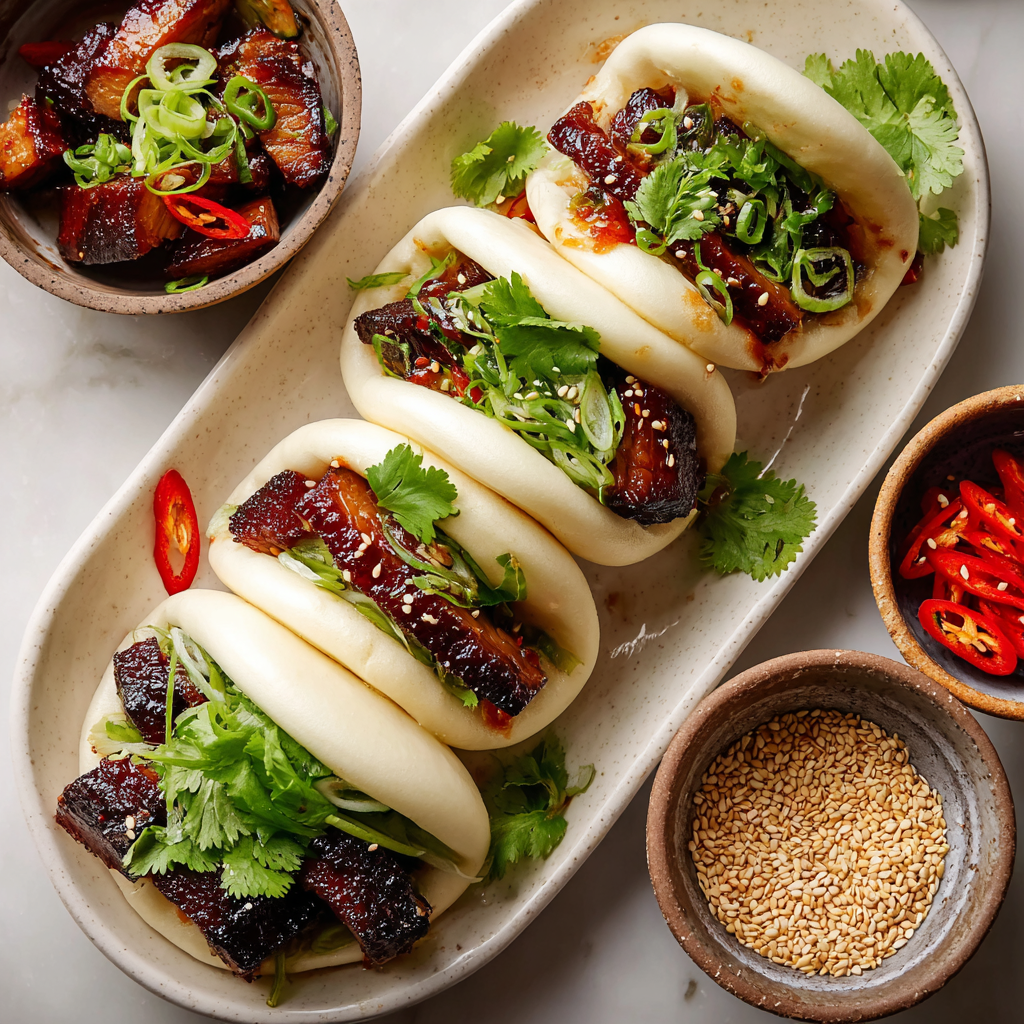
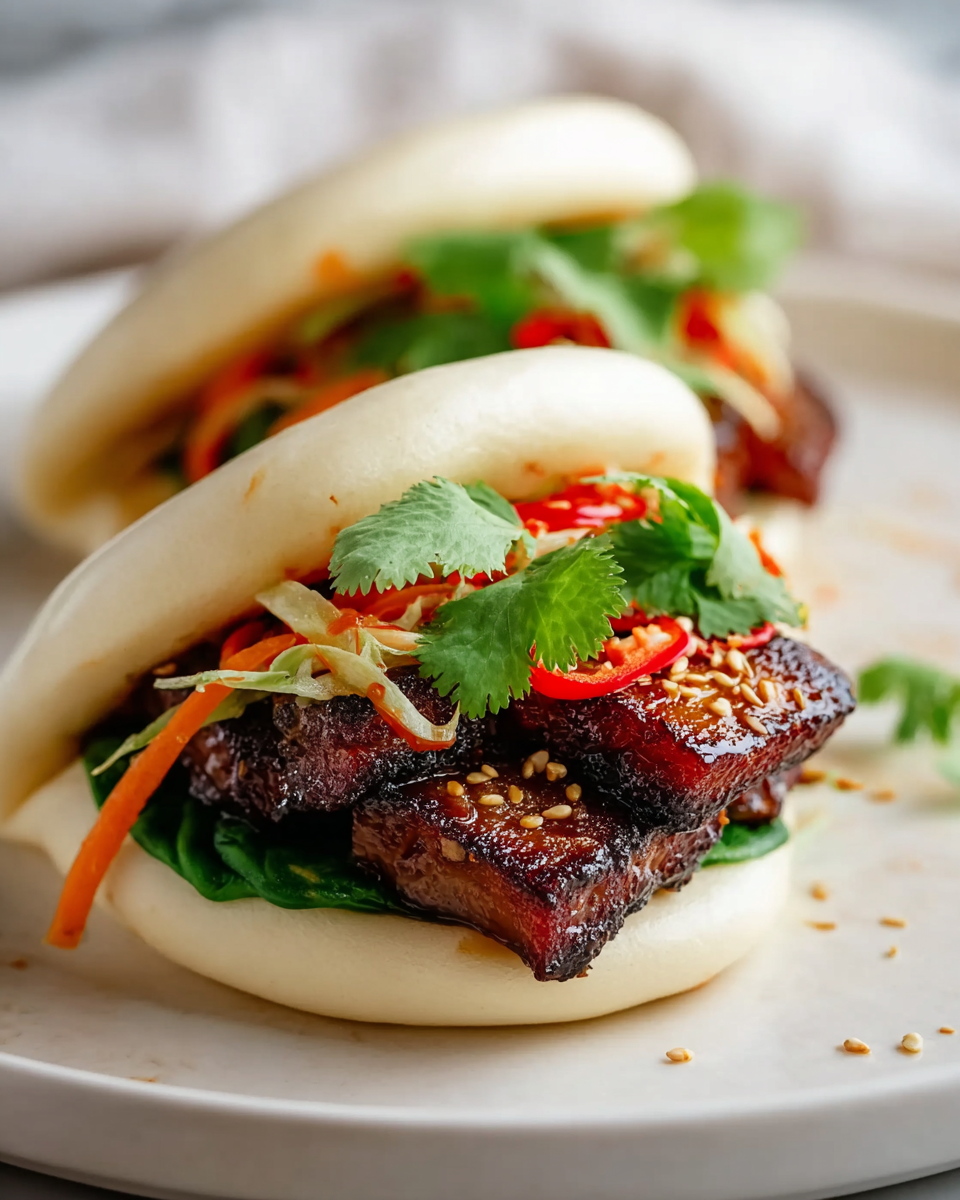
STEP 7: Gently open each steamed bun and fill it with the glossy pork belly. Finish with cilantro, spring onions, sesame seeds, and thin strips of red chili so every bite has richness, freshness, and a little texture.
Can I make the pork belly ahead of time?
Yes, and it actually works very well that way. You can braise the pork a day ahead, chill it, and do the final pan-glaze just before serving. That breaks the recipe into easier stages and makes assembly much less hectic.
Why did my bao buns turn dense instead of fluffy?
Dense buns usually come from under-proofed dough or dough that was not kneaded long enough. Give the first and second rise enough time, and make sure the dough feels smooth and elastic before resting it. Gentle steaming also helps keep the texture light.
Can I freeze the buns?
You can freeze the steamed buns once they have cooled completely. Keep them well wrapped, then reheat by steaming until soft again. The pork filling can also be frozen separately, which makes future assembly much easier.
What can I use if I do not have dark soy sauce?
A regular soy sauce can work in a pinch, though the glaze will be lighter in both color and depth. If you use it, keep an eye on the sweetness and reduction so the sauce still finishes balanced and glossy rather than salty.
Perfect Pairings
- A quick cucumber salad with rice vinegar adds a cool, crisp contrast to the richness of the pork belly.
- Simple stir-fried greens work beautifully alongside the buns when you want a fuller dinner plate.
- Pickled vegetables, especially carrots or radish, bring brightness that cuts through the sticky glaze and fatty pork.
Helpful Tips
- Do not rush the second rise. Puffy shaped buns steam much better than ones that go into the steamer still looking tight.
- Save the pork cooking liquid if you can. It makes a flavorful base for soup, noodles, or a quick savory broth later.
- Fry the braised pork over fairly high heat before adding the sauce so you get caramelized edges as well as a sticky finish.
How to Store & Reheat
Store leftover pork belly in an airtight container in the refrigerator for up to 3 days. Keep the buns separate if possible so they do not absorb too much moisture from the filling.
Steamed buns can be refrigerated for about 2 days or frozen for up to 2 months. Reheat them by steaming for a few minutes rather than microwaving for too long, which can make them tough around the edges.
The glazed pork reheats best in a skillet over low to medium heat with a splash of water if needed to loosen the sauce. If you are reheating from frozen, thaw overnight in the fridge first for the most even texture.
These bao buns are definitely a project-style meal, but they reward you with something that feels both comforting and impressive. Once you take that first bite of fluffy bun, sticky pork, and fresh herbs, the extra time in the kitchen makes perfect sense.
Pork Belly Bao Buns
Ingredients
For the bao buns:
- 3 tbsp whole milk
- 2 tsp instant yeast
- 2 tbsp superfine sugar
- 3 tbsp soft unsalted butter
- 3.75 cups all-purpose flour
- 7.1 fl oz warm water
- 0.5 tsp salt
- 1 tbsp olive oil
- For the pork belly:
- 2.2 lb pork belly skin removed
- 1 tbsp minced ginger
- 1 tbsp rice wine
- 4.25 cups hot chicken broth or vegetable broth
- 3 garlic cloves halved
- 1 tbsp superfine sugar
- 2 tbsp vegetable oil
- 1 pinch salt
- 1 pinch pepper
For the sauce:
- 2 tbsp honey
- 1 red chili finely chopped
- 1 tbsp minced ginger
- 3 tbsp dark soy sauce
- 1 tsp lemongrass paste
- 2 tbsp brown sugar firmly packed
For the garnish:
- 1 tbsp sesame seeds
- 4 spring onions cut into thin strips
- 2 red chilies sliced into thin strips
- 1 small bunch cilantro roughly torn
Instructions
- Place the flour, superfine sugar, salt, and instant yeast into a mixing bowl and stir until evenly distributed.
- In a separate jug, combine the warm water, milk, and butter, stirring until the butter has fully melted.
- Pour the liquid mixture into the dry ingredients little by little, mixing first with a spoon and then with your hands until a dough forms.
- Transfer the dough to a lightly floured work surface and knead for about 10 minutes, or knead in a stand mixer fitted with a dough hook until smooth and elastic.
- Set the dough into a lightly oiled bowl, cover with clingfilm or a damp tea towel, and leave it to rise until doubled in volume, about 90 minutes to 2 hours.
- While the dough is rising, prepare the pork belly. Place the pork belly, ginger, salt, vegetable oil, hot broth, sugar, garlic, pepper, and rice wine into a cast iron casserole pan.
- Bring the contents to a boil, cover with a lid, lower the heat, and let it simmer gently for 2 hours.
- When the pork is fully cooked, switch off the heat and drain the meat. The cooking liquid may be reserved for soups or stock if desired.
- Once the dough has completed its first rise, turn it out onto a floured surface and knead it briefly.
- Divide the dough into 10 equal pieces and shape each piece into a ball.
- Roll each ball into an oval measuring roughly 12 cm by 8 cm, placing each one on a piece of baking parchment.
- Brush the surface of each oval with olive oil, then fold it over a chopstick so that a gap remains in the fold, with the oil on the inside. Remove the chopstick.
- Line two oven trays with parchment paper and place the shaped buns on top.
- Cover the buns with clingfilm or a clean carrier bag and leave them to prove again for 1 hour, or until puffed.
- Bring a large steamer pan to the boil.
- Steam the bao buns in batches, leaving them on their baking parchment, for about 15 minutes until cooked through.
- As the buns steam, cut the cooked pork belly into bite-sized pieces.
- Heat 1 tablespoon of oil in a frying pan. In a small bowl, mix together the sauce ingredients.
- Add the pork pieces to the hot pan, season with salt and pepper, and fry over a high heat until golden.
- Pour in the sauce mixture and continue cooking for 6 to 7 minutes, allowing the pork to become dark, glossy, and sticky.
- Transfer the finished pork to a warmed bowl.
- Open the steamed bao buns carefully and fill each one with the sticky pork belly.
- Top with torn cilantro, sliced red chilies, spring onion strips, and a scattering of sesame seeds before serving.