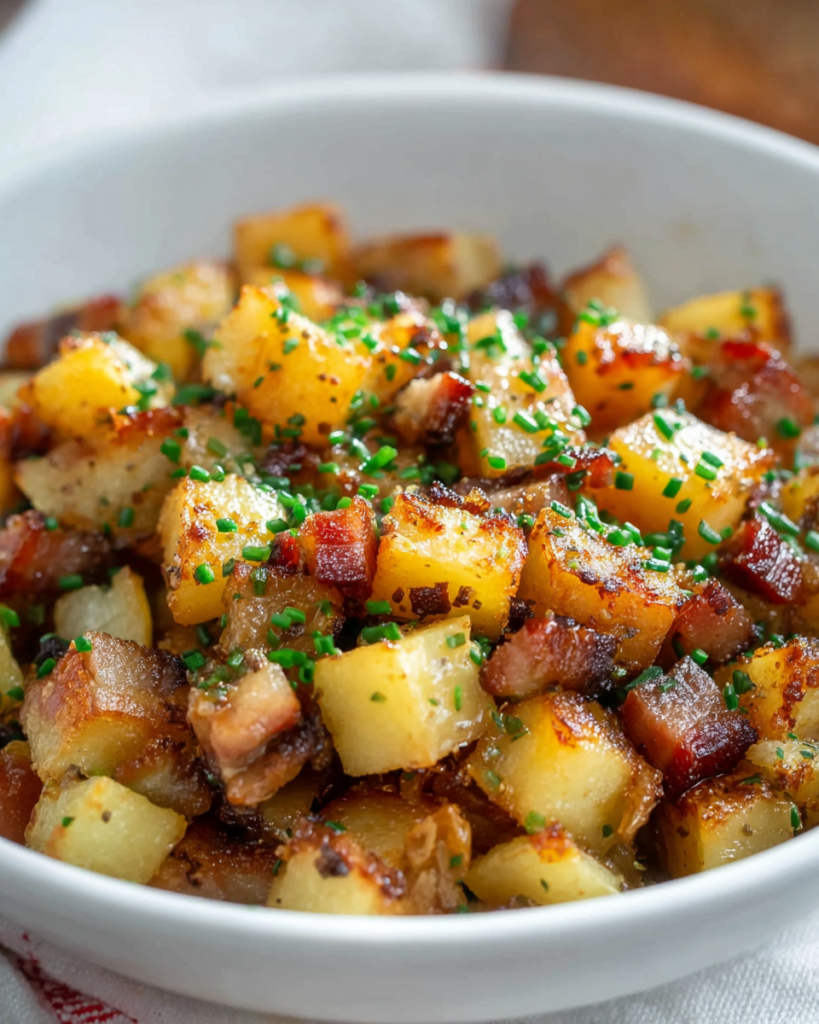
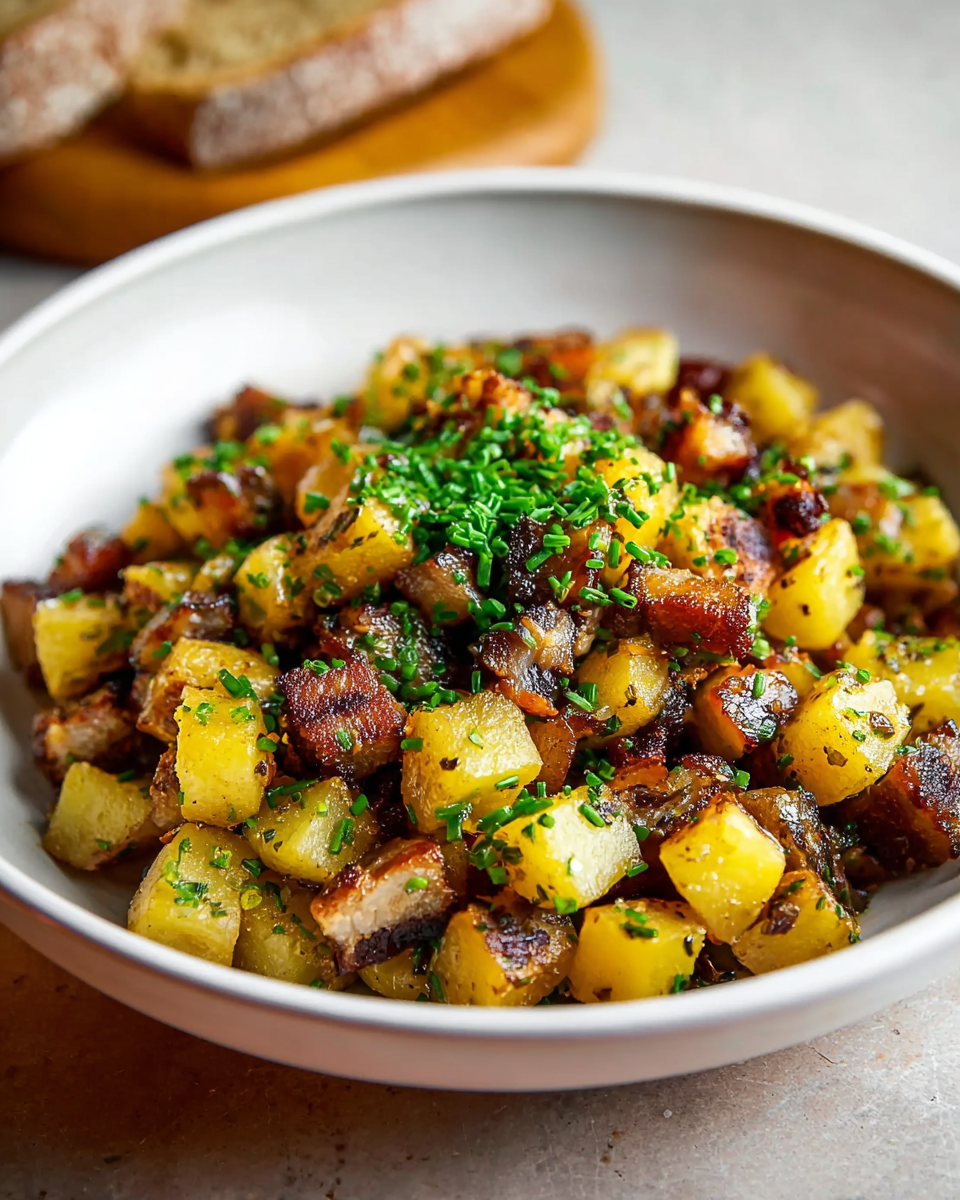
Quick, hearty, and packed with savory skillet flavor, Pork Belly Hash turns leftover pork belly and cooked potatoes into a crisp, golden meal that is satisfying, reliable, and perfect for breakfast-for-dinner, lazy weekends, or a fast comfort-food lunch.
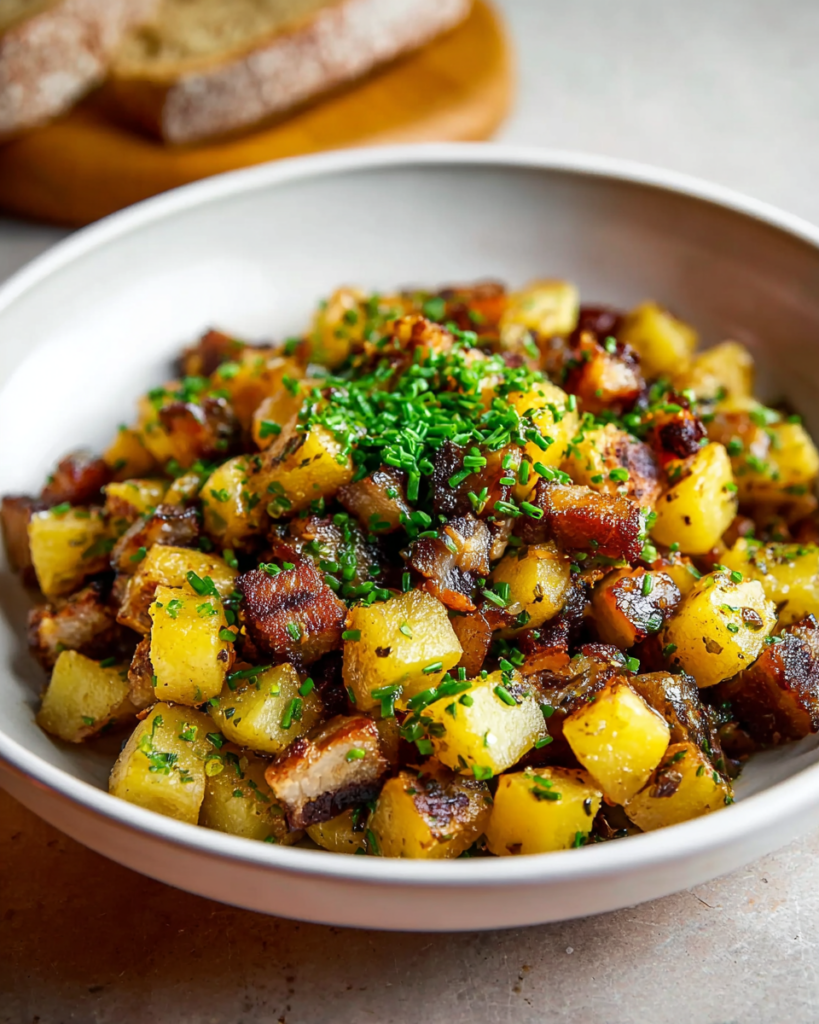
This is the kind of dish that makes leftovers feel exciting again. You get tender bites of pork belly, crisp-edged potatoes, soft onion, and garlicky flavor all brought together in one pan with a light savory coating.
It works so well because every ingredient has a clear job. The onion and garlic build the base, the pork belly adds richness, the potatoes bring body and texture, and the stock mixture helps everything cling together instead of feeling dry.
You also do not need much time to make it happen. Since the potatoes are already cooked and the pork belly is already prepared, this hash comes together quickly and still tastes like something you put real care into.
What You Need to Make This Pork Belly Hash
Olive oil helps the onion soften evenly and gives the pan enough fat to start building color right away.
Onion adds sweetness and depth, which balances the richness of the pork belly and keeps the dish from tasting too heavy.
Garlic brings a sharper savory note that wakes up the whole skillet without overpowering the other ingredients.
Thyme gives the hash a rustic, comforting edge. Even a light sprinkle makes the pan smell fuller and more homey.
Leftover pork belly is the star here. As it heats, the fat renders slightly and coats the potatoes with rich flavor.
Cooked potatoes are what make this hash so satisfying. Because they are already cooked, they can focus on browning and crisping instead of steaming in the pan.
Chicken stock powder or chicken base adds concentrated savory flavor and helps create that lightly glazed finish once mixed with water.
Water loosens the stock and distributes the flavor through the pan so every bite gets seasoned more evenly.
Black pepper adds a little heat and contrast, which is especially useful in a dish built around rich pork and potatoes.
Crusty bread rolls are not just an extra on the side. They are great for scooping up the savory bits left on the plate.
Fresh chives are optional, but they make a nice final touch if you want a little freshness and color before serving.
Cooking Steps
STEP 1: Warm a medium frying pan over medium heat and add the olive oil. Once the oil is ready, add the diced onion with a light sprinkle of thyme. Cook just until the onion starts to soften and turn translucent. You are building the base here, not trying to brown it too hard.
STEP 2: Stir in the sliced garlic and season with black pepper. Let it cook briefly until fragrant. This step is short, because garlic can go from aromatic to bitter fast if the heat is too high or it sits too long.
STEP 3: Add the leftover pork belly after removing any crackling if it is still attached. Cut the pork into small pieces so it heats evenly and mixes well with the potatoes. Let it sauté for a few minutes so some of the fat renders and the edges begin to take on a little color.
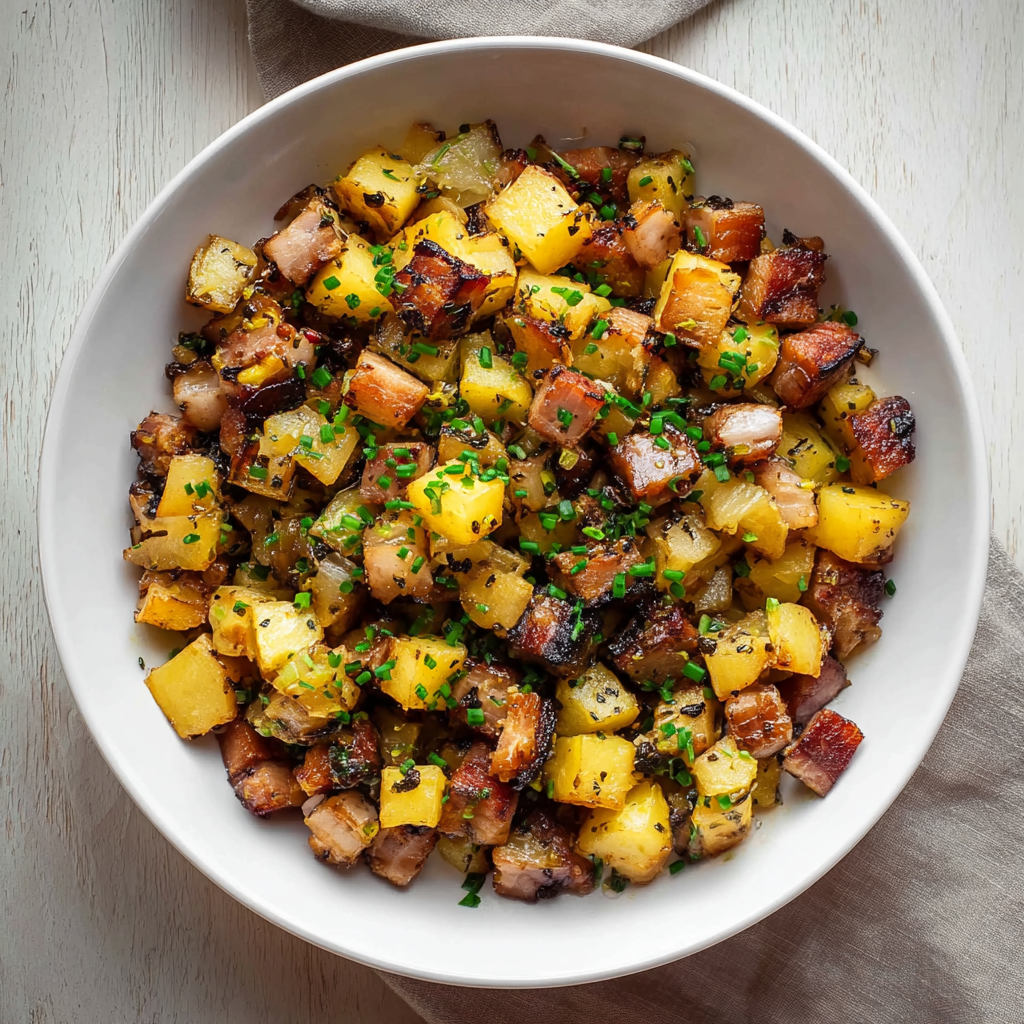
STEP 4: Add the cooked potato cubes to the pan and spread everything out as evenly as you can. Give the potatoes time to sit against the hot surface between stirs. That contact with the pan is what gives you the golden, crisp exterior that makes a hash feel complete.
STEP 5: Chop the reserved crackling into small pieces and stir it into the skillet. This adds texture and a deeper pork flavor throughout the dish, so you get a mix of tender, crisp, and savory in every forkful.
STEP 6: Sprinkle the chicken stock powder over the pan, then pour in the water. Stir well so the stock dissolves and lightly coats the pork and potatoes. Keep cooking until the liquid cooks off and the hash looks glossy, savory, and well seasoned rather than wet.
STEP 7: Spoon the finished hash onto plates and serve it hot with crusty bread rolls on the side. A little chopped chive over the top is a simple finishing touch that makes the rich flavors feel brighter.
Helpful Tips
- Use cold cooked potatoes if possible. They hold their shape better in the pan and crisp more easily than freshly boiled potatoes.
- Do not stir constantly once the potatoes go in. Letting them sit for a minute or two at a time helps build those golden edges.
- Taste at the end before adding extra salt. Pork belly and stock powder can already bring plenty of savory intensity.
Can I use freshly cooked potatoes instead of leftover potatoes?
Yes, but let them cool a bit before adding them to the skillet. Potatoes that are too hot or soft can break apart more easily, while cooled potatoes hold their cubes better and develop a nicer crust.
What kind of pork belly works best for hash?
Leftover roasted pork belly works especially well because it already has strong flavor and a mix of tender meat and rich fat. If it has crackling, keep that too and stir it in near the end for extra texture.
How do I keep the hash from turning soggy?
Use a hot enough pan, avoid overcrowding, and give the potatoes time to brown before stirring. Also cook off the stock mixture fully at the end so the skillet coating stays savory and glossy instead of watery.
Can I add eggs on top?
Yes, a fried or poached egg fits this dish beautifully. The runny yolk softens the crisp potatoes and adds even more richness, which makes the hash feel especially good for brunch or a filling breakfast-style meal.
Perfect Pairings
A fried egg is one of the most natural matches for this hash. It adds softness and richness, and the yolk blends beautifully with the savory pork and crisp potatoes.
A simple green salad works well when you want balance. Something lightly dressed and fresh helps cut through the richness without competing with the skillet flavors.
Crusty rolls or toasted bread are perfect for serving alongside. They make the meal feel more complete and are especially good for catching any savory bits left in the pan or on the plate.
How to Store & Reheat
Store leftover hash in an airtight container in the fridge for up to 3 days. For the best texture, keep the bread separate and add any fresh garnish only when serving.
To reheat, warm the hash in a skillet over medium heat with a small splash of oil. This brings back some of the crispness better than the microwave. If you do use the microwave, heat in short bursts so the pork does not become overly soft.
Freezing is possible, but the potatoes may lose some of their crisp texture once thawed. If you freeze it, store it for up to 1 month and reheat straight from thawed in a skillet for the best result.
Pork Belly Hash
Ingredients
- 2 tablespoons olive oil
- 1 tablespoon chicken stock powder or chicken base
- 4 cooked potatoes peeled and cut into 1/2-inch cubes
- black pepper to taste
- leftover pork belly cut into 1/2-inch chunks
- 1/2 cup water
- 1 onion finely diced into roughly 1/4-inch pieces
- thyme to taste
- 2 garlic cloves thinly sliced
- crusty bread rolls for serving
Instructions
- Set a medium frying pan over medium heat and pour in the olive oil. Once warmed, add the finely diced onion along with a light seasoning of thyme. Cook for about 2 minutes, or until the onion begins to soften and turn translucent.
- Add the sliced garlic to the pan and season with black pepper. Continue cooking briefly, just until the garlic releases its aroma.
- If the crackling has not already been separated from the pork belly, remove it at this stage. Cut the pork belly into lardon-like strips or small pieces, then add them to the pan. Sauté for several minutes so the fat begins to render and the flavors combine.
- Add the cooked diced potatoes to the pan. Cook, stirring from time to time, until the potato cubes begin to develop a crisp, golden exterior.
- Roughly chop the reserved pork crackling into small pieces and stir it through the mixture in the pan.
- Sprinkle the chicken stock powder over the contents of the pan, then pour in the water. Stir well and continue cooking until the liquid has been absorbed and the hash is richly coated.
- Transfer to serving plates and serve with crusty bread rolls alongside.
Notes
Crusty rolls are particularly suitable for soaking up the savory juices from the pan.