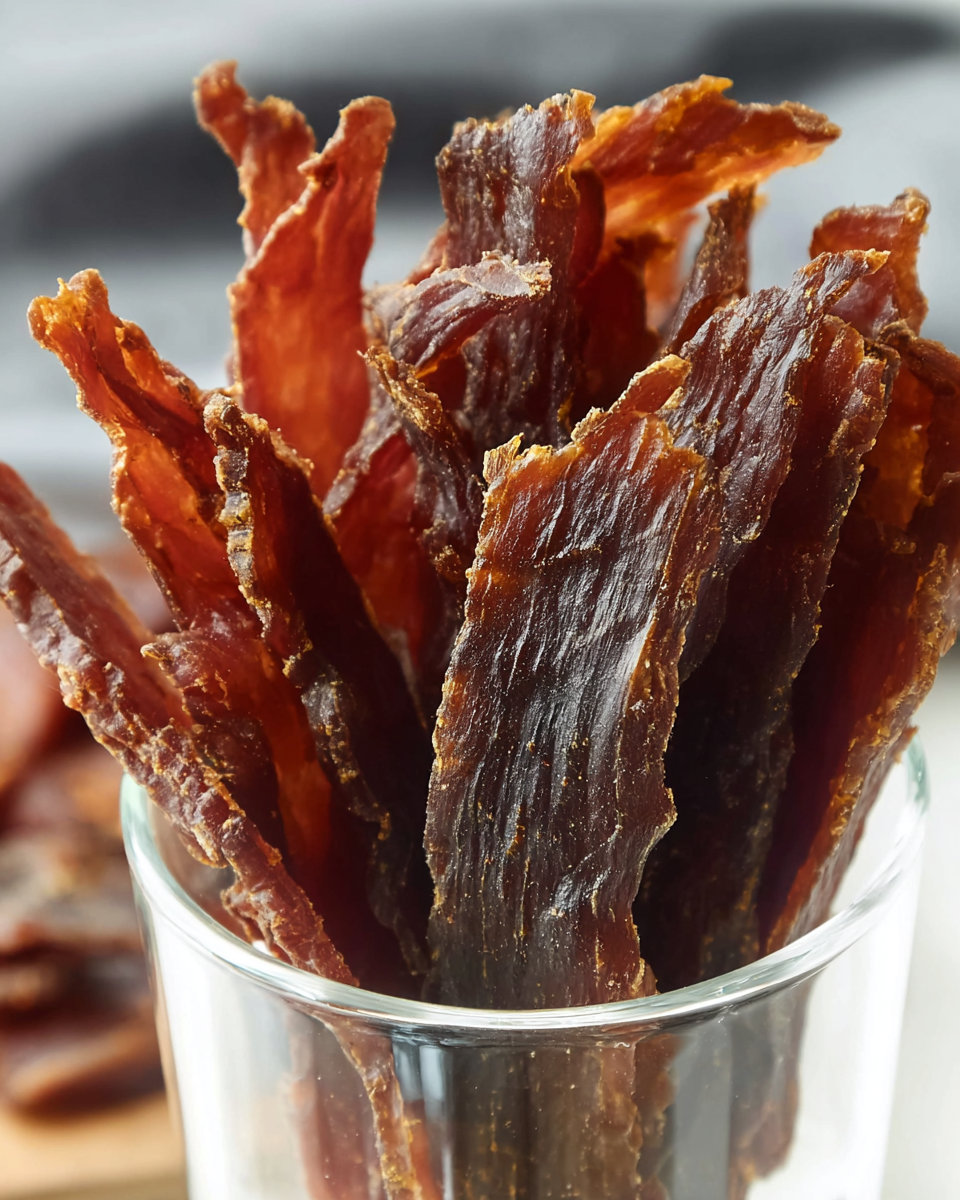
Pork Belly Jerky is a bold, make-ahead snack with a savory-sweet marinade, balanced heat, and deep umami flavor. This homemade jerky is great for batch prep, road trips, lunch boxes, and anytime you want a richly seasoned bite.
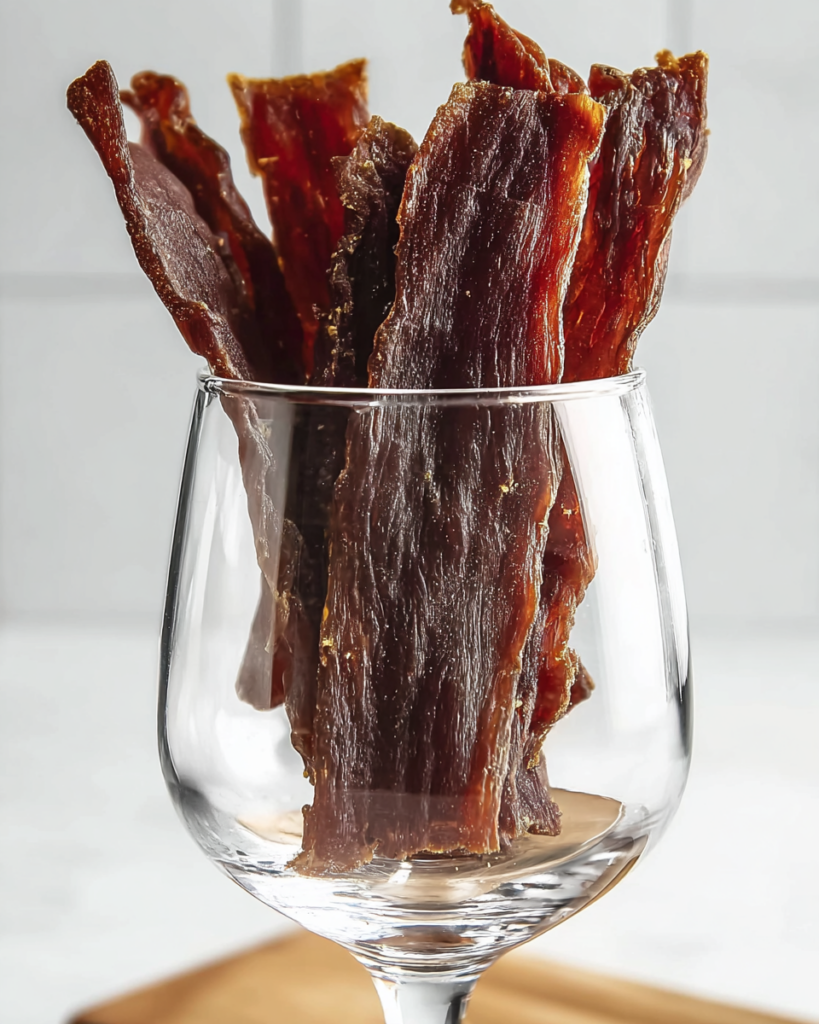
This is the kind of recipe that feels simple once you understand the rhythm of it. You firm the meat, slice it thin, build a strong marinade, and let the dehydrator do the steady work that turns those strips into something snackable and satisfying.
What makes this version stand out is the flavor balance. Soy sauce and Worcestershire bring salt and depth, brown sugar rounds everything out, lime keeps the marinade lively, and chili paste adds that warm kick that keeps each bite interesting.
It also works well for real life. You can marinate the pork the night before, dehydrate it the next day, and keep a batch on hand for those moments when chips or crackers just will not do. It tastes thoughtful, but the process is very manageable in a home kitchen.
What You Need to Make This Pork Belly Jerky
Pork tenderloin gives you lean, even strips that dry nicely and take on the marinade well.
Soy sauce builds the salty, savory base and helps create that classic jerky depth.
Brown sugar softens the sharp edges of the marinade and adds the sweet note that makes the seasoning feel balanced.
Worcestershire sauce adds a darker, layered savoriness that makes the finished jerky taste fuller.
Fresh garlic brings strong aroma and a punchy, homemade flavor that works especially well in dried meat.
Chili paste adds a gentle heat and a little richness, giving the jerky its Korean-inspired flavor direction.
Lime juice brightens the marinade so the overall taste does not feel too heavy.
Cracked black pepper and liquid smoke finish the flavor profile with a little warmth and that familiar smoky edge.
Step-by-Step Pork Belly Jerky
STEP 1: Start by cutting the pork tenderloin into long sections, then place them on a tray and freeze until firm. You are not freezing the meat solid here. You only want it cold enough to slice cleanly and thinly without tearing.
STEP 2: Once the pork is firm, slice it into narrow strips, aiming for a fairly even thickness throughout. Uniform slices matter because they dry at a similar rate, which helps you avoid some pieces turning brittle while others stay too soft.
STEP 3: Build the marinade on the stove by gently heating the soy sauce, brown sugar, Worcestershire, garlic, chili paste, lime juice, pepper, and liquid smoke together. A short simmer is enough. The goal is to dissolve the sugar and help the flavors blend into one smooth, bold mixture.
STEP 4: Cool the marinade fully, then add it to a resealable bag with the sliced pork. Move the pieces around so everything is thoroughly coated. Let the meat rest in the refrigerator for at least a couple of hours, though an overnight soak will give you a more developed flavor.
STEP 5: Remove the pork from the marinade and blot it well with paper towels. This small step makes a big difference because too much surface moisture slows down drying. Arrange the strips in a single layer on dehydrator trays, leaving a little space between each piece for airflow.
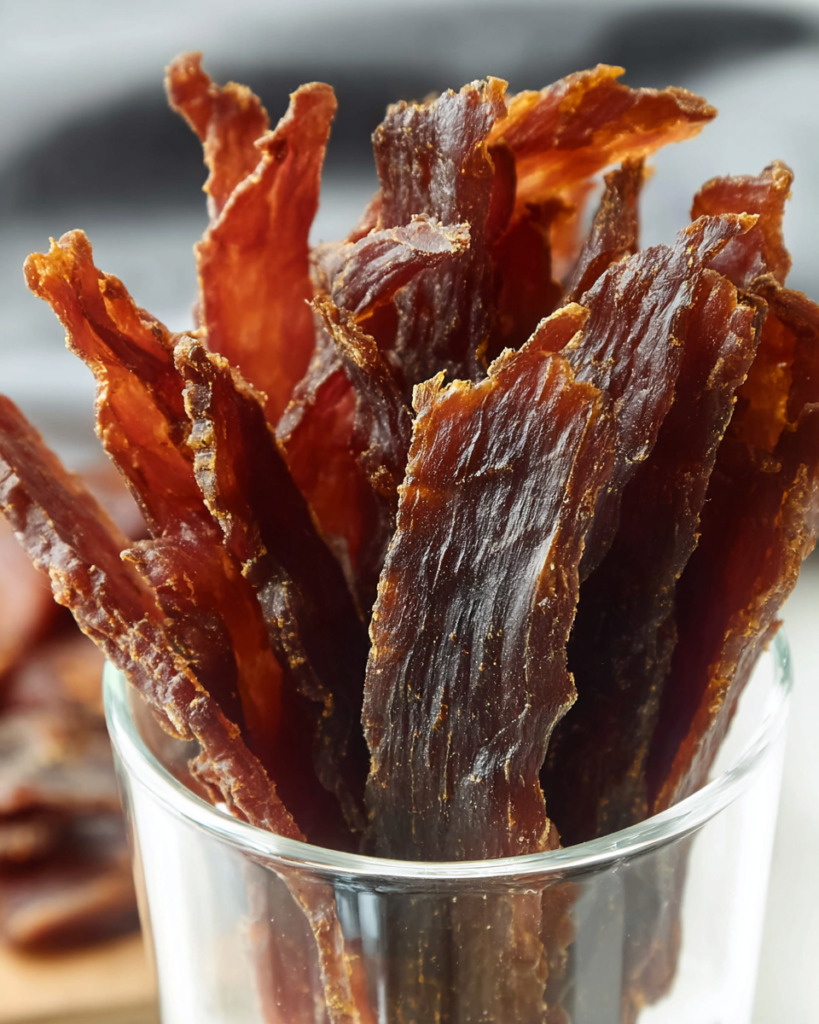
STEP 6: Dry the jerky at 160°F until it is fully dehydrated and pleasantly chewy. When finished, let the strips cool completely before storing. Cooling helps the texture settle and keeps extra moisture from building up in the container.
Perfect Pairings
A crisp cucumber salad or a quick bowl of pickled cucumbers works especially well here. The cool, fresh bite balances the jerky’s salty, savory intensity and gives you a nice contrast in texture.
Plain rice crackers are another smart choice. They keep the focus on the jerky while giving you something light and crunchy alongside it, which is especially nice if you are serving this as part of a snack board.
For a sweeter contrast, fresh pineapple or chilled melon makes a great match. The fruit brings brightness and juiciness that plays beautifully with the chili, soy, and smoky notes in the marinade.
Can I marinate the pork overnight?
Yes, and that is often the best route if you want stronger flavor. A longer rest gives the soy, garlic, chili paste, and lime more time to work into the meat. Just keep the pork refrigerated the whole time and make sure the marinade is fully cooled before combining.
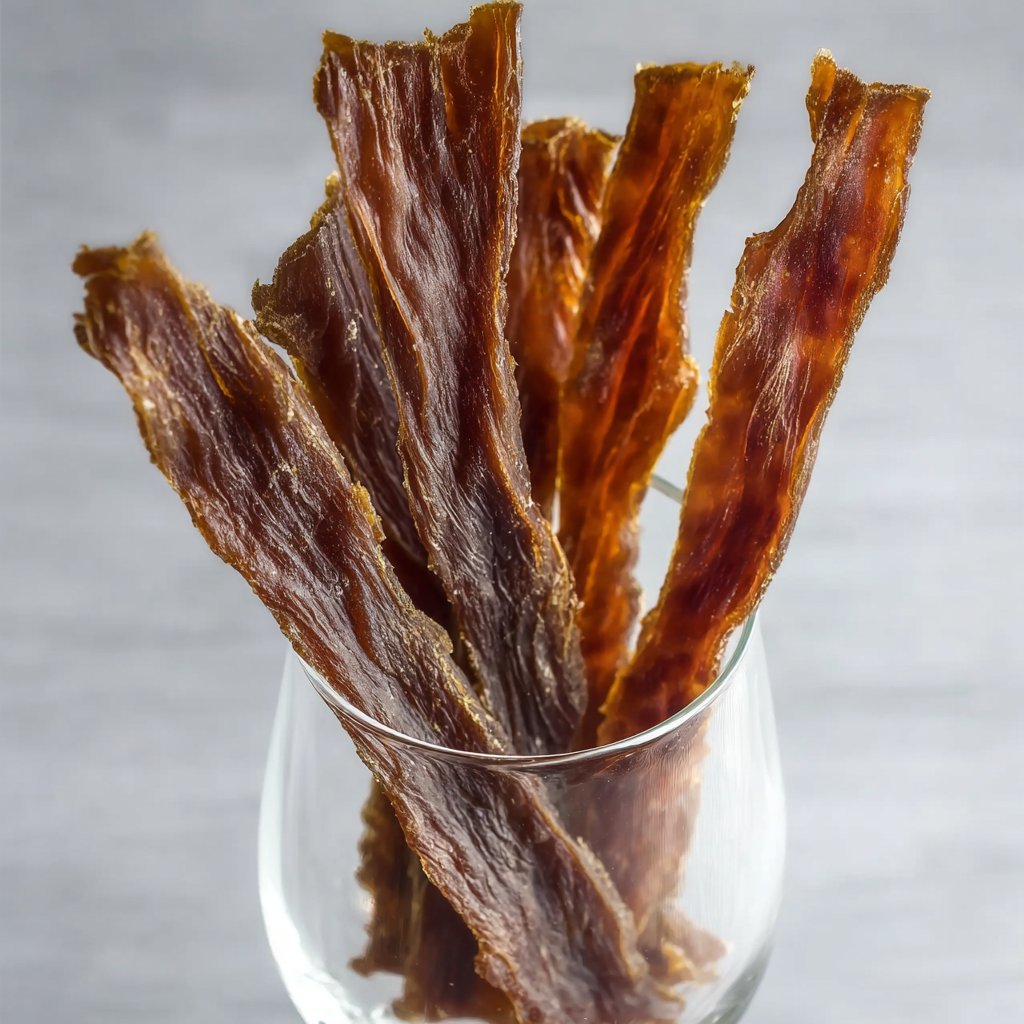
How do I know when the jerky is done?
The finished strips should look dry and feel firm, but they should not snap like a cracker. When you bend a piece, it should flex and feel chewy rather than wet in the center. Thicker slices may need a bit longer than thinner ones.
Can I make this without a dehydrator?
You can use a low oven if needed, as long as you can keep the heat gentle and give the meat good airflow. Set the strips on a rack over a tray and watch closely, because ovens can dry less evenly than a dehydrator.
Why do I need to blot the pork before drying?
Blotting removes excess marinade from the surface so the strips dry more efficiently. It also helps prevent sticky patches and keeps the flavor concentrated instead of watery. You still get all the seasoning, but with a cleaner finish and a better jerky texture.
Helpful Tips
- Slice against the grain for a more tender bite, or with the grain if you want a chewier, more traditional jerky texture.
- Do not crowd the dehydrator trays. Even a little space between strips helps the warm air circulate properly.
- Check the thinner pieces first near the end of drying, since they often finish before the rest of the batch.
How to Store & Reheat
Once the jerky has cooled completely, transfer it to an airtight container right away. For a home batch like this, I prefer storing it in the refrigerator, where it should keep well for about 1 to 2 weeks.
For longer storage, freeze the jerky in a sealed freezer-safe bag or container for up to 2 months. Let it thaw in the refrigerator or at room temperature before serving.
You usually do not need to reheat jerky, but you can refresh the texture if you like. Spread the pieces on a tray and warm them briefly in a low oven just until they lose the chill. That is enough to bring back a slightly fresher bite without over-drying them.
Pork Belly Jerky
Ingredients
- 3 freshly crushed garlic cloves
- 1/3 cup Worcestershire sauce
- 1 pound pork tenderloin cut into thin slices
- 2 tablespoons chili paste such as gochujang
- 1/4 teaspoon liquid smoke
- 1/4 cup firmly packed brown sugar
- Juice from 1 lime
- 1/3 cup low-sodium soy sauce
- 1/4 teaspoon whole black peppercorns cracked fresh if possible
Instructions
- Cut the pork tenderloin in half lengthwise, then split each half again lengthwise so you have four long sections. Arrange the pieces on a baking sheet and place them in the freezer for 2 hours so the meat becomes firm and easier to slice.
- Remove the partially frozen pork and cut it into strips about 1/8 inch thick. Keep the slices as even as possible so they dry at the same rate during dehydration.
- Place the brown sugar, soy sauce, cracked peppercorns, crushed garlic, chili paste, Worcestershire sauce, lime juice, and liquid smoke in a small saucepan. Set the pan over medium heat and bring the mixture to a gentle simmer. Cook for 5 to 10 minutes, stirring as needed, until the sugar has fully dissolved. Remove from the heat and let the marinade cool completely.
- Transfer the cooled marinade to a large resealable bag. Add the sliced pork and make sure every piece is thoroughly coated. Seal the bag and refrigerate for at least 2 hours, or leave it overnight for fuller flavor.
- Lift the pork from the marinade and blot the strips with paper towels to remove excess moisture. Lay the pieces in a single layer on dehydrator trays, leaving space between them for air circulation.
- Set the dehydrator to 160°F and dry the pork for about 4 hours, or until the jerky is fully dehydrated.
- Allow the finished jerky to cool to room temperature before storing. Place it in an airtight container and keep it in a cool, dry location to preserve freshness.